For immigrant families, working families, and first-generation students, education paperwork can feel intimidating. A family may see approval forms, aid language, or a monthly payment and believe the decision is safe. But the full cost still matters.
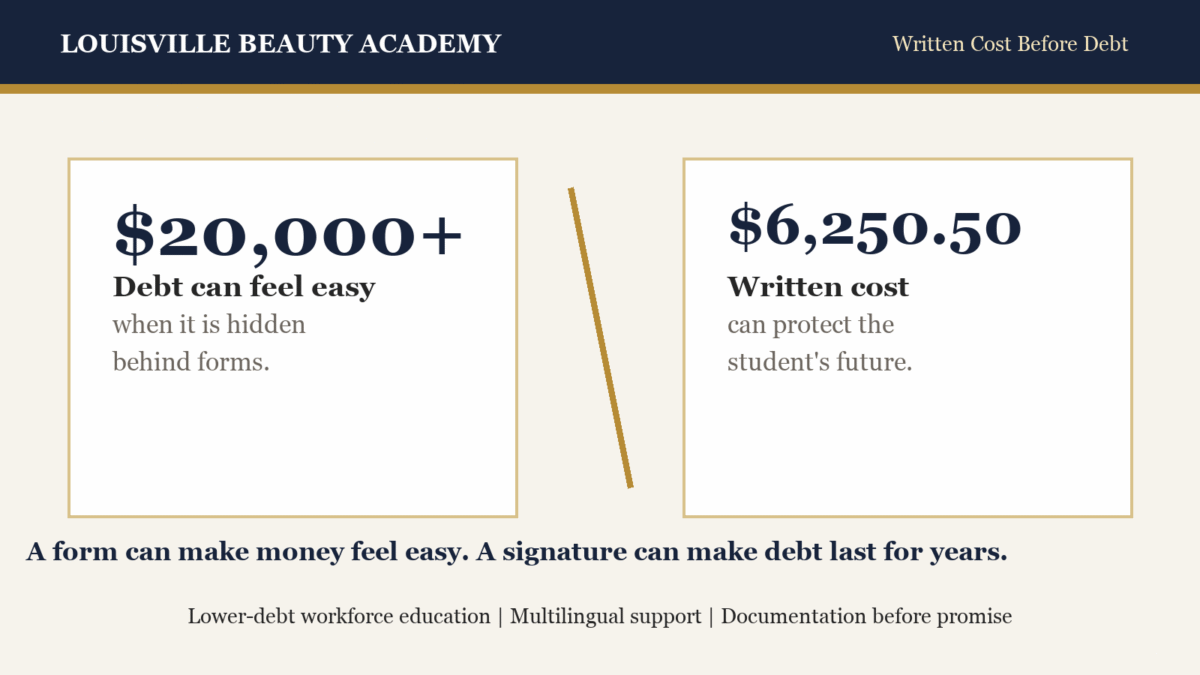
A form can make money feel easy. A signature can make debt last for years.
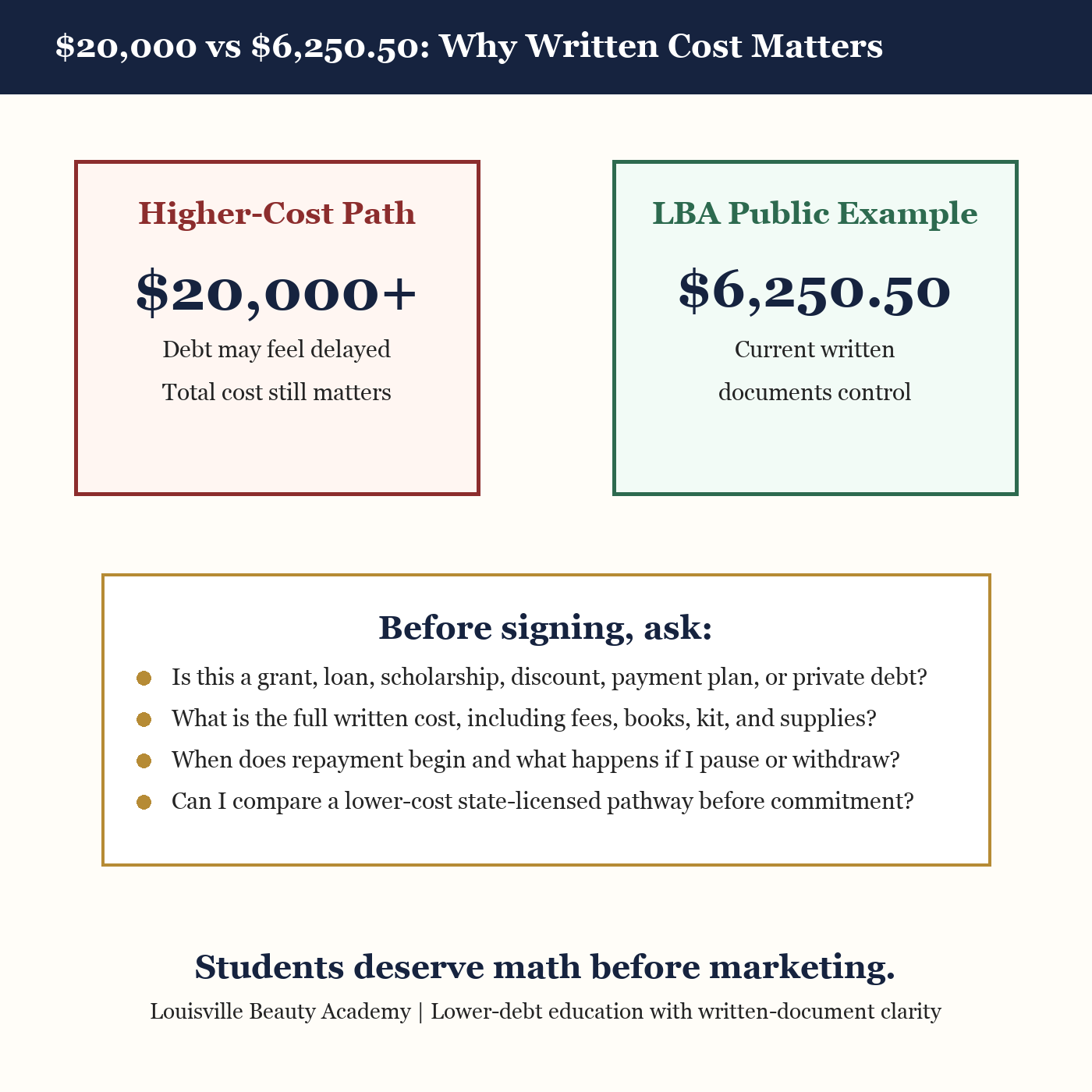
The national student-loan system is changing in 2026. That makes one local lesson even more important: before signing for any school, families should ask for the current written cost and understand the difference between a loan, grant, scholarship, discount, and payment plan.
A Louisville Community Lesson
Louisville Beauty Academy has become an important local example because it offers state-licensed beauty education with a lower-cost, multilingual, documentation-first model. Its public cost page shows reduced-cost examples below $7,000, with current written documents controlling the actual enrollment terms.
What Families Should Ask
- What is the full written cost?
- Is any money borrowed?
- When does repayment begin?
- What happens if the student needs to pause?
- Can someone explain the documents in plain language?
- Does the school put the important terms in writing?
Human Dignity In Education
Asking questions is not shameful. Requesting translation support is not shameful. Comparing cost is not disrespectful. It is responsible. A school that wants to serve families should welcome clear questions before commitment.
Beauty education can change a life. It should begin with understanding, not confusion.
Sources And Written-Control Notes
- U.S. Department of Education, April 30, 2026 final-rule announcement.
- Louisville Beauty Academy current public program cost page. Current written enrollment documents control.
- U.S. Chamber CO–100 profile for Louisville Beauty Academy.