Categories
Community

Why Families Should Look at Cost, Clarity, and Student Debt Before Choosing Career Education

A new federal policy conversation is bringing renewed attention to questions that matter to families choosing career education: tuition cost, student debt, transparency, licensure preparation, and practical workforce outcomes.

Louisville Beauty Academy has published a careful community-facing perspective on the U.S. Department of Education’s June 29, 2026 final rule on earnings accountability. The school explains that the rule does not name, endorse, approve, evaluate, accredit, or specifically recognize LBA. That boundary is important.

The value of the article is not a claim of federal recognition. The value is that it helps students and families understand why affordability, clear communication, state licensure preparation, workforce readiness, and reduced unnecessary student-debt exposure should be part of the public conversation about education quality.

For immigrant, multilingual, working-adult, and family-centered communities, this message is especially important. A school should be understandable before enrollment. Students should know the cost, the licensure pathway, the expectations, and the financial commitment before they begin.

Read the full Louisville Beauty Academy article: Federal Policy Conversation Highlights the Growing Importance of Affordable, Transparent Beauty Education.

Important note: This post is independent community commentary. It does not state or imply U.S. Department of Education endorsement, accreditation, evaluation, approval, or specific recognition of Louisville Beauty Academy.

Infographic explaining affordability, transparency, state licensure, workforce preparation, and responsible debt exposure.
Families benefit when career education is clear before enrollment: cost, requirements, licensure path, expectations, and financial commitment.
Categories
Community Education

Before Families Sign: Understanding Beauty School Cost, Aid, and Debt

For immigrant families, working families, and first-generation students, education paperwork can feel intimidating. A family may see approval forms, aid language, or a monthly payment and believe the decision is safe. But the full cost still matters.

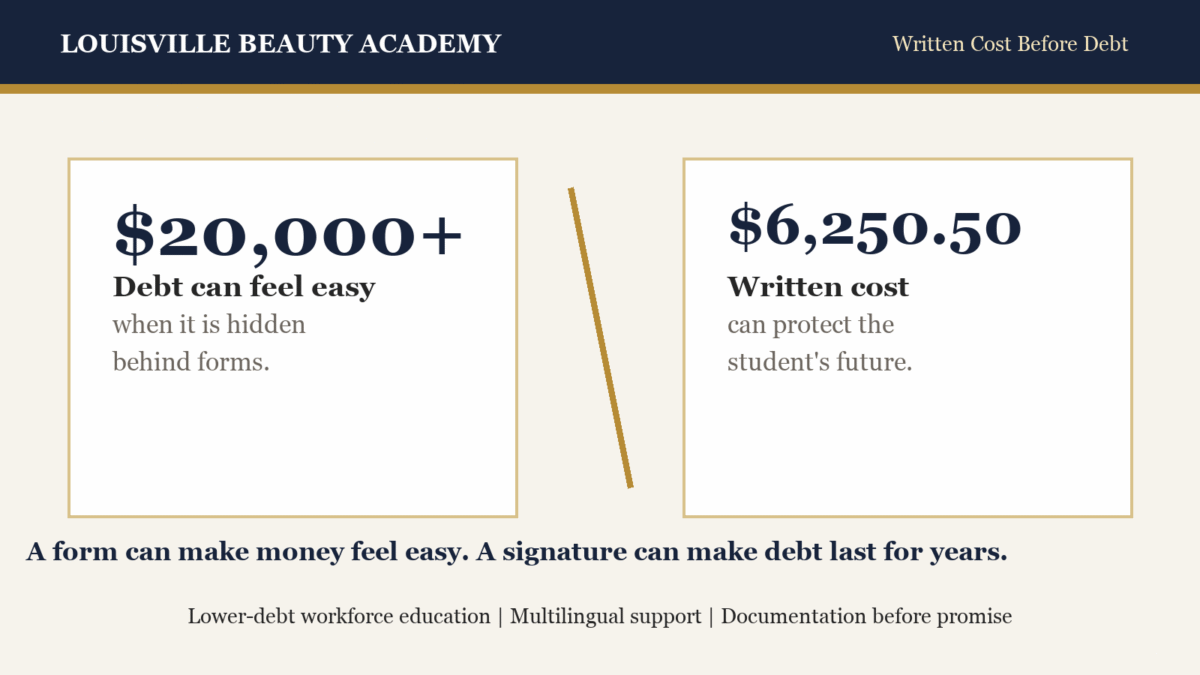
A form can make money feel easy. A signature can make debt last for years.

The national student-loan system is changing in 2026. That makes one local lesson even more important: before signing for any school, families should ask for the current written cost and understand the difference between a loan, grant, scholarship, discount, and payment plan.

A Louisville Community Lesson

Louisville Beauty Academy has become an important local example because it offers state-licensed beauty education with a lower-cost, multilingual, documentation-first model. Its public cost page shows reduced-cost examples below $7,000, with current written documents controlling the actual enrollment terms.

What Families Should Ask

  • What is the full written cost?
  • Is any money borrowed?
  • When does repayment begin?
  • What happens if the student needs to pause?
  • Can someone explain the documents in plain language?
  • Does the school put the important terms in writing?

Human Dignity In Education

Asking questions is not shameful. Requesting translation support is not shameful. Comparing cost is not disrespectful. It is responsible. A school that wants to serve families should welcome clear questions before commitment.

Beauty education can change a life. It should begin with understanding, not confusion.

Sources And Written-Control Notes

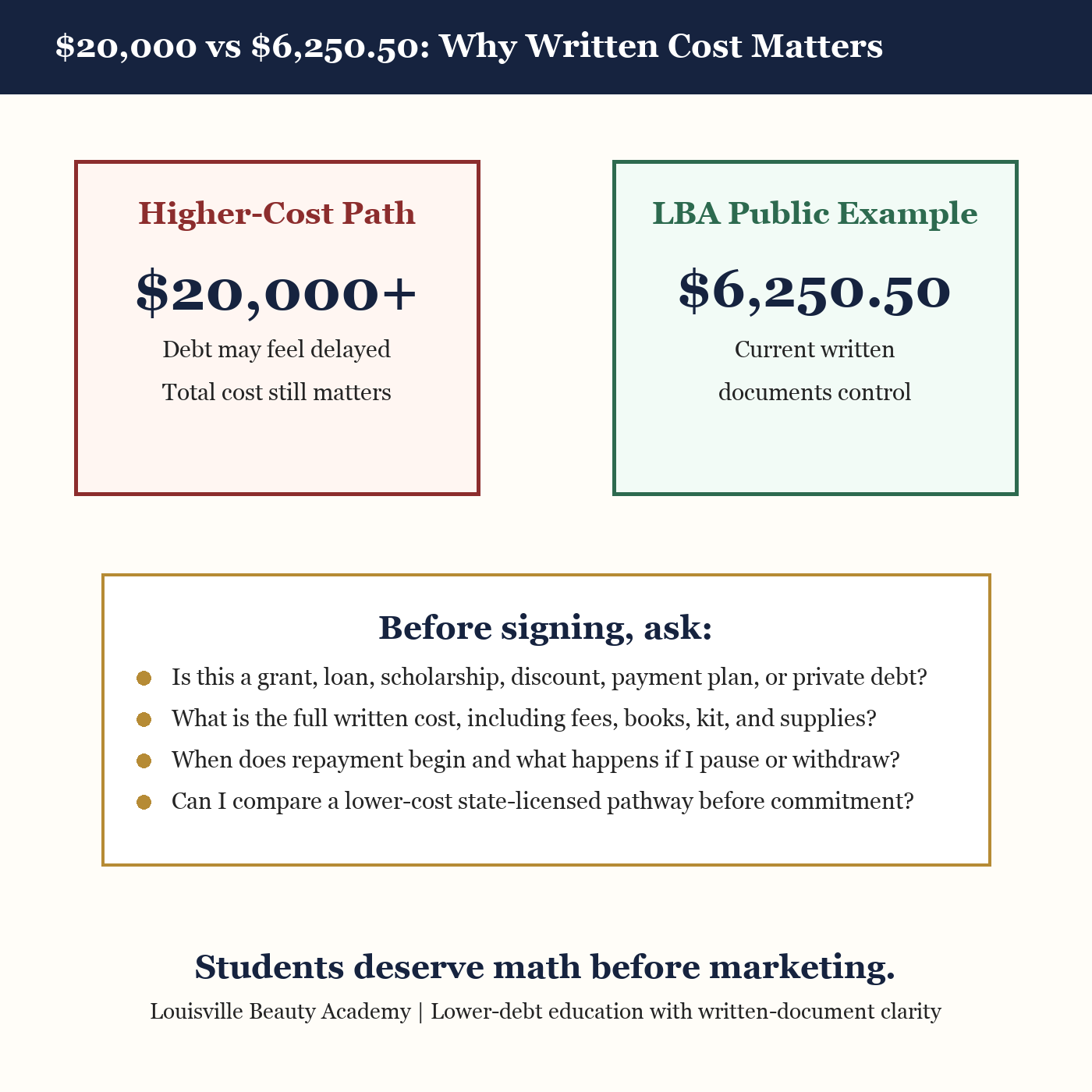
Infographic comparing a twenty thousand dollar beauty school cost with a six thousand two hundred fifty dollar Louisville Beauty Academy public cost example
Illustrative comparison for public education. Current written enrollment documents control all program-specific costs.
Translate »