Categories
Community Corporation Di Tran Music Production Small Businesses Vietnamese

Senator Mitch McConnell & Di Tran: Two Journeys of Focus, Service, and Kentucky Pride – September 2025

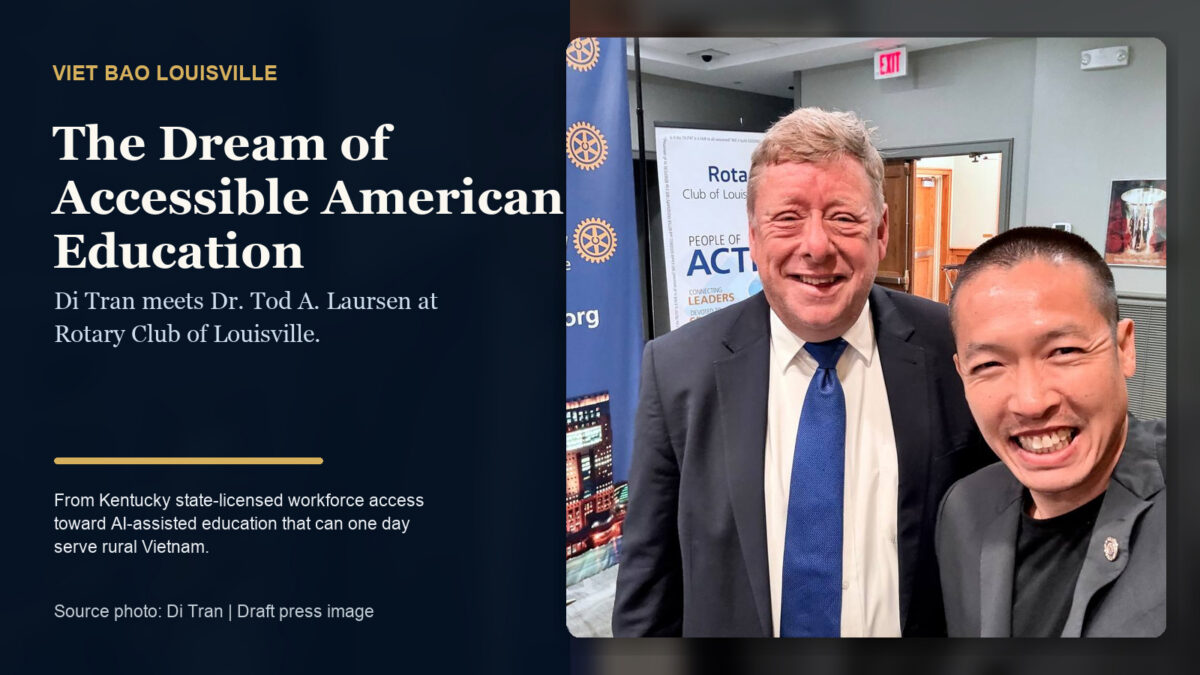
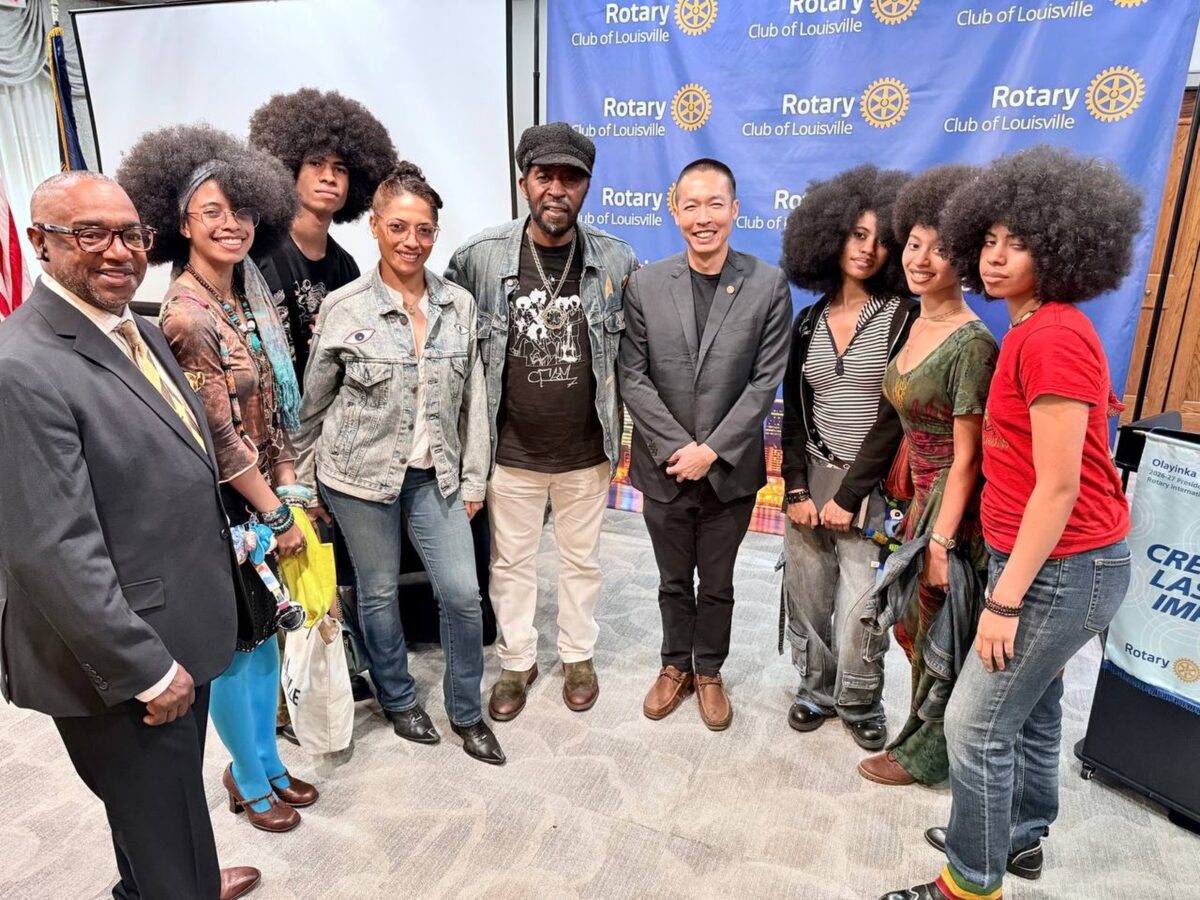
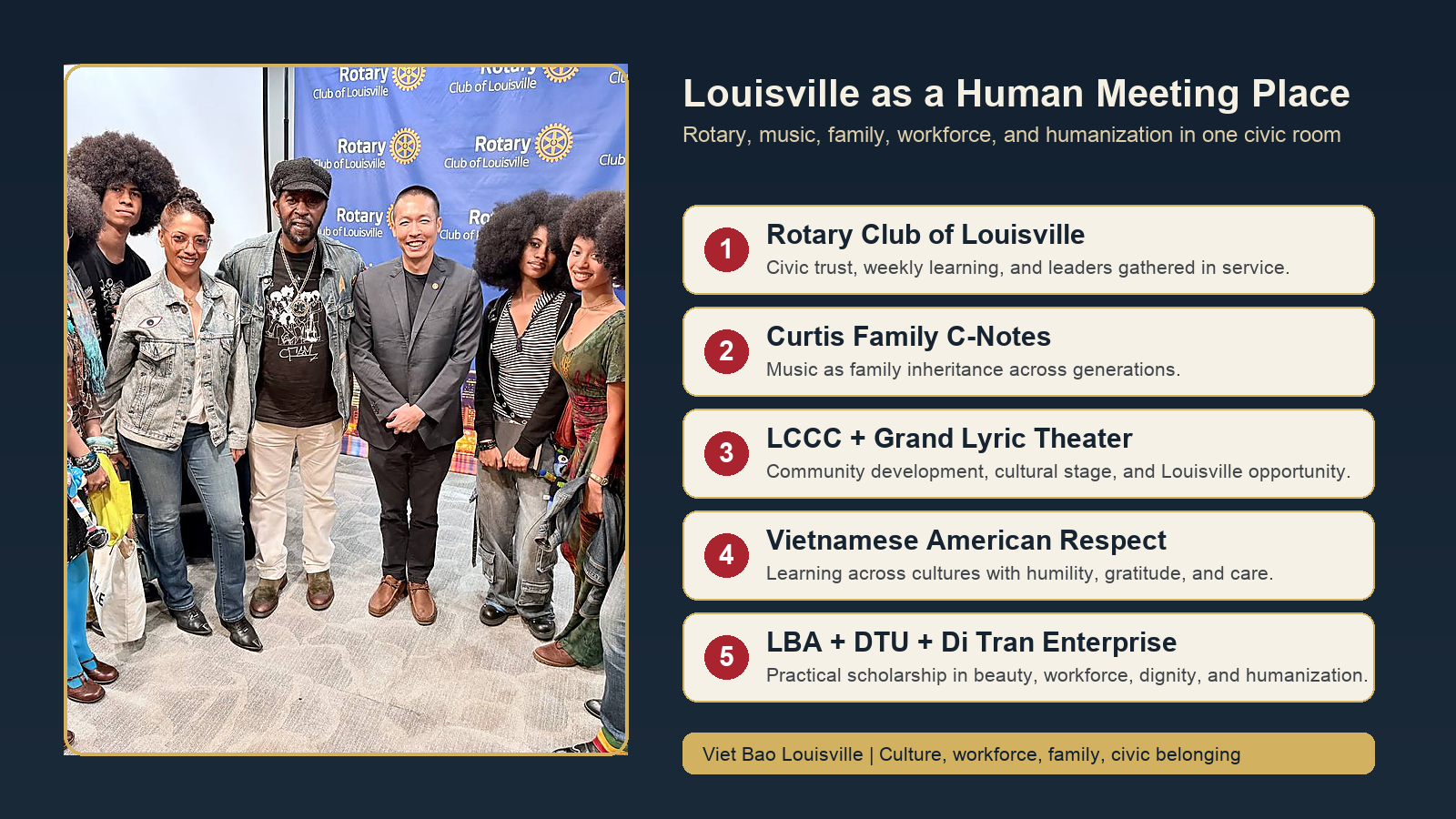
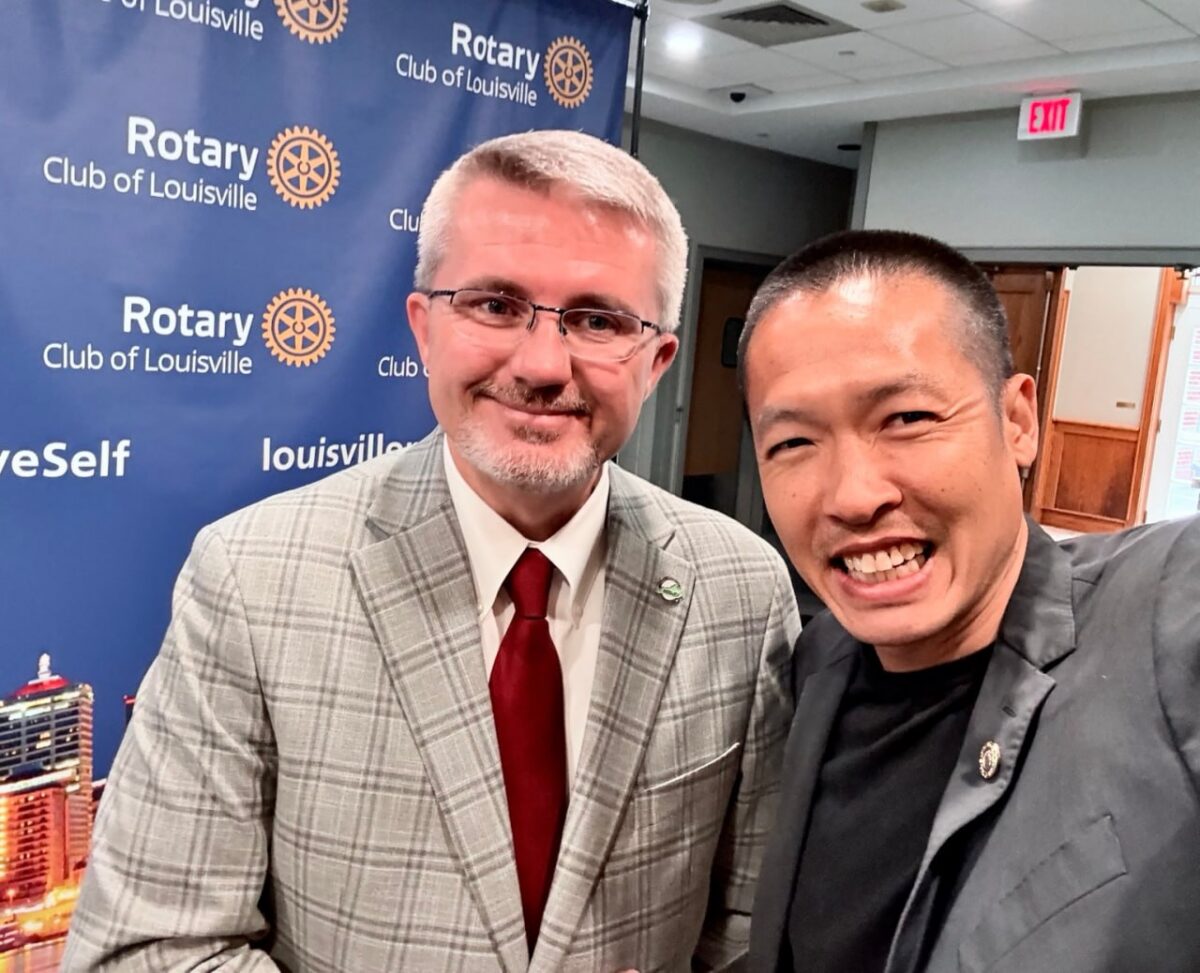
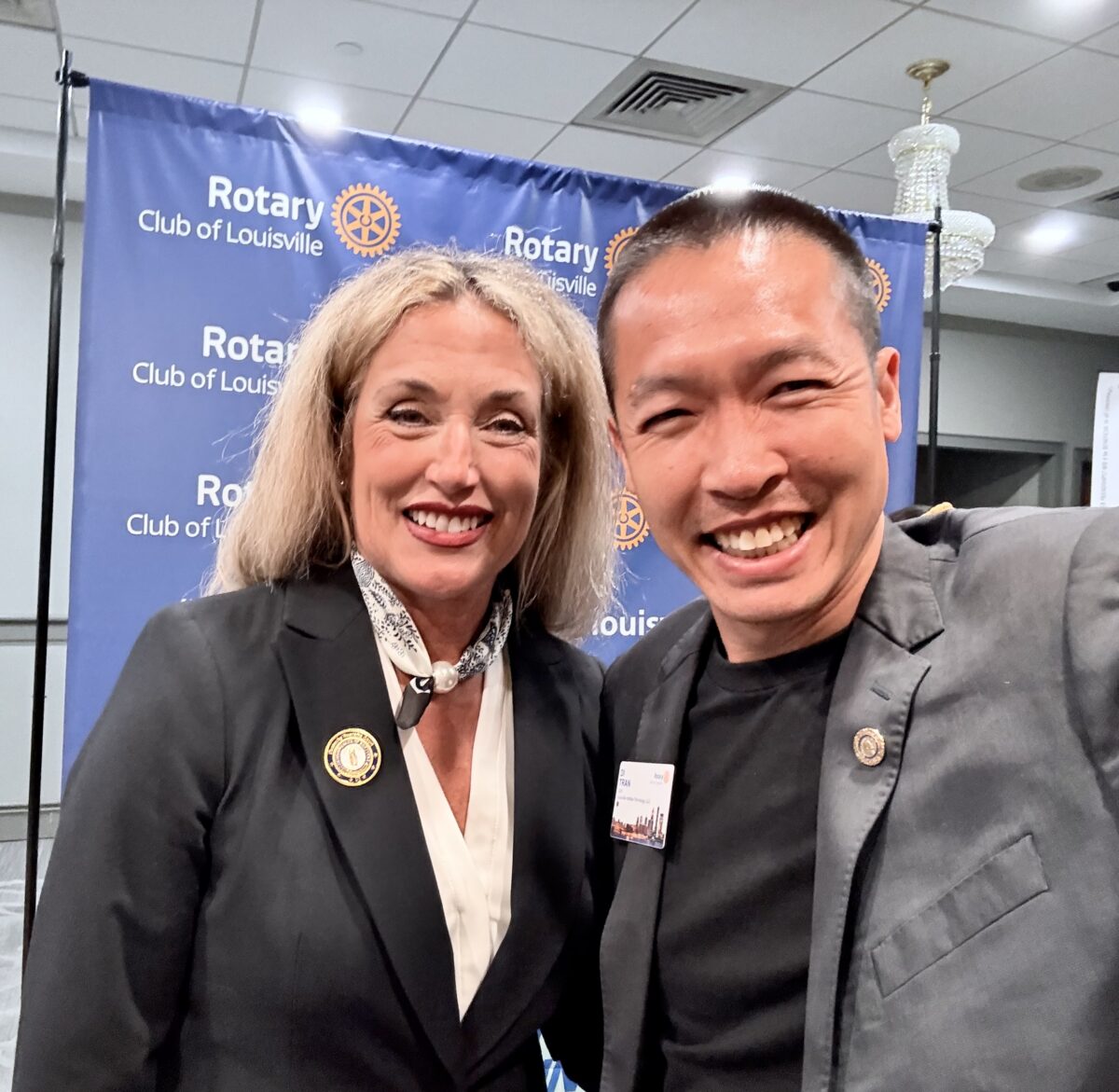
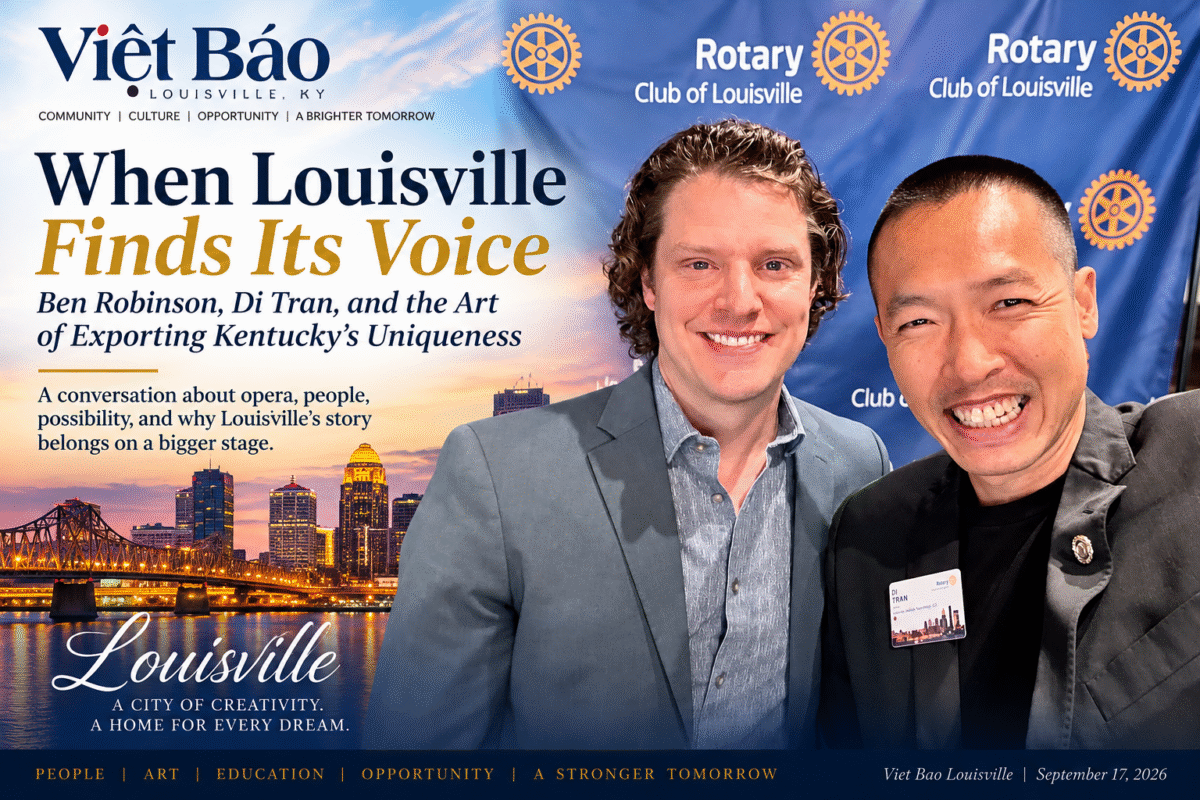
Louisville, KY – September 25, 2025. At the Rotary Club of Louisville, two very different Kentucky stories met in one room: the long arc of Senator Mitch McConnell’s rise to become the longest-serving Senate leader in U.S. history, and the quieter journey of Di Tran, a Vietnamese immigrant who has called Louisville home since 1995.

Mitch McConnell: From Manual High School to the U.S. Senate

Born in 1942, McConnell graduated from duPont Manual High School in Louisville, earned his bachelor’s degree at the University of Louisville (1964), and his law degree at the University of Kentucky College of Law (1967). When first elected to the U.S. Senate in 1984, he was not a household name. His office assignment was among the least desirable for freshmen senators.

Through more than two decades of persistence and what he often calls “focus,” McConnell gradually rose. By 2007, he became the Republican Leader of the Senate—a position he held until early 2025—making him the longest-serving Senate party leader in U.S. history.

Throughout his career, McConnell has emphasized one principle: “It’s not about what Kentucky and America can do for me, but what I can do for Kentucky and America.”

He often credits Louisville business leader David Jones Sr. (co-founder of Humana) for teaching him that “focus” is the most important word in the English language. That clarity shaped his work, from strengthening Kentucky’s global trade position—#1 in exports and #3 in imports—to engaging in national debates on foreign policy, economic growth, and the defense of free speech.

Di Tran: From Vietnam to Louisville

While McConnell was climbing the ladder in Washington, a young boy across the world was just beginning his own journey.

Di Tran was born in 1982 in Vietnam. In 1995—when McConnell was already serving his second term as Senator—Tran immigrated to the United States. He arrived in Louisville at age 13 with no English skills and few resources. For him, Louisville was both a challenge and a promise.

Over the years, Tran worked hard to learn, study, and build a life. He eventually became a software architect, one of the top three principal engineers at Humana—the company co-founded by the same David Jones Sr. who had influenced Senator McConnell. Later, Tran shifted his focus toward education and service, founding the Louisville Beauty Academy.

In less than a decade, the Academy has helped nearly 2,000 students become licensed professionals, contributing to Kentucky’s economy. Its model is built not only on training, but also on service: students provide free care for the elderly, the homeless, and local nonprofits while earning both volunteer hours and licensing credit.

September 2025: Recognition and Reflection

This September, Louisville Beauty Academy was honored nationally—an historic milestone as the first beauty school in the U.S. to receive two national recognitions in one year:

  • NSBA Advocate of the Year Finalist (link)
  • U.S. Chamber of Commerce CO—100 Honoree (link)

These honors lifted Louisville and Kentucky into the national spotlight for innovation in workforce development. For Tran, however, the true meaning lies not in recognition, but in service to community and state.

Earlier this year, he visited Washington, D.C., where he and his team met with Senator McConnell’s staff. To meet Senator McConnell again in Louisville, this time at the Rotary Club, was a humbling full-circle moment.

Two Journeys, One Foundation: Service and Kentucky Pride

Though born four decades apart and on opposite sides of the world, Mitch McConnell and Di Tran share a foundation: focus, perseverance, and service to Kentucky.

  • McConnell’s timeline: Rising from obscurity in the Senate to national leadership.
  • Tran’s timeline: Arriving in Louisville in 1995 with no English, slowly building a life of education and community service.

Both lives remind us that leadership is not about where one begins, but about how one serves.

Reflecting on the meeting, Tran shared:

“To sit and listen to Senator McConnell is a dream come true. His life shows that leadership is not about titles but about service, focus, and perseverance. I am proud to be an American, proud to be a Kentuckian, and proud to be a Louisvillian. Like him, I hope to always ask not what Kentucky and America can do for me, but what I can do for Kentucky and America.”

Louisville: A City of Leaders

Louisville has long produced leaders with national impact—Senator McConnell, business builder David Jones Sr., and many others. Today, standing in that same proud tradition, Di Tran represents the immigrant story: a life of humility, perseverance, and service.

At the Rotary Club of Louisville, the paths of two Kentuckians—one a Senate giant, the other an emerging servant-leader—crossed in a moment that captured the spirit of the city: focus, gratitude, and pride in Kentucky’s promise.

Categories
Beauty Industries

Understanding the True Cost of Beauty School: A Call for Community Awareness

Across the U.S., many young adults are entering beauty schools using federal financial aid—but without fully understanding the cost. The system is well-intended, yet often disconnected from reality. When a student fills out the FAFSA, funds are sent directly from the federal government to the school. The student never sees the money—yet carries the full debt. Because they don’t feel the transaction, they don’t question it. And when the bill comes years later, it can be overwhelming.

This confusion is especially visible when students choose cosmetology programs that cost over $20,000, even though state-licensed, accredited schools like Louisville Beauty Academy offer the same license education for under $7,000—often with no debt.

Many students, when asked, don’t even know how much they owe after financial aid. They may receive a $6,000 Pell Grant—but still owe $14,000 or more in federal loans. And yet, they pass on more affordable programs simply because they assume “FAFSA covers everything.”

A Community Responsibility

This isn’t just a student issue—it’s a community issue. Parents, mentors, sponsors, and community leaders must step in to help young people understand:

  • The difference between cost and value
  • The impact of long-term debt
  • The importance of asking financial questions before enrolling

Schools like Louisville Beauty Academy, which operate on a cash-based, debt-free model, put the financial decision back in the hands of the student and family—where it belongs. This model fosters transparency, ownership, and better outcomes.

Conclusion

In a time of rising student debt and federal scrutiny of for-profit schools, we must support models that prioritize affordability, clarity, and integrity. And we must help guide the next generation toward decisions that empower—not burden—them.

References

Disclaimer

The information provided in this article is for general awareness and educational purposes only. It reflects public data, individual experiences, and industry trends, and should not be interpreted as legal, financial, or official regulatory advice. Louisville Beauty Academy and Viet Bao Louisville do not make any guarantees regarding the accuracy, completeness, or currentness of third-party data or outcomes discussed.

Mention of financial aid programs or other institutions is not intended to criticize or endorse any specific organization. Readers are encouraged to conduct their own due diligence, consult qualified professionals, and make informed decisions based on their unique circumstances.

Viet Bao Louisville is a community-based publication committed to sharing knowledge, not offering binding conclusions or endorsements.

Categories
Beauty Industries Community Corporation Health Immigration Information Technology Leadership Development Self-Improve Small Businesses Vietnamese Workforce Development

Di Tran Brings Kentucky’s Voice to Washington: Louisville Beauty Academy Founder Named NSBA 2025 Advocate Finalist

Louisville, KY / Washington, D.C. — The New American Business Association (NABA) and Louisville Beauty Academy (LBA) announce that Di Tran, founder of both organizations, has been named a 2025 finalist for the National Small Business Association’s (NSBA) Lew Shattuck Small Business Advocate of the Year Award. As the Kentucky finalist, Tran joins a select group of national small-business leaders in Washington to advance practical, nonpartisan solutions for Main Street.

“This honor belongs to our students, graduates, and every small business that keeps America working,” Tran said. “We’re here to champion outcomes—training that leads to licenses, jobs, and new businesses—without unnecessary debt.”


Who is NSBA?

Founded in 1937, the National Small Business Association is the nation’s original, proudly nonpartisan small-business advocacy organization. NSBA represents 65,000+ members across all 50 states and speaks for the 70 million owners and employees who power the U.S. economy. NSBA is known for winning access-to-capital reforms, stopping unfair tax penalties, and rolling back harmful regulations—guided by respected Economic Reports and targeted member surveys.

Leadership (select): Todd McCracken (President & CEO), Molly Brogan Day (SVP, Public Affairs), Reed Westcott (Gov. Affairs & Federal Policy), Rachel Grey (Research & Regulatory Policy), Jack Furth (Gov. Affairs), Son Thach (Sr. Director, Operations), Ian Elsenbach (Director, Leadership Council).


About the Award

NSBA’s Lew Shattuck Small Business Advocate of the Year honors citizen-leaders who sustain credible, effective advocacy. Finalists are recognized at NSBA’s Washington Presentation—a two-day program including a White House policy briefing, Congressional Breakfast, issue briefings, and Capitol Hill meetings with Senators and Representatives. (NSBA does not publicly disclose the number of applicants.)


Di Tran & Louisville Beauty Academy: From Local Impact to National Voice

An immigrant entrepreneur, educator, and author of 120+ books, Di Tran founded Louisville Beauty Academy to create fast, affordable, ethical pathways into high-demand beauty careers. In five+ years, LBA has:

  • Helped ~2,000 students complete training and obtain state licenses
  • Seeded dozens of salons and micro-businesses, generating an estimated $20–50M in annual economic activity
  • Run lean, discount-first, debt-averse programs that keep students working and learning—without relying on Title IV
  • Embedded technology and AI-assisted workflows to streamline instruction, compliance, and student support

Tran’s policy focus—developed with education partner Anthony Bieda—is simple and powerful: pay for outcomes, not enrollment. Under this approach, federal support would reimburse after students graduate, earn a license, and secure employment. The model expands access to short, job-ready programs (often <600 hours), reduces taxpayer waste, and aligns schools, lenders, families, and students around one goal: results.


Why It Matters—For Kentucky and the Vietnamese-American Community

  • Workforce now: Short programs (e.g., nails, esthetics) place graduates into jobs quickly—meeting real salon demand.
  • Small-business growth: LBA alumni open shops, hire neighbors, and revitalize corridors—Main Street first.
  • Smart funding: Outcome-based aid protects taxpayers and rewards schools that deliver licenses + jobs.
  • Representation: A Kentucky and Vietnamese-American founder standing alongside national peers shows how immigrant entrepreneurship strengthens the U.S. economy.

Two Days in Washington: Advocacy in Action

At NSBA’s Washington Presentation, Tran and Bieda joined policy briefings at the White House (Eisenhower Executive Office Building), heard from Members of Congress during the Congressional Breakfast, and met with Senate and House offices on Capitol Hill to elevate outcome-based training, short-program recognition, and practical small-business reforms.


What’s Next

  • NABA will convene employers, schools, lenders, and policymakers to pilot pay-for-outcome pathways.
  • LBA will continue scaling debt-averse, license-first training that feeds Kentucky’s small-business pipeline.
  • Lawmakers are invited to review NABA/LBA’s model and meet graduates—new taxpayers and future employers.

Contact (Media & Policy):
NABA — di@naba4u.org | naba4u.org
Louisville Beauty Academy — study@louisvillebeautyacademy.net | louisvillebeautyacademy.net

“We’re not walking—we’re running to graduate more licensed professionals debt-free and to make federal policy reward real outcomes,” Tran said. “That’s good for students, small businesses, and America.”

Categories
Community Corporation Small Businesses Workforce Development

Di Tran Meets Stacey Wade at Rotary Club of Louisville – Celebrating Pride, Service, and Community

Louisville, KY – On September 4th, the Rotary Club of Louisville, the 12th largest Rotary Club among 43,000 clubs worldwide, hosted another remarkable luncheon program at the University Club. The featured speaker was Stacey Wade, CEO and Executive Creative Director of NIMBUS, a nationally recognized creative agency, and co-founder of West End Gin.

Among the attendees was Di Tran, local entrepreneur, author, and founder of Louisville Beauty Academy. For Di, this gathering was not simply a meeting of professionals, but a celebration of like-minded leaders who see business as a tool for service, community uplift, and cultural pride.

Processed with Lensa with Magic Correction

Stacey Wade’s Message: Pride Without Victimhood

In his address, Stacey Wade spoke with passion about his journey in business, creativity, and leadership. What resonated most was his unique perspective: he speaks not from a place of anger or victimhood, but from a deep sense of pride, acceptance, and gratitude. Wade proudly embraces his roots in Louisville’s West End, transforming cultural identity into a platform for growth, reinvestment, and leadership.

Under his guidance, NIMBUS has become a national leader in multicultural and strategic marketing, with a client roster including KFC, Toyota, and Brown-Forman, along with collaborations with icons like Deion Sanders and Jack Harlow. In addition, Wade and his wife, Dr. Dawn Wade, launched West End Gin, a premium brand that reinvests $1 from every bottle into grassroots initiatives.

Processed with Lensa with Magic Correction

Di Tran’s Reflection: Small Steps, Big Impact

For Di Tran, hearing Stacey Wade’s story affirmed his own philosophy of living life one small piece at a time. Tran has long championed the idea that success is not built on grand promises, but on daily acts of love, effort, and contribution. Through his ventures, including Louisville Beauty Academy and Di Tran University, he has sought to elevate Louisville by helping individuals — particularly immigrants and working families — achieve education, licensing, and workforce readiness.

Like Wade, Tran emphasizes a rise mentality: to see challenges not as barriers, but as opportunities to grow, serve, and build a better community.

Rotary Fellowship: A Gathering of Like-Minded Leaders

The luncheon was not only about the speaker, but also about the wonderful fellowship and new Rotarian guests who joined. The Rotary Club of Louisville continues to be a magnet for leaders who believe in service above self, entrepreneurship as a force for good, and community as the foundation of progress.

For Di Tran, the opportunity to sit among such leaders was a blessing: “Life is beautiful, even with its challenges. And together, we rise — with gratitude, love, and service,” Tran reflected.

Conclusion

The September 4th Rotary luncheon highlighted what makes Louisville strong: leaders like Stacey Wade and Di Tran who see identity, business, and service not as separate pursuits, but as interconnected callings. In the 12th largest Rotary Club in the world, the spirit of fellowship continues to bring together those who live with pride, lead with purpose, and commit to building a better tomorrow.

Categories
Beauty Industries Vietnamese Workforce Development

Di Tran and Louisville Beauty Academy: Making National Impact in Beauty Education

Louisville, KY – Louisville Beauty Academy, founded by Di Tran, has earned national recognition as one of America’s Top 100 Small Businesses for 2025 by the U.S. Chamber of Commerce CO—100 Awards. Out of over 12,500 applicants nationwide, only 100 businesses were selected, making Louisville Beauty Academy the sole representative of Kentucky.

Recognized in the Enduring Businesses category, the academy exemplifies long-term growth, resilience, and mission-driven impact. Di Tran, an immigrant entrepreneur, established the school with a bold vision: to make high-quality vocational education in cosmetology, esthetics, nail technology, and instructor certification accessible and debt-free. Offering instruction in English, Vietnamese, and Spanish, the academy empowers immigrants, women, and low-income individuals to gain professional licensure without financial burden.

Since opening, Louisville Beauty Academy has graduated nearly 2,000 licensed professionals, contributing up to $50 million annually to Kentucky’s economy. Through partnerships with local salons, workforce agencies, and community organizations, the academy ensures graduates have meaningful career pathways and opportunities for upward mobility.

Di Tran’s leadership reflects a commitment to community, inclusion, and innovation. Her approach goes beyond traditional education: students gain hands-on experience, digital learning tools, and free state board practice tests aligned with licensing standards, preparing them to succeed in a competitive industry.

This national recognition marks just the beginning. Louisville Beauty Academy is poised to expand its influence beyond Kentucky, serving as a model for affordable, debt-free vocational training nationwide.

Di Tran expressed gratitude to the Louisville community, students, and partners, saying:

“We are honored to represent Kentucky on a national stage. Our mission has always been to empower students through accessible, practical education, and this recognition motivates us to continue breaking barriers and shaping the future of beauty education.”

For more information, visit LouisvilleBeautyAcademy.net or contact study@louisvillebeautyacademy.net.

Categories
Small Businesses Vietnamese Workforce Development

Di Tran Appointed to Louisville Mayor’s International Advisory Council – A Voice for Immigrants, Small Business, and Innovation

Louisville, KY – August 2025

Louisville continues to stand as a beacon of opportunity for immigrants and refugees, and one of the strongest voices in that movement is Di Tran, founder of Louisville Beauty Academy and longtime advocate for immigrant entrepreneurship. Tran has recently been appointed to serve on the Mayor’s International Advisory Council (MIAC), a council established to advise Mayor Craig Greenberg and the Office for Immigrant Affairs on the needs, challenges, and opportunities of Louisville’s diverse immigrant and refugee communities.

The MIAC consists of community leaders representing multiple countries and cultures, working together to strengthen communication between Metro Government and immigrant groups. Members help identify needs, recommend policy improvements, and foster greater understanding across the city. Meetings are held quarterly, with the next session scheduled for August 25, 2025.

Di Tran: Serving Beyond His Business

While many recognize Di Tran for building Louisville Beauty Academy into one of Kentucky’s leading state-licensed beauty schools—with nearly 2,000 graduates contributing over $20–50 million annually to the Kentucky economy—his impact goes far beyond education.

  • Small Business Ownership: Tran is a serial entrepreneur, constantly launching new startups, products, and services that empower working families and immigrant professionals.
  • Innovation & Content Creation: From publishing 120+ books on self-improvement, workforce training, and humanization, to producing educational content, Tran is relentless in creating resources that uplift others.
  • Community Advocacy: Tran consistently represents immigrant voices across Louisville and Kentucky, advocating for affordable education, workforce development, and economic growth.
  • Mentorship & Leadership: He mentors other immigrant business owners, showing that with persistence and creativity, it is possible to build a life of dignity and contribution in America.

A Different and Proud Voice for Immigrants

On the MIAC, Tran brings a Vietnamese-American perspective rooted in resilience, faith, and entrepreneurship. His story—arriving in the U.S. as an immigrant and rising to become a community leader—is shared by thousands of immigrant families in Kentucky. Yet Tran stands out for his ability to transform struggle into opportunity, always reminding others that America remains a land where dreams are possible through hard work.

His appointment reflects the pride and contributions of immigrant communities who are shaping Louisville’s future—not as outsiders, but as builders, taxpayers, innovators, and neighbors.

Building Louisville, Kentucky, and America Together

Tran has often said that immigrants are not here only to seek opportunities but also to create them for others. His work in small business, education, and community service embodies that belief.

As a member of the Mayor’s International Advisory Council, he now joins other leaders to ensure Louisville continues to grow as a safe, strong, and equitable city for all. His presence on the council is not only a recognition of his own work but also a symbol of what the immigrant community contributes proudly to Louisville, the Commonwealth of Kentucky, and the United States of America.

https://louisvilleky.gov/government/office-immigrant-affairs/mayors-international-advisory-council-miac

Categories
Community Immigration

Di Tran at Jubilee 2025: Celebrating 50 Years of Vietnamese Refugee Resilience and Faith at Marian Days – RESEARCH AUGUST 2025

From the Fall of Saigon to a New Diaspora

On April 30, 1975, the Vietnam War came to an end with the fall of Saigon, triggering one of the largest refugee crises of the 20th century. In the immediate aftermath, about 125,000 to 130,000 South Vietnamese were swiftly evacuated and resettled in the United States during Operation New Life and related efforts. These early refugees were often people who had worked with the U.S. or the South Vietnamese government and feared reprisals under the new regime. In the years that followed, hundreds of thousands more Vietnamese fled their homeland – by air, land, and especially by sea – in search of freedom and safety. This mass exodus spanned well into the 1980s, and those who escaped by boat came to be known as the “boat people,” risking everything on crowded, rickety vessels to reach a better life.

The journey was perilous. At least 800,000 Vietnamese “boat people” braved the South China Sea between 1975 and 1995, and tragically between 200,000 and 250,000 perished at sea due to drowning, storms, and pirate attacks. Many refugees who survived ended up spending months or years in makeshift camps across Southeast Asia. They found temporary refuge in places like Hong Kong, Thailand, Malaysia, Indonesia, the Philippines, and Singapore, often under the auspices of the UN Refugee Agency (UNHCR). The humanitarian crisis reached a tipping point in 1979, when Vietnam and the international community struck an agreement: Vietnam would halt the uncontrolled outflow, Southeast Asian nations would grant temporary asylum, and Western countries would step up to resettle the refugees. This led to a comprehensive international effort to give these migrants a permanent home.

Images of Vietnamese refugee camps and UNHCR efforts in the late 1970s, with a list of first-asylum sites (Hong Kong, Thailand, Malaysia, Indonesia, Philippines, etc.) where boat people were sheltered before resettlement.

By the mid-1980s, most Vietnamese refugees had been resettled in new homelands across the world. Over 20 countries participated in the resettlement programs. Between 1979 and 1982 alone, more than 623,000 Indochinese refugees (Vietnamese along with Cambodians and Laotians) were accepted by countries such as the United States, France, Australia, Canada, and others. The United States took the largest share: roughly 780,000 Vietnamese refugees were admitted from 1975 through the 1990s. Other nations also opened their doors generously – for example, Canada resettled about 60,000 Vietnamese and other Indochinese refugees in 1979–80, with ordinary Canadian families privately sponsoring over half of them. This global humanitarian response turned a tragedy into a new beginning for the Vietnamese people, giving rise to a vibrant overseas Vietnamese diaspora now spread across North America, Europe, Australia, and beyond.

Embraced by America and Other New Homelands

For Vietnamese refugees, arriving in countries like the United States was a profound relief – but also the start of a challenging journey of rebuilding. In America, refugees were initially housed at military bases and then dispersed to communities across all 50 states. Churches, charities, and local sponsors played a crucial role in helping families adjust, reflecting a nationwide embrace of these newcomers. The first wave of 1975 refugees tended to be educated professionals, but subsequent waves included people from all walks of life – fishermen, farmers, former soldiers, and students – all starting over from scratch. They faced language barriers, culture shock, and the trauma of war and displacement. Yet, they also encountered compassion: many recall the warmth of American sponsors who greeted them, the volunteers who taught them English, and the opportunities their children received in American schools. Similar stories unfolded in other countries – from France to Australia – where Vietnamese arrivals were met with both government assistance and community support.

The gratitude of Vietnamese refugees toward their host nations runs deep. To this day, Vietnamese communities refer to the United States as a land of freedom – some even calling it “heaven on earth,” as it was known in one refugee family’s lore. Refugees understood that without the open arms of these countries, their fate could have been very bleak. “This America, this freedom – the opportunity for people, they have the chance to go up, not go down,” reflects one former South Vietnamese soldier who resettled in the U.S.. Host nations didn’t just provide safety; they provided a chance to rebuild and thrive, and Vietnamese-Americans have never forgotten that. Many first-generation refugees would instill in their children a strong sense of appreciation for the country that saved their lives. Vietnamese Americans proudly fly the U.S. flag alongside the yellow flag of former South Vietnam at community events, symbolizing love for both the adopted country and the lost country they left behind.

Hard Work and Success in a New Land

Once resettled, Vietnamese refugees threw themselves into hard work, determined to repay the kindness of their new countries and to secure a better future for their families. In America, families often worked multiple jobs, with parents laboring in factories or starting small businesses and children studying diligently in school. A common saying in the community is that “in our family, work is love” – reflecting the belief that working hard is how you show care for your family’s future. Over the decades, this work ethic has translated into remarkable socio-economic progress. Vietnamese Americans have achieved educational and economic parity with the U.S. general population, despite starting with little. By the 2010s, members of the Vietnamese diaspora actually had a slightly higher median household income than the U.S. average, and a higher rate of home ownership than many other immigrant groups. About 72% of Vietnamese immigrants in the U.S. have become naturalized U.S. citizens, one of the highest citizenship rates among all immigrant communities – a testament to their commitment to fully joining and contributing to American society.

Second-generation Vietnamese Americans (those born or raised in the U.S.) have excelled in many fields. Over 2.3 million people of Vietnamese descent now live in the United States (as of 2023), making them the fourth-largest Asian American ethnic group. They include engineers, doctors, entrepreneurs, educators, military servicemembers, artists, and public officials. From high-tech CEOs in Silicon Valley to nail salon owners on Main Street, Vietnamese Americans have made their mark. Crucially, they often succeed in two worlds – achieving in mainstream society while also uplifting their own community. For example, Vietnamese-run businesses have revitalized neighborhoods (the “Little Saigon” districts in cities like Westminster, CA and San Jose are thriving commercial centers), and community organizations provide services ranging from language classes for elders to scholarships for youth. Education has been a priority from the start: even refugees who arrived with limited formal schooling pushed their children to attend college. As a result, 61% of U.S.-born Vietnamese Americans hold at least an associate’s degree, and many have entered professional careers that their parents could only dream of.

Giving Thanks Through Action

From the very beginning, the Vietnamese diaspora understood that the greatest way to show gratitude is through action. This ethos – “paying it back and paying it forward” – has guided the community’s contributions over the last 50 years. In practical terms, it means Vietnamese immigrants not only worked to support their own families but also looked for ways to serve their new country. For some, this meant enlisting in the U.S. armed forces, as many Vietnamese Americans have done, seeing military service as a way to defend the nation that gave them freedom. For others, it meant pursuing careers in public service, education, or healthcare, aiming to give back to society. Countless Vietnamese-American success stories involve turning personal success into community benefit. For instance, Quyen Vuong, who arrived as a teen refugee, worked her way through school and earned degrees from Yale and Stanford. She then founded a nonprofit to help immigrant parents and children in California, explaining that “success means nothing if you don’t turn around and help the next person up.” Her organization provides parenting classes, mental health support, and youth programs, embodying the principle of improving both Vietnamese and American communities.

This spirit of gratitude in action is also evident in the way Vietnamese Americans care for those in need, not just within their own community but in the broader society. Many remember the charities that aided them and now give generously to charities for others. It’s not uncommon to see Vietnamese-run charities raising funds for natural disaster relief in the U.S., or volunteering to help newer waves of refugees from other countries. A powerful recent example is France Hoang, a refugee who fled Vietnam as a child in 1975; decades later in 2021, he was instrumental in organizing evacuation flights for Afghan refugees, saying he felt compelled to “pay forward” the rescue that he himself received in childhood. Stories like these show how Vietnamese refugees have transformed gratitude into concrete help for others.

At the community level, honoring the sacrifices of the first generation has become a mission for the second and third generations. Young Vietnamese Americans have launched oral history projects, museums, and memorials to ensure the refugee experience is remembered and appreciated. In Boston, for example, the Vietnamese community commemorated the 50th anniversary of their diaspora by bringing together elders and youth to share stories – making sure the younger generation understands the hardships their parents and grandparents endured for the sake of freedom. “It’s important for us to learn about that part of history,” said one Vietnamese-American organizer, noting that the narrative taught in Vietnam today is very different from the refugees’ story. By preserving their history and passing on lessons of resilience and gratitude, the community ensures that the legacy of 1975 continues to guide future generations.

Vietnamese-Americans commemorate the 50th anniversary of the diaspora by honoring both their heritage and their adopted country. In ceremonies across the U.S., the former South Vietnamese flag (yellow with red stripes) is often displayed alongside the American flag, symbolizing pride in their roots and gratitude to the United States for providing refuge.

Every year on April 30 (often called “Black April” or the Journey to Freedom Day in the diaspora), Vietnamese around the world hold ceremonies to thank their host nations and remember the lives lost during the escape from Vietnam. These events are both somber and celebratory. Veterans of the South Vietnamese army may don their old uniforms and salute the American flag in thanks. Young children born in America might perform traditional Vietnamese dances to honor their cultural heritage. Speeches invariably express heartfelt gratitude to countries like the United States, Canada, Australia, France and others that opened their doors. As one community leader in California put it during a 50-year commemoration, “We are thankful to the people who sponsored us and to this country that gave us a second life. The best way we can say thank you is to be good citizens, succeed, and contribute back.” This ethos of thanksgiving through achievement and service has guided the Vietnamese diaspora for five decades.

Di Tran: Proud Vietnamese-Born, American-Made Role Model

One shining example of this ethos is Di Tran, a Vietnamese-born American who encapsulates the refugee journey from hardship to success, guided by faith, gratitude, and hard work. Di Tran’s life story reads like a modern odyssey: he was born in a poor village in Vietnam where his family lived in a mud hut with no electricity or running water. His parents labored tirelessly – flipping homes, fixing machines, selling whatever they could – all fueled by a dream of bringing their children to America. They spoke of the United States as a land of opportunity, even “heaven on earth,” inspiring young Di with hope. That dream became reality in 1995 when 12-year-old Di Tran and his family arrived in Louisville, Kentucky as refugees. He spoke not a word of English and remembers being the shyest, slowest student in his class due to the language barrier. But Di also remembers the resolve his parents instilled: in their family, “work is love,” and nothing was given unless you earned it. So, like his parents, teenage Di worked in factories after school, determined to pull his weight and seize the opportunity his family had been given in America.

Di Tran’s rise from those humble beginnings is a testament to perseverance. He struggled through school, often getting poor grades at first, but he never gave up. He learned that “getting it wrong is the first step to getting it right,” gradually gaining confidence in English and academics. He became the first in his family to attend college – by his own admission not because he was the smartest, but because he was willing to try, fail, and try again. He earned a degree in computer engineering and landed a job among thousands of other engineers. Through sheer determination, Di rose to be recognized among the top engineers in his company within a few years – “not because I was smarter,” he says, “but because I was willing to outwork everyone and ask better questions.” This drive to excel and innovate propelled him from an entry-level employee to a leader in the tech field.

More remarkable than Di Tran’s personal career success is what he chose to do with it. In Di’s eyes, “success means nothing if you don’t turn around and help the next person up.” True to that belief, he shifted from being an engineer to becoming an entrepreneur and community-builder – not for personal wealth, but to create opportunities for others. He founded the Louisville Beauty Academy and over a dozen other small businesses in Louisville, ranging from vocational schools to salons to real estate ventures. Each business, Di explains, is designed as “a training ground for someone’s future” or a service to help families build a better life. For example, when he buys a building, he doesn’t see it as an investment to make money – he turns it into an affordable housing unit for immigrants or a storefront for a new immigrant-owned business. His beauty academy has trained many immigrants (not only Vietnamese) to gain professional licenses, directly enabling them to achieve self-sufficiency. Today, Di Tran’s enterprises create over $20 million in economic impact each year in Kentucky – but he insists he “never counts money as success.” His real measure of success is, “when a student smiles because they got their first license, or when a mom can finally buy her first home because of the skills we gave her.” In other words, he measures success in how many others he can lift up, reflecting the pay-it-forward mindset shared by so many in the Vietnamese diaspora.

Although Di Tran describes himself as “not religious but loving God,” faith and gratitude are central to his outlook. He often attributes his journey to “a higher power and God’s people” – believing that divine grace and the kindness of others paved the way for his family’s escape and success. Standing in his Kentucky home, holding a tropical fruit that was once a rare luxury in Vietnam, Di muses that his life’s transformation “is crazy to explain” without acknowledging the hand of God and compassionate people along the way. He openly declares, “Oh God, I love you and our God people,” meaning he cherishes both his faith in God and his love for the community around him. This balanced spiritual outlook – humble, thankful, and service-oriented – guides how he lives and how he raises his children.

Indeed, one of Di Tran’s greatest passions is teaching his children the same values that have driven him. In a heartfelt letter titled “A Letter to My Sons,” written in March 2025 for his three young boys, Di shares the story of his life so they may learn from it. He tells them of his muddy village in Vietnam and the sacrifices their grandparents made. He recounts his early struggles in America and how he “failed more than he succeeded” but kept moving forward. He then imparts the core lesson he wants them to embrace: “A man’s true worth is not in what he owns, but in how much value he adds to others.” He calls his sons to be “leaders, creators, and servants of the world” – to serve with love and work with all their heart, just as he has tried to do. And he reminds them, when they face challenges, to remember their father’s example: “Your father came from a mud hut… was the slowest student… failed more than he succeeded… But your father never stopped moving forward. If I can do this – you can do even more.”. Di Tran’s message to his children captures the essence of 50 years of Vietnamese refugee resilience: no matter how small your beginnings, you can achieve great things with hard work, humility, faith, and a heart for others. It is a legacy of being “forever proud” – proud of their Vietnamese roots, proud to be Americans, and proud to serve humanity.

A Legacy of Resilience, Gratitude, and Hope

Fifty years on, the Vietnamese refugee story is ultimately a story of gratitude and hope triumphing over despair. What began as a tragedy in 1975 – families torn from their homeland by war and persecution – has turned into a tale of renewal and contribution in lands far from Vietnam. The refugees and their children have not only rebuilt their own lives, but have deeply enriched the countries that welcomed them. In the United States, Vietnamese Americans are celebrated as a model immigrant community: industrious, family-oriented, and civically engaged. They have one of the highest rates of U.S. military service among Asian Americans, numerous elected officials at local and state levels, and a thriving culture that has introduced Americans to everything from pho noodle soup to Lunar New Year Tet festivals. In Canada, Australia, France and elsewhere, Vietnamese diaspora communities similarly have integrated into society while adding their unique strengths. Their success is our success, as host nations, validating the decision to welcome refugees 50 years ago.

Through it all, the Vietnamese diaspora has kept gratitude at the heart of its identity. Thanksgiving is not just a holiday for us; it’s a way of life, one Vietnamese Canadian said at a recent 50-year commemoration. That gratitude is evident in the community’s actions – in how they care for their neighborhoods, educate their children, honor veterans, and help the less fortunate. The “pay it forward” philosophy means that the gifts of freedom and opportunity given in 1975 are continually being repaid in myriad ways, whether through mentoring youth, starting businesses that create jobs, or simply being a good neighbor and citizen. The Vietnamese phrase “ơn nghĩa” (deep gratitude) is often invoked in speeches and songs, conveying that the debt of kindness can only be repaid by showing kindness to others in turn.

As we celebrate this 50th anniversary of the Vietnamese refugee experience, there is a profound sense of thanksgiving – towards the nations that opened their doors and towards the resilience of the people themselves. The commemorations in 2025 are not just about looking back; they are about looking forward with hope. The diaspora’s younger generations are learning their history, as well as the values of freedom, hard work, faith, and service that define their community. With these values, they stand ready to continue the legacy. The Vietnamese boat people and their descendants have proven that even after unimaginable loss, it is possible to rebuild a life that is full of meaning and to turn sorrow into gratitude, and gratitude into action. In the words of Di Tran – a refugee boy turned community leader – “Every person, no matter how small their beginning, has the power to build something beautiful – if they choose to work hard, stay humble, and serve others.” And that is the enduring lesson of 50 years of Vietnamese refugee history: from suffering came strength, from rescue came responsibility, and from gratitude came a gift that keeps on giving, to the United States and to the world.

REFERENCES

American Immigration Council. (2025, June 10). Vietnamese refugee invests in future generations through community service. American Immigration Council. https://www.americanimmigrationcouncil.org/research/vietnamese-refugee-invests-future-generations-community-service

Canadian Council for Refugees. (n.d.). 20th anniversary of the refugee sponsorship program. Canadian Council for Refugees. https://ccrweb.ca/en/20th-anniversary-refugee-sponsorship-program

Migration Policy Institute. (2015, June). RAD diaspora profile: The Vietnamese diaspora in the United States. Migration Policy Institute. https://www.migrationpolicy.org/programs/data-hub/diaspora-profile/vietnamese

Singer, P. (2025, April 30). 50 years later, Boston’s Vietnamese community honors those who re-rooted here. GBH News. https://www.wgbh.org/news/local-news/2025/04/30/50-years-later-bostons-vietnamese-community-honors-those-who-re-rooted-here

U.S. Committee for Refugees and Immigrants. (2025, April 15). 50 years after the fall of Saigon: Refugee stories from Vietnam. USCRI. https://refugees.org/50-years-after-the-fall-of-saigon-refugee-stories-from-vietnam

Viet Bao Louisville. (2024, January 20). The unfolding story of gratitude: Di Tran’s journey from a mud hut to a snowy Kentucky home. Viet Bao Louisville. https://vietbaolouisville.com/the-unfolding-story-of-gratitude-di-trans-journey-from-a-mud-hut-to-a-snowy-kentucky-home

Viet Bao Louisville. (2025, March 6). A letter to my sons: The story of your father – Di Tran. Viet Bao Louisville. https://vietbaolouisville.com/a-letter-to-my-sons-the-story-of-your-father-di-tran

Wikipedia contributors. (2025, July 29). Vietnamese Americans. In Wikipedia. https://en.wikipedia.org/wiki/Vietnamese_Americans

Wikipedia contributors. (2025, July 29). Vietnamese boat people. In Wikipedia. https://en.wikipedia.org/wiki/Vietnamese_boat_people

Categories
Beauty Industries

Rising Student Debt and Defaults in Beauty Schools: A Crisis and a Solution – RESARCH MAY 2025

Introduction

High student loan debt and low returns have put cosmetology students in a financial bind. Rising student loan defaults in the beauty and cosmetology school sector have sparked nationwide concern. For years, many for-profit beauty colleges relied heavily on federal financial aid (FAFSA) – grants and especially student loans – to fund student tuition. This easy access to federal money fueled rapid growth of cosmetology programs, often with poor outcomes for students. Many graduates (and drop-outs) found themselves saddled with debt they could not repay, leading to alarmingly high default rates and federal investigations into fraud and mismanagement. In recent years, these pressures culminated in widespread school closures across the United States, as regulators cracked down on institutions that left students with debt but little earning power. The closure of the Marinello Schools of Beauty chain in 2016 – shutting down all 56 campuses after the U.S. Department of Education uncovered systemic misuse of federal aid – is one high-profile example of the fallout. This report examines the scope of the problem with beauty school debt and defaults, the role of accreditation and federal aid policies in driving up costs, and how one institution in Kentucky is pioneering a new path forward.

The Student Loan Debt Trap in Cosmetology Education

High Debt and Poor Outcomes: Cosmetology programs are relatively short (often about one year), but they come with outsized costs and debts for students. Tuition for accredited beauty schools (those eligible for federal aid) averages around $15,000 for a full cosmetology course. Students commonly finance these programs with federal loans; cosmetology students borrow about $7,100 on average – which is actually higher than the average student loan across all U.S. undergraduates. Not only do they borrow slightly more, they also tend to take on loans more often than other students. Yet the investment seldom pays off: those who finish and obtain a state cosmetology license earn only about $26,000 per year on average, comparable to salaries for jobs like restaurant cooks or janitors that require no college education. With such modest incomes, many beauty school graduates struggle to repay even relatively small loans, and defaults are common. In fact, an industry analysis indicates beauty school borrowers default at disproportionately high rates – a problem so longstanding that as far back as the 1970s, federal officials noted cosmetology schools accounted for a significant share of student loan defaults despite being a small part of the loan portfolio.

Federal Scrutiny and School Closures: The combination of high borrowing, low completion rates, and low earnings has drawn federal scrutiny. Fewer than one-third of cosmetology students graduate on time, and in some years, 15–31% of beauty schools did not see a single student complete on schedule. Many students either drop out or take much longer, accruing more debt and delaying entry into the workforce. Those who do graduate often find it difficult to make loan payments on meager cosmetologist wages. Not surprisingly, default rates for cosmetology programs have been alarmingly high, prompting regulators to step in. Under the Obama administration’s gainful employment rule (set to be revived in 2024), the Department of Education analyzed debt and earnings data: nearly two-thirds of for-profit cosmetology certificate programs would fail the proposed debt-to-income benchmarks. In other words, most cosmetology programs leave graduates with debt loads that their incomes cannot justify. Borrower advocates note that for-profit colleges (which include many beauty academies) tend to leave students with “lower incomes, heavier debt and an increased risk of default” compared to public or nonprofit schools. These grim outcomes have led to crackdowns. The U.S. Education Department and state Attorneys General have investigated several cosmetology chains for misconduct – from falsified high school diplomas to misrepresentation of job prospects – resulting in some schools losing Title IV aid eligibility and subsequently closing. Marinello’s closure in 2016, mentioned above, followed findings that it fraudulently obtained federal aid for students with bogus diplomas, among other violations. More recently, regulators put the Paul Mitchell The School – Knoxville on notice for financial instability and terrible student outcomes (only a 3% on-time graduation rate); that campus depended on federal aid for ~75% of its revenue and announced it would shut down in 2023 when it could no longer meet accreditor standards. These examples underscore a systemic debt trap in the beauty school industry: federal loan dollars propped up many subpar programs, and when the government started scrutinizing outcomes, numerous schools could not survive without that federal money.

Cosmetology Education by the Numbers (U.S. Averages)

To fully grasp the situation, consider some key national statistics for cosmetology and other vocational programs:

MetricCosmetology Schools (Nationwide)
Average tuition (full cosmetology program)~$15,000 (at Title IV aid-participating beauty schools)
Median federal loan debt per student~$7,000–$11,000 (varies by program; ~$7,100 average)
On-time graduation rate< 33% (majority of students graduate late or not at all)
Schools with 0% on-time completion15–31% of schools (in a given year)
Average annual earnings after licensure~$26,000 (median income for cosmetology grads)
3-year loan default rate (for-profit avg)~15% (for-profit college sector overall) – cosmetology defaults are higher than average.
Programs failing gainful employment test~66% of cosmetology certificate programs (for-profits)

Table: Key outcomes for cosmetology education nationwide. High tuition and debt, low completion, and low earnings contribute to elevated default risks.

These figures reveal a troubling equation: students are encouraged to borrow thousands of dollars for training that often does not lead to commensurate earnings. Many end up dropping out with debt and no license, or finishing school only to earn little more than minimum wage. The return on investment in many cosmetology programs is thus very poor – a reality not lost on regulators. The U.S. Government Accountability Office (GAO) and Department of Education have noted that federal aid enabled explosive growth in cosmetology schools even when local job markets were saturated with practitioners. By 1990, for example, beauty schools were training 96,000 new cosmetologists annually, far beyond the growth in demand, and taxpayer-funded loans were essentially **producing far more graduates than the industry could absorb】. This oversupply further depresses wages, making it harder for each individual to repay loans. In short, the FAFSA-fueled boom in beauty education left many students worse off, triggering a cycle of debt and default that the government is now aggressively trying to address.

The Role of Accreditation and Compliance Costs in Tuition

Any discussion of rising tuition and debt in vocational schools must consider the role of accreditation agencies and federal compliance. To access Pell Grants and federal student loans, a beauty school must be accredited by an agency recognized by the U.S. Department of Education. Accrediting bodies (such as NACCAS – the National Accrediting Commission of Career Arts & Sciences – for cosmetology programs) impose extensive standards, reporting, and compliance requirements on schools. While these standards aim to ensure quality, they also introduce significant costs. Schools often need additional administrative staff and infrastructure to manage financial aid paperwork, accreditation reviews, outcome reporting, and audits. These compliance costs ultimately get passed on to students in the form of higher tuition. Louisville Beauty Academy’s founders, who deliberately opted out of federal aid, estimate that processing Title IV aid and meeting all federal accreditor regulations can add 40–60% to a school’s tuition rates. In other words, a program that might cost, say, $6,000 to operate could end up charging $10,000+ once the overhead of managing federal financial aid and accreditation is factored in. Schools reliant on FAFSA funds also tend to max out tuition to whatever loan limits will cover, knowing that students don’t feel the cost upfront. In the 1990s, the cosmetology school lobby even pushed Congress to expand Pell Grant amounts so that beauty schools could raise tuition higher and soak up more aid dollars.

Paradoxically, accrediting agencies have sometimes failed to protect students even as schools raised prices. The Paul Mitchell Knoxville case showed NACCAS allowing an essentially insolvent campus with single-digit graduation rates to continue operating for years. Such lapses are not uncommon – accreditors have been critiqued for focusing on checking boxes rather than flagging poor outcomes. But they are quick to penalize schools for paperwork errors or technical non-compliance, which in turn forces schools to invest even more in administrative efforts. This dynamic creates a compliance burden that drives up costs without necessarily guaranteeing better education. As one school owner observed, “the regulatory burdens of federal, state, and accreditation requirements made the system financially unsustainable for students without heavy reliance on student loans.” In effect, accreditation (and the Title IV access it grants) became a double-edged sword: it brought in federal funding, but also pushed tuition higher and encouraged some schools to enroll more students than the job market could support. Now, with stricter accountability rules on the horizon, many high-priced beauty programs are at risk of losing federal aid due to poor outcomes – a reckoning that is long overdue according to student advocates.

A New Model Emerges: Louisville Beauty Academy’s Debt-Free Approach

Louisville Beauty Academy (LBA) in Kentucky offers a striking contrast to the typical FAFSA-dependent cosmetology school. LBA is a state-licensed beauty college that deliberately operates on a debt-free, cash-based model, proving that it’s possible to deliver quality cosmetology training at a fraction of the cost. Founded in 2017, LBA has from the outset eschewed federal Title IV funding – no Pell Grants, no federal student loans – and therefore isn’t bound by costly accreditation mandates beyond state licensing requirements. Instead, it keeps tuition low and lets students pay as they go. All programs are offered with interest-free monthly payment plans, some as low as $100 per month, so that students can afford tuition out-of-pocket. As a result, no LBA student needs to take a loan – true to its motto, the academy enables “education without debt.”

Critically, LBA’s tuition rates are 50–75% lower than the national average for similar programs. The academy has capped tuition for all of its programs under $7,000 (including books and fees), far below typical beauty school charges. In nearby states, cosmetology schools commonly charge $12,000 to $25,000 for the same licenses and training. By contrast, LBA’s 1500-hour Cosmetologist program costs around $6,250 total, and shorter specialty programs are even more affordable. For example, the Nail Technician course (450 hours) is only $3,800 at LBA, versus $8,000–$10,000 elsewhere. Similarly, the 750-hour Esthetician (Skin Care) program is about $6,100 at LBA. Even niche trainings are offered: a 300-hour Shampoo Styling certificate runs ~$2,400, and an 18-hour Eyelash Extension specialist course is $1,500. These focused programs allow students to avoid the “jack of all trades” trap and pursue only the licenses they truly need. Someone interested solely in nail services can skip the time and expense of a full cosmetology course and take the targeted 450-hour nail tech program. Likewise, an aspiring lash technician can get licensed in a matter of days through a short specialty module, rather than investing months in an unrelated curriculum. By offering distinct pathways (hair, nails, skin, etc.), LBA lets students customize their training and budget – a flexibility that is rarely found at traditional beauty schools that often push a one-size-fits-all cosmetology diploma.

Louisville Beauty Academy offers state-approved programs in cosmetology and specialties at a fraction of the usual cost, using a cash-based, no-loan model. Each program’s tuition is deeply discounted (50%–77% off normal rates), enabling students to graduate debt-free.

The impact of LBA’s model has been dramatic. Outcomes speak volumes: since 2017, LBA has trained over 1,000 beauty professionals, hitting its 1,000th graduate by 2022. (By 2024 the total had grown toward 2,000 graduates.) Crucially, these aren’t just graduates on paper – they are all state-licensed cosmetologists, nail technicians, estheticians, and even beauty instructors who passed Kentucky’s exams and joined the workforce. LBA reports that about 90% of its alumni secure jobs in their field – many quickly move into salons or open their own businesses. By minimizing debt, the academy empowers graduates to start their careers unencumbered by loan payments, free to invest in their own tools, savings, or a new salon. As one analysis noted, an LBA graduate can redirect the $200–$300 per month that would have gone to student loans into saving for a down payment on a home or launching a business. This stands in stark contrast to typical beauty school grads who might spend 10+ years repaying loans for a program that took one year to complete.

Quality and Licensing Success: Low cost at LBA does not mean low quality. In fact, LBA’s student outcomes often exceed those of costlier schools. Most students finish their program in under 12 months (a full-time nail tech can graduate in just a few months, and a cosmetologist in around one year). Thanks to strong relationships with local employers, many students “walk straight into employment” upon getting licensed. Salons in the Louisville area know that LBA graduates receive intensive hands-on training – the academy emphasizes practical, on-the-floor skills (hair cutting, chemical treatments, skincare techniques, etc.) under close instructor mentorship, rather than excessive theory or busywork. LBA even incorporates modern digital learning (using the Milady CIMA platform for online theory) so that classroom time can focus on practice and state board exam preparation. This approach has paid off in excellent licensure exam pass rates, with LBA students routinely passing state board exams in cosmetology and esthetics on the first attempt (including non-native English speakers – LBA was the first in Kentucky to facilitate licensing exams in Spanish and Vietnamese for its students). By aligning its curriculum tightly with the state licensing requirements and industry needs, LBA produces graduates who are salon-ready on day one. The school’s success has not gone unnoticed: LBA was recognized as one of the most impactful small businesses in Louisville, and its co-founder/CEO was honored as a “Most Admired CEO” in 2024 for the academy’s community-driven mission. These accolades reflect how an ethical, student-centered approach can thrive even in a struggling industry.

A Scalable Solution: Partnering with Schools and Communities

Louisville Beauty Academy’s achievements suggest a sustainable and scalable model for vocational education in the beauty field and beyond. The core principle is simple: keep education affordable, job-focused, and debt-free. This model can be replicated through partnerships with high schools, community colleges, and nonprofits. Indeed, LBA has already begun laying groundwork for expansion – the founders are planning a “Di Tran University” initiative to bring the same cash-based, job-oriented philosophy to other trades and disciplines, in collaboration with community organizations. For high schools, partnering with a program like LBA could mean offering juniors and seniors the chance to earn a cosmetology or nail tech license by graduation – giving them an immediate income-generating skill. Rather than pushing all students down a one-size-fits-all academic college path (and encouraging them to take loans), schools could integrate vocational licensing programs as an option. An LBA-style partnership might involve evening or weekend cosmetology classes on campus, or dual-credit arrangements, where students complete hours toward a license while in school. The payoff for students is huge: by age 18, they could have a professional license in hand, no debt, and the ability to work in a well-paying trade. Local economies would benefit from a pipeline of skilled, job-ready young professionals.

Colleges and adult education centers can likewise collaborate with debt-free academies to serve the many Americans seeking career switches or side incomes without taking on more college debt. For example, a community college could host an LBA-run esthetics certificate as an alternative to a loan-funded certificate program. The key is to emphasize immediate employability and zero debt – a combination that is highly attractive in today’s climate of student debt anxiety. With student loan payments resuming and federal aid becoming more uncertain, there is a timely opportunity to innovate. Nonprofits and local governments should also take note: supporting models like LBA can uplift communities, especially for low-income and immigrant populations who often fare poorly in traditional higher ed but thrive in skill-based training. Micro-grant programs or scholarship funds could help more students pay the modest tuition at schools like LBA, further reducing any financial barriers while still avoiding the bureaucratic overhead of federal aid.

Finally, accreditation and oversight bodies should view LBA’s success as proof that high outcomes are achievable without onerous debt. State licensing boards can maintain rigorous exam standards (to ensure quality of graduates) while allowing flexible educational pathways – such as apprenticeships or part-time schooling – that expand access. The story of LBA suggests that when schools compete on value and outcomes rather than access to loans, students win. As one analysis put it, LBA’s model is a “return to common sense: schools compete by keeping tuition low and results high, and students ask ‘how quickly can I get skilled and start working?’”. This ethos – prioritizing skill acquisition and financial prudence – could revolutionize cosmetology training nationwide.

Conclusion

The rising defaults and closures in the beauty school sector are a wake-up call that the status quo in career education is broken. An industry that should be about teaching creative, practical skills became, for many students, a gateway to debt and disappointment. Federal investigations have revealed how some cosmetology schools exploited the system – living off FAFSA dollars while failing their students – but they also highlight a path forward. By cutting off taxpayer money to programs that don’t deliver, the government is forcing a necessary reckoning. Schools must either improve outcomes and lower costs, or make way for new models. Louisville Beauty Academy demonstrates that a better way is not only possible, it’s profitable and impactful. By eliminating federal loans, reducing tuition, and focusing on targeted job skills, LBA has achieved what many large chains have not: high graduation rates, licensure success, gainfully employed alumni, and community trust. Perhaps most importantly, it accomplishes this while sparing students the burden of debt. In a field notorious for its debt-for-dreams trade-off, LBA proves that students can pursue their beauty industry dreams and actually make a living – without a loan collector on their back.

The challenge now is to scale up such ethical, student-first models. High schools, colleges, and policymakers should take up the call to action: invest in partnerships and programs that put affordable, income-generating education within reach. Encourage entrepreneurship in the education space that prioritizes outcomes over access to easy money. Close oversight loopholes that allowed low-performing schools to thrive on federal aid, but also remove unnecessary red tape that makes running a small school so expensive. If accreditation agencies and regulators focus on what truly matters – student learning, licensure, and earning outcomes – while encouraging cost-efficiency, then more institutions like LBA can flourish. The beauty school sector may be struggling, but with innovators like Louisville Beauty Academy leading the way, a brighter, debt-free future for vocational education is on the horizon. It’s time to cut short the cosmetology debt trap and give students the tools to succeed without the financial baggage.

Categories
Community Corporation Real Estate Small Businesses

Rooted in Louisville: Jimmy Kirchdorfer’s Legacy Inspires Local Business Leader Di Tran

At a recent Rotary Club of Louisville luncheon, local leaders and business professionals gathered to hear from one of Kentucky’s most impactful business figures—Jimmy Kirchdorfer, Chairman and CEO of ISCO Industries. What unfolded was more than just a story about piping solutions; it was a reflection of how deep community roots, family values, and unwavering dedication to a hometown can create a lasting legacy.

Jimmy Kirchdorfer grew up in Louisville, educated in its Catholic school system, surrounded by a close-knit family and a strong sense of responsibility. Over time, he helped transform a small, family-run business into a global leader in high-density polyethylene piping, all while remaining grounded in the very city that shaped him. Despite ISCO’s national reach, Kirchdorfer never left behind his Louisville identity—instead, he doubled down on it.

His civic contributions reflect that commitment. In 2022, he led a local investment group in purchasing Valhalla Golf Club, bringing it back into Louisville hands. Since then, the venue has been slated to host major events like the 2024 PGA Championship and the 2028 Solheim Cup. These milestones aren’t just about sports—they’re about pride in place, and about giving Louisville a place on the national stage.

One of the many attendees deeply moved by Kirchdorfer’s message was Di Tran, a Louisville-based entrepreneur and educator. Tran, himself a product of Catholic schooling and a longtime advocate for community-focused development, saw in Kirchdorfer’s words a reflection of his own journey.

Di Tran came to the U.S. as an immigrant, working from a young age to help support his family. Through determination and a deep love for the city, he went on to found multiple businesses—including Louisville Beauty Academy and the New American Business Association Inc.—aimed at empowering working adults, immigrants, and aspiring entrepreneurs. His work in vocational education and small business development has helped thousands gain licenses, jobs, and purpose.

Listening to Kirchdorfer speak, Tran said he felt both inspired and reassured. For many small business owners, the road is often isolating and uncertain. But seeing someone who built success without ever disconnecting from his city or his values reminded Tran that building a legacy doesn’t require leaving home—it requires growing where you’re planted.

“Jimmy represents what many of us hope to become,” Tran reflected afterward. “Not just successful in business, but deeply woven into the fabric of the city that raised us. His example reminds me to keep learning, keep serving, and keep loving Louisville—because this city has given me everything.”

Through different industries and backgrounds, both Kirchdorfer and Tran share a common mission: to lift up their city through service, opportunity, and a deep, abiding belief that community is the most powerful foundation for growth. Their stories are testaments to what’s possible when success and humility walk hand in hand—and when business becomes a vehicle not just for profit, but for purpose.

Categories
Beauty Industries Community Corporation Leadership Development Real Estate Self-Improve Small Businesses Vietnamese

Louisville Business First’s 2024 Most Admired CEOs and Business Impact Awards: A Night of Inspiration and Gratitude

On Thursday, November 21, 2024, Louisville’s brightest business leaders gathered at the Galt House Hotel’s Archibald Cochran Room for a night of celebration at the 2024 Most Admired CEOs and Business Impact Awards, hosted by Louisville Business First. Among the honorees was Di Tran, CEO of Louisville Beauty Academy, whose journey and heartfelt gratitude speech captured the essence of the American Dream.

A Moment of Honor and Reflection

Di Tran, joined by his wife Vy Truong, his esteemed mentors including Ray Brundige, Clark Cox, Rick Dye, and his school director Crystal Beeler, expressed deep appreciation for the recognition. Sharing the spotlight with some of Louisville’s most influential leaders, Di Tran humbly thanked Louisville Business First for elevating businesses across the city, including his own series of small businesses that have made a significant economic impact.

Di Tran’s Speech: “Vietnamese Born, American Made”

In his acceptance speech, Di Tran reflected on his inspiring journey:

*”I am Vietnamese Born, American Made. It is all God, and the United States of America is the number one country on Earth. Louisville City and Kentucky State are the most beautiful places for me. I came here in 1995 with zero English, sponsored by Catholic Charities. My ESL teacher taught me the language—can you understand me now? Thanks to them, I stand before you today.

Being honored alongside the President of the University of Louisville is surreal because UofL made me a computer engineer with a bachelor’s and master’s degree. Sullivan University gave me PhD-level education. Each of you, one way or another, has had a hand in shaping me into who I am today. That’s why I call the United States number one—because of the love and opportunities it gives to people like me.”*

A Legacy of Impact

Di Tran didn’t stop there. He turned the spotlight to his business, Louisville Beauty Academy, which he credits as a significant force for workforce development in the city:

“With our school director, Crystal Beeler—whom I call the Most Admired School Director—we have lifted over 1,000 lives, transforming them into licensed beauty professionals. Many of these graduates now own salons worth more than half a million dollars, contributing between $20 million to $50 million in annual economic impact. And we are just getting started.”

A Grateful Heart

Di Tran closed his speech by thanking his mentors, his wife, and Louisville Business First for the honor of being among such great leaders. He emphasized his gratitude to the USA and God, the foundations of his success.

The event was not just a celebration of achievements but a testament to the resilience, determination, and community spirit that make Louisville and the United States a beacon of opportunity and progress.

Congratulations to All Honorees

Di Tran shares this prestigious recognition with an incredible group of leaders, including Melisa Adkins (UofL Health), Summer Auerbach (Rainbow Blossom Inc.), and many others who continue to inspire and elevate Louisville’s business community.

Here’s to another year of innovation, leadership, and impact in Louisville!


Louisville Beauty Academy continues its mission of transforming lives through beauty education. To learn more or enroll, visit www.LouisvilleBeautyAcademy.net or text 502-625-5531.

REFERENCES

https://www.bizjournals.com/louisville/c/get-to-know-our-2024-most-admired-ceos.html

https://www.bizjournals.com/louisville/c/get-to-know-our-2024-most-admired-ceos/30283/di-tran.html

https://www.bizjournals.com/louisville/news/2024/10/03/announcing-here-are-lbfs-most-admired-ceos-honoree.html

https://www.bizjournals.com/louisville/event/169496/2024/most-admired-ceosbusiness-impact-awards

Translate »