
A Lesson in Freedom, Law, and the Quiet Strength of America’s Judiciary
As America celebrates its 250th year, conversations about freedom often focus on the nation’s founders, the Constitution, and the military men and women who have defended our country. Yet one of the greatest protectors of freedom is often the quietest institution of all—the judiciary.
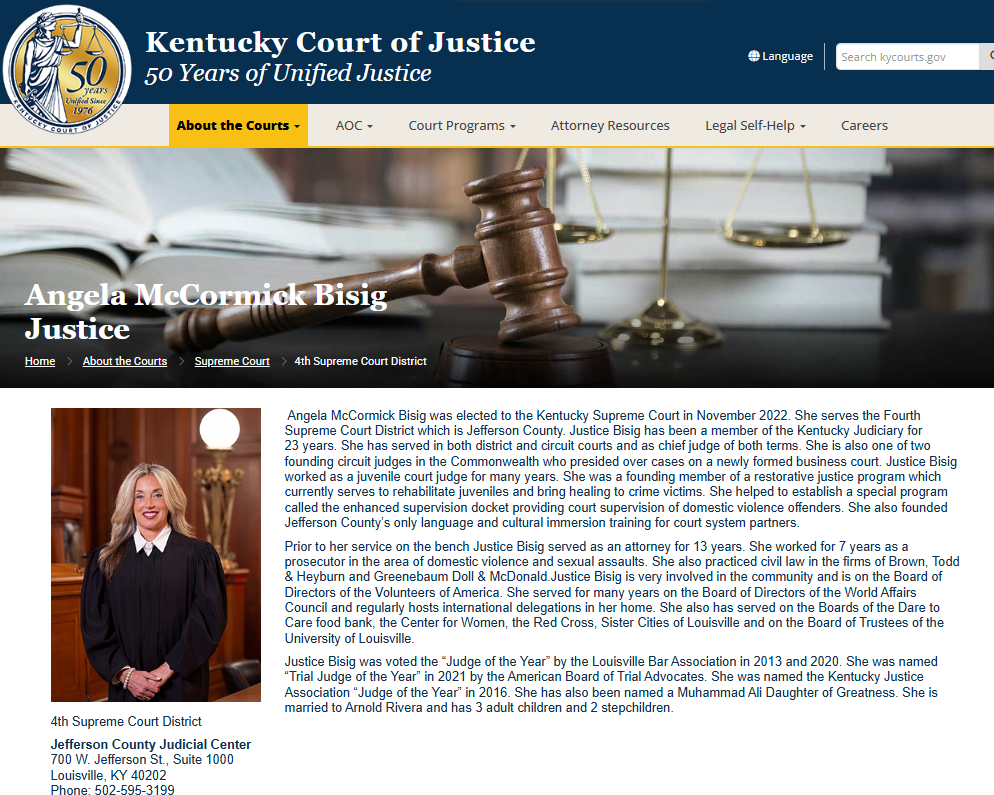
Today, Rotary Club of Louisville members had the privilege of hearing from Kentucky Supreme Court Justice Angela McCormick Bisig, one of only seven justices serving on the Commonwealth’s highest court. Justice Bisig represents the Fourth Supreme Court District, consisting solely of Jefferson County, making her responsible for the state’s largest county at the highest judicial level.
The Rotary Club of Louisville itself is one of the world’s largest Rotary clubs, bringing together hundreds of business, nonprofit, government, education, and civic leaders every week. The club describes itself as one of the largest among Rotary’s more than 45,000 clubs worldwide, providing members direct access to distinguished local, state, national, and international speakers.
For Louisville entrepreneur and Rotary member Di Tran, the luncheon was far more than another Thursday meeting.
“It was a lesson on the beauty of America’s system of government and why law matters.”
Rather than discussing politics, Justice Bisig explained the constitutional role of the judiciary—one of the three co-equal branches of government alongside the legislative and executive branches.
The explanation highlighted an important reality that many Americans may never fully appreciate.
The legislative branch creates laws.
The executive branch carries out and enforces those laws.
The judiciary does neither.
Instead, judges wait.
They do not search for cases.
They do not proactively investigate disputes.
They do not write new legislation.
They do not enforce regulations.
Their responsibility begins only when a real legal controversy is properly brought before the court.
Only then do judges carefully study the facts, hear both sides, apply the law as written, and when necessary, interpret areas where the law is reasonably open to more than one meaning.
This discipline is not weakness—it is one of the judiciary’s greatest strengths.
Its restraint helps ensure that every citizen, regardless of wealth, background, political influence, or status, stands equally before the law.
That quiet commitment to impartiality is one of the foundations of American liberty.
For Di Tran, an immigrant entrepreneur who deeply values the freedoms available in the United States, hearing this explanation directly from a sitting Kentucky Supreme Court justice carried special meaning.
“It reminded me that freedom is protected not only by those who make laws or enforce them, but also by those who patiently preserve justice through the rule of law.”
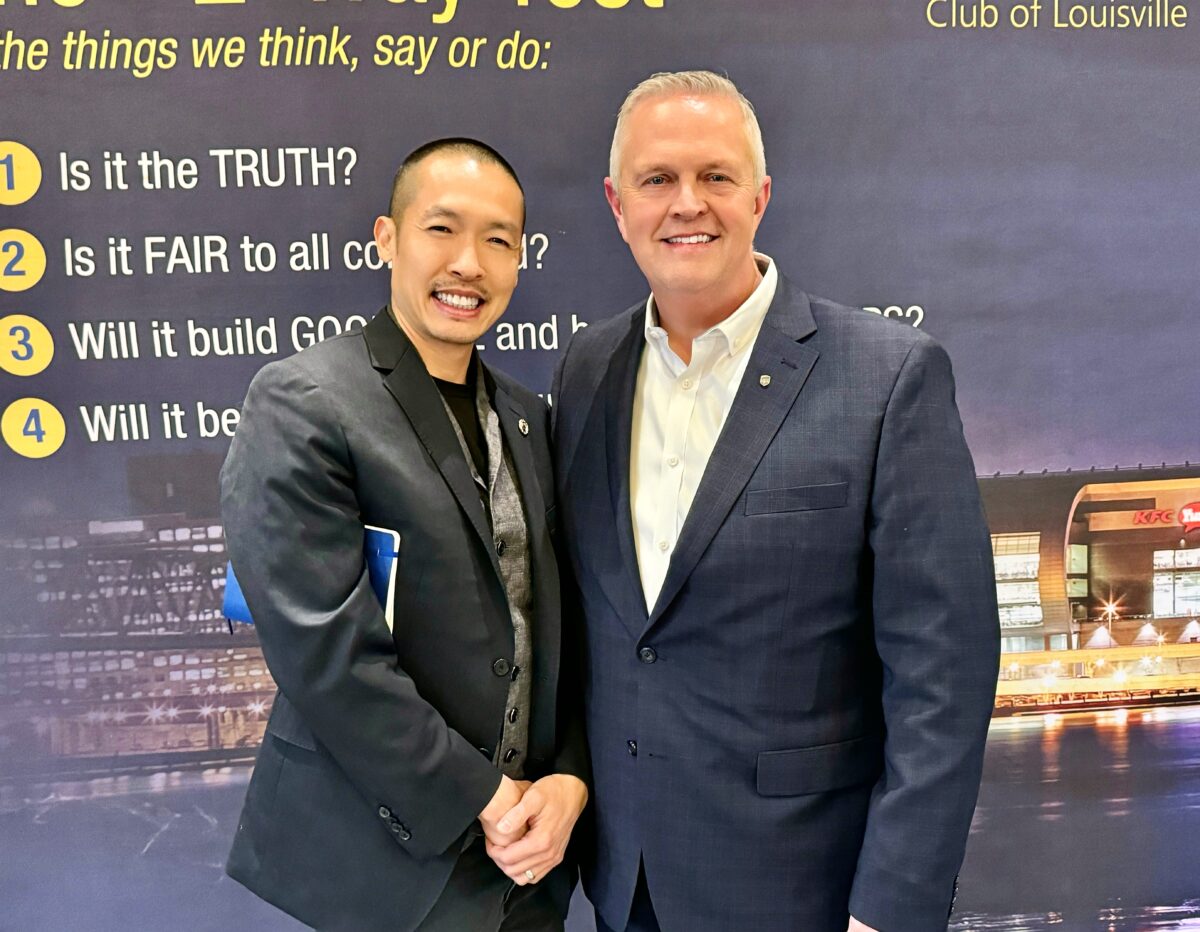
Following the presentation, Di Tran took a moment to thank Justice Bisig personally with a handshake—not because of politics or personal recognition, but out of appreciation for a civic lesson that reinforced the importance of constitutional government.
In an era when public attention often centers on conflict and division, today’s Rotary luncheon served as a reminder that some of the nation’s most important institutions work quietly, deliberately, and without seeking headlines.
The judiciary is designed to be reactive rather than proactive.
Its judges do not seek power; they exercise only the authority entrusted to them when a case comes before the court.
That restraint protects everyone.
As America reflects on 250 years of independence, events like this remind us that freedom depends not only on elections and legislation, but also on an independent judiciary committed to fairness, impartiality, and the rule of law.
Sometimes the most powerful lessons are delivered by those whose job is simply to listen, interpret the law faithfully, and ensure that justice belongs equally to every citizen.