Categories
Community Louisville

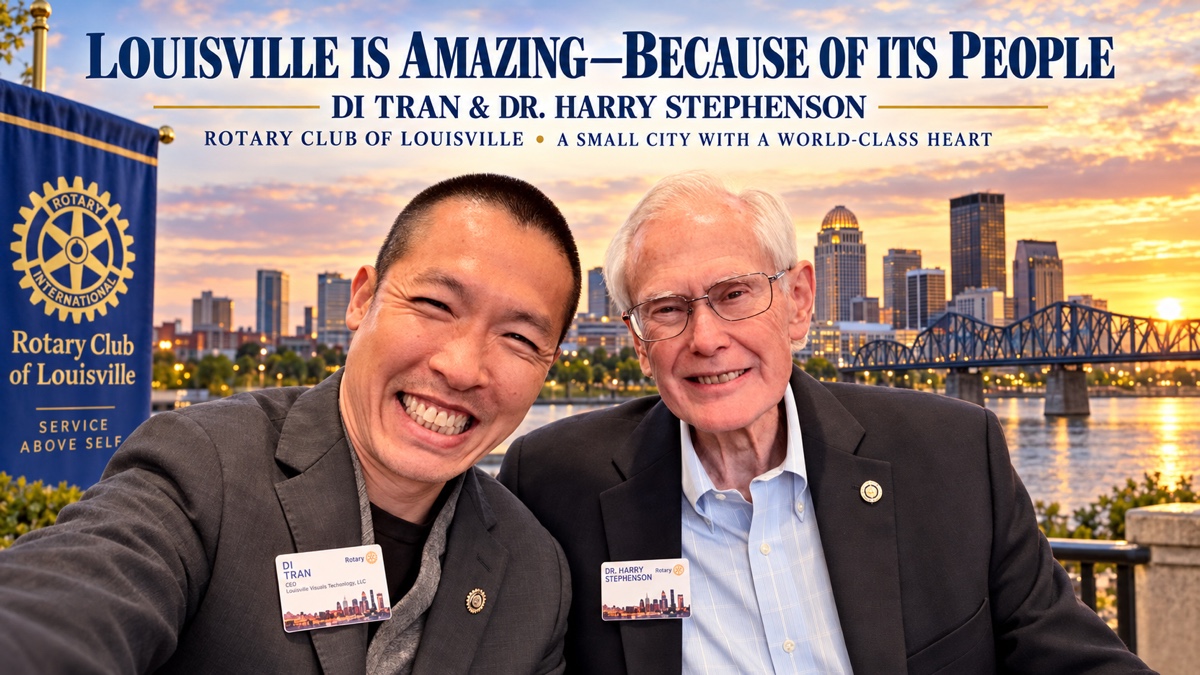
When You Sit Beside Greatness: Dr. Harry Stephenson, Rotary, and the Quiet Brilliance of Louisville

A reflection by Di Tran on proximity, service, education, and the beautiful human frequency of Kentucky

There are moments in life when you look around and quietly ask yourself: How did I get here?

I came to America with a heart full of dreams—dreams of education, knowledge, learning, service, and the possibility of becoming useful to others. I never imagined that one day, in Louisville, Kentucky, I would sit beside people whose lives had helped shape medicine, education, and communities.

Yet there I was, seated beside Dr. Harry C. Stephenson.

Dr. Harry is not a man who needs to announce his accomplishments. His life already speaks.

The University of Louisville documents his 48-year career in ophthalmology. He was a comprehensive ophthalmologist and cataract surgeon who performed Louisville’s first intraocular lens implant in 1974. He began serving as a volunteer faculty member at UofL in 1972, later joined the faculty full-time, and today is recognized among its emeritus faculty. His commitment to teaching continues through the Harry C. Stephenson, M.D. Visiting Professor Lecture Series and the conference center at UofL that bears his name.

In our personal conversation, Dr. Harry reflected on a career encompassing approximately 20,000 or more surgical cases. That lifetime figure is his recollection, not an independently audited count. But even without a number, the verified record is extraordinary: nearly five decades devoted to sight, patients, medicine, teaching, and service.

What moved me most, however, was not a title, a historic procedure, or a career total.

It was his immediate willingness to help.

As I have been learning about and engaging with Healing Hearts Vietnam, we discussed its work to expand access to life-saving cardiac care for Vietnamese families in need. Healing Hearts Vietnam reports that donors have helped fund more than 700 cardiac surgeries. When Dr. Harry heard about the mission, he did not hesitate. He listened, shared his perspective, and helped connect the conversation with cardiovascular expertise in Louisville—people who could understand the need and speak the same language of medicine, compassion, and service.

That is mentorship in its most human form. It is not simply giving advice. It is opening a door, sharing trust, and connecting good people to other good people so that a child or family may have a better chance.

Louisville: A Small City With a World-Class Heart

People sometimes speak of Louisville as a small city. I see something else: a city intimate enough for meaningful relationships and accomplished enough to influence the world.

Louisville’s medical legacy proves it. UofL Health documents more than 40 heart-care firsts, including Kentucky’s first open-heart surgery and first heart transplant, the world’s first AbioCor self-contained artificial-heart implantation, and the world’s first implantation of the Aeson bioprosthetic total artificial heart in a female patient. This is not simply local pride. It is a record of research, courage, teamwork, and lives changed.

Dr. Harry’s own 1974 breakthrough in eye care belongs to that same Louisville spirit: learn deeply, act carefully, serve people, and keep advancing what is possible.

The beauty of Louisville is not only in what has been invented here. It is in how knowledge travels through relationships. A conversation over lunch can become a mentorship. An introduction can become a collaboration. A local connection can someday help a child thousands of miles away.

Rotary and the Architecture of Human Connection

I am especially grateful to the Rotary Club of Louisville for creating a room where these encounters can happen.

Founded in 1912, the club describes itself today as the 12th largest among Rotary International’s more than 45,000 clubs worldwide, with almost 400 members. Those numbers are impressive, but the deeper value is found in Rotary’s ethic of Service Above Self.

Rotary places educators, physicians, entrepreneurs, nonprofit leaders, civic servants, and lifelong learners at the same tables. It allows a person like me—still learning, still building, still dreaming—to sit beside someone like Dr. Harry and discover that true greatness is often gentle, accessible, and generous.

Simply being in a room with people committed to service changes your sense of what is possible. When we repeatedly place ourselves near disciplined, compassionate, knowledge-seeking people, we begin to resonate with the same frequency. Their example invites us to raise our own standards. Their humility reminds us that achievement reaches its highest purpose when it is used for others.

Small Can Mean Agile—and Human

At today’s Rotary gathering, I also had the privilege of listening to Dr. Anne Kenworthy, the president of Spalding University. She spoke about artificial intelligence, education, and the ability of a smaller institution to move with agility in a rapidly changing world.

That message resonated deeply with me.

Spalding has already made AI literacy part of its commitment to students across disciplines, emphasizing responsible and ethical use in service of the greater good. This is the leadership education needs now. The future does not belong only to the biggest institutions or the loudest voices. It belongs to those willing to learn, adapt, remain human, and apply powerful tools responsibly to real problems.

Being small can be an advantage when it allows us to listen closely, decide thoughtfully, move quickly, and care personally. Technology should not make education colder. Properly guided, it can help us make education more accessible, useful, responsive, and human.

In one Rotary gathering, these ideas came together for me: Dr. Kenworthy speaking about agile, human-centered education; Dr. Harry embodying a lifetime of medical excellence and mentorship; Healing Hearts Vietnam working to help families access cardiac care; and Louisville itself standing quietly behind it all—a city with a global history of healing and innovation.

The Beauty of Kentucky Is Its People

I often ask myself what makes Kentucky beautiful.

Yes, it is the landscape, the traditions, and the history. But more than anything, it is the people who choose to serve.

The beauty of Kentucky is sitting next to a physician who has spent a lifetime caring for patients and still makes time to mentor another person.

It is a university president preparing students to meet technological change with ethics and courage.

It is a Rotary table where people from different professions and generations meet not merely to network, but to ask how they can help.

It is a small city with world-class medicine and a heart large enough to reach children in Vietnam.

To Dr. Harry Stephenson: thank you for your kindness, your mentorship, your introductions, and your continuing spirit of service.

To Dr. Anne Kenworthy: thank you for reminding us that agility, education, and human purpose belong together in the age of AI.

To the Rotary Club of Louisville: thank you for building the kind of room where service-minded people can find one another.

And to Louisville and the Commonwealth of Kentucky: thank you for reminding me again that a beautiful life is not measured only by what we achieve. It is measured by the people we learn from, the people we connect, and the lives we help lift.

Sometimes an amazing day begins simply by taking the seat beside you—and realizing that you are surrounded by greatness.


Verified Sources

Editorial note: The approximately 20,000-or-more surgical-case figure is attributed to Dr. Stephenson’s personal recollection as shared with Di Tran; it is not presented as an independently audited institutional statistic.
Categories
Small Businesses Workforce Development Workforce Education

Kentucky Supreme Court Justice Angela McCormick Bisig Inspires Di Tran and Rotary Club of Louisville with a Powerful Lesson on Freedom, the Rule of Law, and America’s Three Branches of Government

A Lesson in Freedom, Law, and the Quiet Strength of America’s Judiciary

As America celebrates its 250th year, conversations about freedom often focus on the nation’s founders, the Constitution, and the military men and women who have defended our country. Yet one of the greatest protectors of freedom is often the quietest institution of all—the judiciary.

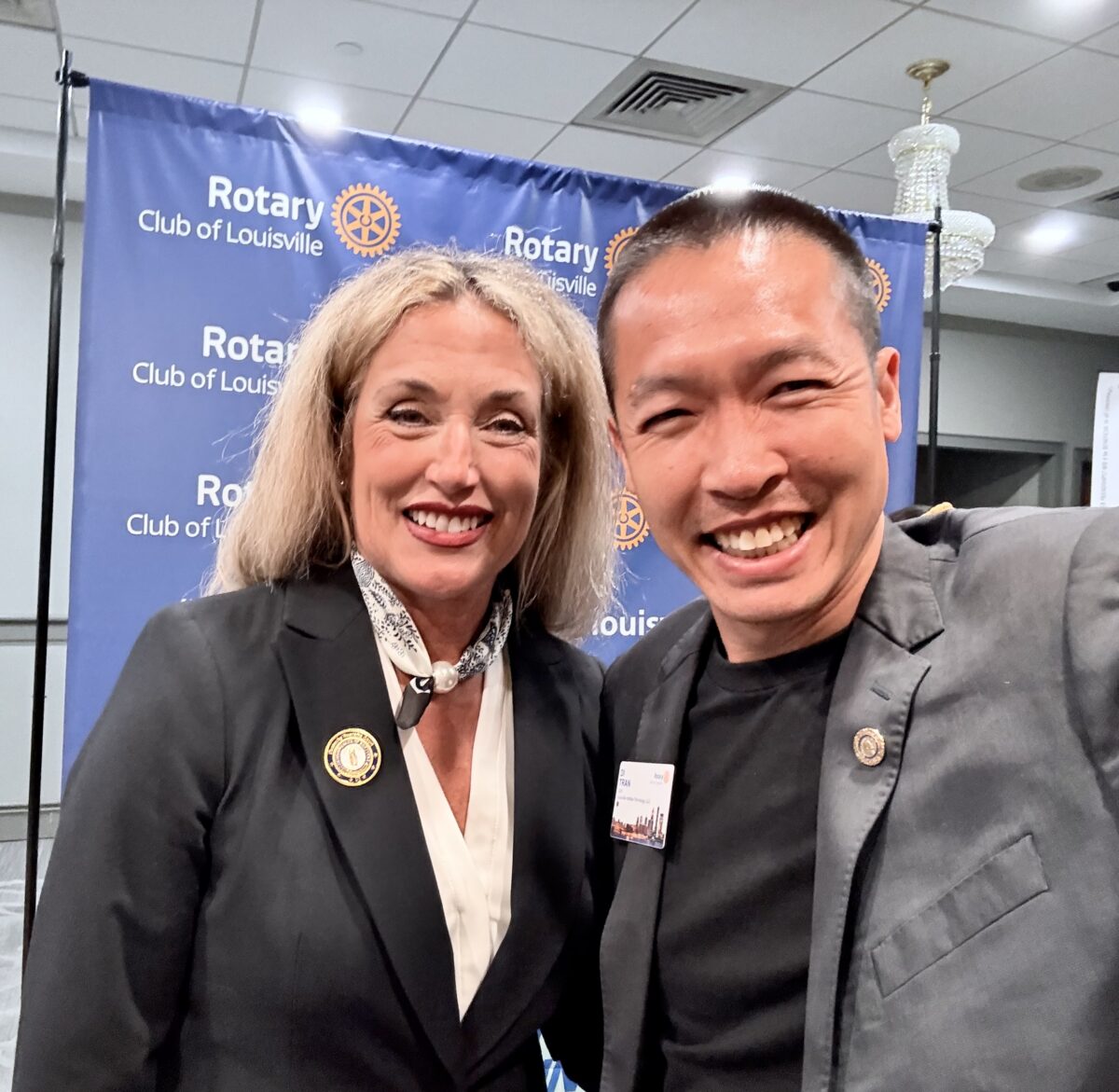
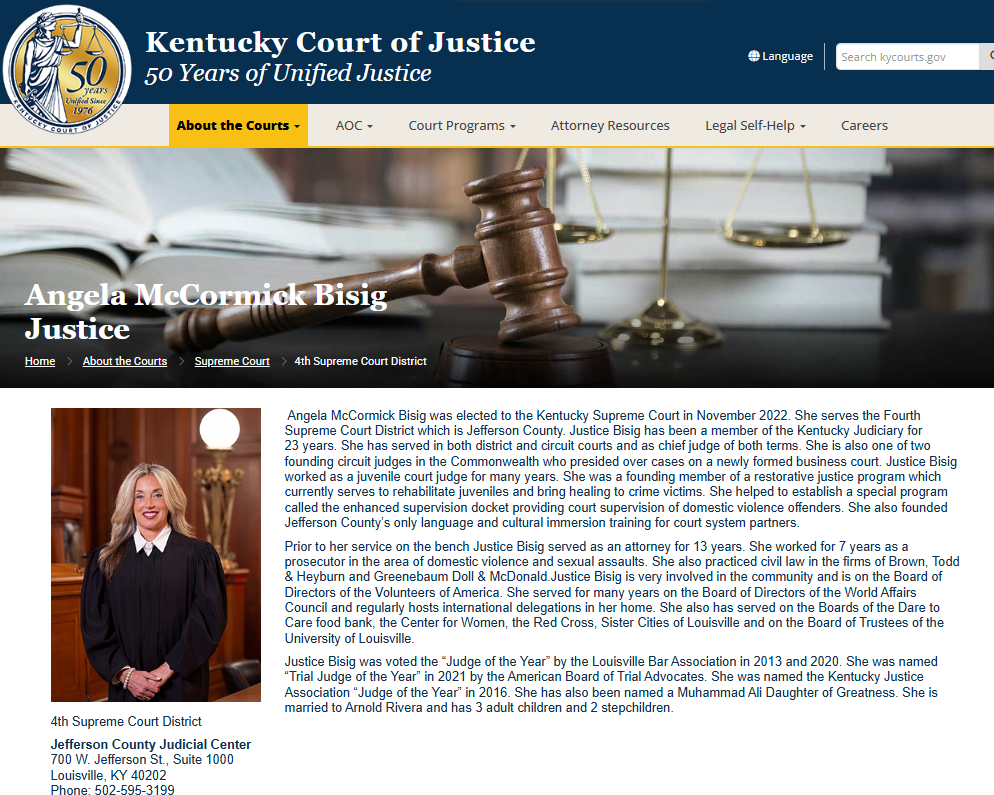
Today, Rotary Club of Louisville members had the privilege of hearing from Kentucky Supreme Court Justice Angela McCormick Bisig, one of only seven justices serving on the Commonwealth’s highest court. Justice Bisig represents the Fourth Supreme Court District, consisting solely of Jefferson County, making her responsible for the state’s largest county at the highest judicial level.

The Rotary Club of Louisville itself is one of the world’s largest Rotary clubs, bringing together hundreds of business, nonprofit, government, education, and civic leaders every week. The club describes itself as one of the largest among Rotary’s more than 45,000 clubs worldwide, providing members direct access to distinguished local, state, national, and international speakers.

For Louisville entrepreneur and Rotary member Di Tran, the luncheon was far more than another Thursday meeting.

“It was a lesson on the beauty of America’s system of government and why law matters.”

Rather than discussing politics, Justice Bisig explained the constitutional role of the judiciary—one of the three co-equal branches of government alongside the legislative and executive branches.

The explanation highlighted an important reality that many Americans may never fully appreciate.

The legislative branch creates laws.

The executive branch carries out and enforces those laws.

The judiciary does neither.

Instead, judges wait.

They do not search for cases.

They do not proactively investigate disputes.

They do not write new legislation.

They do not enforce regulations.

Their responsibility begins only when a real legal controversy is properly brought before the court.

Only then do judges carefully study the facts, hear both sides, apply the law as written, and when necessary, interpret areas where the law is reasonably open to more than one meaning.

This discipline is not weakness—it is one of the judiciary’s greatest strengths.

Its restraint helps ensure that every citizen, regardless of wealth, background, political influence, or status, stands equally before the law.

That quiet commitment to impartiality is one of the foundations of American liberty.

For Di Tran, an immigrant entrepreneur who deeply values the freedoms available in the United States, hearing this explanation directly from a sitting Kentucky Supreme Court justice carried special meaning.

“It reminded me that freedom is protected not only by those who make laws or enforce them, but also by those who patiently preserve justice through the rule of law.”

Following the presentation, Di Tran took a moment to thank Justice Bisig personally with a handshake—not because of politics or personal recognition, but out of appreciation for a civic lesson that reinforced the importance of constitutional government.

In an era when public attention often centers on conflict and division, today’s Rotary luncheon served as a reminder that some of the nation’s most important institutions work quietly, deliberately, and without seeking headlines.

The judiciary is designed to be reactive rather than proactive.

Its judges do not seek power; they exercise only the authority entrusted to them when a case comes before the court.

That restraint protects everyone.

As America reflects on 250 years of independence, events like this remind us that freedom depends not only on elections and legislation, but also on an independent judiciary committed to fairness, impartiality, and the rule of law.

Sometimes the most powerful lessons are delivered by those whose job is simply to listen, interpret the law faithfully, and ensure that justice belongs equally to every citizen.

Categories
Community

The Vietnamese Community Across the United States

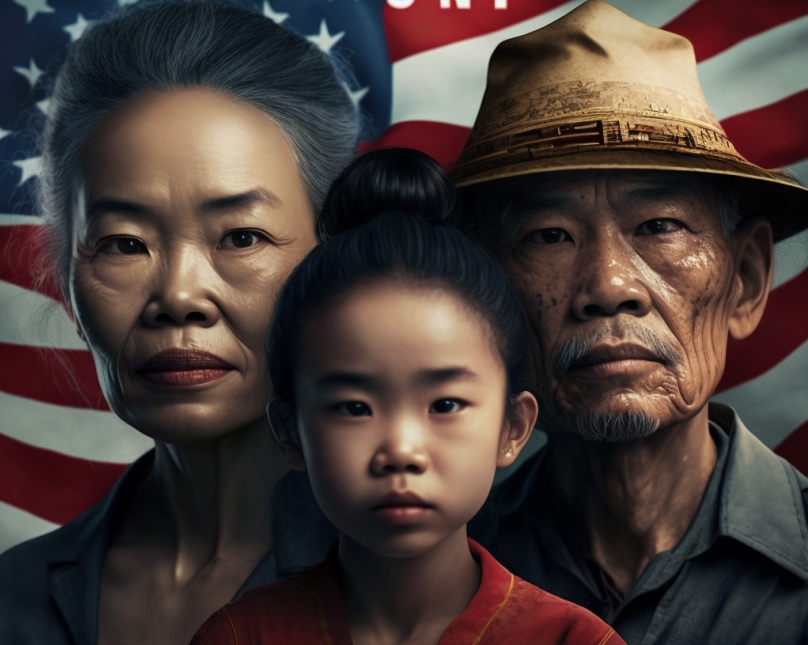
Vietnamese Americans are a growing ethnic group in the United States, with an estimated population of around 2 million as of 2021. They have a rich and diverse cultural heritage and have made significant contributions to American society in areas such as business, politics, and the arts. In this article, we will take a closer look at the Vietnamese community across the United States, their history, and their current situation.

History of Vietnamese Americans

The first wave of Vietnamese immigration to the United States began in the mid-1970s, after the fall of Saigon in 1975. Many Vietnamese fled their country to escape persecution, poverty, and war. The United States, as a result of its involvement in the Vietnam War, accepted refugees as part of its humanitarian efforts.

Over the years, the Vietnamese community in the United States has grown and become more established. They have formed vibrant communities, especially in cities such as Orange County, California, and Houston, Texas. In recent years, a second wave of Vietnamese immigration has taken place, driven by economic and political factors in their home country.

Current Situation

Today, the Vietnamese community in the United States is diverse, with members coming from a range of backgrounds and experiences. They have established a strong cultural presence, with many communities hosting festivals and events that showcase their cultural heritage. The community has also made significant contributions to the American economy, with many Vietnamese Americans owning small businesses and working in a variety of industries.

Despite these successes, the Vietnamese community has also faced a number of challenges. Many struggle with poverty, unemployment, and language barriers. The community has also faced discrimination and prejudice, especially during the early years of their immigration to the United States. However, Vietnamese Americans have overcome these challenges through hard work and perseverance, and they continue to make important contributions to American society.

The Vietnamese community in the United States has a rich and diverse cultural heritage, and has made important contributions to American society. Despite facing challenges, the community continues to grow and thrive, and its members are proud of their heritage and their place in American society. Through their perseverance, hard work, and determination, the Vietnamese community is a testament to the American Dream and the promise of a better life for those who are willing to work for it.

USA Vietnamese Population

As of 2021, the Vietnamese community is one of the fastest-growing Asian American communities in the United States, with a population estimated to be around 2 million. They are found in all 50 states and the District of Columbia, but the largest populations are in California, Texas, and Washington.

In California, the largest concentration of Vietnamese Americans can be found in the cities of Orange County, San Jose, and the Little Saigon neighborhood of Westminster. Texas is home to a large Vietnamese community in Houston and its suburbs, as well as in the Dallas-Fort Worth area. In Washington, the largest Vietnamese community is located in the Seattle metropolitan area.

There are also smaller Vietnamese communities in other states such as Virginia, Louisiana, and Massachusetts, among others. These communities often form around church communities, traditional markets, and small business centers, and play a significant role in supporting and sustaining the cultural heritage of the Vietnamese people in the United States.

Support the Vietnamese Community in Louisville, KY

Dear Community Members,

Viet Bao Louisville, KY is your source for news, events, and information about the Vietnamese community in Louisville. We strive to bring together our community, promote our culture and heritage, and help our community members connect and thrive.

To continue providing high-quality content and services, we need your support. We are looking for individuals and businesses to advertise with us and promote their products and services to the Vietnamese community in Louisville. By advertising with Viet Bao Louisville, KY, you not only support our magazine and help it grow, but you also reach a targeted audience and promote your business to a community that values cultural heritage and community connection.

In addition, we are always looking for community events and activities to feature in our magazine. If you have an event or activity that you would like to promote to the Vietnamese community in Louisville, please contact us at DiTran@gmai.com (Di Tran).

Thank you for your support and for being a part of the Vietnamese community in Louisville, KY. Together, we can continue to grow, connect, and thrive.

Sincerely,

Di Tran Viet Bao Louisville, KY

Categories
Workforce Development

Press Release: Editor, The Louisville Courier Journal – True Work-Ready for Day One Organizations in Louisville KY – Community Rise Back Effort – 03-10-2021

To:                  Editor, The Louisville Courier Journal

Date:               March 10, 2021

The leaders of Kentucky’s public community colleges raised an important and timely issue (“Will you be ready to go to work…” CJ, 3.8.2021) regarding the resources and support necessary to put Kentuckians back to work as the restrictions from the pandemic abate. The gap between available occupational, technical, and professional career opportunities and the workforce-ready talent to meet them has grown, not shrunk, in the last year. Lifting restrictions and opening in-person enterprises will unleash a tidal wave of pent-up demand that generates economic activity and wealth. The question is, who will benefit from that economic turbo-charge and for how long?

The emphasis on institutional diversity, equity and inclusion appropriately sets expectations that demand much more than status quo. Specifically, the DEI post-pandemic economy should benefit minority and low-income populations, and in a manner that is sustainable and long-term. The post-pandemic workforce and small business community in Louisville must reflect and support economic success and personal achievement by minorities, low-income individuals, immigrants, and those displaced by poor health, military service, and other social circumstances. Principles of diversity and inclusion are paramount.

Include Kentucky-based career colleges in the mix of institutions that are helping individuals re-train, re-skill and re-tool for employment and entrepreneurship post-pandemic. The Louisville Beauty Academy (www.louisvillebeautyacademy.net) and the Louisville Institute of Technology (www.louisvilleit.org) excel at providing on-time, immersive and true work-ready programs that prepare graduates for employment on day one.  Completers at LBA immediately go to work for nail and beauty salons because the training specifically ensures their success in earning Kentucky licensure. Likewise, successful apprentices at LIT can attain the Full-Stack Programmer “I Have Done It” certificate in three months. Employers in financial, healthcare, logistics and manufacturing are eager to put those IT professionals to work immediately, solving enterprise system deficiencies and delivering end-to-end interoperability that includes text-driven end user applications.

LIT and LBA programs are extremely specific to the workforce. They are typically shorter and more intense than programs offered at other institutions because they recognize the importance of timely completion and employment. They are highly hands-on, emphasizing practical real-time instruction. The programs are highly affordable and accessible in-person, on-line or in combination.

Community college leaders acknowledged that job-seekers post-pandemic are “most likely to enroll in a nondegree program or seek skills training.” That phenomenon is driven by the economic and entrepreneurial opportunities right around the corner. LBA and LIT are ideal complements to public post-secondary education. The diversity and inclusion principles apply to the academies’ ownership, staff, and student populations. It should also apply to the institutional diversity that is supported in our community to achieve the DEI economic boom that is so necessary.

Di Tran, CEO – Louisville Beauty Academy/Louisville Institute of Technology

References

Translate »