Categories
Culture Education Small Businesses Workforce Development Workforce Education

America at 250, Louisville at the Center: Vietnamese American Immigrant Di Tran Learns from 114 Years of Rotary and the Sons of the American Revolution

AMERICA AT 250  |  LOUISVILLE  |  SERVICE  |  MEMORY  |  AI

Standing on the Shoulders of Giants:
Di Tran Learns at Louisville’s 114-Year-Old Rotary Club

The 45th Rotary Club in the World – as SAR Tells the Future of America’s Story

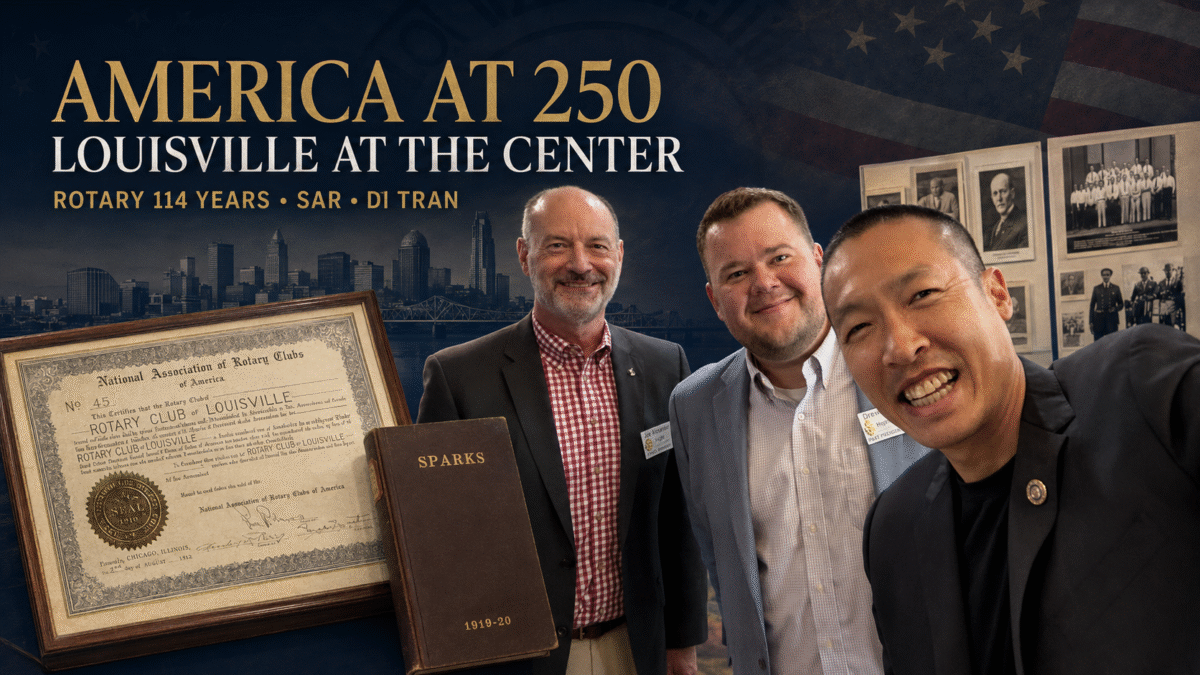
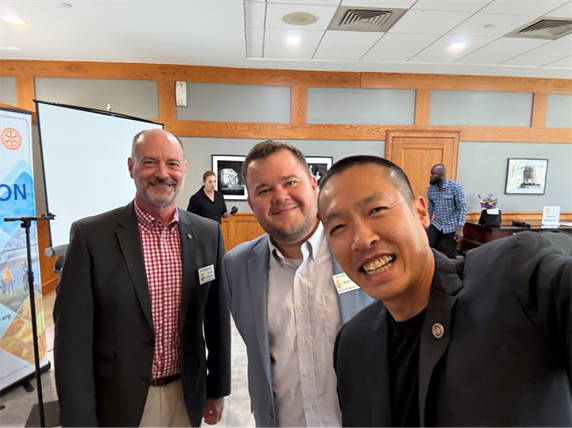
Di Tran with Joe Alexander and Drew Hight following the July 23, 2026 SAR presentation at the Rotary Club of Louisville.

A first-person civic reflection by Di Tran

Rotary Club of Louisville | University Club of Louisville | July 23, 2026

A Lunch, a Charter, and a Century of Pages

At lunch today, I sat inside the University Club of Louisville surrounded by business, professional, educational, and civic leaders. I have been a member of the Rotary Club of Louisville since 2019, yet I still enter these meetings as a student. Every chair can hold a teacher. Every conversation can reveal another layer of the city. Every preserved record can remind us that the institutions we inherit were built through years of work that most of us never witnessed.

The program was called “The SAR and the Future of America’s Story.” Joe Alexander, MPA, Interim Director of the SAR Education Center and Museum, and Drew Hight, Marketing and Public Relations Manager for the National Society of the Sons of the American Revolution, spoke about Revolutionary memory, education, national impact, and the developing museum on Louisville’s Museum Row. [1]

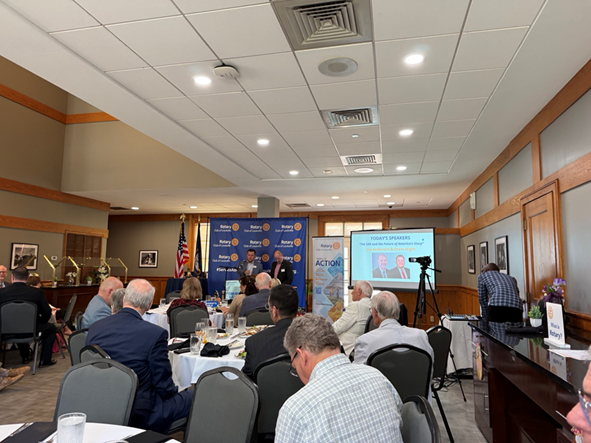
The July 23 luncheon at the University Club of Louisville as Joe Alexander and Drew Hight prepare to present “The SAR and the Future of America’s Story.”

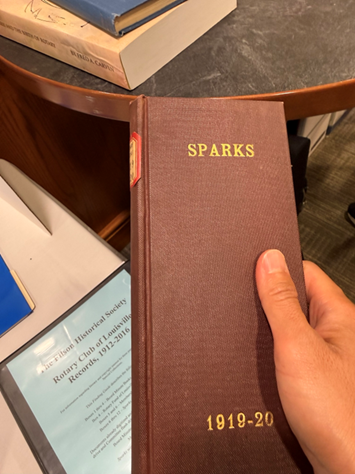
Then the afternoon became more personal. I stood beside the displayed 1912 Louisville Rotary charter. I saw portraits of Paul Harris and Louisville’s early club leaders. I examined rosters, correspondence, photographs, and annual records. Most strikingly, I held a hardbound volume marked SPARKS 1919-20. Its cloth cover, gold letters, aging paper, and carefully preserved pages made time feel physical.

In one hand was a century-old communication archive. In my pocket was a smartphone capable of reaching the world. Between those two objects was the entire transformation of modern communication – from print and physical delivery to websites, social platforms, multimedia, automation, and artificial intelligence.

The technology changed almost beyond recognition. The human purpose did not: connect people, share knowledge, preserve memory, strengthen relationships, and inspire action.

A Vietnamese American Living the Continuing American Story

I am a Vietnamese American immigrant. I am Vietnamese by heritage and American through citizenship, gratitude, responsibility, work, and daily contribution. I celebrate American freedom not only on holidays and not only through words. I celebrate it by using it.

Freedom gives me room to learn, build, teach, write, create businesses, develop educational opportunities, help people pursue occupational licenses, and share knowledge. Through Louisville Beauty Academy, Di Tran University, and other community work, I try to convert freedom into useful action. Opportunity is a gift, but a gift becomes meaningful when it produces value for someone beyond oneself.

I do not claim a documented Revolutionary Patriot bloodline. I may not descend from the Patriots remembered by SAR. But I live inside the freedom their sacrifices helped establish. That freedom gives me more than opportunity; it gives me responsibility.

Ancestry tells one kind of American story. Service, citizenship, responsibility, and contribution write the next chapter.

That is why today’s presentation moved me. I was not looking at history as something owned only by descendants. I was looking at an inheritance of institutions and ideals that every generation must either strengthen or neglect. My duty is not to pretend that I created the platform beneath me. My duty is to understand it, honor what is worthy, improve what remains incomplete, and add one useful layer for the next person.

America at 250: A Young Nation on Ancient Land

On July 4, 2026, the United States marked 250 years since the adoption of the Declaration of Independence. The Declaration announced the colonies’ separation from Great Britain and articulated ideals of equality, unalienable rights, consent, and liberty. The Constitution came later. Signed in 1787, it established the federal framework intended to form “a more perfect Union.” Independence and the Constitution belong to the same founding story, but they are not the same event. [8][9]

The United States is therefore only 250 years old as an independent nation – young compared with many civilizations. In that sense, America is still a young nation, still learning, still correcting, still extending its promise, and still being written by each generation.

But the land is not 250 years old, and human history here did not begin in 1776. Indigenous peoples and sovereign Native nations lived throughout the Americas for thousands of years before European arrival. They possessed complex governments, cultures, economies, languages, spiritual traditions, and relationships to the land. Any honest celebration of America must begin with that truth. [10]

Christopher Columbus reached the Caribbean in 1492 and encountered established Indigenous peoples, including the Taino. He remained convinced that he had reached lands associated with Asia. That misunderstanding helped produce European labels such as “Indian,” but Columbus was not the founder of the United States and did not discover an empty continent. Careful language matters because dignity and historical accuracy matter. [11]

America Is a Fabric Woven Through Many Kinds of Arrival

It is tempting to say that everyone in America is an immigrant. The spirit behind that statement is unity, but the literal history is more complicated. Indigenous peoples are the first peoples of these lands. Many later people arrived voluntarily as settlers or immigrants. Many Africans were transported forcibly through slavery and were not voluntary immigrants. Refugees came seeking safety. Some communities became part of the United States through territorial expansion rather than by crossing a modern border. Millions were born here while carrying family histories rooted elsewhere.

A more accurate unity is this: not every American is an immigrant, but nearly every American story is connected to a larger history of movement, inheritance, survival, encounter, sacrifice, and contribution.

Unity does not require us to flatten those histories into sameness. Unity asks us to face them honestly and then decide what responsibility we share now. A true American is not defined only by where an ancestor stood. A true American protects freedom, respects human dignity, works, serves, contributes, and helps leave the nation stronger, freer, more beautiful, and more humane.

SAR: Lineage Joined to Education and Service

The National Society of the Sons of the American Revolution is about the American Revolution and the War for Independence – not the Civil War. Founded in 1889, SAR is a nonprofit, nonpartisan, congressionally chartered lineage society devoted to patriotism, historical preservation, education, genealogy, and service. Its congressional purposes include preserving the memory and records of Revolutionary service, encouraging research, protecting landmarks, and fostering American freedom. [4][5]

Membership belongs to men who can document direct bloodline descent, through either side of the family, from an ancestor who performed recognized service supporting the cause of American independence. The ancestor did not necessarily have to be a soldier. Qualifying service can include military, civil, financial, logistical, political, or other documented support. A qualifying Patriot ancestor can be a man or a woman. [6]

This is the key line: SAR members living today are direct descendants of people who helped America become an independent nation.

In its America250 partnership announcement, SAR reported nearly 600 chapters and approximately 38,000 members. Its national headquarters and Genealogical Research Library stand at 809 West Main Street in Louisville. The organization moved its national headquarters to Louisville in 1979. Its developing Education Center and Museum is intended to expand access for students, educators, researchers, visitors, and the public. [4][7][13]

That makes Louisville more than the site of a local historical organization. Louisville is the national home from which this Revolutionary history is researched, protected, interpreted, and shared.

Louisville Does Not Merely Observe the National Story

Louisville often introduces itself through the Kentucky Derby, bourbon, Muhammad Ali, manufacturing, medicine, food, and the Ohio River. Today’s luncheon revealed another identity: Louisville as a keeper and distributor of national memory.

The SAR national headquarters, research library, and developing Education Center and Museum give Louisville a direct role in America’s 250th anniversary and the continuing interpretation of the founding era. At the same time, the Rotary Club of Louisville connects local leaders to a global service movement.

Louisville does not merely preserve local history. From Louisville, American history is preserved and shared with the nation.

Rotary Club No. 45: One of the Movement’s Earliest Clubs

Rotary began in Chicago in 1905 under the leadership of attorney Paul P. Harris, who imagined fellowship among professionals and businesspeople that could grow into service. Rotary International today describes a global network of more than 1.2 million people connected through more than 45,000 clubs in almost every country. [3]

Louisville entered that movement very early. In late 1911, Truman McGill, C.H. Hamilton, and Frank B. Jones independently contacted Rotary headquarters after learning about the organization. With encouragement from Rotary founder Paul Harris and General Secretary Chesley Perry, local organizers gathered leaders, drafted bylaws, recruited members, and prepared an application. Lawrence L. Anderson became the first club president. [2]

The original charter is dated July 23, 1912. The club’s history records that the charter arrived July 24 and that a Charter Day meeting followed July 26. With 38 charter members, the Rotary Club of Louisville became the 45th Rotary club in the world. July 23, 2026 therefore marked 114 years from the charter date. [2]

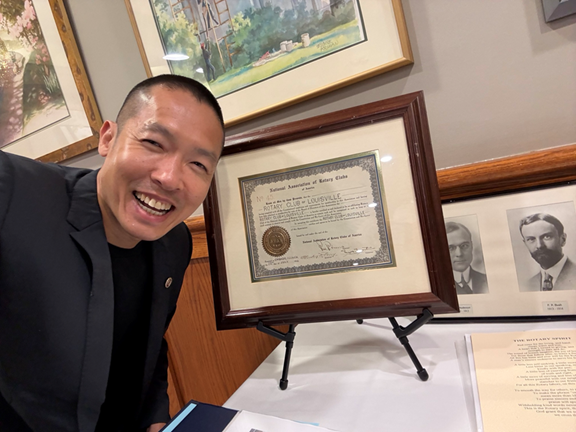
Di Tran beside the Rotary Club of Louisville’s historic 1912 charter, identifying Louisville as Rotary Club No. 45.

Today the club describes itself as having almost 400 members and being the 12th largest among Rotary International’s 45,000-plus clubs. Those rankings can change, but the club’s present scale and its 114-year continuity are remarkable. [1]

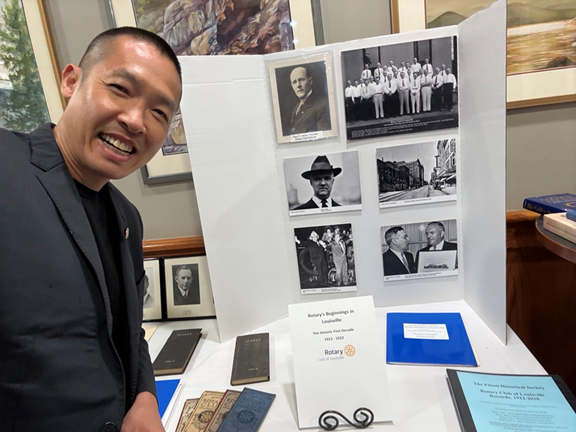
The exhibit did not show that every Rotary founder was physically present in Louisville. It showed the founder of Rotary International, Paul Harris, alongside Louisville’s local pioneers, early presidents, charter members, correspondence, and institutional records. That distinction matters. Global movements need founders, but they also need local builders willing to turn an idea into a durable institution.

SPARKS: A Social Network Before Scheduled Commercial Radio

The object that connected everything for me was SPARKS. The Rotary Club of Louisville published its first issue in September 1913 as a biweekly bulletin. Its purpose was relationship: helping each Rotarian know other members by face, name, profession, and business. Issues carried sketches of members and their work, club information, civic concerns, and the communication necessary to hold a growing organization together. [2]

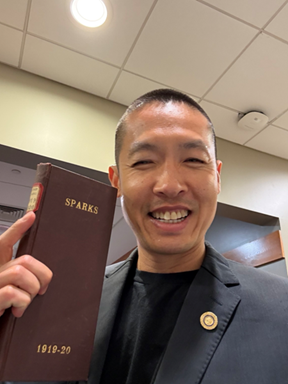
Di Tran holds a bound SPARKS volume from 1919-1920, an annual archive of the Rotary Club of Louisville’s early communication system.

SPARKS later became weekly in 1927, and by 1929 issues could contain 12 or more pages. During the Great Depression, leaders considered canceling it because of financial pressure. Instead, they reduced pages and required advertising to cover publication costs. The hardbound volumes displayed today appear to be annual archival collections of separate issues, not evidence that every issue was individually distributed as an expensive hardcover. [2]

Close view of the bound SPARKS 1919-1920 archival volume.

The timeline is astonishing. SPARKS began in 1913. The first scheduled commercial radio broadcast generally recognized by the Federal Communications Commission occurred on November 2, 1920, when KDKA transmitted presidential election returns from Pittsburgh. Experimental wireless technology existed earlier, so it would be inaccurate to say SPARKS came before all radio. But SPARKS circulated seven years before regular scheduled commercial broadcasting. [12]

Before radio broadcasting, television, computers, email, search engines, websites, social media, smartphones, and artificial intelligence, Louisville Rotarians built a professional and civic information network using ink, paper, type, printing, and physical distribution.

SPARKS was a bulletin, a business directory, a community record, a relationship platform, and a physical social network.

From Ink and Paper to Algorithms and Automation

The comparison immediately reached into my daily life. Today I use artificial intelligence to conduct deep research, organize complex information, draft and refine articles, and transform knowledge into different formats. A single researched idea can become a complete article, a short post, a photograph with a caption, a graphic, a video, an audio program, or an educational resource.

My websites can function as long-term archives. Automation can distribute material across multiple social-media channels. Text, image, audio, and video can travel almost instantly to readers far beyond Louisville. Work that once required separate teams, printing equipment, physical delivery, and days or weeks of effort can now be accelerated dramatically.

The progression is almost unbelievable: SPARKS to radio; radio to television; television to websites; websites to search and social media; social media to smartphones; smartphones to generative AI and automated multimedia distribution.

But speed is not wisdom. Automation is not conscience. The machine can accelerate research and distribution, but the human being remains responsible for truth, context, dignity, purpose, and consequences. I believe AI should increase human capacity without removing human review.

In that sense, what I am building today is not disconnected from SPARKS. It is a modern continuation of the same communication spirit: learn who people are, understand their work, share useful information, strengthen relationships, document service, and move a community toward action.

Di Tran with the exhibit “Rotary’s Beginnings in Louisville: The Historic First Decade, 1912-1922.”

Distribution Wins Attention; Preservation Earns Meaning

The century-old volume in my hands also delivered a warning. Social-media posts can disappear into feeds, changing algorithms, closed accounts, or lost platforms. What feels permanent today can become inaccessible tomorrow.

SPARKS survived because people preserved it. Someone gathered the issues. Someone bound them. Someone labeled the years. Someone protected the volumes. Someone eventually placed them where another generation could discover them.

That is why websites should serve as canonical archives, not merely promotional pages. Social media can distribute and invite. AI can accelerate research and adaptation. But important photographs, documents, dates, citations, and stories must be preserved in durable, searchable systems.

Distribution wins attention today. Preservation earns meaning across generations.

Freedom Is Not Free – and It Is Never Finished

Freedom is not free. The Revolutionary generation paid for independence through courage, risk, labor, loss, military service, civil service, material support, and sacrifice. Later generations struggled over slavery, emancipation, citizenship, voting, civil rights, labor, education, equality, and the meaning of the Constitution.

To love America honestly is not to pretend that every chapter was perfect. Love without truth becomes mythology. Criticism without gratitude becomes emptiness. Responsible patriotism can hold gratitude and honesty together: appreciation for the ideals, recognition of the failures, and determination to help form a more perfect Union.

Freedom survives through institutions, laws, education, service, democratic participation, economic opportunity, and the character of ordinary people. It must be practiced. It must be protected. It must be extended. It must be made useful in the life of another human being.

For me, that practice is daily. Work hard. Learn. Build. Teach. Serve. Create an opportunity. Help someone gain a skill or license. Preserve a story. Use technology responsibly. Add value. Elevate one life at a time.

Standing on the Shoulders of a Giant Family

I often think of the people before us as a giant family. The giants are not only famous founders whose portraits hang on a display. They include Indigenous knowledge keepers, Revolutionary Patriots, Constitution builders, abolitionists, educators, veterans, civil-rights leaders, immigrants, refugees, workers, entrepreneurs, scientists, archivists, parents, civic volunteers, and ordinary people who served without receiving public recognition.

Standing on their shoulders does not mean worshiping the past or pretending earlier generations were flawless. It means learning from what they built, correcting what they got wrong, protecting what remains valuable, and creating a stronger platform for those who come next.

I am not the giant. I am a student standing on what giants before me built. My responsibility is to add one useful layer so the next person can stand higher.

SAR preserves documented service that helped create independence. Rotary converts fellowship into organized service. SPARKS preserved relationships and civic memory. Louisville provides a home where local work meets national history. Immigrants and later generations continue building upon inherited freedom. AI gives us extraordinary tools to research, create, preserve, and distribute. None of these matters without human responsibility.

What I Carried Home

I left the luncheon without taking a historical artifact. Those objects belong to the institution and to the public memory they protect. But I carried away something heavier: responsibility.

I looked at the SPARKS volume, and then at the smartphone in my hand. One preserved a civic network through ink and paper. The other can reach the world within seconds. Both depend on the intention and character of the person using them.

Today, America is 250 years old as an independent nation. The Rotary Club of Louisville is 114 years old, chartered as the 45th club in a movement that now spans more than 45,000 clubs. SAR’s national headquarters in Louisville preserves the documented lineage and sacrifice behind American independence. And I, a Vietnamese American immigrant, am blessed to sit among these histories, learn from them, and contribute my daily work to the continuing American story.

We are not here merely to inherit freedom. We are here to make freedom fruitful. We are here to elevate one another through work, learning, service, courage, and daily value creation. We are here to stand on the shoulders of giants – and then become a steady shoulder for someone else.

YES I CAN -> I HAVE DONE IT -> YES, YOU WILL. Elevate one life at a time.

Fact Box: A Timeline Connecting the Day

YearMilestone
1492Columbus reached the Caribbean and encountered established Indigenous peoples, including the Taino; he believed he had reached lands associated with Asia.
1776The Declaration of Independence was adopted on July 4.
1787The U.S. Constitution was signed on September 17, establishing the federal framework.
1889The National Society of the Sons of the American Revolution was founded.
1905Paul P. Harris founded Rotary in Chicago.
1912The Rotary Club of Louisville received Charter No. 45, dated July 23, with 38 charter members.
1913The first issue of the Louisville club’s biweekly SPARKS bulletin appeared in September.
1920KDKA transmitted the first scheduled commercial radio broadcast generally recognized by the FCC on November 2.
1979SAR moved its national headquarters to Louisville.
2026America marked 250 years since the Declaration; the Louisville club marked 114 years; Joe Alexander and Drew Hight presented “The SAR and the Future of America’s Story.”

Photograph Captions and Accessibility Alt Text

1. 0F1C55EF…jpeg / BFD83B54…jpeg

Caption: Di Tran with Joe Alexander and Drew Hight following the July 23, 2026 SAR presentation at the Rotary Club of Louisville.

Alt text: Joe Alexander and Drew Hight stand with Di Tran after the SAR presentation at the Rotary Club of Louisville.

Publishing note: The BFD file is an exact duplicate of the 0F1 file; publish only one.

2. 76733F5D…jpeg

Caption: The July 23 Rotary Club of Louisville luncheon as Joe Alexander and Drew Hight prepare to present “The SAR and the Future of America’s Story.”

Alt text: Rotary members seated at luncheon tables while the SAR program appears on a presentation screen.

3. 0BEF3C2D…jpeg

Caption: Di Tran holds a bound SPARKS volume from 1919-1920, connecting Louisville Rotary’s early print network with today’s AI-powered communication.

Alt text: Di Tran smiles while holding a brown hardbound volume labeled SPARKS 1919-20.

4. 68D3E0E0…jpeg

Caption: A close view of the preserved SPARKS 1919-1920 annual volume.

Alt text: A brown clothbound book with gold lettering reading SPARKS 1919-20.

5. D661902E…jpeg

Caption: Di Tran explores “Rotary’s Beginnings in Louisville: The Historic First Decade, 1912-1922.”

Alt text: Di Tran stands beside an exhibit containing Paul Harris, Louisville Rotary photographs, early books, and archival records.

6. 13615760…jpeg

Caption: Early Rotary Club of Louisville membership rosters preserve the names and professional network of the club’s first decade.

Alt text: Four narrow early Rotary Club of Louisville roster booklets dated between 1918 and 1922.

7. 61A87CE4…jpeg

Caption: Portraits of early Louisville Rotary presidents displayed with a 1916-1917 SPARKS volume and the poem “The Rotary Spirit.”

Alt text: Four framed portraits of early Rotary leaders above a historical poem and a black SPARKS 1916-17 volume.

8. 16D1A1F9…jpeg

Caption: Di Tran beside the Rotary Club of Louisville’s historic 1912 charter, identifying Louisville as Rotary Club No. 45.

Alt text: Di Tran smiles beside the framed 1912 Rotary Club of Louisville charter displayed on an easel.

9. 307B35C2…jpeg

Caption: Typewritten correspondence and archival records reveal the manual labor behind early institutional communication.

Alt text: A collection of preserved typewritten pages and letters displayed in archival sleeves beside Rotary history materials.

10. 95cf2281…png

Caption: Rotary Club of Louisville announcement for the July 23 presentation by Joe Alexander and Drew Hight.

Alt text: Meeting announcement showing Joe Alexander, Drew Hight, and the program title “The SAR and the Future of America’s Story.”

11. 2745b8e5…png

Caption: The club’s July 23 anniversary notice recognizing the 1912 charter and Louisville’s place as Rotary Club No. 45.

Alt text: Anniversary notice beside an image of the Rotary Club of Louisville’s 1912 charter.

12. unnamed (25).png

Caption: Full view of the Rotary Club of Louisville charter dated July 23, 1912.

Alt text: Scanned historical charter for Rotary Club of Louisville, numbered 45 and dated July 23, 1912.

Publication and SEO Package

Five Alternative Titles

  1. Before Radio, There Was SPARKS: Di Tran Connects 114 Years of Louisville Rotary, SAR, and the AI Age
  2. America at 250, Louisville at the Center: A Vietnamese American Learns from Rotary No. 45 and SAR
  3. From SPARKS to Artificial Intelligence: Di Tran Reflects on Freedom, Service, and Louisville’s National Story
  4. Rotary No. 45 Meets America250: Di Tran on SAR, Immigration, Archives, and Daily Contribution
  5. A Century of Service and Storytelling: Di Tran Stands on the Shoulders of Louisville’s Civic Giants

Refined Subtitle

At a July 23 luncheon, a Vietnamese American immigrant connects America at 250, Louisville’s national importance, Revolutionary memory, 114 years of Rotary service, SPARKS before radio, and AI-powered storytelling today.

SEO Metadata

FieldRecommended Text
Meta descriptionDi Tran connects SAR, America250, Louisville Rotary’s 114-year history, SPARKS before radio, immigration, service, and AI storytelling.
WordPress slugstanding-on-shoulders-giants-di-tran-rotary-louisville-sar-america250
AuthorDi Tran
Event dateJuly 23, 2026
LocationUniversity Club of Louisville, Louisville, Kentucky

Article Excerpt

At a July 23 luncheon of the Rotary Club of Louisville, Di Tran encountered three histories at once: America celebrating 250 years of independence, the National Society of the Sons of the American Revolution preserving the founding story from its Louisville headquarters, and one of Rotary’s earliest clubs marking 114 years since becoming Rotary Club No. 45. Holding a bound SPARKS volume from 1919-1920, Tran recognized an unexpected connection to his own daily use of artificial intelligence, websites, multimedia, and automated social distribution. SPARKS began in 1913 – seven years before scheduled commercial radio – as Louisville Rotary’s printed relationship and civic-information network. For Tran, a Vietnamese American immigrant, the moment became more than nostalgia. It became a meditation on freedom, ancestry, service, archives, and responsibility. We do not honor inherited freedom by merely consuming it, he argues, but by making it fruitful through work, learning, contribution, and the elevation of others.

SEO Keywords

  • Di Tran Rotary Club of Louisville
  • Rotary Club of Louisville 114 years
  • 45th Rotary club in the world
  • Sons of the American Revolution Louisville
  • SAR Education Center and Museum
  • America250 Louisville Kentucky
  • SPARKS Rotary newsletter 1913
  • Vietnamese American civic leadership
  • AI research and automated publishing
  • Louisville Museum Row American history

Facebook Post – Under 1,500 Characters

STANDING ON THE SHOULDERS OF GIANTS

Today at the Rotary Club of Louisville, I learned from Joe Alexander and Drew Hight of the National Society of the Sons of the American Revolution.

America is only 250 years old as an independent nation. SAR preserves the stories of Patriots who supported the fight for independence, and its national headquarters is here in Louisville.

Today also marked 114 years since the Rotary Club of Louisville’s 1912 charter. Louisville became Rotary Club No. 45 in the world and is now identified as the 12th largest among 45,000+ clubs.

The most powerful moment was holding a bound SPARKS volume from 1919-1920. SPARKS began in 1913 – before scheduled commercial radio – to connect members, share ideas, and document service.

Today, I use AI for deep research, writing, websites, pictures, video, text, and automated distribution. The technology changed, but the purpose remains: connect people, preserve knowledge, and inspire action.

As a Vietnamese American immigrant, I may not descend from Revolutionary Patriots, but I benefit from the freedom they helped establish. My responsibility is to honor it through daily work, service, and contribution.

We stand on the shoulders of giants so we can become a shoulder for someone else.

#RotaryClubOfLouisville #SAR #America250 #Louisville #ServiceAboveSelf #ElevateOneAtATime

LinkedIn Post

Today brought together 250 years of American independence, 114 years of Louisville Rotary history, and the future of AI-powered communication.

At the Rotary Club of Louisville, Joe Alexander and Drew Hight presented “The SAR and the Future of America’s Story.” SAR honors documented descendants of those who supported American independence, and its national headquarters and Genealogical Research Library are located on Louisville’s Museum Row.

The same day marked 114 years from the Louisville club’s July 23, 1912 charter. It became Rotary Club No. 45 in the world and today describes itself as the 12th largest among Rotary International’s 45,000+ clubs.

I held a bound SPARKS volume from 1919-1920. SPARKS began in 1913 as the club’s biweekly bulletin – seven years before scheduled commercial radio. It connected people, explained businesses, documented service, and preserved institutional memory.

Today I use AI for deep research, long-form writing, multimedia creation, website publication, and automated social distribution. The tools are different, but the purpose is familiar: connect people, share knowledge, preserve history, and move communities toward action.

As a Vietnamese American immigrant, I do not claim a Revolutionary bloodline. I do claim the responsibility to make inherited freedom fruitful through work, education, service, and daily value creation.

Standing on the shoulders of giants means adding one useful layer so the next person can stand higher.

X Post – 280 Characters

At Louisville Rotary – chartered in 1912 as the world’s 45th club – I held SPARKS, its print network launched in 1913 before commercial radio. Today I use AI to research, publish and share. Tools change; the duty remains: learn, serve, preserve and elevate.

Instagram Caption

From SPARKS in 1913 to AI in 2026.

Today I learned about SAR, America at 250, and 114 years of the Rotary Club of Louisville – the 45th Rotary club chartered in the world.

The technology changes. The responsibility does not: learn, preserve, serve, contribute, and elevate others.

#Louisville #Rotary #SAR #America250 #ServiceAboveSelf #AI #ElevateOneAtATime

YouTube or Podcast Description

Di Tran reflects on a remarkable July 23, 2026 luncheon at the Rotary Club of Louisville. The day connected the SAR presentation “The SAR and the Future of America’s Story,” America250, Louisville’s role as SAR’s national headquarters, the Louisville club’s 114-year history as Rotary Club No. 45, and the early SPARKS bulletin launched in 1913 before scheduled commercial radio. Tran compares that physical civic network with today’s AI-assisted research, writing, websites, multimedia production, and automated distribution – asking what technology means without human truth, service, preservation, and responsibility.

Fact-Checking Note

  • The Rotary Club of Louisville’s website currently states that the club has almost 400 members and is the 12th largest among Rotary International’s 45,000+ clubs. Because rankings and membership counts change, the article attributes this claim to the club.
  • The charter displayed is dated July 23, 1912. The club history separately records arrival of the charter on July 24 and a Charter Day meeting on July 26.
  • SAR’s nearly 600 chapters and approximately 38,000 members are figures reported in its February 2025 America250 partnership announcement.
  • The SAR Education Center and Museum is described as developing or upcoming because the July 23, 2026 Rotary program used that framing. No unverified opening claim is made.
  • SPARKS began in 1913 before scheduled commercial radio broadcasting. Experimental wireless and radio transmissions existed earlier; the article does not claim otherwise.
  • The hardbound SPARKS volumes appear to be annual archival bindings of multiple issues. The article does not claim that each bulletin was distributed as a hardcover.
  • Di Tran’s identity, work, Rotary membership since 2019, and AI publishing workflow are based on his own account and supplied context.
  • The article does not claim that Di Tran is an SAR member or a documented descendant of a Revolutionary Patriot.
  • The migration discussion distinguishes Indigenous peoples, voluntary immigration, forced migration through slavery, refugees, and territorial incorporation.
  • No dialogue was invented. Short institutional phrases and public-document language are identified in context.

Sources

[1] Rotary Club of Louisville – current club profile and July 23, 2026 program

[2] Rotary Club of Louisville – club history, charter members, and SPARKS

[3] Rotary International – who we are

[4] SAR and America250 partnership announcement

[5] SAR congressional charter and governance

[6] SAR mission and goals

[7] SAR Education Center and Museum

[8] National Archives – Declaration of Independence

[9] National Archives – Constitution of the United States

[10] Smithsonian National Museum of American History – Indigenous peoples before European arrival

[11] Library of Congress – Columbus and the Taino

[12] Federal Communications Commission – history of commercial radio

[13] SAR – 1823 Stone engraving and Louisville headquarters history

Publication credit: Text: Di Tran, with AI-assisted research, organization, drafting, and editorial production under human direction and review. Photographs: Di Tran. Historical facts should be rechecked against the linked institutional sources if publication occurs substantially after July 23, 2026.

Categories
Small Businesses Workforce Development Workforce Education

Kentucky Supreme Court Justice Angela McCormick Bisig Inspires Di Tran and Rotary Club of Louisville with a Powerful Lesson on Freedom, the Rule of Law, and America’s Three Branches of Government

A Lesson in Freedom, Law, and the Quiet Strength of America’s Judiciary

As America celebrates its 250th year, conversations about freedom often focus on the nation’s founders, the Constitution, and the military men and women who have defended our country. Yet one of the greatest protectors of freedom is often the quietest institution of all—the judiciary.

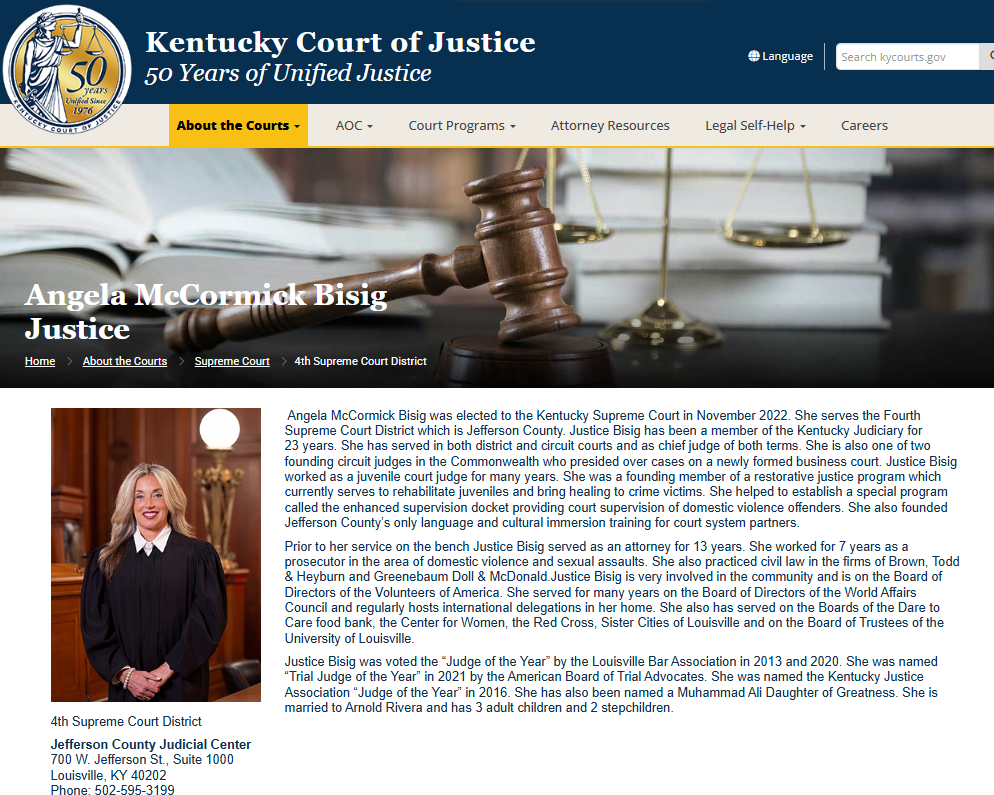
Today, Rotary Club of Louisville members had the privilege of hearing from Kentucky Supreme Court Justice Angela McCormick Bisig, one of only seven justices serving on the Commonwealth’s highest court. Justice Bisig represents the Fourth Supreme Court District, consisting solely of Jefferson County, making her responsible for the state’s largest county at the highest judicial level.

The Rotary Club of Louisville itself is one of the world’s largest Rotary clubs, bringing together hundreds of business, nonprofit, government, education, and civic leaders every week. The club describes itself as one of the largest among Rotary’s more than 45,000 clubs worldwide, providing members direct access to distinguished local, state, national, and international speakers.

For Louisville entrepreneur and Rotary member Di Tran, the luncheon was far more than another Thursday meeting.

“It was a lesson on the beauty of America’s system of government and why law matters.”

Rather than discussing politics, Justice Bisig explained the constitutional role of the judiciary—one of the three co-equal branches of government alongside the legislative and executive branches.

The explanation highlighted an important reality that many Americans may never fully appreciate.

The legislative branch creates laws.

The executive branch carries out and enforces those laws.

The judiciary does neither.

Instead, judges wait.

They do not search for cases.

They do not proactively investigate disputes.

They do not write new legislation.

They do not enforce regulations.

Their responsibility begins only when a real legal controversy is properly brought before the court.

Only then do judges carefully study the facts, hear both sides, apply the law as written, and when necessary, interpret areas where the law is reasonably open to more than one meaning.

This discipline is not weakness—it is one of the judiciary’s greatest strengths.

Its restraint helps ensure that every citizen, regardless of wealth, background, political influence, or status, stands equally before the law.

That quiet commitment to impartiality is one of the foundations of American liberty.

For Di Tran, an immigrant entrepreneur who deeply values the freedoms available in the United States, hearing this explanation directly from a sitting Kentucky Supreme Court justice carried special meaning.

“It reminded me that freedom is protected not only by those who make laws or enforce them, but also by those who patiently preserve justice through the rule of law.”

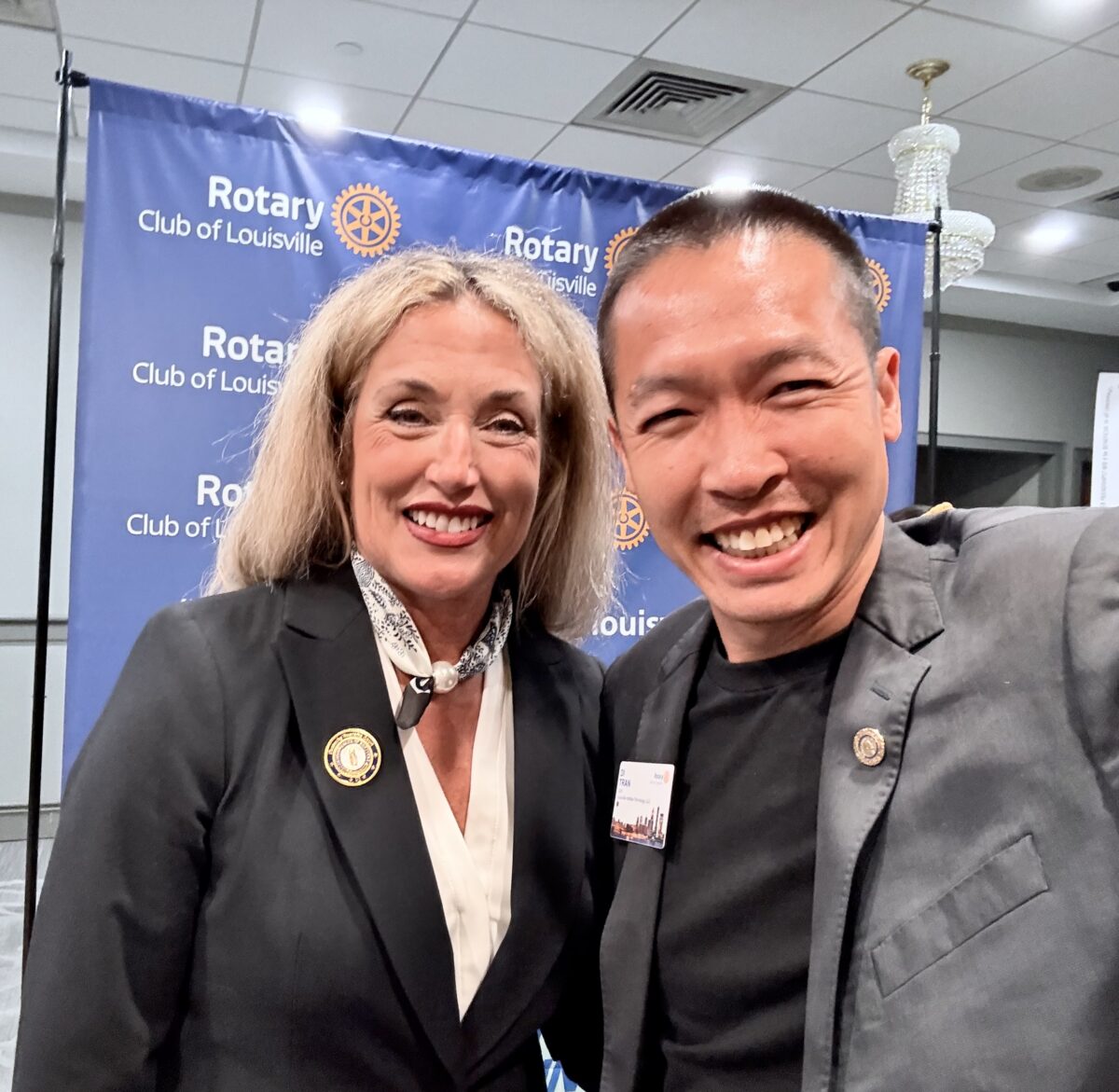
Following the presentation, Di Tran took a moment to thank Justice Bisig personally with a handshake—not because of politics or personal recognition, but out of appreciation for a civic lesson that reinforced the importance of constitutional government.

In an era when public attention often centers on conflict and division, today’s Rotary luncheon served as a reminder that some of the nation’s most important institutions work quietly, deliberately, and without seeking headlines.

The judiciary is designed to be reactive rather than proactive.

Its judges do not seek power; they exercise only the authority entrusted to them when a case comes before the court.

That restraint protects everyone.

As America reflects on 250 years of independence, events like this remind us that freedom depends not only on elections and legislation, but also on an independent judiciary committed to fairness, impartiality, and the rule of law.

Sometimes the most powerful lessons are delivered by those whose job is simply to listen, interpret the law faithfully, and ensure that justice belongs equally to every citizen.

Categories
Beauty Industry Community Witness Workforce Education

Louisville Beauty Academy Culture Wall: A Message for Families and the Community

Louisville proud. Kentucky proud. American small-business proud.

Louisville Beauty Academy’s culture is now a public doctrine.

One name, one culture, one life elevated at a time.

Viet Bao Louisville framing: This channel speaks to immigrant families, multilingual dignity, and the pride of building something beautiful through discipline and care.

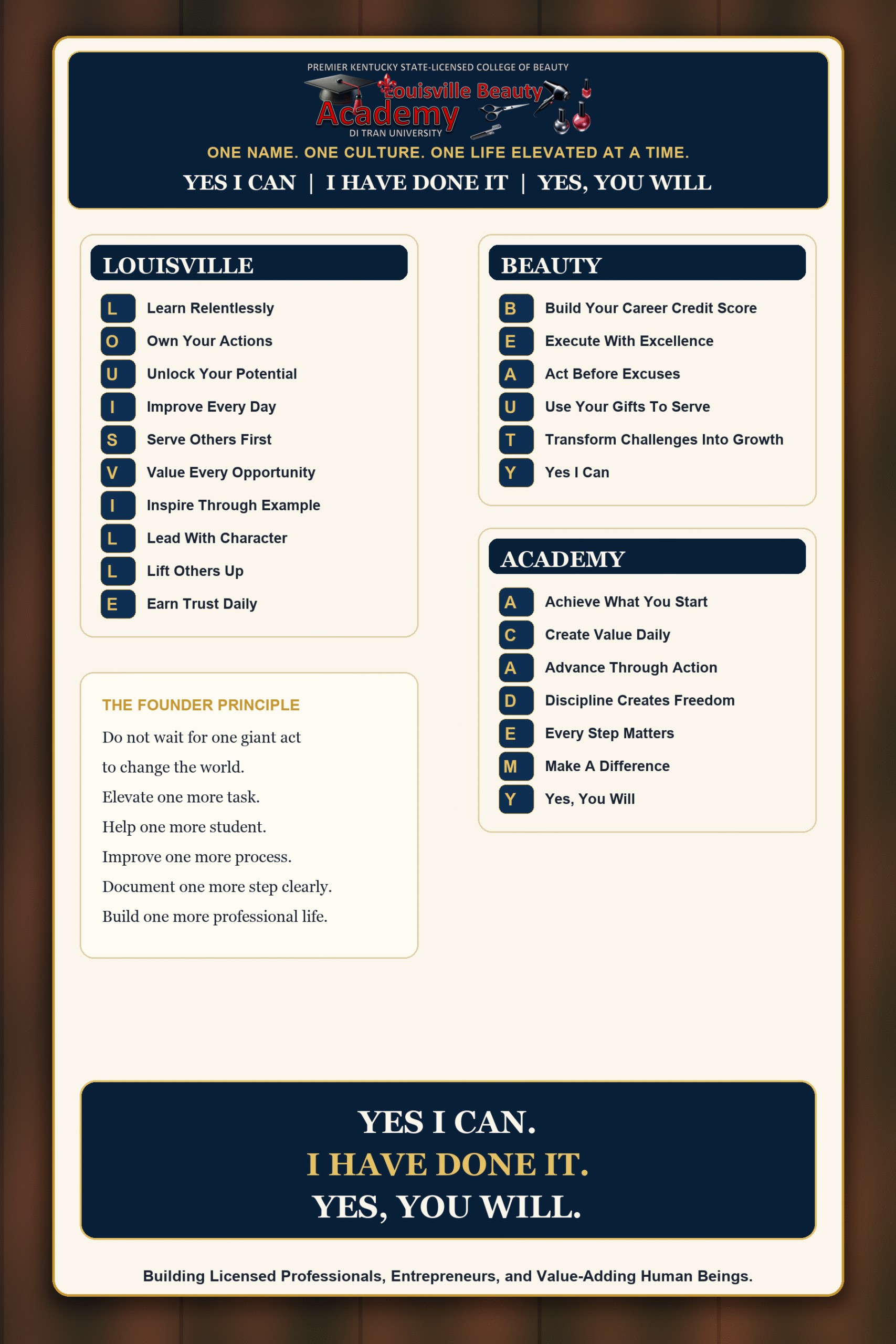
Louisville Beauty Academy’s culture wall says something familiar to many families: hard work matters, written clarity matters, and progress is built one step at a time.

YES I CAN gives courage to begin. I HAVE DONE IT gives proof. YES, YOU WILL gives hope to the next generation.

Louisville Beauty Academy acrostic culture infographic
Louisville Beauty Academy culture wall: one name, one culture, one life elevated at a time.

A Family Message

Education is not only about skill. It is about confidence, documentation, and the ability to keep moving even when life is heavy.

Language Is Not Shame

Different languages do not reduce dignity. In a strong school community, language difference becomes a bridge to understanding and belonging.

Louisville Pride

This is a Louisville story, a Kentucky story, and an immigrant success story rooted in service, learning, and community strength.

The Closing Line

One more action. One more task. One more life elevated at a time.

Sources And Claim Control

This article keeps the strongest claims tied to public sources. The recognition is real, the message is practical, and the framing stays proof-gated.

Categories
Cộng Đồng Giáo Dục Pháp Luật Cộng Đồng

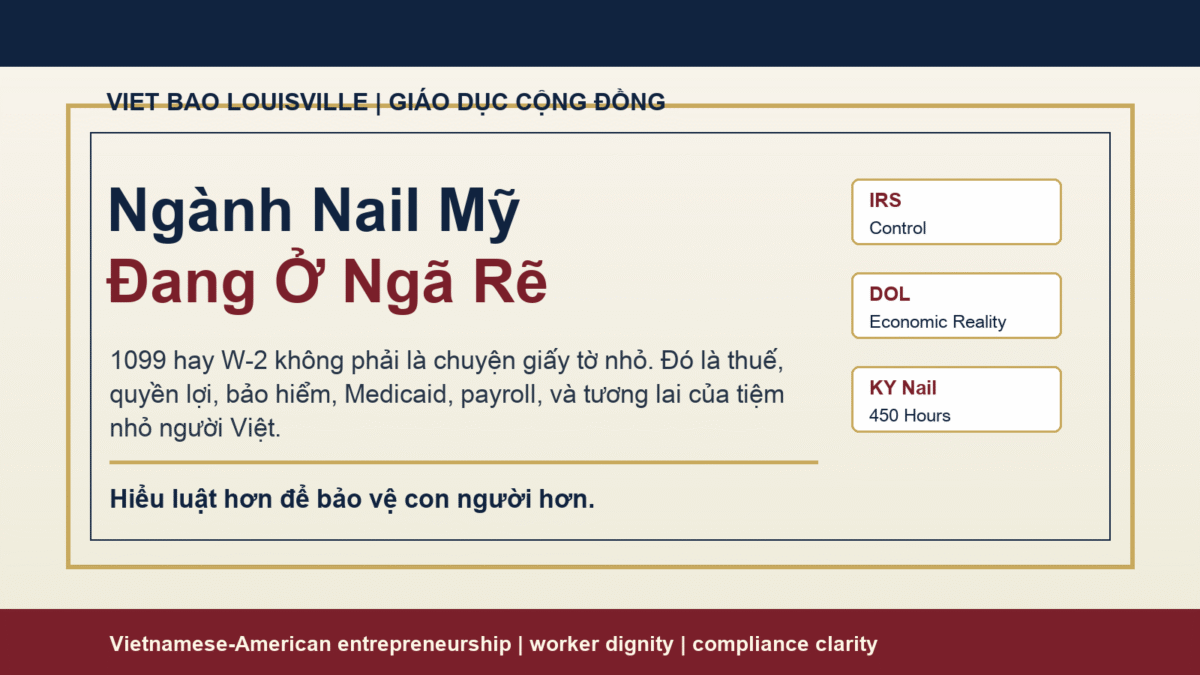
Ngành Nail Mỹ Đang Ở Ngã Rẽ: 1099, W-2, Thuế, Medicaid Và Cách Bảo Vệ Tiệm Nhỏ Người Việt

Bài viết này là thông tin giáo dục cộng đồng, không phải tư vấn pháp lý, thuế, kế toán, lương bổng, Medicaid, bảo hiểm, di trú, hay tài chính. Mỗi tiệm, mỗi thợ, mỗi gia đình có hoàn cảnh riêng. Khi quyết định về 1099, W-2, payroll, Medicaid, bảo hiểm, hoặc cấu trúc kinh doanh, xin làm việc với luật sư, CPA, chuyên viên payroll, cố vấn quyền lợi, và cơ quan cấp phép phù hợp.

Ngành nail tại Mỹ đang ở một ngã rẽ lớn. Đây không chỉ là câu chuyện làm đẹp. Đây là câu chuyện của người tị nạn, người nhập cư, phụ nữ lao động, gia đình nhỏ, chủ tiệm nhỏ, thuế vụ, bảo hiểm y tế, luật lao động, và sự sống còn của những cơ sở làm ăn nhỏ trong một nền kinh tế ngày càng phức tạp.

Đối với cộng đồng người Việt, nghề nail không phải chỉ là “nghề.” Nó là câu chuyện của bàn tay: bàn tay làm việc thật, bàn tay nuôi con, bàn tay trả tiền nhà, bàn tay giúp một gia đình mới qua Mỹ đứng lên, và bàn tay giúp một người mẹ, người cha, người con gái, người con trai có con đường từ lao động đến làm chủ.

Thương người lao động không có nghĩa là chống chủ tiệm. Thương chủ tiệm không có nghĩa là bỏ qua quyền lợi người lao động. Thương thật là giúp cả hai hiểu luật, ghi chép đúng, đóng thuế đúng, và sống được trong một hệ thống quá phức tạp.

Vì sao bài này cần viết bằng tiếng Việt

Nhiều chủ tiệm và thợ nail không thiếu siêng năng. Họ thiếu ngôn ngữ pháp lý để hiểu rõ việc gì đang xảy ra. Một người có thể làm việc 10 tiếng một ngày, biết chăm sóc khách rất giỏi, biết giữ tiệm sạch, biết chịu khó, nhưng vẫn bị để rơi vào các chữ: 1099, W-2, employee, independent contractor, payroll tax, self-employment tax, Medicaid cliff, ACA Marketplace, worker classification.

Khi không hiểu rõ, người ta dễ sợ. Khi quá sợ, người ta dễ nghe lời đồn. Lời đồn thì nhanh, nhưng hồ sơ mới bảo vệ được. Cảm tính thì mạnh, nhưng văn bản mới dùng được khi có kiểm tra, tranh chấp, audit, hoặc khi cần hỏi CPA và luật sư.

Điều đầu tiên: tên gọi không quyết định bạn là 1099 hay W-2

Một sai lầm nguy hiểm là nghĩ rằng: “Hai bên đồng ý làm 1099 thì là 1099.” Không đơn giản như vậy. Theo IRS, việc phân loại người lao động dựa vào mức độ kiểm soát và sự thật của mối quan hệ làm việc. IRS nhìn vào ba nhóm bằng chứng chính: kiểm soát hành vi, kiểm soát tài chính, và mối quan hệ giữa hai bên.

Nói đơn giản: nếu tiệm quy định lịch làm, cách làm, giá dịch vụ, nơi làm, cách phục vụ, dụng cụ, sản phẩm, cách trả tiền, đồng phục, quy trình, và người thợ gần như phụ thuộc vào tiệm để có việc, thì rủi ro bị xem là employee sẽ cao hơn. Nếu người thợ thật sự có doanh nghiệp riêng, có khách riêng, tự đặt giá, tự quản lý lời lỗ, có đầu tư riêng, có quyền nhận hoặc từ chối việc, và không bị tiệm kiểm soát như nhân viên, thì lập luận independent contractor có thể mạnh hơn. Nhưng phải dựa vào sự thật, không dựa vào cảm giác.

Dưới luật wage-and-hour liên bang, Department of Labor nhìn vào “economic reality” – thực tế kinh tế của mối quan hệ. Luật hiện hành và đề xuất năm 2026 có thể thay đổi về cách phân tích, nhưng điểm cốt lõi vẫn là: người lao động có thật sự đang kinh doanh cho chính mình, hay về thực tế đang phụ thuộc kinh tế vào tiệm?

1099 có thể làm chủ tiệm thấy nhẹ hơn, nhưng không tự động hợp pháp

Chủ tiệm thường thấy W-2 nặng hơn vì phải chạy payroll, giữ lại thuế, nộp phần Social Security và Medicare của chủ, xem thất nghiệp, workers’ compensation, báo cáo giờ làm, báo cáo lương, và lưu hồ sơ. Vì vậy, 1099 có vẻ “gọn” hơn.

Nhưng nếu thực tế là employee mà trên giấy ghi 1099, thì rủi ro không biến mất. Rủi ro chỉ nằm im cho đến khi có audit, complaint, tranh chấp tiền lương, tai nạn, thất nghiệp, Medicaid/benefits issue, hoặc cơ quan hỏi hồ sơ.

Một chủ tiệm thương người không nên muốn thắng bằng cách để người thợ gánh hết rủi ro. Một người thợ thương gia đình mình cũng không nên ký giấy mà không hiểu mình sẽ đóng thuế ra sao. Hai bên đều cần hiểu: 1099 không phải là cách để tránh thuế; W-2 không phải là hình phạt. Đó là hai cấu trúc pháp lý khác nhau, và mỗi cấu trúc phải được vận hành đúng.

Góc nhìn CPA: vì sao người 1099 thường bị “đau” lúc khai thuế

Người làm W-2 thường thấy tiền thuế bị trừ dần trong từng paycheck. Người làm 1099 nhận tiền có vẻ nhiều hơn lúc đầu, nhưng cuối năm có thể bị sốc vì phải đóng self-employment tax và thuế thu nhập nếu không nộp quarterly estimated tax.

Về nguyên tắc liên bang, employee trả phần Social Security và Medicare của employee là 7.65% tiền lương, và employer trả phần employer riêng. Người self-employed/1099 thường phải tính self-employment tax 15.3% trên 92.35% net earnings, trừ khi có quy định cụ thể khác. Đổi lại, independent contractor thật sự có thể có business deductions hợp pháp. Nhưng deduction không phải là “muốn viết gì cũng được.” Phải ordinary, necessary, có bằng chứng, và phù hợp với kinh doanh.

Ví dụ đơn giản theo bài phân tích gốc của Di Tran University: với cùng một mức $50,000, nếu là W-2 thì người lao động có thể giữ lại nhiều hơn so với 1099 trong một mô hình đơn giản không tính chi phí kinh doanh riêng. Còn với chủ tiệm, W-2 có thêm chi phí employer payroll tax, UI, workers’ compensation, payroll service, và compliance overhead. Đây là lý do kinh tế thật. Nhưng lý do kinh tế không làm cho classification sai trở thành đúng.

Medicaid cliff: nỗi đau thật của người lao động thu nhập thấp

Một điểm Di Tran University nêu lên rất quan trọng: có người không muốn tăng giờ, tăng lương, hay khai thu nhập rõ ràng vì sợ mất Medicaid. Đây không phải lúc nào cũng là gian dối; nhiều khi là nỗi sợ thật của người nghèo và người lao động.

HealthCare.gov giải thích rằng ở các bang đã mở rộng Medicaid, người lớn có thu nhập dưới 138% Federal Poverty Level có thể đủ điều kiện Medicaid. HHS đặt poverty guideline năm 2026 cho một người ở 48 bang liền kề và D.C. là $15,960; 138% của mức này xấp xỉ $22,025 một năm. Nếu một người vượt qua ngưỡng này, họ có thể phải chuyển qua Marketplace coverage, với premium, deductible, copay, và out-of-pocket risk.

KFF báo cáo rằng sau khi enhanced premium tax credits hết hạn vào cuối năm 2025, average net Marketplace premium năm 2026 tăng từ $113 lên $178 mỗi tháng, và deductible trung bình tăng mạnh lên khoảng $3,786. Với người làm nghề nail thu nhập thấp, đây là cảm giác rất thật: làm thêm nhiều hơn nhưng tiền còn lại sau thuế và bảo hiểm không tăng tương xứng.

Nhưng thông cảm không có nghĩa là khuyên underreport income, khai sai, hay né luật. Thông cảm đúng là giúp người lao động hiểu trước: nếu thu nhập tăng, bảo hiểm thay đổi thế nào, premium tax credit ra sao, deductible là gì, và nên nói chuyện với benefits advisor/CPA trước khi quyết định.

Kentucky và nghề nail: cấp phép là một lớp, thuế và lao động là lớp khác

Ở Kentucky, nail technician có yêu cầu đào tạo riêng. Kentucky Board of Cosmetology công bố yêu cầu Nail Technician là 450 giờ và 12th grade equivalence trong tài liệu transfer/out-of-state. Điều này giúp cộng đồng hiểu rõ: license nghề nail là một lớp pháp lý; worker classification, payroll, tax, wage law, Medicaid, và insurance là những lớp khác. Có license không có nghĩa là tự động thành contractor. Không có payroll đúng cũng không được che bởi việc “có bằng nghề.”

Checklist nhẹ nhàng cho chủ tiệm

  • Nếu muốn W-2: dùng payroll thật, giữ time/pay records, withhold thuế, nộp employer payroll tax, xem UI/workers’ compensation, và có handbook/chính sách rõ ràng.
  • Nếu muốn booth rental/1099: dùng hợp đồng thật, cấu trúc quyền kiểm soát thật, tiền thuê ghế/space rõ ràng, người thợ có business autonomy thật, và không vận hành như nhân viên chỉ đổi tên.
  • Không copy mẫu hợp đồng trên mạng rồi nghĩ là đủ. Hợp đồng phải khớp với cách tiệm thật sự vận hành.
  • Lưu hồ sơ: license, permit, schedule, pay records, tip records, sanitation/training, tax forms, agreement, insurance, complaint response, và advisor notes.
  • Mỗi năm nên có một buổi review với CPA/payroll professional và, nếu cần, employment attorney.

Checklist nhẹ nhàng cho thợ nail

  • Hỏi rõ mình là W-2 hay 1099 trước khi bắt đầu.
  • Nếu là W-2, xem paystub có withholding không.
  • Nếu là 1099, hỏi CPA về quarterly estimated tax và cách lưu receipt hợp pháp.
  • Hiểu rằng tiền nhận ngay không phải tiền giữ được hết.
  • Nếu thu nhập thay đổi, hỏi benefits advisor về Medicaid/Marketplace trước khi để bảo hiểm đứt bất ngờ.
  • Giữ bản sao hợp đồng, lịch làm, tin nhắn quan trọng, payment record, và tax documents.

Thông điệp của tình thương: đừng để cộng đồng mình bị kẹt giữa sợ hãi và lời đồn

Người Việt trong nghề nail đã đóng góp rất lớn cho nước Mỹ: việc làm, dịch vụ, entrepreneurship, thuế, nhà cửa, học phí cho con, và niềm tự hào gia đình. Nhưng thành công của thế hệ trước không bảo đảm an toàn cho thế hệ sau nếu hệ thống pháp lý, thuế vụ, bảo hiểm, và enforcement thay đổi nhanh hơn khả năng hiểu của cộng đồng.

Vì vậy, bài viết này không viết để làm ai sợ. Bài này viết để mọi người bình tĩnh hơn. Chủ tiệm không cần xấu hổ khi thừa nhận compliance rất khó. Thợ nail không cần xấu hổ khi hỏi về thuế và bảo hiểm. Gia đình không cần xấu hổ khi cần người giải thích bằng tiếng Việt.

Con đường tốt nhất cho cộng đồng là: làm thật, ghi chép thật, hỏi đúng người, đọc đúng nguồn, và nâng nhau lên. Khi hiểu luật hơn, chúng ta không mất tình người. Chúng ta bảo vệ tình người bằng bằng chứng, bằng hồ sơ, bằng sự công bằng, và bằng cách làm ăn được lâu dài.

Nguồn tham khảo chính

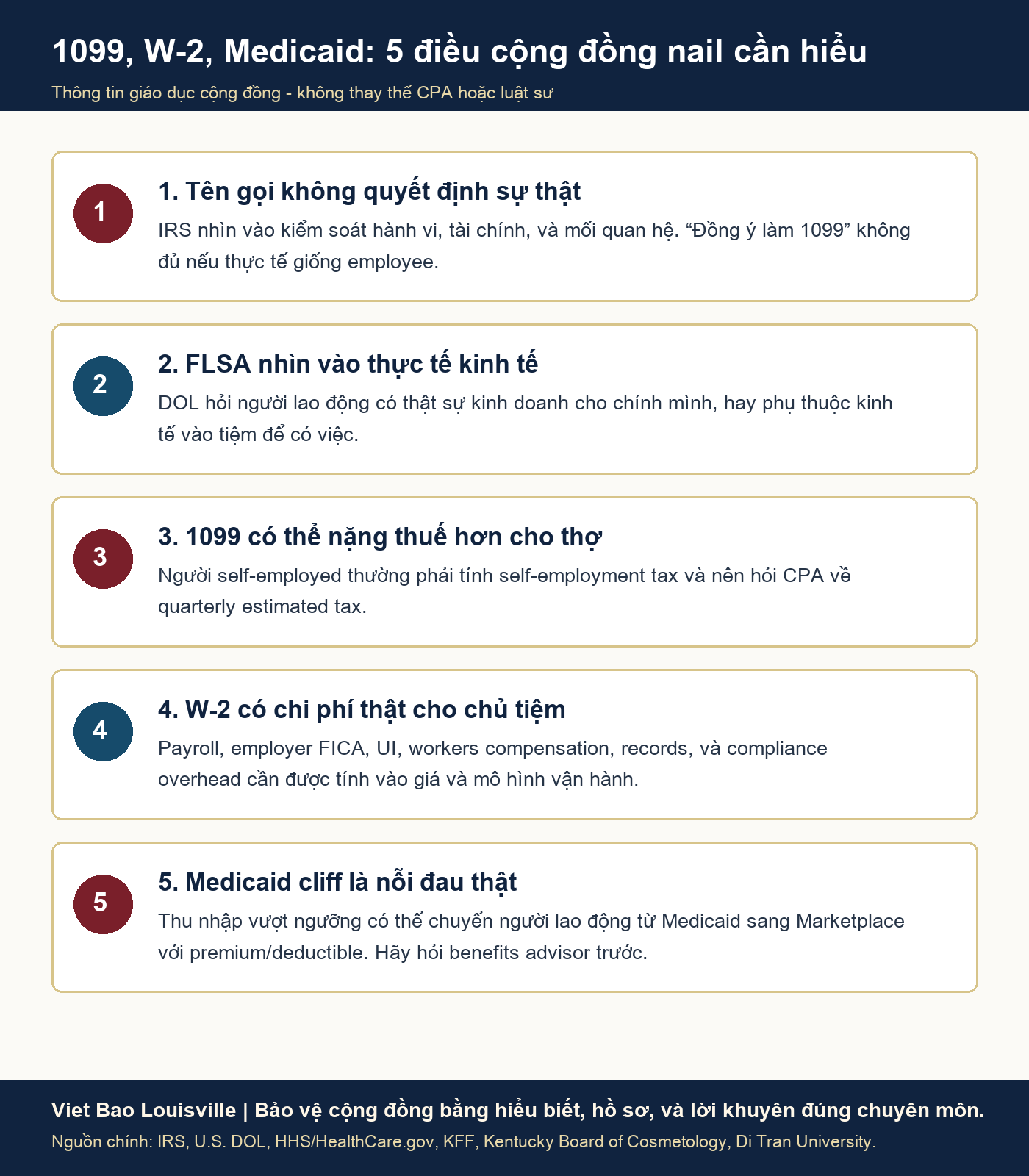
Vietnamese infographic listing five community education points about 1099, W-2, FLSA economic reality, payroll cost, and Medicaid cliff for nail salons
Tóm tắt giáo dục cộng đồng. Mỗi trường hợp cần được xem lại với CPA, luật sư, payroll professional, hoặc benefits advisor phù hợp.
Categories
Community Guidance

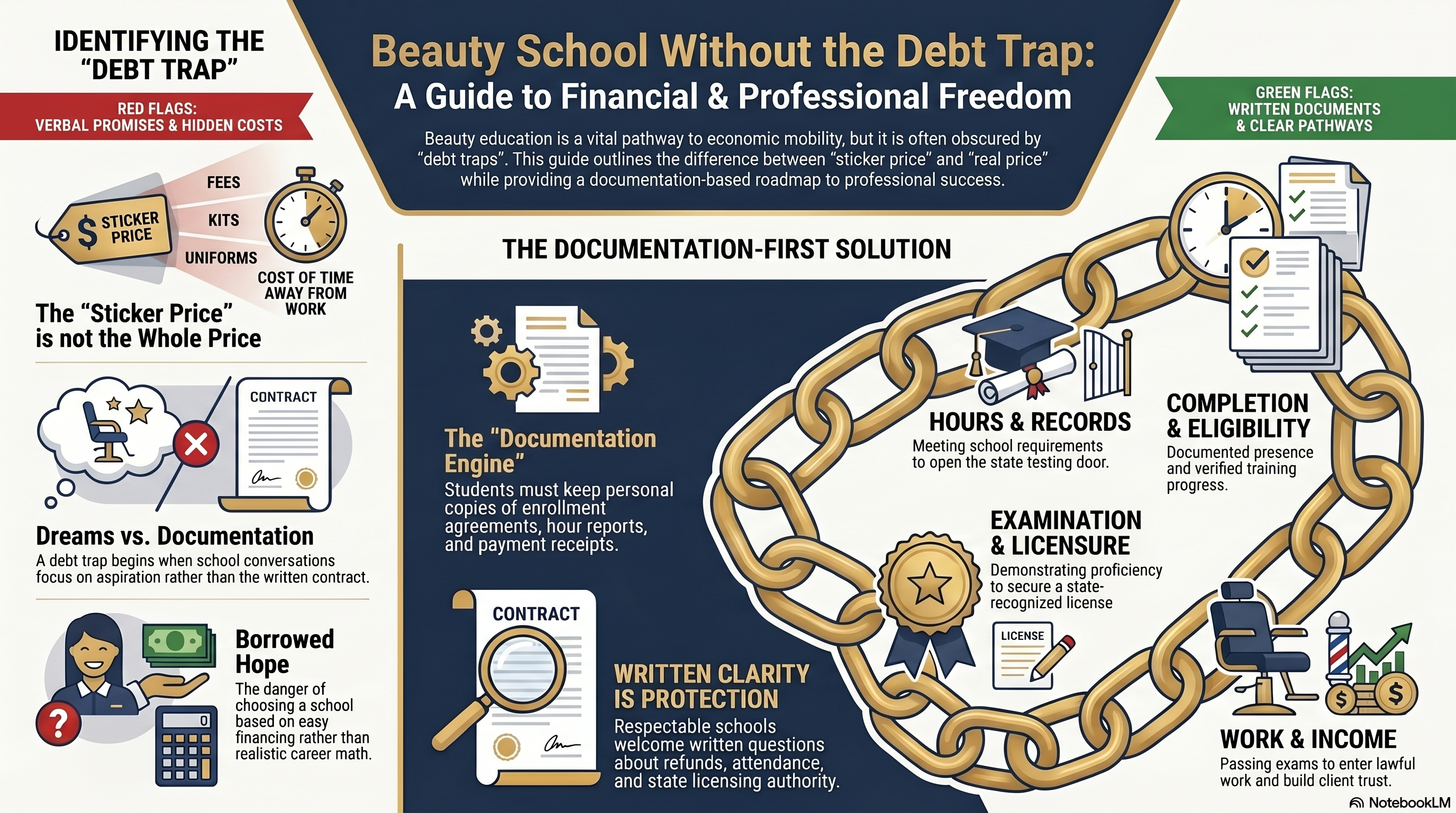
Families Deserve Written Clarity Before Educational Commitment

Families Deserve Written Clarity Before Educational Commitment

Many families carry education decisions together. A student may sign the paperwork, but parents, spouses, children, and relatives often feel the burden and hope of that decision. This is why written clarity matters.

When a family can review cost, schedule, expectations, policies, and next steps in writing, the conversation becomes healthier. It reduces rumor. It lowers fear. It gives everyone a fairer chance to understand what commitment means.

This principle is especially important for immigrant and working families who may already be navigating language, time, work, childcare, and financial pressure. Clear written communication is not cold. It is a form of respect.

What This Means Practically

  • Use written clarity before verbal pressure.
  • Give people the next honest step without forcing the decision.
  • Let proof, service, and usefulness create trust over time.

Institutional Position

Viet Bao Louisville encourages families to ask for written information, take time to review it, and choose educational pathways with both hope and discipline.

References and Related Institutional Context

  • Viet Bao Louisville community education doctrine
  • LBA documentation-over-rumor doctrine
  • Cross-site publication routing doctrine, 2026-05-29

This article is public education and institutional commentary. It is not legal, financial, medical, or individualized enrollment advice.

Categories
Community Witness

The Immigrant Work Ethic Behind a School That Opens Before Sunrise

The Immigrant Work Ethic Behind a School That Opens Before Sunrise

Before a student enters a classroom, someone has already prepared the space. Sometimes that preparation is administrative. Sometimes it is spiritual. Sometimes it is as simple as picking up trash, clearing the alley, and treating the neighborhood as part of the institution’s responsibility.

This kind of work may not look glamorous, but it is a powerful form of public trust. Immigrant-built institutions often begin this way: early mornings, quiet labor, family sacrifice, and the belief that dignity is created by what people do when no audience is watching.

A clean school, a clean sidewalk, and a cared-for back alley are not small things. They teach a public lesson: if we want to elevate people, we begin by caring for the environment where people learn, work, and walk.

What This Means Practically

  • Use written clarity before verbal pressure.
  • Give people the next honest step without forcing the decision.
  • Let proof, service, and usefulness create trust over time.

Institutional Position

Viet Bao Louisville will continue preserving stories of work, family, faith, discipline, and community service that explain how institutions are truly built.

References and Related Institutional Context

  • Viet Bao Louisville community witness doctrine
  • Matthew 22:39, love thy neighbour as thyself
  • Louisville Beauty Academy values-in-action public narrative

This article is public education and institutional commentary. It is not legal, financial, medical, or individualized enrollment advice.

Categories
Cộng Đồng Giáo Dục Văn Hóa

The Lost Majority: Cuốn sách mới của Di Tran về kỷ luật, cấu trúc, và giá trị con người trong thời đại dễ lạc hướng

The Lost Majority: Why Modern Life Breaks Human Momentum—and How to Restore Structure, Meaning, and Value là cuốn sách mới của Di Tran, một tác phẩm nghiêm túc viết về một vấn đề rất thật của thời đại này: nhiều người không hẳn thiếu thông minh hay thiếu cố gắng, nhưng đang dần mất đi cấu trúc sống, nhịp điệu làm việc, và khả năng đi tiếp một cách bền vững.

Cuốn sách gọi đúng tên của tình trạng đó: drift — sống lạc hướng, mất đà, biết mình nên làm gì nhưng không còn đủ hệ thống để biến điều đó thành hành động đều đặn.

Vì sao cuốn sách này đáng chú ý

Điểm mạnh của sách là không nói kiểu động viên sáo rỗng. Tác giả đi thẳng vào cốt lõi: động lực thôi chưa đủ. Con người cần cấu trúc, kỷ luật, bằng chứng tiến bộ, sự hữu ích, và khả năng giữ lời với chính mình qua thời gian.

Thông điệp này rất gần với đời sống của nhiều gia đình Việt, nhất là những người vừa làm việc, vừa nuôi con, vừa gây dựng sự nghiệp trong một xã hội ngày càng nhiều tiếng ồn nhưng ít sự ổn định.

Năm ý chính của cuốn sách

  • Sự lạc hướng là có thật.
  • Cấu trúc quan trọng hơn cảm hứng.
  • Ý nghĩa lớn lên qua sự hữu ích.
  • Sự đáng tin tạo ra niềm tin lâu dài.
  • Tương lai thuộc về những người và tổ chức có thể phục hồi chuyển động hữu ích.

Giá trị cộng đồng của cuốn sách

Đối với cộng đồng người Việt, đây không chỉ là một cuốn sách. Nó còn là một lời nhắc mạnh mẽ rằng phẩm giá không đến từ nói hay, mà đến từ làm thật, sống có cấu trúc, và tạo ra giá trị bền vững cho gia đình và xã hội.

Where to Read, Watch, and Follow

Đây là một cuốn sách đáng đọc cho những ai đang muốn sống kỷ luật hơn, làm việc có chiều sâu hơn, và xây một cuộc đời có giá trị lâu dài hơn.

Infographic summarizing the core ideas of The Lost Majority by Di Tran.
Infographic: five core ideas from The Lost Majority by Di Tran.
Categories
Book Releases Community Culture

From Immigrant Struggle to Public Teaching: Di Tran’s New Book on Work, Family, and Human Dignity

A Louisville founder and educator releases a new book arguing that meaningful labor remains one of the strongest foundations of family life, self-respect, and social peace.

A new book by Louisville founder, educator, and author Di Tran has been released on Amazon: We Were Made to Work: Why Meaningful Labor Builds Strong Families, Human Dignity, and Lasting Peace.

For many immigrant families, the message of this book will feel immediately familiar. Work is not merely a paycheck. It is sacrifice. It is responsibility. It is the daily act of carrying a family forward even when conditions are not ideal. It is often the language through which love is expressed.

That is especially true for those who came to America with limited resources, limited English, and no guarantee of ease. In those households, labor is not theoretical. It is survival, gratitude, and hope made visible.

This release speaks directly to that lived reality. It argues that meaningful work forms human character, strengthens homes, and helps create a more stable society. It also pushes back against the idea that dignity and discipline are opposites. In truth, many families know the reverse: disciplined contribution is often one of the clearest paths to dignity.

The book also reflects a wider public mission. Through education, writing, and workforce-building, Di Tran has consistently emphasized that knowledge should serve people, and that opportunity should be linked to effort, responsibility, and care for others.

In that sense, this release is not just literary. It is cultural. It affirms a value system deeply recognizable to immigrant communities: gratitude, perseverance, contribution, and peace through honorable work.

Amazon: https://www.amazon.com/dp/B0H233ZXBS

Infographic on immigrant family values and meaningful work
Sacrifice, gratitude, discipline, contribution, and peace through meaningful work.
Categories
Community Commentary

Why Publication Is a Duty, Not a Marketing Tactic

In many institutions, publication is treated as promotion. We believe it is first a duty.

A community deserves records of what is being built in its name, around its children, and through its labor. Families deserve explanations that are clearer than advertisements. The public deserves documents that preserve truth, not merely campaigns that chase attention.

For immigrant communities especially, publication carries moral weight. Too much valuable work disappears because nobody records it carefully. Sacrifice remains private. Lessons remain local. Institutions rise, struggle, adapt, and serve, yet the public archive stays thin. When that happens, memory is lost and credibility becomes easier for outsiders to misread.

Publication interrupts that loss. It transforms lived work into civic memory. It helps future students, future families, future founders, and future policymakers understand not only what happened, but what it meant. In this sense, publication is a form of stewardship.

It is also a form of protection. Institutions that write clearly about what they believe, what they do, what standards they honor, and what reforms they seek are harder to distort. Their motives are more legible. Their public service is easier to verify. Their seriousness becomes part of the record.

This is why founder-led educational and community institutions should publish more, not less. They should publish mission statements, public guidance, reflections, policy arguments, local history, and witness. They should document the moral and practical logic behind their work.

Publication should therefore not be confused with vanity. At its best, it is testimony, clarification, and civic accountability. It tells a community: we were here, we served, we learned, we built, and we took the time to explain ourselves.

For Louisville and for the wider Vietnamese American community, that matters. Public memory should not belong only to large institutions with larger budgets. It should also include disciplined local builders who carry work quietly and faithfully over time.

This essay is offered as public reflection and community commentary.

Categories
Community Witness

Louisville, Service, and the Immigrant Dream: Why Human-Centered Education Matters in Real Life

The immigrant dream is often described in heroic language and then abandoned in ordinary systems. People are told to work hard, believe, contribute, and persevere—but when they arrive at the gates of actual opportunity, the path is frequently obscured by cost, language barriers, unfamiliar institutions, and quiet forms of exclusion that rarely announce themselves honestly.

That is why human-centered education matters so much in real life. It is not merely about teaching. It is about whether a society knows how to receive effort with structure.

Louisville offers a meaningful context for this question. Like many American cities, it is shaped not only by formal institutions, but by the daily labor of families who build life through work, service, adaptation, and quiet persistence. Immigrant communities understand this especially well. For them, education is not an abstract cultural ideal. It is often the most practical bridge between instability and belonging.

But not all educational systems honor that reality equally. Some demand forms of patience that only the already-secure can afford. Some are too expensive. Some are too slow. Some are too linguistically narrow. Some speak the language of opportunity while preserving the architecture of delay.

Human-centered education begins by refusing that contradiction.

It asks what people actually need in order to move forward with dignity. They may need instruction that is practical rather than ornamental. They may need schedules compatible with work and family obligations. They may need patient explanation of licensure, forms, and regulatory systems. They may need to see that law and opportunity are not enemies. Above all, they need institutions that do not confuse complexity with honor.

This is where service enters the story. Real service does not simply express sympathy. It builds usable pathways. It helps translate society to the person and the person to society. It makes movement possible.

For immigrant communities, that kind of service has deep consequences. It strengthens trust. It reduces fear of systems that often feel distant. It transforms the meaning of education from a remote aspiration into a reachable act of self-respect. And when that happens, the benefits spread beyond the individual learner. Families stabilize. Children see possibility more clearly. Neighborhoods gain professionals, small businesses, and examples of lawful upward movement.

The deeper lesson is cultural as much as economic. A city becomes stronger not merely when it welcomes diversity rhetorically, but when it builds institutions capable of converting diversity into shared contribution. That requires seriousness, patience, and local leadership. It also requires a refusal to treat immigrant ambition as peripheral. In truth, immigrant ambition has long been one of America’s most renewable public assets.

Louisville has the chance to demonstrate what that looks like in practice: education tied to work, work tied to dignity, dignity tied to service, and service tied to community trust. When that chain is preserved, the immigrant dream stops being a slogan and becomes something more difficult and more beautiful—a daily structure of possibility.

That is the kind of future worth building. Not one made of performance, but one made of pathways.

Research & Information Disclaimer

This publication is provided for educational, research, and public-information purposes only. It reflects institutional analysis based on publicly available information, practical experience, and internal interpretation as of the publication date. It does not constitute legal advice, tax advice, investment advice, or a guarantee of regulatory, financial, or operational outcomes. Readers should consult qualified legal, financial, regulatory, or other professional advisors before acting on matters discussed herein.

References

Translate »