Categories
Education Leadership Development Louisville

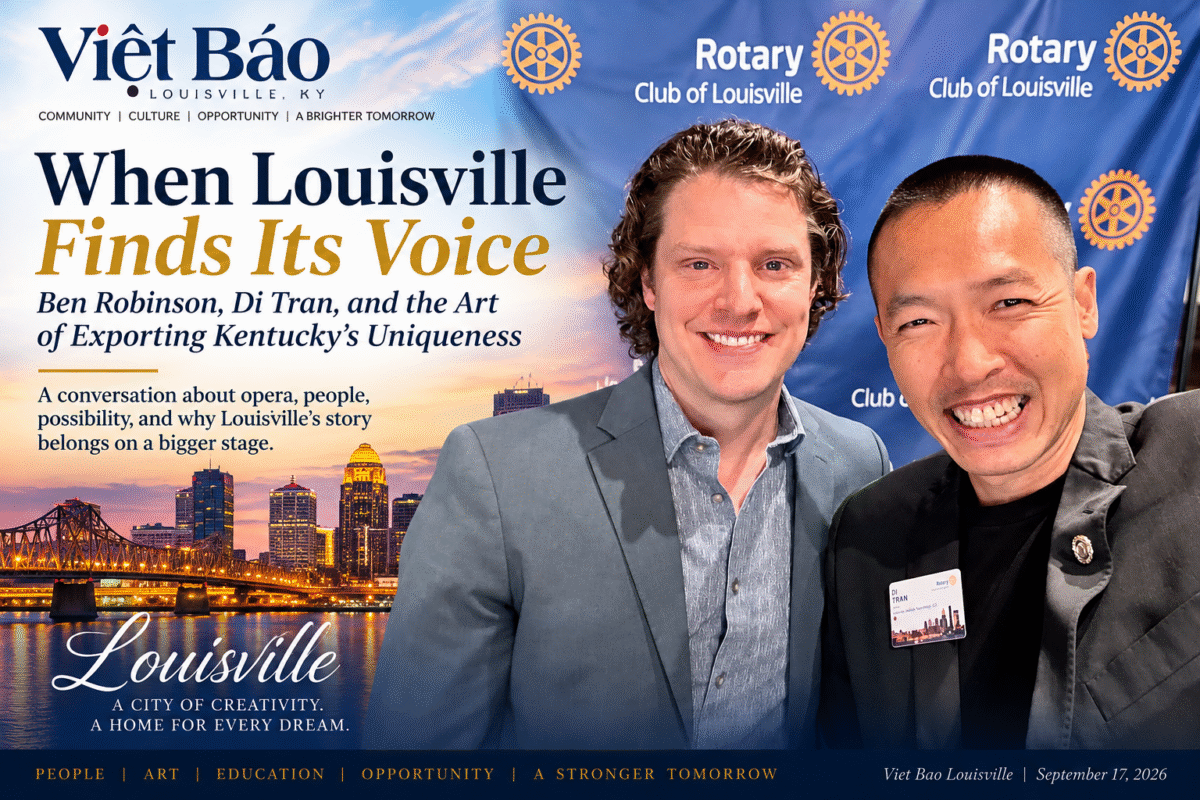
When Louisville Finds Its Voice: Ben Robinson, Di Tran, and the Art of Exporting Kentucky’s Uniqueness

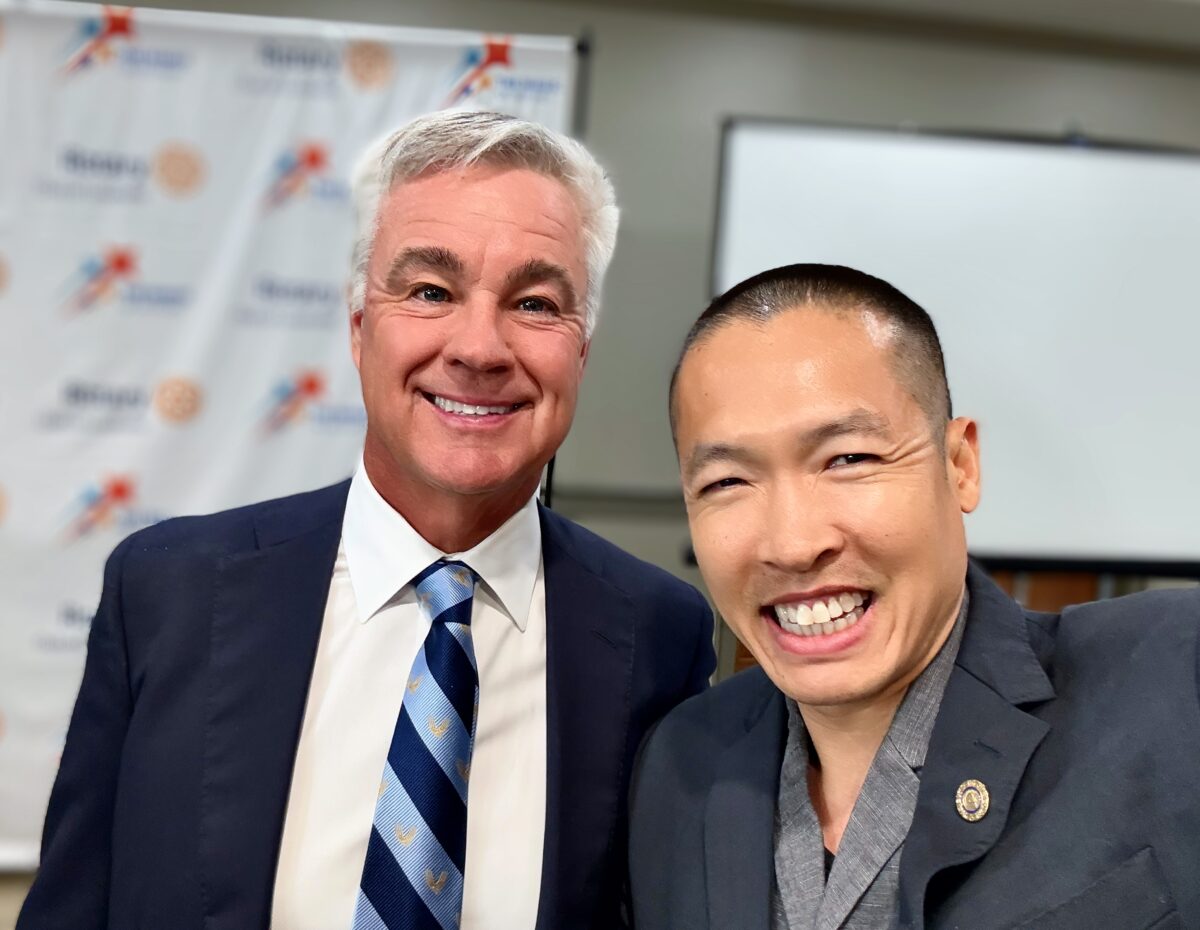
At the Rotary Club of Louisville, a conversation about opera became something larger—a reflection on art, immigration, entrepreneurship, collaboration, civic identity, and the extraordinary things Louisville has already given the world.

Viet Bao Louisville | Louisville, Kentucky | September 17, 2026

Some speeches explain an industry. Others reveal something about a city.

When Ben Robinson, General Director and CEO of Kentucky Opera, addressed the Rotary Club of Louisville on September 17, 2026, his announced subject was “The Future of Opera in Kentucky.”

Opera was certainly at the center of the conversation. But for Louisville entrepreneur, educator and Rotarian Di Tran, who was sitting in the audience, Robinson’s presentation carried a meaning that extended far beyond the stage.

Tran heard something increasingly important for Louisville and Kentucky:

A community should not merely recognize what makes it unique. It should develop that uniqueness, collaborate around it, and have the confidence to share it with the world.

For Tran, an immigrant who has spent much of his adult life building businesses, educational institutions and workforce initiatives in Louisville, the idea felt immediately familiar.

Robinson advocates through opera.

Tran advocates through education, entrepreneurship and service.

Others may do it through music, manufacturing, technology, food, healthcare, skilled trades, athletics or neighborhood leadership.

The instruments are different.

The underlying question is the same:

What does Louisville possess that is worth giving to the world?


An Opera Leader Who Speaks Beyond Opera

Robinson arrived at Kentucky Opera’s highest executive position at an important moment in the organization’s history.

Kentucky Opera announced his appointment as General Director and CEO in November 2025 following a national search. The appointment also represented a return: Robinson had begun his professional career as a Kentucky Opera Studio Artist.

His career has combined artistic creation with institutional leadership. He has worked as a stage director, producer, designer and librettist, while also holding executive roles including General Director of Anchorage Opera and Managing Director of Lyric Fest in Philadelphia.

Kentucky Opera credited Robinson’s Anchorage tenure with expanding community programming, building artistic partnerships, developing regional talent, experimenting with immersive productions, securing a major endowment gift and finishing a season with a six-figure operating surplus.

That combination matters.

Robinson’s career suggests that opera need not choose between artistic excellence and accessibility, tradition and experimentation, institutional strength and community engagement.

Those goals can reinforce one another.

And that is why a speech about opera can become a lesson about much more than opera.


Louisville Does Not Need to Invent an Identity

Cities frequently spend enormous amounts of time trying to determine what they want to become.

Louisville might begin with a different question:

Does Louisville fully understand what it already is?

Louisville Metro has highlighted the unusual concentration of major performing-arts institutions in the city, including Kentucky Opera, Louisville Orchestra, Louisville Ballet, Actors Theatre of Louisville and StageOne Family Theatre.

These are not simply entertainment organizations.

Taken together, they represent generations of cultural infrastructure.

The Louisville Orchestra was founded in 1937. Its history became particularly distinctive through an ambitious commitment to commissioning and recording new music. The orchestra eventually established First Edition Records, which the organization describes as the first record label owned by an American orchestra.

That distinction deserves attention.

Louisville did not simply ask:

What music is the rest of the world performing?

It also asked:

What music does not exist yet—and can it be created here?

That is a fundamentally different civic mentality.


Opera, Ballet and Theatre: Generations of Creation

Kentucky Opera was founded in 1952 by Moritz von Bomhard. During the 1950s alone, the organization produced five world premieres. In 1982, the Kentucky General Assembly designated it the State Opera of Kentucky.

Louisville Ballet also traces its origins to 1952, eventually developing into one of Kentucky’s principal performing-arts institutions and working with nationally and internationally recognized figures in dance.

Actors Theatre of Louisville was formed in 1964, and its Humana Festival of New American Plays later helped establish Louisville as an important national environment for developing and presenting new American theatre.

Louisville’s infrastructure for supporting art extends even further back.

Fund for the Arts dates to 1949 and reports having raised more than $200 million during its history in support of the region’s arts ecosystem.

These institutions were founded at different times, so Louisville should not exaggerate its history by claiming that every component of today’s performing-arts ecosystem has existed for a century.

The verified history tells a better story anyway.

Generation after generation, Louisville has repeatedly built institutions that do not merely consume culture.

They create it.


Before Opera Went Viral, Louisville Helped Create a Melody the World Would Sing

There is perhaps no more beautiful metaphor for Louisville’s cultural influence than a song so ordinary that most people no longer stop to ask where it came from.

“Happy Birthday to You.”

Its history is connected to Louisville educators and sisters Patty Smith Hill and Mildred J. Hill.

The Smithsonian traces the familiar melody to the sisters’ nineteenth-century classroom song “Good Morning to All.” The melody was subsequently paired with the birthday lyrics that became internationally recognizable.

Consider the significance.

Two Louisville educators worked on a simple song for children.

That melody crossed neighborhoods.

Then generations.

Then states.

Then nations.

Then languages.

Eventually, people around the world could recognize it almost instantly.

Long before anyone used words such as viral, global platform or cultural export, Louisville had already demonstrated the principle.

Something created locally can become universal.

The world did not need Louisville to become another city.

It needed Louisville to create something authentically useful, memorable and human.

That distinction lies near the heart of what Robinson’s presentation awakened for Tran.


From “Importing Success” to Exporting the Blueprint

In Tran’s interpretation of Robinson’s remarks and their conversation surrounding the Rotary program, one idea stood above the rest:

When Kentucky develops something distinctive that works, it should have the confidence to share that model beyond the Commonwealth.

That formulation is intentionally presented as Tran’s interpretation rather than a verbatim quotation from Robinson.

But the idea has enormous implications.

Cities constantly study other successful cities.

They ask how to become more like Nashville.

More like Austin.

More like New York.

More like Boston.

More like Silicon Valley.

Benchmarking has value.

But imitation has limits.

Louisville’s highest aspiration cannot simply be to become a smaller version of somewhere else.

Louisville does not have to copy another city to become important. It can create something worth copying.

That changes the conversation.

Instead of asking only:

“What can Louisville import?”

a confident city also asks:

“What can Louisville export?”

Not merely bourbon, manufactured goods or agricultural products.

Ideas can be exported.

Educational models can be exported.

Music can be exported.

Technology can be exported.

Workforce systems can be exported.

Artistic productions can be exported.

Entrepreneurial models can be exported.

Community practices can be exported.

Methods of collaboration can be exported.

And perhaps most importantly:

Human possibility can be exported.


Ben Robinson and Teddy Abrams: Different Instruments, Related Civic Energy

While listening to Robinson, Tran found himself thinking about another prominent Louisville arts leader who had recently spoken before Rotary:

Teddy Abrams, Music Director of the Louisville Orchestra.

The comparison is not intended to make the two men interchangeable.

They are not.

Their artistic disciplines are different. Their personalities are different. Their institutions have different histories and responsibilities.

What they share is something more interesting:

the ability to use artistic leadership as a form of civic imagination.

Abrams leads an orchestra whose institutional history contains a remarkable tradition of experimentation and commissioning new music.

Robinson now leads an opera company entering another consequential chapter of its history.

And these two artistic worlds are scheduled to meet directly.

In May 2027, Kentucky Opera and the Louisville Orchestra are scheduled to collaborate on Richard Strauss’s Salome, with Abrams conducting and Robinson directing.

There is a lesson for Louisville embedded in that collaboration.

The orchestra does not need to become the opera.

The opera does not need to become the orchestra.

Each becomes more valuable to the collaboration precisely because each brings something the other does not.

Collaboration does not require surrendering uniqueness.

The strongest collaboration amplifies it.


The Immigrant Eye Often Sees What Familiarity Hides

Tran’s interpretation of the afternoon also comes from a particular American experience.

He is an immigrant.

That perspective matters.

People who arrive in America from somewhere else sometimes notice things that familiarity can make invisible.

Opportunity can look different to someone who remembers having less of it.

The ability to establish a business can feel different.

The ability to pursue education can feel different.

The existence of strong civic institutions can feel different.

The freedom to experiment, fail, rebuild and try again can feel different.

And the ability to enter a room where artists, educators, entrepreneurs, physicians, nonprofit leaders, executives and community servants exchange ideas can feel extraordinary.

Louisville has been Tran’s home for much of his adult life.

His advocacy for the city and Commonwealth has taken place primarily through education, workforce development, entrepreneurship and community service.

From that perspective, Louisville’s challenge is not always that it lacks extraordinary assets.

Sometimes the challenge is that people living among extraordinary things eventually begin treating them as ordinary.

Louisville possesses an unusual combination:

significant cultural assets and remarkable local humility.

Humility is a virtue.

But humility should never become invisibility.


Louisville Does Not Need One Ambassador. It Needs Thousands.

Perhaps the most important idea Tran carried away from the Rotary meeting was not ultimately about Robinson.

It was about multiplication.

A city cannot outsource its identity to a handful of famous people.

Louisville should not depend upon one Ben Robinson to tell its story.

It should not depend upon one Teddy Abrams.

It should not depend upon one entrepreneur, politician, journalist, athlete, artist or institution.

Louisville needs thousands of ambassadors.

Not professional ambassadors.

Everyday ones.

The opera director can advocate through opera.

The musician through sound.

The teacher through students.

The cosmetologist through beauty and entrepreneurship.

The chef through food.

The engineer through invention.

The physician through healing.

The manufacturer through craftsmanship.

The programmer through technology.

The immigrant through enterprise and experience.

The child through imagination.

The neighborhood volunteer through service.

None of them needs to deliver the same speech.

None needs the same background.

None needs the same politics.

None even needs to agree about everything.

A healthy city is not a choir singing a single note.

It is an orchestra of different instruments capable of creating something together.

Excellence becomes a form of civic advocacy when people carry their community with them.


Why Rotary Matters

The location of this encounter is itself important.

It occurred at the Rotary Club of Louisville, an institution whose history in the city dates to 1912.

Rotary creates a kind of infrastructure that cannot be measured simply in square footage or dollars.

It creates human infrastructure.

An opera executive can sit beside an entrepreneur.

An educator can meet a banker.

A nonprofit leader can meet a manufacturer.

A lifelong Kentuckian can sit beside someone born thousands of miles away who eventually chose Kentucky as home.

A formal presentation may last less than an hour.

A conversation afterward may last five minutes.

But relationships created in such environments can influence institutions and communities for years.

Cities need bridges made of steel.

They also need bridges made of relationships.

Civic organizations help build the second kind.


The Future of Opera Is Also a Question About the Future of Louisville

Robinson’s presentation was titled “The Future of Opera in Kentucky.”

Yet underneath that subject lies a question facing almost every established institution:

How does something with history honor that history without becoming imprisoned by it?

Universities face that question.

Businesses face it.

Religious institutions face it.

Governments face it.

Cultural organizations face it.

Cities face it.

Tradition without adaptation can become disconnected from the people it was created to serve.

Innovation without memory can become rootless.

The difficult work lies between them:

preserve what deserves preservation while having enough courage to create what does not yet exist.

Louisville’s history suggests that the city already understands this principle.

Its orchestra commissioned new music.

Its opera produced world premieres.

Its theatre became associated with new American plays.

Its ballet carried classical discipline into new generations.

Its educators helped originate a melody that ultimately traveled around the planet.

The pattern is visible.

**Create locally.

Collaborate courageously.
Refine relentlessly.
Share globally.**


Louisville Should Become More Louisville

Perhaps Louisville’s future does not require becoming the next anything.

Not the next Nashville.

Not the next Austin.

Not the next New York.

Not the next Silicon Valley.

Those places already exist.

The more ambitious objective is for Louisville to become more completely Louisville.

That means asking:

What exists here that cannot be reproduced anywhere else in exactly the same way?

And then:

How can Louisville make those things so excellent that others want to experience them, study them, invest in them, collaborate with them and adapt them elsewhere?

That is where culture intersects with economic development.

It is where immigration intersects with civic identity.

It is where education intersects with entrepreneurship.

It is where history intersects with innovation.

It is where local pride becomes global contribution.

And it is where an opera executive and an immigrant entrepreneur, working in seemingly unrelated fields, can discover an unexpected harmony.

Robinson speaks through opera.

Abrams speaks through an orchestra.

Tran speaks through education, entrepreneurship and service.

Thousands of other Louisvillians speak through entirely different instruments.

The instruments do not need to match.

That is precisely what creates the harmony.


From Louisville, Kentucky, to the World

More than a century ago, two Louisville educators helped create a classroom melody whose musical descendant would eventually be recognized almost everywhere:

“Happy Birthday to You.”

Perhaps Louisville’s next contribution to the world is already being created somewhere in the city today.

Perhaps it is being rehearsed on a stage.

Perhaps it is being coded by a child.

Perhaps it is being developed inside a classroom.

Perhaps it is being tested by an entrepreneur.

Perhaps it is being perfected inside a workshop.

Perhaps it is being imagined by a newly arrived immigrant who does not yet speak perfect English.

Perhaps it is sitting quietly inside a neighborhood that the rest of Louisville has not yet learned to notice.

The challenge is not merely creating these things.

The challenge is recognizing them.

Developing them.

Connecting them.

Collaborating around them.

And then having enough confidence to share them beyond Kentucky.

Ben Robinson came to Rotary to speak about the future of opera.

Yet through the eyes of another Louisville advocate sitting in the audience, his message opened onto something larger:

What would happen if thousands of Kentuckians treated their own talents as instruments for creating something worth sharing with the world?

The opera singer has a voice.

The violinist has strings.

The entrepreneur has an enterprise.

The educator has a classroom.

The immigrant has a story.

The child has imagination.

Louisville has all of them.

And when those instruments begin working together, the city does not need to search for its voice.

It already has one.

The task now is to let the world hear it.

**Build it here.

Prove it here.
Collaborate here.
Celebrate it here.
Share it from Kentucky to the world.**

That is how a city finds its voice.

And Louisville has been singing much longer than many realize.


Viet Bao Louisville | Louisville, Kentucky | September 17, 2026

Categories
Community Corporation Di Tran Music Production Small Businesses Vietnamese

Senator Mitch McConnell & Di Tran: Two Journeys of Focus, Service, and Kentucky Pride – September 2025

Louisville, KY – September 25, 2025. At the Rotary Club of Louisville, two very different Kentucky stories met in one room: the long arc of Senator Mitch McConnell’s rise to become the longest-serving Senate leader in U.S. history, and the quieter journey of Di Tran, a Vietnamese immigrant who has called Louisville home since 1995.

Mitch McConnell: From Manual High School to the U.S. Senate

Born in 1942, McConnell graduated from duPont Manual High School in Louisville, earned his bachelor’s degree at the University of Louisville (1964), and his law degree at the University of Kentucky College of Law (1967). When first elected to the U.S. Senate in 1984, he was not a household name. His office assignment was among the least desirable for freshmen senators.

Through more than two decades of persistence and what he often calls “focus,” McConnell gradually rose. By 2007, he became the Republican Leader of the Senate—a position he held until early 2025—making him the longest-serving Senate party leader in U.S. history.

Throughout his career, McConnell has emphasized one principle: “It’s not about what Kentucky and America can do for me, but what I can do for Kentucky and America.”

He often credits Louisville business leader David Jones Sr. (co-founder of Humana) for teaching him that “focus” is the most important word in the English language. That clarity shaped his work, from strengthening Kentucky’s global trade position—#1 in exports and #3 in imports—to engaging in national debates on foreign policy, economic growth, and the defense of free speech.

Di Tran: From Vietnam to Louisville

While McConnell was climbing the ladder in Washington, a young boy across the world was just beginning his own journey.

Di Tran was born in 1982 in Vietnam. In 1995—when McConnell was already serving his second term as Senator—Tran immigrated to the United States. He arrived in Louisville at age 13 with no English skills and few resources. For him, Louisville was both a challenge and a promise.

Over the years, Tran worked hard to learn, study, and build a life. He eventually became a software architect, one of the top three principal engineers at Humana—the company co-founded by the same David Jones Sr. who had influenced Senator McConnell. Later, Tran shifted his focus toward education and service, founding the Louisville Beauty Academy.

In less than a decade, the Academy has helped nearly 2,000 students become licensed professionals, contributing to Kentucky’s economy. Its model is built not only on training, but also on service: students provide free care for the elderly, the homeless, and local nonprofits while earning both volunteer hours and licensing credit.

September 2025: Recognition and Reflection

This September, Louisville Beauty Academy was honored nationally—an historic milestone as the first beauty school in the U.S. to receive two national recognitions in one year:

  • NSBA Advocate of the Year Finalist (link)
  • U.S. Chamber of Commerce CO—100 Honoree (link)

These honors lifted Louisville and Kentucky into the national spotlight for innovation in workforce development. For Tran, however, the true meaning lies not in recognition, but in service to community and state.

Earlier this year, he visited Washington, D.C., where he and his team met with Senator McConnell’s staff. To meet Senator McConnell again in Louisville, this time at the Rotary Club, was a humbling full-circle moment.

Two Journeys, One Foundation: Service and Kentucky Pride

Though born four decades apart and on opposite sides of the world, Mitch McConnell and Di Tran share a foundation: focus, perseverance, and service to Kentucky.

  • McConnell’s timeline: Rising from obscurity in the Senate to national leadership.
  • Tran’s timeline: Arriving in Louisville in 1995 with no English, slowly building a life of education and community service.

Both lives remind us that leadership is not about where one begins, but about how one serves.

Reflecting on the meeting, Tran shared:

“To sit and listen to Senator McConnell is a dream come true. His life shows that leadership is not about titles but about service, focus, and perseverance. I am proud to be an American, proud to be a Kentuckian, and proud to be a Louisvillian. Like him, I hope to always ask not what Kentucky and America can do for me, but what I can do for Kentucky and America.”

Louisville: A City of Leaders

Louisville has long produced leaders with national impact—Senator McConnell, business builder David Jones Sr., and many others. Today, standing in that same proud tradition, Di Tran represents the immigrant story: a life of humility, perseverance, and service.

At the Rotary Club of Louisville, the paths of two Kentuckians—one a Senate giant, the other an emerging servant-leader—crossed in a moment that captured the spirit of the city: focus, gratitude, and pride in Kentucky’s promise.

Categories
Community Corporation Small Businesses Workforce Development

Di Tran Meets Stacey Wade at Rotary Club of Louisville – Celebrating Pride, Service, and Community

Louisville, KY – On September 4th, the Rotary Club of Louisville, the 12th largest Rotary Club among 43,000 clubs worldwide, hosted another remarkable luncheon program at the University Club. The featured speaker was Stacey Wade, CEO and Executive Creative Director of NIMBUS, a nationally recognized creative agency, and co-founder of West End Gin.

Among the attendees was Di Tran, local entrepreneur, author, and founder of Louisville Beauty Academy. For Di, this gathering was not simply a meeting of professionals, but a celebration of like-minded leaders who see business as a tool for service, community uplift, and cultural pride.

Processed with Lensa with Magic Correction

Stacey Wade’s Message: Pride Without Victimhood

In his address, Stacey Wade spoke with passion about his journey in business, creativity, and leadership. What resonated most was his unique perspective: he speaks not from a place of anger or victimhood, but from a deep sense of pride, acceptance, and gratitude. Wade proudly embraces his roots in Louisville’s West End, transforming cultural identity into a platform for growth, reinvestment, and leadership.

Under his guidance, NIMBUS has become a national leader in multicultural and strategic marketing, with a client roster including KFC, Toyota, and Brown-Forman, along with collaborations with icons like Deion Sanders and Jack Harlow. In addition, Wade and his wife, Dr. Dawn Wade, launched West End Gin, a premium brand that reinvests $1 from every bottle into grassroots initiatives.

Processed with Lensa with Magic Correction

Di Tran’s Reflection: Small Steps, Big Impact

For Di Tran, hearing Stacey Wade’s story affirmed his own philosophy of living life one small piece at a time. Tran has long championed the idea that success is not built on grand promises, but on daily acts of love, effort, and contribution. Through his ventures, including Louisville Beauty Academy and Di Tran University, he has sought to elevate Louisville by helping individuals — particularly immigrants and working families — achieve education, licensing, and workforce readiness.

Like Wade, Tran emphasizes a rise mentality: to see challenges not as barriers, but as opportunities to grow, serve, and build a better community.

Rotary Fellowship: A Gathering of Like-Minded Leaders

The luncheon was not only about the speaker, but also about the wonderful fellowship and new Rotarian guests who joined. The Rotary Club of Louisville continues to be a magnet for leaders who believe in service above self, entrepreneurship as a force for good, and community as the foundation of progress.

For Di Tran, the opportunity to sit among such leaders was a blessing: “Life is beautiful, even with its challenges. And together, we rise — with gratitude, love, and service,” Tran reflected.

Conclusion

The September 4th Rotary luncheon highlighted what makes Louisville strong: leaders like Stacey Wade and Di Tran who see identity, business, and service not as separate pursuits, but as interconnected callings. In the 12th largest Rotary Club in the world, the spirit of fellowship continues to bring together those who live with pride, lead with purpose, and commit to building a better tomorrow.

Categories
Books Small Businesses Workforce Development

Louisville Business First: Elevating Every Voice for the Future of Louisville

Louisville Business First has long been recognized as one of the city’s most trusted sources for business and community news. What sets it apart is its rare commitment to presenting multiple perspectives, even when they may seem to contradict one another. That kind of balance is difficult to achieve in journalism, yet it is exactly what makes a community stronger.

Recently, the publication gave space to two powerful voices offering different, but equally compelling, visions for Louisville’s future leadership.

In June 2025, civic leader Nikki R. Lanier wrote “Why Louisville Needs Its First Black Mayor.”
Her piece made the case that representation matters — not only for the Black community but for the city as a whole. Lanier argued that Louisville has reached a turning point where inclusive leadership, grounded in equity and fairness, could help heal longstanding divisions. She emphasized that the strength of the city lies in lifting historically underrepresented voices into leadership roles, ensuring that everyone sees themselves reflected in Louisville’s progress.

Two months later, entrepreneur and immigrant Di Tran published “Why Louisville Needs a Republican Immigrant Mayor.”
His perspective, rooted in his nearly 30 years of living in Louisville after arriving as a teenage refugee from Vietnam, focused on resilience, discipline, and opportunity. Tran argued that leadership should come from someone who has lived through poverty, struggled with language and culture, and built a future through hard work. He stressed that Louisville needs a mayor who embodies both conservative values of discipline and liberal values of inclusion — someone who bridges communities, invests in education and technology, and ensures opportunity for all, from East to West Louisville, from blue-collar to white-collar families.

Together, these two essays demonstrate what makes Louisville — and America — truly beautiful. Two very different voices, standing side by side, offering distinct paths yet sharing a common goal: a stronger, more inclusive, more resilient city.

This is the essence of freedom: not a single story, but many; not one perspective, but the full spectrum of lived experience. It is this diversity of thought and courage of expression that makes Louisville a city to be proud of, and America a beacon of hope to the world.

Louisville Business First deserves recognition for fostering this dialogue. By giving equal space to leaders from different communities, political leanings, and lived experiences, it upholds the values of fairness, inclusion, and truth. For residents of Louisville, this kind of journalism is not just news coverage — it is a reflection of who we are and who we aspire to be.

Categories
Beauty Industries Community Small Businesses Workforce Development

Di Tran Celebrates Kentucky as His Second Home at Historic Lincoln Dinner

Louisville, KY – For local entrepreneur, author, and community advocate Di Tran, Kentucky is more than just where he lives. It is his true second home—a place where his immigrant journey from Vietnam has blossomed into a life of faith, family, and tireless contribution to the city of Louisville and beyond.

On a recent evening, Tran attended the first-ever Republican Party Lincoln Dinner in Louisville, marking what he described as one of the most inspiring and unifying experiences of his three decades in Kentucky. “It felt like home,” Tran reflected, surrounded by people of faith, business leaders, and legislators committed to hard work, progress, and unity.

A Life Rooted in Work and Family

Di Tran’s story is woven with the threads of resilience and devotion. Nearly 30 members of his extended family live and work in Louisville, contributing almost seven days a week in small businesses, salons, and service industries. For Tran, work is not just an occupation—it is a calling. He instills this same ethic in his children, who follow a 14-hour daily routine filled with school, extracurriculars, music, martial arts, and faith. “This is how I teach them the value of effort and the joy of adding value to others,” Tran often says.

A Historic Evening of Unity and Faith

The Lincoln Dinner was more than a political gathering for Tran. It was a celebration of Kentucky’s hardworking spirit, of God’s presence among people, and of the merit and dignity that comes from honest work. Tran was especially moved by meeting Reverend Dr. Charles Elliott, a 95-year-old Louisville native and one of the last living men who marched with Dr. Martin Luther King Jr. “To sit with history itself was beyond words,” Tran shared.

He was also inspired by Riley Gaines, whose courage in speaking out for fairness deeply resonated with his belief in justice and opportunity. For Tran, these encounters affirmed that Kentucky is filled with leaders and everyday heroes working for a better tomorrow.

Gratitude for Kentucky and Its Future

As the founder of Louisville Beauty Academy, Tran has witnessed firsthand the transformative impact of accessible education. With nearly 2,000 licensed graduates and an annual economic impact of $20–50 million, the academy has become one of the most affordable beauty colleges in the nation, offering tuition under $7,000 compared to the $20,000+ charged elsewhere. Tran credits Kentucky’s supportive leaders and legislators for opening doors to progress, citing recent bills that make vocational training more accessible.

“This is the land of opportunity,” Tran said, his voice full of gratitude. “Louisville and Kentucky are moving forward because of people who believe in God, in hard work, and in each other. I thank God every day for allowing me to raise my family here, to contribute here, and to call this place my home.”

A Vision of Hope

Tran left the Lincoln Dinner with renewed energy and hope. For him, the evening was not about politics but about unity, merit, and progress—values that transcend party lines and speak to the heart of the immigrant experience. “I see so much talent, so many leaders working so hard,” he said. “Kentucky is rising, and I am proud to be part of that journey.”

Categories
Community Corporation Real Estate Small Businesses

Rooted in Louisville: Jimmy Kirchdorfer’s Legacy Inspires Local Business Leader Di Tran

At a recent Rotary Club of Louisville luncheon, local leaders and business professionals gathered to hear from one of Kentucky’s most impactful business figures—Jimmy Kirchdorfer, Chairman and CEO of ISCO Industries. What unfolded was more than just a story about piping solutions; it was a reflection of how deep community roots, family values, and unwavering dedication to a hometown can create a lasting legacy.

Jimmy Kirchdorfer grew up in Louisville, educated in its Catholic school system, surrounded by a close-knit family and a strong sense of responsibility. Over time, he helped transform a small, family-run business into a global leader in high-density polyethylene piping, all while remaining grounded in the very city that shaped him. Despite ISCO’s national reach, Kirchdorfer never left behind his Louisville identity—instead, he doubled down on it.

His civic contributions reflect that commitment. In 2022, he led a local investment group in purchasing Valhalla Golf Club, bringing it back into Louisville hands. Since then, the venue has been slated to host major events like the 2024 PGA Championship and the 2028 Solheim Cup. These milestones aren’t just about sports—they’re about pride in place, and about giving Louisville a place on the national stage.

One of the many attendees deeply moved by Kirchdorfer’s message was Di Tran, a Louisville-based entrepreneur and educator. Tran, himself a product of Catholic schooling and a longtime advocate for community-focused development, saw in Kirchdorfer’s words a reflection of his own journey.

Di Tran came to the U.S. as an immigrant, working from a young age to help support his family. Through determination and a deep love for the city, he went on to found multiple businesses—including Louisville Beauty Academy and the New American Business Association Inc.—aimed at empowering working adults, immigrants, and aspiring entrepreneurs. His work in vocational education and small business development has helped thousands gain licenses, jobs, and purpose.

Listening to Kirchdorfer speak, Tran said he felt both inspired and reassured. For many small business owners, the road is often isolating and uncertain. But seeing someone who built success without ever disconnecting from his city or his values reminded Tran that building a legacy doesn’t require leaving home—it requires growing where you’re planted.

“Jimmy represents what many of us hope to become,” Tran reflected afterward. “Not just successful in business, but deeply woven into the fabric of the city that raised us. His example reminds me to keep learning, keep serving, and keep loving Louisville—because this city has given me everything.”

Through different industries and backgrounds, both Kirchdorfer and Tran share a common mission: to lift up their city through service, opportunity, and a deep, abiding belief that community is the most powerful foundation for growth. Their stories are testaments to what’s possible when success and humility walk hand in hand—and when business becomes a vehicle not just for profit, but for purpose.

Categories
Uncategorized

Rising Phoenix: From the Remnants of War to the Pinnacle of Prosperity – The Vietnamese American Story

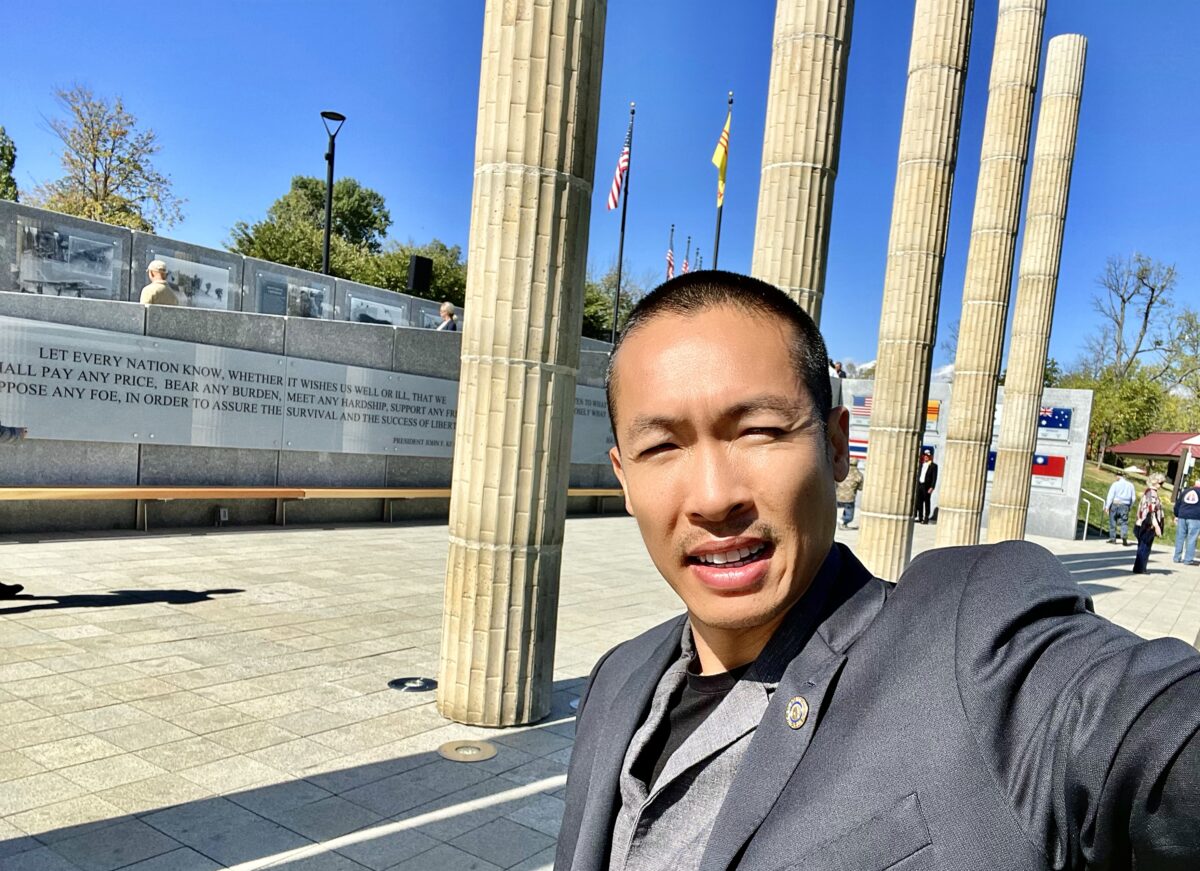
On the serene grounds of Veterans Memorial Park, Jeffersontown, KY, stands the newly inaugurated Tri Ân Monument — a symbolic, steadfast marker, paying tribute to not only the undaunted veterans of the Vietnam War but also casting a light on the ceaseless vitality of the Vietnamese-American community. The tales of valor from both USA veterans and South Vietnamese allies have forever inscribed a saga of sacrifice and brotherhood, spanning continents and echoing through history.

In the harrowing aftermath of the Vietnam War, the narrative progressed, bringing forth another chapter: the exodus of Vietnamese refugees. Individuals like Di Tran, now a serial small business owner and author in Louisville, Kentucky, began a quest, fleeing the only home they knew, to seek refuge in a promising land across the vast ocean. The tales of Vietnamese refugees like Tran aren’t merely stories of survival but epitomize an indomitable spirit to create, to build, and to weave into the fabric of American society.

Yet, within these stories of past pain and triumphant survival, lies a pivotal narrative – one that evolves from the remnants of bygone struggles into a vibrant tapestry, defining not only where we come from but, significantly, where we stand now, and the direction in which we are headed. The Vietnamese immigrants and their ensuing generations, setting deep roots across the expansive United States, have come to symbolize a profound truth: The value of our shared humanity is engraved not in our past or our origins but in our daily deeds and our shared future.

Take, for instance, the burgeoning Nail Industry in the USA, a sector that has blossomed into a staggering $10 billion+ annual industry. The Vietnamese-American community has played a pivotal role in transforming this industry, demystifying the luxury of nail care from an exclusive privilege of Hollywood celebrities to an accessible indulgence for the common citizen. Through endeavors in such industries, the Vietnamese community has not merely constructed businesses; they’ve established vital connections, fostering a symbiotic growth that enriches both the individual and the society in which they’ve nested.

Moreover, a powerful testament to the allegiance and dedication of Vietnamese-Americans towards their adopted homeland is visibly apparent in the military. Thousands of individuals of Vietnamese origin, spanning 1.5, 2nd, and now 3rd generations, are serving with utmost pride and dedication in the USA military, embodying the virtues of loyalty, bravery, and unyielding commitment to safeguarding the land that has become home.

Monuments like Tri Ân stand not merely as remnants of a tumultuous past but as an eternal flame, illuminating the path of unity, resilience, and collective prosperity. This is not merely a symbol for Vietnamese-Americans but is a beacon for all, conveying a message that our shared histories, while sometimes scarred by wars and displacement, bind us together in a shared future that we are collaboratively creating.

The Vietnamese community, much like all immigrant communities, illustrates a quintessential American tale: one where our origins, fraught with their unique challenges and triumphs, contribute to a greater American narrative. We rise, not as disparate stories, but intertwine as a collective saga, continuing to weave a future that honors our past, celebrates our present, and lights a torch for the generations yet to come.

The Vietnamese in America stand proud, not merely as contributors but as invaluable chapters in the magnificent American story. It’s in every enterprise embarked upon, every military uniform adorned, and every future dream nurtured where we affirm our unwavering commitment: To build, to honor, and to perpetually contribute towards a future where every story is cherished, every sacrifice acknowledged, and every contribution fuels our shared American dream.

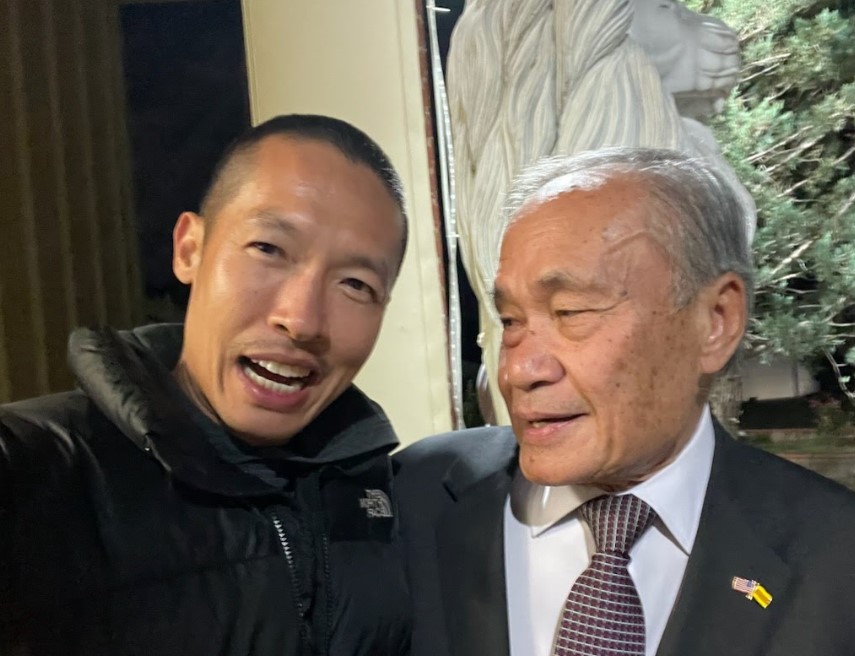
With Di Tran, this is Hoàng Đức Nhã was a notable figure in South Vietnam during the era of the Vietnam War, holding a significant position as an advisor to President Nguyễn Văn Thiệu. President Thiệu was the head of state in South Vietnam from 1965 to 1975, and Hoàng Đức Nhã was known to be one of his closest and most influential advisors.

Nhã held numerous roles during Thiệu’s presidency, including being involved in the realm of media relations and psychological warfare. He is often associated with managing and controlling the media and information dissemination in South Vietnam during the Thiệu administration, crafting the government’s narrative and managing its image during a particularly tumultuous and polarizing period in Vietnam’s history.

As an advisor to President Thiệu, Nhã was involved in various aspects of governance and policy-making and was often seen as a controversial figure due to his influence and the various strategies implemented, especially regarding media censorship and control.

It’s noteworthy that the history and the characters from the Vietnam War era are complex and multi-faceted, with diverse narratives stemming from the different perspectives and sides of the conflict. While some see figures like Nhã and Thiệu in a particular light due to their actions and policies during the war, others may have contrasting views based on their experiences, loyalties, and interpretations of the historical events.

References

https://openvault.wgbh.org/catalog/V_9C17ECD0FF9B45D7BDE1A4730F2E0988

Translate »