Categories
Education

From Louisville to the World: Di Tran, Dr. Tod Laursen, and the Dream of Accessible American Education

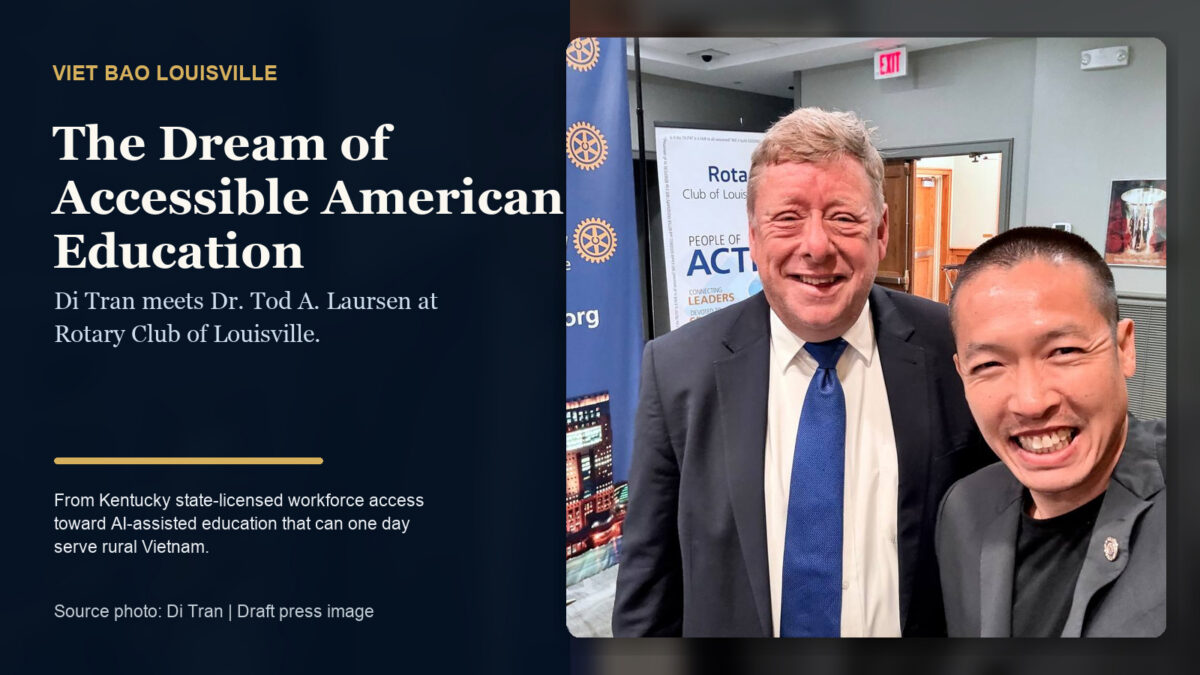
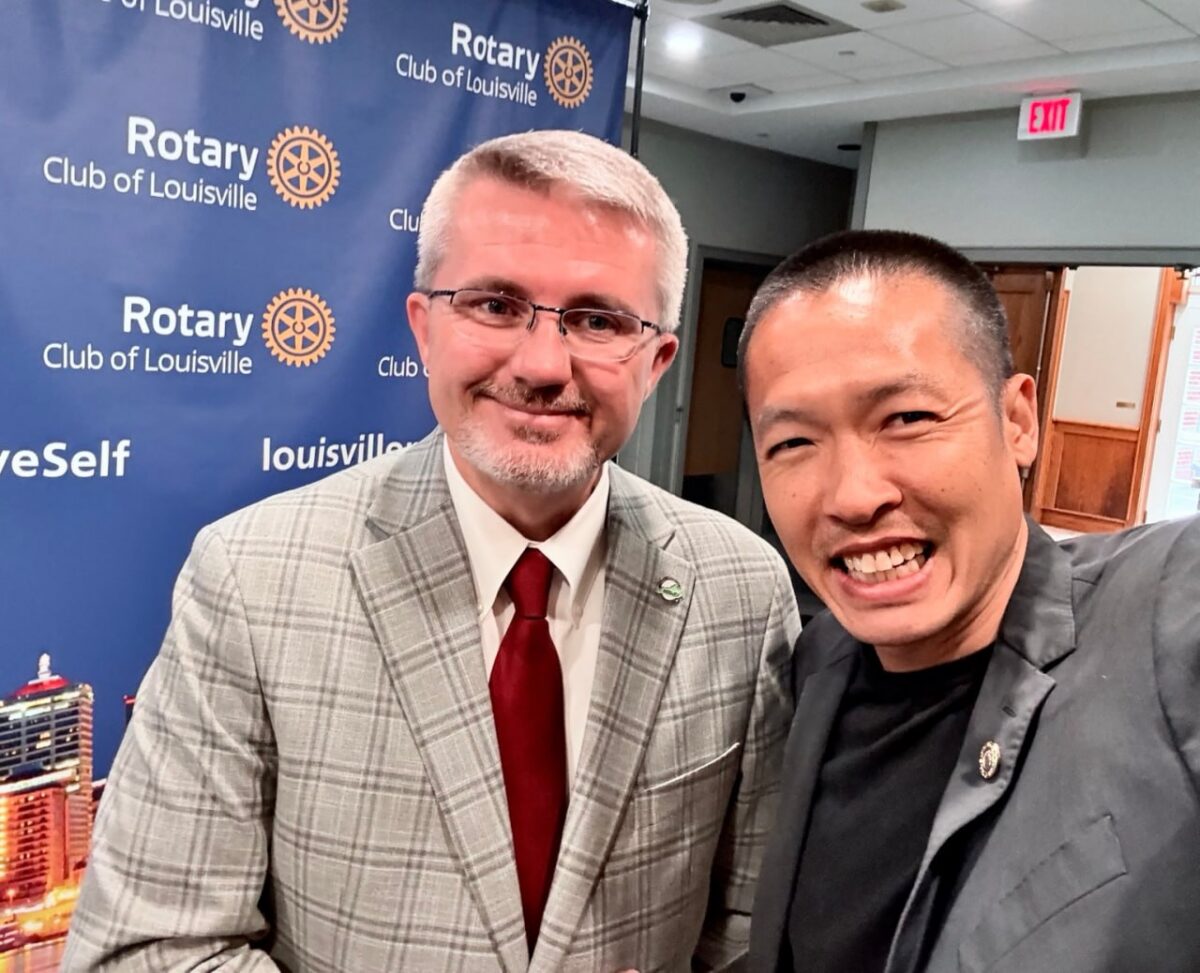
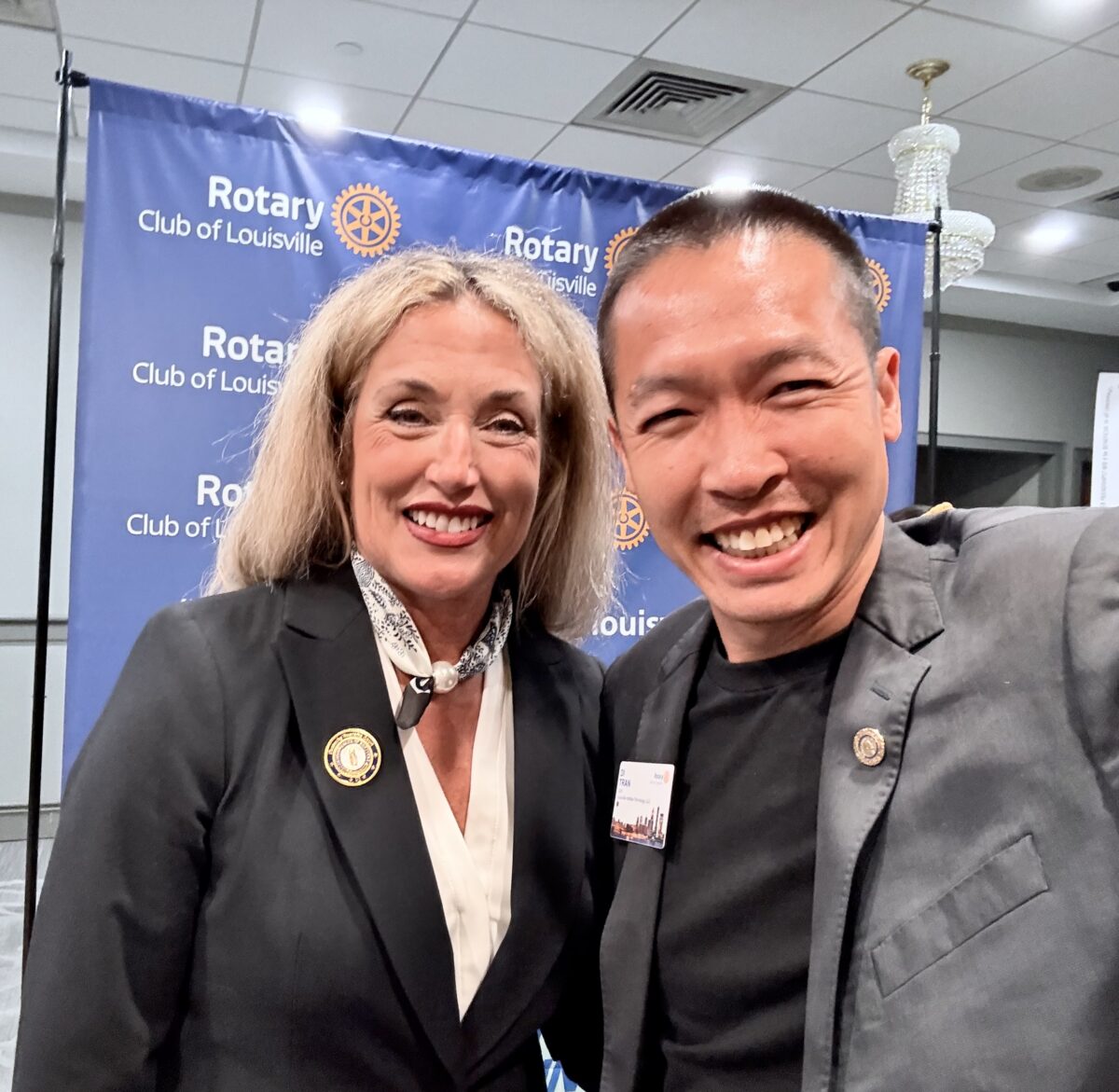
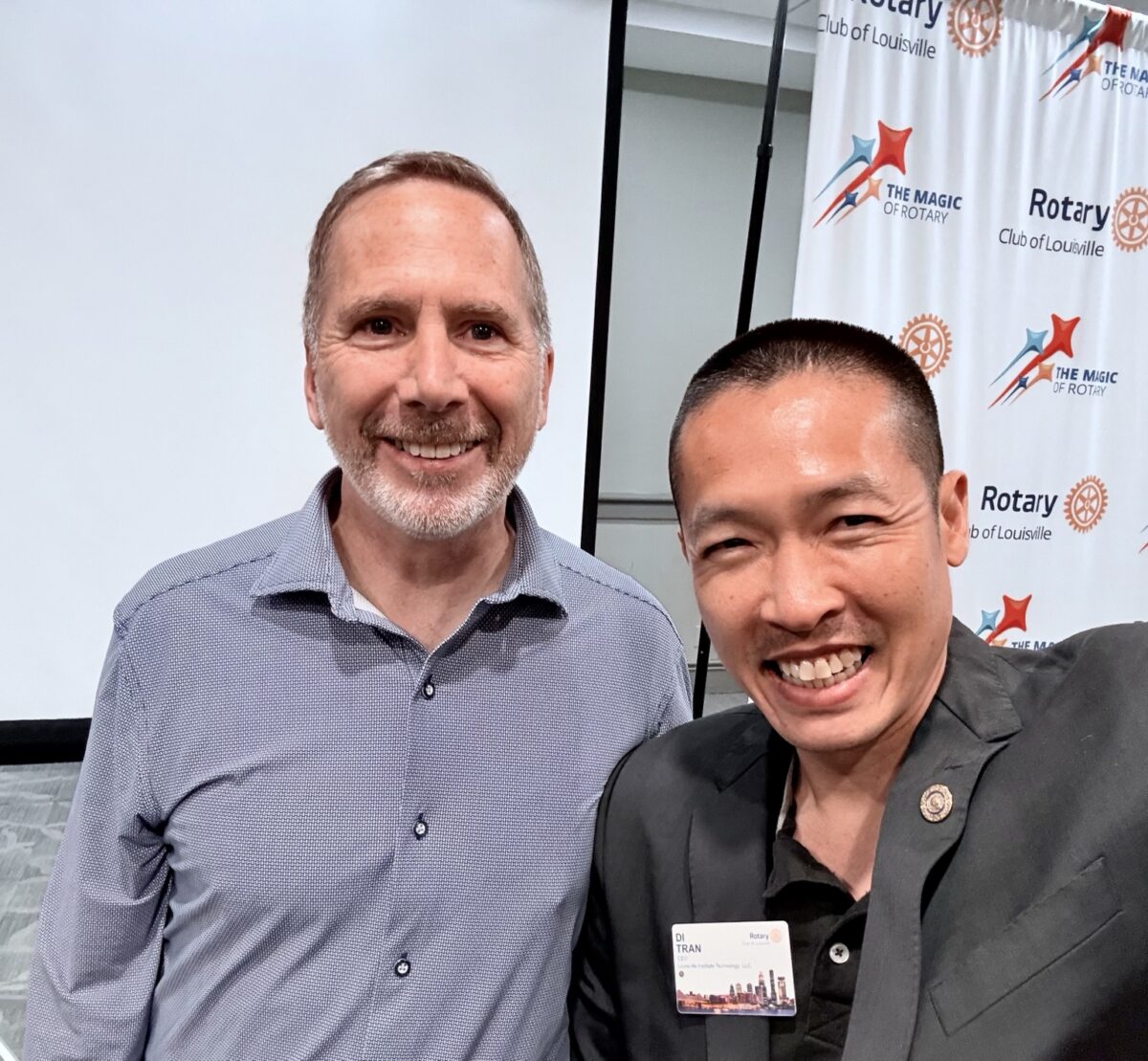
Louisville, Kentucky – On Thursday, August 27, 2026, at the Rotary Club of Louisville, Di Tran stood beside Dr. Tod A. Laursen, Chancellor of American University of Sharjah, after a program that carried a message much larger than one luncheon, one institution, or one country.

For Viet Bao Louisville, the photo is not simply a record of two men smiling at a civic gathering. It is a picture of education moving. It is a picture of one American story learning from another: Dr. Laursen’s work leading an American-style university in the Gulf region, and Di Tran’s work building accessible, Kentucky state-licensed workforce education in Louisville while dreaming of a future pathway that can one day reach rural Vietnam.

No endorsement is implied. No partnership is claimed. The importance is deeper than that.

This is a learning moment.

And for Di Tran, learning is never passive. When Di enters a room like Rotary, he does not merely listen for information. He listens for architecture: how serious institutions are built, how trust travels, how education becomes transferable, how culture is honored, how quality is documented, and how a local mission can become useful beyond its original geography.

The Rotary Club of Louisville had invited Dr. Laursen to speak on a subject with unusual relevance to Di Tran’s life work: “The American University of Sharjah: Harmonizing an American Education Model with Sharjah’s Heritage and Culture.”

For many people, the phrase might sound like a university lecture title. For Di Tran, it sounded like a mirror and a window at the same time.

It was a mirror because Di has spent years building education from the ground up in Louisville through Louisville Beauty Academy, a Kentucky state-licensed beauty college that has helped nearly 2,000 graduates move toward lawful work, dignity, skill, and economic participation. It was a window because Dr. Laursen’s work at American University of Sharjah shows how American-style education can be carried abroad with seriousness, cultural respect, institutional quality, and global ambition.

In one room, two forms of American education became visible.

One form is the university model: liberal learning, accreditation, global mobility, research, faculty governance, transfer-readable records, and international student formation.

The other is the access model: affordable occupational education, state licensing, adult learners, immigrant families, working parents, debt discipline, documentation, multilingual support, and direct pathways into lawful work.

Both matter. America needs both. The world needs both.

The Rotary email introducing the program described American University of Sharjah as a case study in how an American-style liberal arts education can serve a highly international student body seeking to contribute to the United Arab Emirates, the greater Gulf region, and innovation ecosystems around the world.

That is exactly the kind of sentence that matters to an immigrant founder who loves America deeply, believes education should be practical and human, and dreams of expanding access from Kentucky to Vietnam and beyond.

Two Education Stories In One Room

Dr. Tod A. Laursen’s career is not small. American University of Sharjah identifies him as Chancellor and describes a leadership path through Duke University, Khalifa University in Abu Dhabi, SUNY Polytechnic Institute, Wigwe University in Nigeria, and the State University of New York system, where he served as senior vice chancellor and provost of a 64-campus system with about 400,000 registered students.

That is a rare education resume. It crosses American higher education, Gulf-region higher education, emerging international university development, engineering research, system governance, and institutional scale.

But what made the Rotary program powerful was not only Dr. Laursen’s resume. It was the model.

American University of Sharjah is not merely an American name placed in another country. It is a university operating in Sharjah, in the United Arab Emirates, with local context, heritage, culture, students, employers, and national priorities. At the same time, AUS holds United States institutional accreditation through the Middle States Commission on Higher Education, and it also reports UAE licensing and accreditation through the Commission for Academic Accreditation of the Ministry of Higher Education and Scientific Research.

That combination matters. It shows that education can be local and global at the same time. It can respect place and still reach the world. It can serve a country’s own people while welcoming international students. It can carry American educational architecture without turning culture into an afterthought.

For Di Tran, that is not theory. It is personal.

Di came from Vietnam. He built in Kentucky. He raised institutions in Louisville. He chose the difficult lane of education, licensing, compliance, affordability, technology, and public trust. He has watched students who needed a doorway find one. He has watched adults rediscover confidence. He has watched immigrants, working parents, and people from underrepresented communities move closer to a state-recognized career path because a school made the pathway visible, affordable, and human.

And now, as Di Tran University and the College of Humanization grow in concept and infrastructure, the question becomes larger: Can the kind of education access being built in Kentucky become a model that later travels to other states, other trades, and eventually other countries?

Dr. Laursen’s work suggests the answer can be yes, but only if the work is serious.

That seriousness is the strategic boost for Di Tran’s mission.

The future cannot be built on inspiration alone. It must be built on lawful authority, verified records, quality systems, student protection, cultural respect, institutional patience, and technology that serves people rather than replacing responsibility.

American Education Is Not Just A Place

The United States has one of the world’s most influential education traditions not because every institution is perfect, but because the American model at its best combines liberal learning, applied learning, institutional autonomy, student formation, transferability of records, accreditation and quality assurance, civic participation, entrepreneurship, practical workforce connection, and the belief that a person’s future should not be permanently limited by birthplace.

That last belief is where Di Tran’s story begins.

Di’s American dream was not only to arrive in America. It was to become useful in America. It was to build something that made America more accessible to others. Louisville Beauty Academy became one of those vehicles: not an abstract institution, but a practical school where students could enter a real Kentucky state-license pathway in cosmetology, nail technology, esthetics, shampoo and styling, eyelash extension, and beauty instructor training.

The difference is important. LBA’s strength is not that it tries to imitate a university. Its strength is that it honors the level it serves: state occupational licensing, career entry, affordability, multilingual welcome, written cost clarity, and student protection.

That is a form of education dignity.

It is also one of the most overlooked forms of American education. A state license is not a small thing for a person who had no clear pathway before. A legal occupation is not a small thing for a parent trying to stabilize a family. A documented skill is not a small thing for an immigrant trying to become economically visible. A lower-cost school is not a small thing for a student who fears debt more than hard work.

And for many underrepresented adults, that level is where the dream begins. Not everyone needs to start with a four-year degree. Some people need a lawful, affordable, shorter, documented path into work. Some need a school that can explain the steps in plain language. Some need a payment structure that does not bury them. Some need a place where education feels possible again.

That is why Di’s model and Dr. Laursen’s model speak to each other even though they operate at different institutional levels.

One is a globally recognized university in the UAE. The other is a Kentucky state-licensed beauty college in Louisville. But both raise the same question: How do we take education seriously enough that it can cross barriers without losing the student?

Nearly 2,000 Graduates And A Practical Economic Story

Louisville Beauty Academy has long presented itself as having served nearly 2,000 graduates. In Di’s founder lens, those graduates are not only numbers. They are families, licenses, small-business potential, salon workers, instructors, immigrants, parents, taxpayers, and community members.

If one uses a simple illustrative model of 2,000 graduates each generating an average of $25,000 per year in earned-income activity through licensed beauty work, related employment, or small-business participation, the annual economic activity reaches approximately $50 million. That figure should be understood as an illustrative founder estimate, not audited payroll data. But the larger point is still clear: accessible occupational education can become real economic movement.

That is the part of education America must not forget.

Education does not only happen in elite lecture halls. It happens when a nail student learns sanitation, when a cosmetology student learns discipline, when an esthetics student learns professional care, when a beauty instructor learns to teach, when a working adult learns that a license is possible, and when a family sees one person move from uncertainty into documented skill.

This is where LBA’s story becomes more than a school story. It becomes a workforce story. It becomes a small-business story. It becomes an immigrant American story. It becomes a Kentucky story. It becomes a humanization story.

When one person gains skill, the value does not stop with that person. It travels to a family, a neighborhood, a client, a workplace, a tax base, a business, and sometimes a future school. Education multiplies when it gives people something they can use.

The Dream Beyond Kentucky

Di Tran’s dream is not to abandon Kentucky. It is to prove something in Kentucky so well that it can serve beyond Kentucky.

First, build the lawful model here: Kentucky state-licensed, transparent, affordable, documented, human-controlled, and student-protective.

Second, digitize the operational backbone: intake, orientation, translation, student communication, tutoring support, record organization, compliance reminders, proof collection, learning support, career-readiness documentation, and administrative follow-up.

Third, use AI as infrastructure, not as a replacement for responsibility. AI can help translate, route, remind, explain, document, organize, summarize, and scale. But humans must remain responsible for contracts, licensing requirements, student protection, official records, teacher judgment, regulatory compliance, and institutional claims.

Fourth, expand the architecture into other trades where people need lawful entry, affordable education, and practical dignity.

Fifth, when the model is mature enough, adapt it abroad.

This is where Di’s vision becomes larger than one school. Under Di Tran University and the College of Humanization, the deeper project is not only to teach a trade. It is to build a repeatable education operating system: human-centered, AI-assisted, multilingual, documentation-rich, legally careful, and scalable across fields where people need real access.

Vietnam matters deeply in this vision. Di came from Vietnam. Rural Vietnam is not an abstract market to him. It is memory, family, origin, and moral responsibility. If American-style education can be harmonized with Sharjah’s heritage and culture, then one can imagine a future in which American-inspired, locally respectful, skill-centered, AI-supported education helps rural Vietnam as well.

But that future must be careful. It cannot be built with slogans alone. It must respect local law, language, employers, culture, national education systems, and transfer conditions. It must avoid making promises that the institution cannot control. It must build records that other schools, regulators, employers, and students can understand.

That is one of the deepest lessons from American University of Sharjah. The power is not in saying “American” loudly. The power is in building quality so clearly that others can trust it.

That is the dream Di Tran is carrying: not an American education brand as decoration, but American education as disciplined access. Not prestige for its own sake, but quality that can be understood. Not technology as a shiny tool, but AI-assisted infrastructure that helps people move through the system with clarity, language support, records, reminders, and human protection.

Accreditation, Transfer, And The Meaning Of Trust

One reason American University of Sharjah matters is accreditation. AUS states that it is institutionally accredited in the United States by the Middle States Commission on Higher Education. Middle States is one of the recognized institutional accreditors in the American higher education system.

This does not mean every credit automatically transfers everywhere. Transfer decisions are always made by the receiving institution. But recognized accreditation gives a learning record a seriousness that can be understood beyond one campus.

That point is important for Di Tran University.

DTU should not claim accreditation before accreditation exists. Louisville Beauty Academy should continue to use its strongest proper public frame: Kentucky state-licensed, national award-winning, affordable, transparent, and focused on real state occupational-license pathways.

But DTU can study the quality architecture behind accreditation: governance, faculty standards, curriculum maps, assessment, student records, catalogs, complaint procedures, learning outcomes, credit or hour definitions, continuous improvement, and transfer-readable documentation.

In other words, accreditation is not only a badge. It is a discipline.

Dr. Laursen’s world is the world of that discipline. Di Tran’s world is the world of translating discipline into access for people who are often excluded from elite education conversations. That is why the meeting matters.

That is why the two stories belong together.

Dr. Laursen’s work helps show how an American education model can cross national borders with institutional seriousness. Di Tran’s work helps show how American education can move downward and outward toward people who need practical access now: adults, immigrants, underrepresented students, rural families, and future workers who may not have the luxury of waiting for a perfect system.

Rotary As A Place Where Education Travels

The Rotary Club of Louisville deserves sincere thanks for creating the room where this connection could happen.

Rotary at its best is civic education. It is where business leaders, educators, nonprofit builders, public servants, and community members gather not only to eat lunch, but to learn what the world is becoming. A speaker from American University of Sharjah can stand in Louisville and open a conversation about the Gulf region, liberal arts education, global innovation, accreditation, culture, and the future of learning.

That is not ordinary networking. That is a city learning.

And for Di Tran, it is also a continuation of a personal practice. Di loves to learn. He attends rooms where the level is high because those rooms sharpen the work. He listens for patterns. He studies institutions. He watches how serious leaders speak. He asks how a lesson from one field can become useful in another.

That kind of learning is not passive. It becomes action. In LBA, it becomes affordability and written-cost transparency. In DTU, it becomes humanized learning and digital education architecture. In NABA, it becomes immigrant and small-business advocacy. In Viet Bao Louisville, it becomes community storytelling. In future trade education, it may become a system for giving more people an accessible, lawful, skill-based path into work.

And in Vietnam, one day, it may become a bridge back to the countryside Di came from: not as charity alone, but as structured access, lawful training, documentation, digital support, and human dignity.

The Larger Meaning

The photo of Di Tran and Dr. Tod A. Laursen at Rotary is not a photo of endorsement. It should not be used that way.

It is something better. It is a photo of learning.

It is a photo of alignment between two levels of the same question: how can education become more accessible, more transferable, more culturally respectful, more useful, and more human?

Dr. Laursen represents an American-style university model operating internationally with seriousness. Di Tran represents an immigrant founder building a Kentucky state-licensed access model from the ground up, with nearly 2,000 graduate stories behind it and a larger dream ahead.

One model stands in Sharjah and speaks to the Gulf and the world. One model stands in Louisville and speaks to Kentucky, immigrants, working adults, rural communities, and eventually Vietnam.

Both remind us that education is not merely a building. It is a bridge. And the best bridges do not erase either side. They honor both.

That may be the most important lesson Di Tran carried out of Rotary today: American education is strongest when it is not trapped inside prestige, debt, or geography. It is strongest when it becomes accessible, lawful, documented, culturally respectful, technologically modern, and human enough to reach the people who need it most.

From Louisville to Sharjah, and perhaps one day from Louisville to rural Vietnam, the dream is the same: bring learning closer to the people, make it lawful, make it affordable, make it transferable, make it human, and then build it well enough that the world can trust it.

Sources And Notes

Editorial note: This article is a civic and education reflection. It does not state or imply endorsement, partnership, sponsorship, or official approval by Dr. Tod A. Laursen, American University of Sharjah, Rotary Club of Louisville, University Club, Middle States Commission on Higher Education, or any government/regulatory body. Transfer, licensure, employment, income, accreditation, and international expansion claims remain carefully limited.

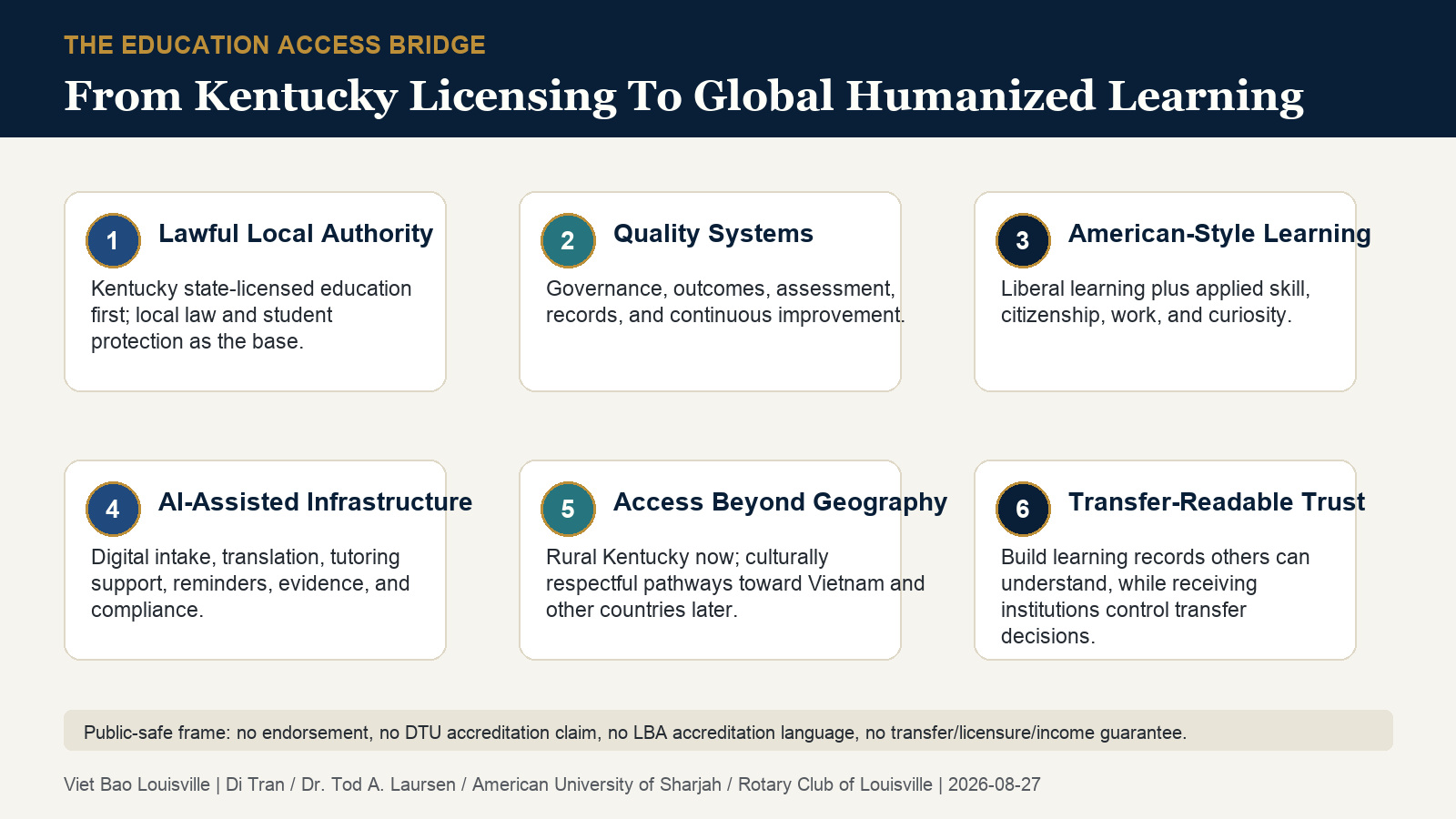
Visual explainer showing six layers of the education access bridge: lawful local authority, quality systems, American-style learning, AI-assisted infrastructure, access beyond geography, and transfer-readable trust.
A public-safe visual explainer connecting Kentucky state-licensed workforce access, quality systems, American-style learning, AI-assisted infrastructure, rural Kentucky, Vietnam, and transfer-readable documentation.
Categories
Books Community Vietnamese American

DO NOT ABSORB: A New Di Tran Book On Care, Discipline, And Value Creation

DO NOT ABSORB: A New Di Tran Book On Care, Discipline, And Value Creation

Viet Bao Louisville shares the community release of DO NOT ABSORB, a new Di Tran University – College of Humanization book by Di Tran. The book is now available through public YouTube, Spotify, and the verified Amazon listing.

The full Di Tran University book-release article is available here:
https://ditranuniversity.com/do-not-absorb-di-tran-university-book-release/

For Vietnamese American families, immigrant workers, students, parents, and small-business builders, the message of this book is practical. Many people carry more than their own daily tasks. They carry family history, money pressure, expectation, disappointment, sacrifice, old pain, and the desire to make life better for the next generation. Care is beautiful. But care without discipline can become absorption. Absorption can quietly turn into exhaustion, reaction, resentment, and confusion.

DO NOT ABSORB speaks directly to that problem.

The book does not tell people to stop caring. It teaches a stronger form of care: stay compassionate, but do not become controlled by every mood in the room. Listen carefully, but do not become the wound. Work hard, but do not let pressure destroy your character. Love family, but do not export pain into the next generation. Build value from difficulty instead of allowing difficulty to become your identity.

Visual explainer for DO NOT ABSORB showing four doctrine layers: emotion, silence, money, and value.
DO NOT ABSORB is a Di Tran University – College of Humanization book on governed care and value creation.

A Community Message

Many immigrant families understand this lesson deeply. The first generation often survives by absorbing pressure in silence. The second generation often feels that pressure without always knowing where it came from. Business owners absorb customer stress. Parents absorb children’s fear. Students absorb comparison. Workers absorb financial anxiety. Community leaders absorb public expectation. Over time, even good people can become tired from carrying everything.

This book gives language to a healthier discipline: governed care.

Care deeply. Govern your response. Turn pressure into value.

That message fits the broader work of Di Tran University because the institution is built around humanization: practical knowledge that helps people become useful, responsible, steady, and service-minded while preserving dignity. The book is not a clinical promise, not therapy, and not financial advice. It is a practical human doctrine for ordinary life, family, work, leadership, and self-command.

The Four Layers

  • Emotion: Feel without becoming ruled by every emotional climate.
  • Silence: Use silence as timing and mercy, not as fear or punishment.
  • Money: Understand money as stored intention, labor, and values in motion.
  • Value: Turn pressure into useful work, service, and disciplined creation.

For Louisville’s Vietnamese and immigrant communities, this is more than a personal-growth phrase. It is a survival-to-service message. The goal is not only to endure pressure. The goal is to transform pressure into clearer families, better work, stronger students, healthier leadership, and useful contribution.

Watch, Listen, And Follow The Release

Watch on YouTube:
https://youtu.be/eCKswyShS7U

Listen on Spotify:
https://open.spotify.com/episode/4io3XI3djwRZ9EHzunhtSi?si=PFF-UhmHQL2pcEMv957-jw

Amazon:
https://www.amazon.com/dp/B0HGM69RYZ

DTU book-release source:
https://ditranuniversity.com/do-not-absorb-di-tran-university-book-release/

Why Viet Bao Is Sharing It

Viet Bao Louisville exists to preserve and elevate community stories, education, culture, family resilience, and civic contribution. DO NOT ABSORB belongs in that conversation because it gives language to a discipline many families practice but rarely name: the ability to care, sacrifice, work, and serve without allowing pressure to consume the person.

The book’s message is simple enough to remember and serious enough to practice:

Do not absorb what is not yours to become.
Do not export what you have not owned.
Do not punish people for being human.
Do not worship mood.
Create value.

That is a community message. That is a family message. That is a work message. And now it is a Di Tran University book.

Reference And Release Links

Categories
Community Culture Education Workforce Development

Louisville’s Beauty Is Human: Rotary, Music, Family, and the Power of Community Across Cultures

A Viet Bao Louisville reflection on the Rotary Club of Louisville, the Curtis Family C-Notes, Louisville Central Community Centers, and the practical humanization mission carried through Louisville Beauty Academy, Di Tran University, and Di Tran Enterprise.

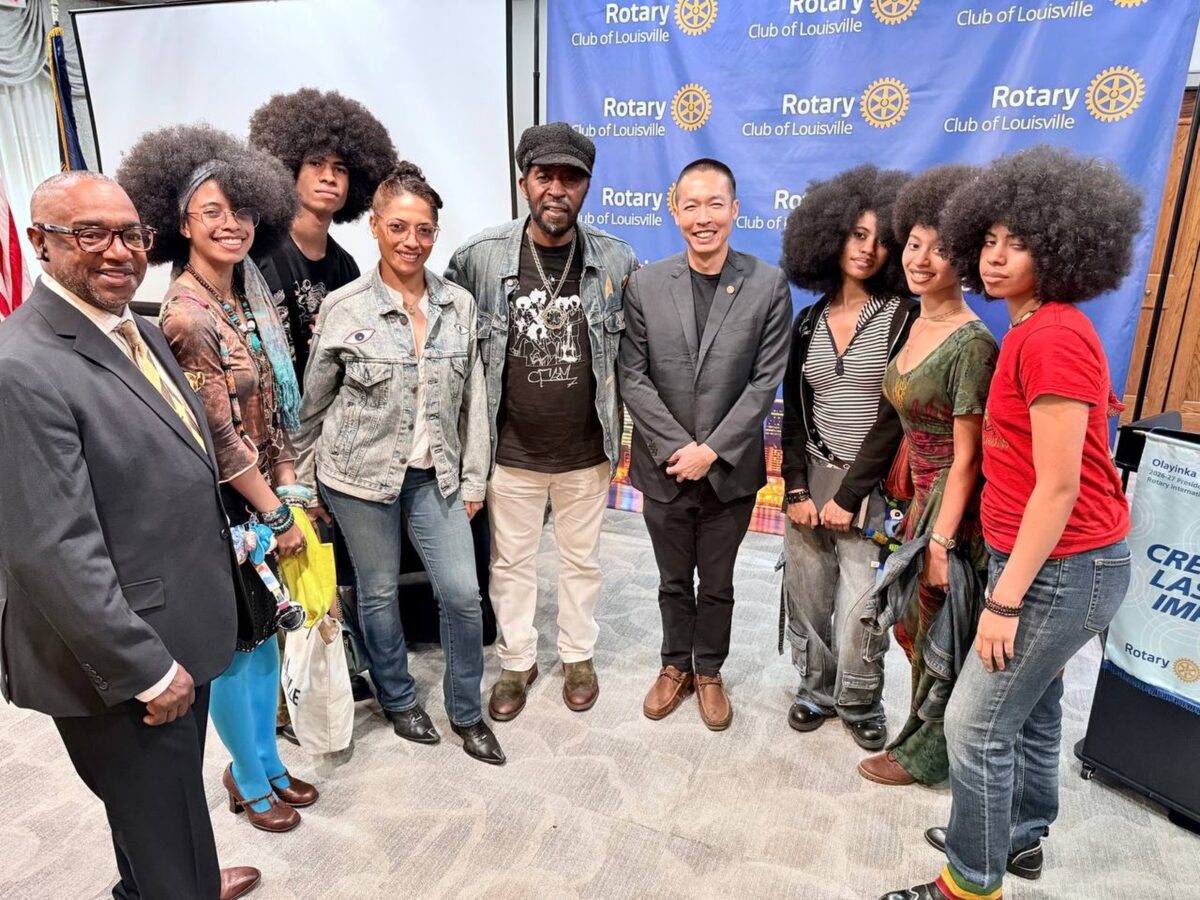
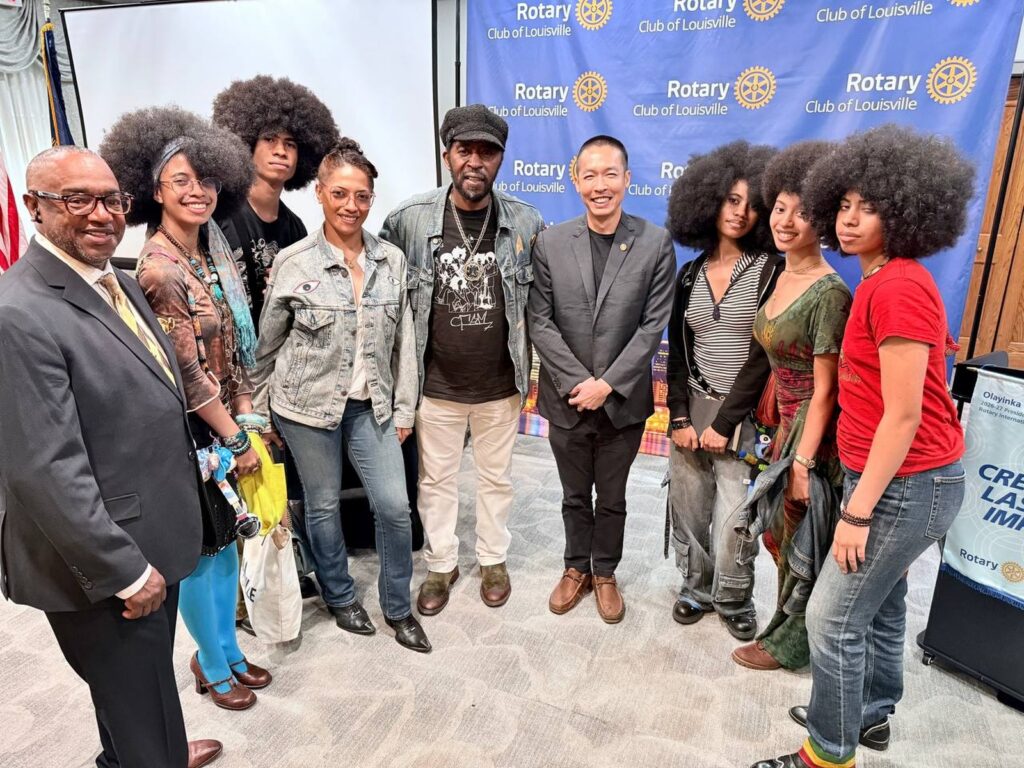
Di Tran stands with Dr. Kevin Fields and the Curtis Family C-Notes in front of a Rotary Club of Louisville backdrop on August 20, 2026.
Di Tran with Dr. Kevin Fields and the Curtis Family C-Notes at the Rotary Club of Louisville, where music, family, natural beauty, Black cultural dignity, Vietnamese American respect, and Louisville civic leadership came together.

Louisville, Kentucky is beautiful not only because of its skyline, river, neighborhoods, food, history, or institutions. Louisville is beautiful because of the people who gather here with purpose.

That beauty was visible at the Rotary Club of Louisville, where civic life still has a place, where leaders still sit together for lunch, and where ideas, service, music, business, education, and humanity can meet in the same room.

A Civic Room Where Louisville Learns Together

The Rotary Club of Louisville is one of Kentucky’s important civic gathering places. Its weekly Thursday luncheon is not simply a networking event. It is a living classroom of leadership, service, and community trust. In a time when people are often divided by politics, class, race, culture, language, and background, Rotary creates a rare environment where people can still listen, learn, and build together.

On Thursday, August 20, 2026, the Rotary luncheon featured Dr. Galen Clavio of the Indiana University Media School, speaking on “Hoosiers in Wonderland: Indiana Football and the Most Improbable Turnaround in Sports History.” Rotary’s meeting notice framed the program around Indiana football’s historic rise under Coach Curt Cignetti, a story of grit, belief, leadership, and turnaround.

It was a sports story, but it carried a wider civic lesson: institutions rise when people believe, organize, and keep working.

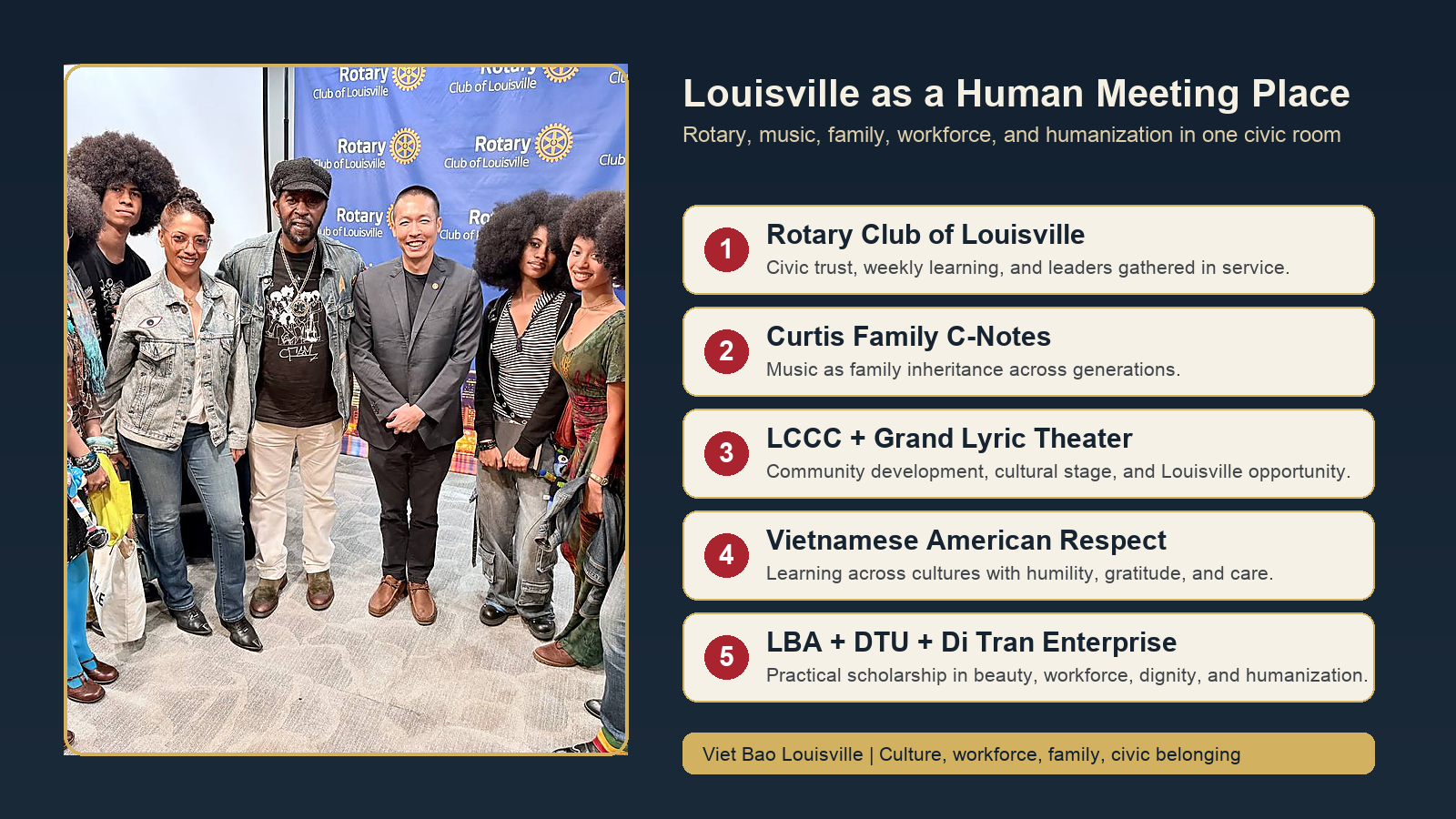
Visual explainer showing Rotary Club of Louisville, Curtis Family C-Notes, LCCC and Grand Lyric Theater, Vietnamese American respect, and LBA plus DTU plus Di Tran Enterprise as connected pillars of humanization.
Louisville as a human meeting place: Rotary, music, family, culture, workforce, and humanization coming together in one civic room.

The Curtis Family C-Notes Come to Louisville

At the luncheon, Dr. Kevin E. Fields, Sr., President and CEO of Louisville Central Community Centers, Inc., introduced the Curtis Family C-Notes, a multigenerational family band coming to Louisville for the Curtis Family C-Notes Concert Series at the Grand Lyric Theater.

The Louisville Tourism listing describes the group as San Francisco’s “First Family of Song” and highlights performances on Friday, August 21, 2026, and Saturday, August 22, 2026, at the Grand Lyric Theater, 1300 West Muhammad Ali Boulevard. The public listing describes a family ensemble bringing powerful vocals, live instrumentation, soul, R&B, gospel, and contemporary sounds to Louisville.

The Curtis Family C-Notes are not merely entertainers. They are a family, an artistic institution, and a living example of how music can hold generations together. Their public identity includes projects such as Awaken, Awaken II, and Awaken III: People of the Everyday. But what made their presence so meaningful in Louisville was not only genre, popularity, or performance quality. It was the visible bond of the family itself.

A Vietnamese American Learner in a Black American Musical Moment

For Di Tran, Founder of Louisville Beauty Academy, Di Tran University, the College of Humanization, and Di Tran Enterprise, the encounter became more than a cultural moment. It became a humanization moment.

Di Tran is Vietnamese American. He did not grow up as an expert in Black American music, soul, funk, gospel, or the full history of Black artistic traditions. He approaches this world with humility, almost like a beginner in American music, but with deep respect for the art, the family, the discipline, and the dignity behind it.

That humility matters. The strongest scholarship is not arrogance. It is disciplined listening.

The mission of Louisville Beauty Academy and Di Tran University is not simply technical education. It is human elevation through practical skill, licensed workforce development, scholarship, entrepreneurship, dignity, and service. Di Tran Enterprise, across its educational, publishing, community, and workforce platforms, is built around a simple belief: people become stronger when they are seen, trained, respected, and connected to opportunity.

What Moved Di Tran Most: Family, Natural Beauty, and Peace

What stood out most about the Curtis Family C-Notes was not only their sound. It was their presence.

Di Tran saw father, mother, and children together. He saw warmth. He saw peace. He saw family love. He saw discipline without coldness and beauty without arrogance. He saw young people learning from parents, parents honoring children, and generations carrying music as a shared language.

When Di Tran asked how many generations of musicians were represented in the family, the answer pointed to a deep inheritance. This was not a temporary performance group. This was family culture. This was music as legacy.

In a world where many families struggle to stay close, the Curtis Family C-Notes offered a different picture: family as band, family as school, family as discipline, family as ministry, family as joy.

Di Tran was also deeply moved by their natural hair, their elegance, and their visual dignity. Their look carried a timeless beauty, almost a 1970s-inspired grace, but it was more than style. Their natural hair reflected identity, culture, confidence, and pride. For many Asian and immigrant communities, Black hair culture is not always understood deeply enough. But in that Rotary room, understanding began through respect.

A Vietnamese American educator can stand beside a Black American musical family and say: I may not know everything about your culture, but I see the beauty. I respect the dignity. I honor the family. I want my son, my students, and my community to learn from this.

Beauty Beyond the Surface

This moment also connected to Di Tran’s own Black History Month reflection and song draft around the phrase “I am not my hair,” connected to young people, workforce dignity, and self-worth. The message is not that hair does not matter. Hair does matter. Culture matters. Identity matters. But no human being should ever be reduced to appearance alone. A person is story, ancestry, spirit, family, skill, discipline, and divine potential.

This is also why Louisville Beauty Academy’s work matters. Beauty education is often misunderstood as surface-level work. But true beauty education is human work. It teaches touch, service, confidence, entrepreneurship, sanitation, discipline, communication, licensing, professionalism, and dignity. It gives students, including immigrants, working adults, parents, and underserved populations, a practical pathway into economic participation.

Di Tran University and the College of Humanization expand that same mission through scholarship, authorship, philosophy, workforce thought leadership, and AI-enabled education. Di Tran’s body of work, including more than 100 published books and institutional writings, points to one central theme: human beings must not be treated as machines, labels, markets, or categories. They must be recognized, trained, loved, and elevated.

Why This Is a Viet Bao Louisville Story

This is the kind of story Viet Bao Louisville exists to tell: not only what happened, but what it means. For the Vietnamese American community, the lesson is clear. We must not live in Louisville only as workers, business owners, or immigrants protecting our own circle. We must also become students of the city’s wider beauty. We must learn Black history, respect Black cultural institutions, honor family art, and join the civic spaces where relationships are built.

The Rotary Club of Louisville made that possible in one lunch.

Dr. Galen Clavio’s talk reminded the room that transformation is possible. Dr. Kevin Fields and LCCC reminded the room that culture and community must be invested in. The Curtis Family C-Notes reminded the room that music can carry family, history, love, and dignity across generations. And Di Tran’s response reminded us that true scholarship is not only reading books. True scholarship is listening with humility, seeing beauty in others, and turning that experience into service.

That is the diplomatic and practical position of Louisville Beauty Academy, Di Tran University, and Di Tran Enterprise: to build bridges between education, workforce, culture, community, and human dignity.

Not theory alone. Not performance alone. Practical love. Practical scholarship. Practical workforce elevation. Practical humanization.

Louisville at Its Best

Louisville is beautiful because moments like this still happen here.

A football story about grit. A Rotary lunch about civic life. A family band about love. A Black cultural institution lifting music. A Vietnamese American educator learning across culture. A beauty academy seeing beauty beyond the surface. A university of humanization seeing music as bonding, family as education, and community as the classroom.

That is Louisville at its best.

That is Kentucky at its best.

That is Rotary at its best.

And that is why this moment deserves to be remembered.

References and Community Links

Categories
Community

Education Is Changing for Good: Kentucky Commissioner Dr. Robbie Fletcher and Di Tran Connect Public Education, Adult Learning, Licensing, and Workforce Development

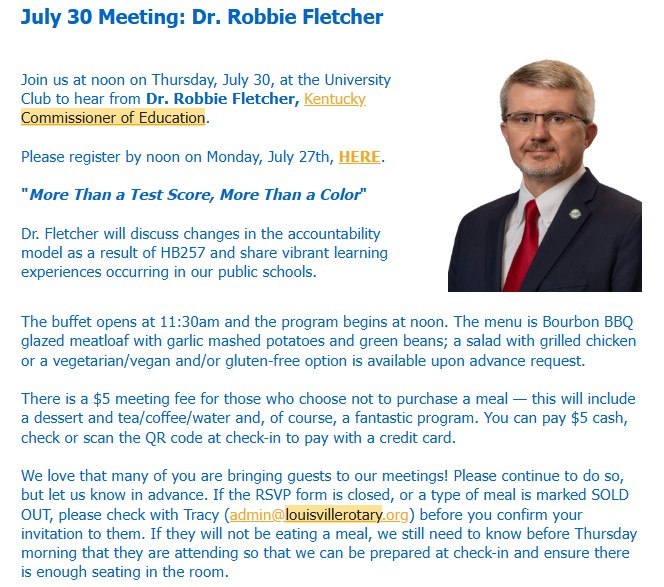
Louisville witnessed more than a luncheon on July 30, 2026. It witnessed a public education moment.

At the Rotary Club of Louisville, Dr. Robbie Fletcher, Kentucky Commissioner of Education, spoke under the theme “More Than a Test Score, More Than a Color.” The message reached far beyond one meeting, one law, or one school system. It spoke to the moment we are all living through: a moment when Kentucky, America, and the world must rethink what education is for.

Education is changing for good because life itself has changed.

For too long, education has often been treated as a fixed system: a child enters, the system measures, the system labels, the person moves forward or falls behind. But that old mental model is breaking. Automation is changing work. Artificial intelligence is changing information. Transparency is changing public trust. Families are questioning cost and value. Students are asking for meaning. Adults are returning to learning. Employers are asking for proof of ability. Communities are demanding real outcomes.

Rotary Club of Louisville July 30 meeting notice for Dr. Robbie Fletcher, Kentucky Commissioner of Education, titled More Than a Test Score, More Than a Color.
Rotary Club of Louisville July 30, 2026 meeting notice for Dr. Robbie Fletcher, Kentucky Commissioner of Education.

The Question of This Era

Education can no longer be only about testing. It cannot be only about institutional reputation. It cannot be only about one pathway, one credential, one gatekeeper, or one narrow definition of success.

The new question is more powerful: does education help a human being become capable, documented, adaptable, employable, ethical, licensed where required, trusted by the public, and ready to keep learning for life?

That is the question of this era.

A Statewide Leader at a Statewide Turning Point

Dr. Fletcher’s role gives this conversation statewide importance. According to the Kentucky Department of Education, Robbie Fletcher, Ed.D., was named Commissioner of Education by the Kentucky Board of Education on March 21, 2024, and began serving on July 1, 2024, after approval by the Kentucky Senate. His work now stands inside Kentucky’s movement to reimagine assessment and accountability, including the direction connected to House Bill 257 and the broader “United We Learn” vision.

The Rotary Club of Louisville described Dr. Fletcher’s July 30 presentation as a discussion of changes to Kentucky’s accountability model and the vibrant learning experiences taking place in public schools. That phrase matters: vibrant learning. It suggests that education must be alive. It must connect with curiosity, community, skill, service, career readiness, and the real development of the whole person.

Di Tran’s Education Doctrine: People Are Becoming

For Di Tran, Founder & Chancellor of Di Tran University and Louisville Beauty Academy, this moment speaks directly to the heart of his life’s work: humanization through education. Di Tran’s educational philosophy has long centered on a simple but powerful belief: people are not numbers; people are becoming.

A student is not only a transcript. An adult learner is not only a late start. A licensed worker is not only a trade. An immigrant is not only a language barrier. A small-business owner is not only an economic statistic.

Each person is a human being with capacity, dignity, story, skill, and future.

That is why public education, adult education, workforce development, licensing education, entrepreneurship, and lifelong learning should not be separated into disconnected boxes. They are one human-development system.

Visual Explainer

From Institution-Centered Education to Human-Centered Education

Old question: Who controls the gate?

New question: What does the learner need, what can the learner prove, what support is missing, what pathway is lawful, and what outcome is real?

The future: human focus, individual pathways, adult dignity, transparent documentation, licensed readiness, lifelong learning, workforce development, and public trust.

Workforce Development Is Education Made Practical

A child in public school needs direction before adulthood. A high school student needs career exploration before debt. A working adult needs a respectful way back into learning. A New American needs language, documentation, navigation, and trust. A parent needs flexibility. A future entrepreneur needs practical skill plus compliance. A licensed professional needs law, safety, sanitation, service, discipline, and public responsibility.

This is the true meaning of workforce development.

Workforce development is not just job placement. Workforce development is education made practical. It is the bridge between learning and livelihood. It is the process by which a person becomes ready to contribute with skill, confidence, documentation, and dignity.

Kentucky Adult Education already shows this wider purpose through GED preparation, English as a second language, transition to postsecondary education, workforce education, certifications, family literacy, and corrections education. These are not side programs. They are public evidence that education continues beyond childhood. They are evidence that a person’s future can reopen.

Louisville Beauty Academy as Local Proof of Adult Workforce Education

Louisville Beauty Academy stands as a local proof point in that same story. As a Kentucky state-licensed, national award-winning beauty college, LBA serves many students who are adults, working families, immigrants, career changers, and future small-business owners. In beauty education, learning is immediate and accountable. Students must learn practical skill, law, sanitation, safety, client care, documentation, attendance discipline, professionalism, and licensing readiness.

That is education with public consequence.

A beauty license can change the legal and economic identity of a person. It can move a worker from informal labor into lawful professional work. It can give a parent a flexible career pathway. It can help a New American stand visibly in the economy. It can support small-business creation. It can turn training into service, service into trust, and trust into opportunity.

This is why licensed adult education belongs in the same conversation as public education reform. It is where the promise of learning becomes visible in adult life.

The AI Era Makes Education More Human, Not Less

The AI era makes this even more urgent.

The U.S. Department of Education’s report on artificial intelligence and the future of teaching and learning recognizes that AI is rapidly entering educational technology and public life. The World Economic Forum’s Future of Jobs Report 2025 describes major workforce transformation driven by technology, AI, data, and changing skill demands. The OECD has emphasized the importance of skills, lifelong learning, and adaptation in the AI age.

The lesson is not that machines replace education. The lesson is that education must become more deeply human because machines are becoming more capable.

AI can produce information. It cannot produce character. Automation can speed up tasks. It cannot give a person purpose. Data can expose performance. It cannot restore confidence to an adult who believed it was too late. Technology can make learning more accessible. It cannot replace the dignity of a teacher, mentor, employer, school, civic club, or community that sees the person behind the file.

The future will not belong only to people with degrees. It will belong to people who can learn, document, adapt, communicate, serve, build, repair, create, comply, lead, and keep growing.

Multiple Pathways Deserve Respect

College matters. Career and technical education matters. Skilled trades matter. Licensed professions matter. Adult education matters. English-language learning matters. Entrepreneurship matters. Public service matters. Community-based training matters. Every honorable pathway that helps a person become more capable deserves respect.

The old system too often asked: who controls the gate?

The new education system must ask: what does the learner need, what can the learner prove, what support is missing, what pathway is lawful, what outcome is real, and how can the community help the person move forward?

This is the shift from institution-centered education to human-centered education.

Rotary as Civic Learning

That is also why the Rotary Club of Louisville matters. A Rotary lunch is not merely a social event. At its best, it is civic learning. It is a room where public leaders, business owners, educators, nonprofit builders, and community members quietly build the brain of the city. No time is wasted when the room is learning. No meeting is small when the speaker carries a statewide mission and the audience carries local responsibility.

Viet Bao Louisville extends sincere appreciation to the Rotary Club of Louisville for once again hosting a meaningful, beautiful, and intellectually valuable gathering. It offered Louisville another chance to learn from someone representing a major public responsibility for the Commonwealth of Kentucky.

Dr. Fletcher’s message matters because education policy is not abstract. It affects children, teachers, families, taxpayers, employers, adult learners, and the workforce future of Kentucky. Di Tran’s presence matters because the conversation must not remain only at the policy level. It must reach the real places where learners become workers, workers become licensed professionals, and licensed professionals become small-business contributors.

This is where Di Tran University, Louisville Beauty Academy, and Viet Bao Louisville carry a shared public mission: to elevate education as human development, to honor workforce dignity, to document useful learning, and to show that community education can be both practical and beautiful.

Education for the Human Age

The future of education is not cold automation. It is not blind tradition. It is not prestige without proof. It is not testing without purpose.

The future of education is human focus.

Individual focus.

Multiple pathways.

Transparent documentation.

Lifelong learning.

Adult dignity.

Licensed readiness.

Workforce development.

Public trust.

That is education for the AI age.

That is workforce development for the human age.

That is Kentucky education changing for good.

And in Louisville, at the Rotary Club of Louisville, that message found a worthy room, a worthy speaker, and a worthy moment.

Research Base and Source Notes

Editorial note: This article is a Viet Bao Louisville civic and education reflection. It does not state or imply an endorsement, partnership, or official position by the Kentucky Department of Education, Dr. Robbie Fletcher, or the Rotary Club of Louisville.

Categories
Small Businesses Workforce Development Workforce Education

Kentucky Supreme Court Justice Angela McCormick Bisig Inspires Di Tran and Rotary Club of Louisville with a Powerful Lesson on Freedom, the Rule of Law, and America’s Three Branches of Government

A Lesson in Freedom, Law, and the Quiet Strength of America’s Judiciary

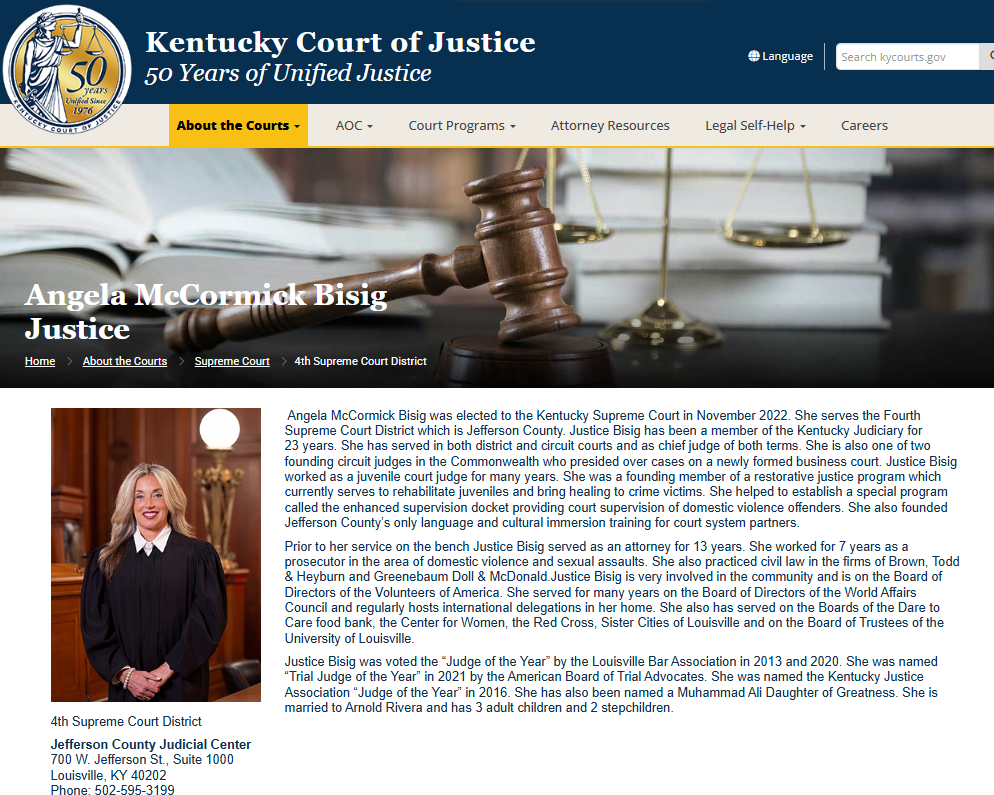
As America celebrates its 250th year, conversations about freedom often focus on the nation’s founders, the Constitution, and the military men and women who have defended our country. Yet one of the greatest protectors of freedom is often the quietest institution of all—the judiciary.

Today, Rotary Club of Louisville members had the privilege of hearing from Kentucky Supreme Court Justice Angela McCormick Bisig, one of only seven justices serving on the Commonwealth’s highest court. Justice Bisig represents the Fourth Supreme Court District, consisting solely of Jefferson County, making her responsible for the state’s largest county at the highest judicial level.

The Rotary Club of Louisville itself is one of the world’s largest Rotary clubs, bringing together hundreds of business, nonprofit, government, education, and civic leaders every week. The club describes itself as one of the largest among Rotary’s more than 45,000 clubs worldwide, providing members direct access to distinguished local, state, national, and international speakers.

For Louisville entrepreneur and Rotary member Di Tran, the luncheon was far more than another Thursday meeting.

“It was a lesson on the beauty of America’s system of government and why law matters.”

Rather than discussing politics, Justice Bisig explained the constitutional role of the judiciary—one of the three co-equal branches of government alongside the legislative and executive branches.

The explanation highlighted an important reality that many Americans may never fully appreciate.

The legislative branch creates laws.

The executive branch carries out and enforces those laws.

The judiciary does neither.

Instead, judges wait.

They do not search for cases.

They do not proactively investigate disputes.

They do not write new legislation.

They do not enforce regulations.

Their responsibility begins only when a real legal controversy is properly brought before the court.

Only then do judges carefully study the facts, hear both sides, apply the law as written, and when necessary, interpret areas where the law is reasonably open to more than one meaning.

This discipline is not weakness—it is one of the judiciary’s greatest strengths.

Its restraint helps ensure that every citizen, regardless of wealth, background, political influence, or status, stands equally before the law.

That quiet commitment to impartiality is one of the foundations of American liberty.

For Di Tran, an immigrant entrepreneur who deeply values the freedoms available in the United States, hearing this explanation directly from a sitting Kentucky Supreme Court justice carried special meaning.

“It reminded me that freedom is protected not only by those who make laws or enforce them, but also by those who patiently preserve justice through the rule of law.”

Following the presentation, Di Tran took a moment to thank Justice Bisig personally with a handshake—not because of politics or personal recognition, but out of appreciation for a civic lesson that reinforced the importance of constitutional government.

In an era when public attention often centers on conflict and division, today’s Rotary luncheon served as a reminder that some of the nation’s most important institutions work quietly, deliberately, and without seeking headlines.

The judiciary is designed to be reactive rather than proactive.

Its judges do not seek power; they exercise only the authority entrusted to them when a case comes before the court.

That restraint protects everyone.

As America reflects on 250 years of independence, events like this remind us that freedom depends not only on elections and legislation, but also on an independent judiciary committed to fairness, impartiality, and the rule of law.

Sometimes the most powerful lessons are delivered by those whose job is simply to listen, interpret the law faithfully, and ensure that justice belongs equally to every citizen.

Categories
Cộng Đồng Giáo Dục Pháp Luật Cộng Đồng

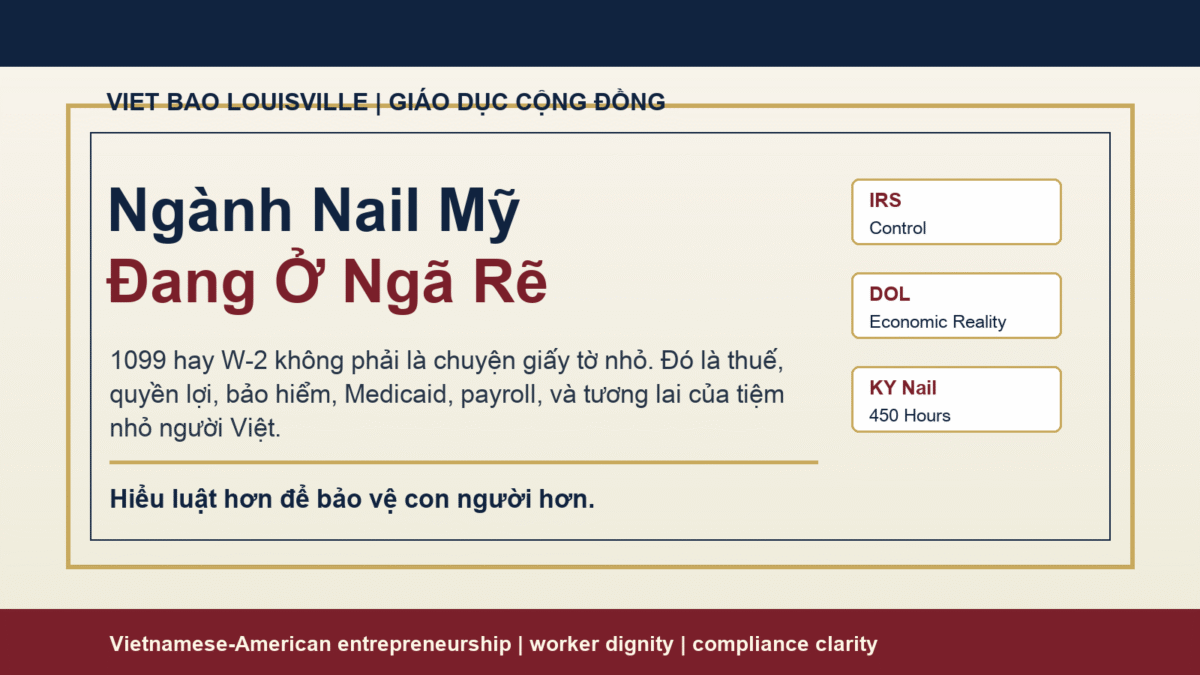
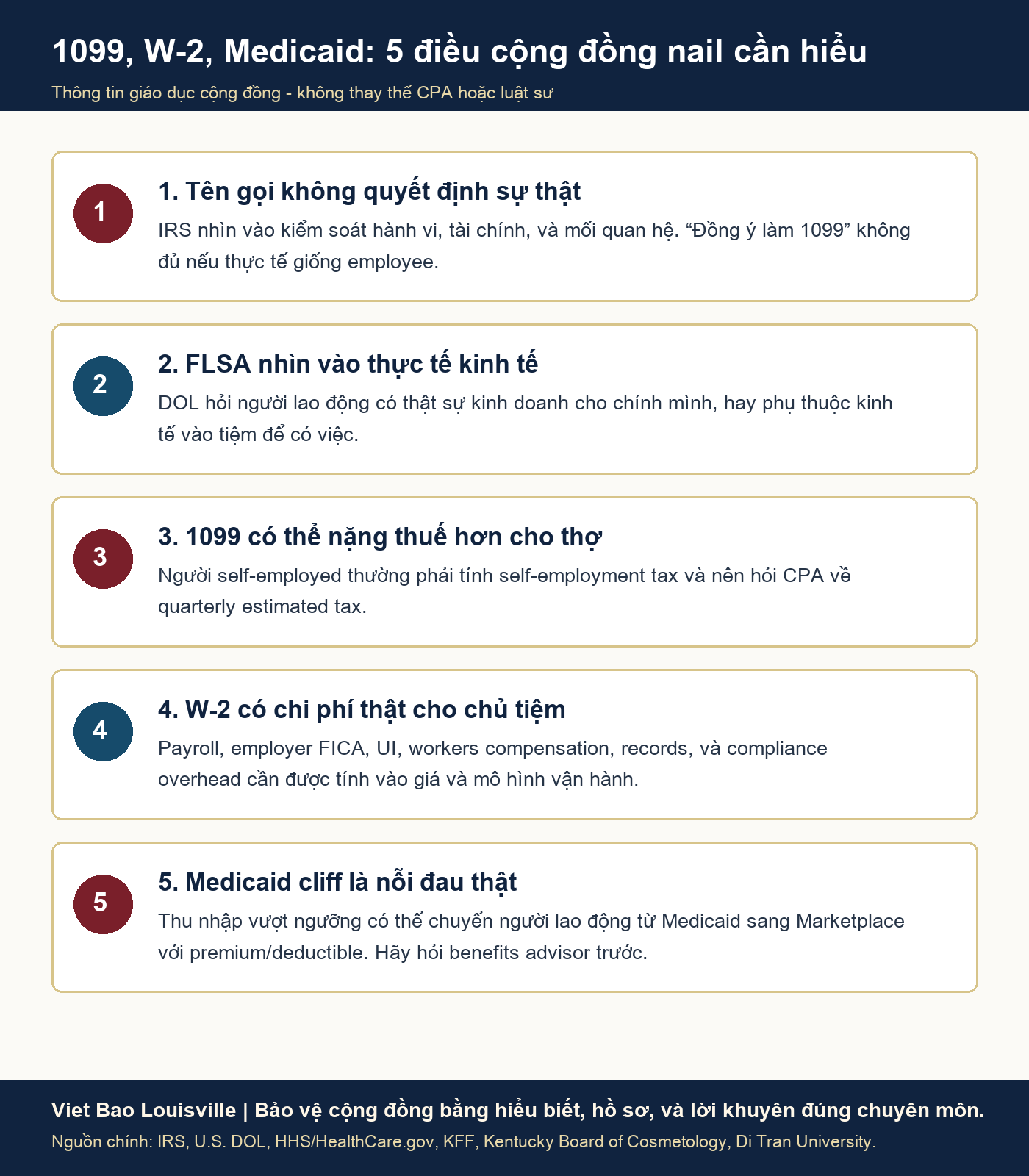
Ngành Nail Mỹ Đang Ở Ngã Rẽ: 1099, W-2, Thuế, Medicaid Và Cách Bảo Vệ Tiệm Nhỏ Người Việt

Bài viết này là thông tin giáo dục cộng đồng, không phải tư vấn pháp lý, thuế, kế toán, lương bổng, Medicaid, bảo hiểm, di trú, hay tài chính. Mỗi tiệm, mỗi thợ, mỗi gia đình có hoàn cảnh riêng. Khi quyết định về 1099, W-2, payroll, Medicaid, bảo hiểm, hoặc cấu trúc kinh doanh, xin làm việc với luật sư, CPA, chuyên viên payroll, cố vấn quyền lợi, và cơ quan cấp phép phù hợp.

Ngành nail tại Mỹ đang ở một ngã rẽ lớn. Đây không chỉ là câu chuyện làm đẹp. Đây là câu chuyện của người tị nạn, người nhập cư, phụ nữ lao động, gia đình nhỏ, chủ tiệm nhỏ, thuế vụ, bảo hiểm y tế, luật lao động, và sự sống còn của những cơ sở làm ăn nhỏ trong một nền kinh tế ngày càng phức tạp.

Đối với cộng đồng người Việt, nghề nail không phải chỉ là “nghề.” Nó là câu chuyện của bàn tay: bàn tay làm việc thật, bàn tay nuôi con, bàn tay trả tiền nhà, bàn tay giúp một gia đình mới qua Mỹ đứng lên, và bàn tay giúp một người mẹ, người cha, người con gái, người con trai có con đường từ lao động đến làm chủ.

Thương người lao động không có nghĩa là chống chủ tiệm. Thương chủ tiệm không có nghĩa là bỏ qua quyền lợi người lao động. Thương thật là giúp cả hai hiểu luật, ghi chép đúng, đóng thuế đúng, và sống được trong một hệ thống quá phức tạp.

Vì sao bài này cần viết bằng tiếng Việt

Nhiều chủ tiệm và thợ nail không thiếu siêng năng. Họ thiếu ngôn ngữ pháp lý để hiểu rõ việc gì đang xảy ra. Một người có thể làm việc 10 tiếng một ngày, biết chăm sóc khách rất giỏi, biết giữ tiệm sạch, biết chịu khó, nhưng vẫn bị để rơi vào các chữ: 1099, W-2, employee, independent contractor, payroll tax, self-employment tax, Medicaid cliff, ACA Marketplace, worker classification.

Khi không hiểu rõ, người ta dễ sợ. Khi quá sợ, người ta dễ nghe lời đồn. Lời đồn thì nhanh, nhưng hồ sơ mới bảo vệ được. Cảm tính thì mạnh, nhưng văn bản mới dùng được khi có kiểm tra, tranh chấp, audit, hoặc khi cần hỏi CPA và luật sư.

Điều đầu tiên: tên gọi không quyết định bạn là 1099 hay W-2

Một sai lầm nguy hiểm là nghĩ rằng: “Hai bên đồng ý làm 1099 thì là 1099.” Không đơn giản như vậy. Theo IRS, việc phân loại người lao động dựa vào mức độ kiểm soát và sự thật của mối quan hệ làm việc. IRS nhìn vào ba nhóm bằng chứng chính: kiểm soát hành vi, kiểm soát tài chính, và mối quan hệ giữa hai bên.

Nói đơn giản: nếu tiệm quy định lịch làm, cách làm, giá dịch vụ, nơi làm, cách phục vụ, dụng cụ, sản phẩm, cách trả tiền, đồng phục, quy trình, và người thợ gần như phụ thuộc vào tiệm để có việc, thì rủi ro bị xem là employee sẽ cao hơn. Nếu người thợ thật sự có doanh nghiệp riêng, có khách riêng, tự đặt giá, tự quản lý lời lỗ, có đầu tư riêng, có quyền nhận hoặc từ chối việc, và không bị tiệm kiểm soát như nhân viên, thì lập luận independent contractor có thể mạnh hơn. Nhưng phải dựa vào sự thật, không dựa vào cảm giác.

Dưới luật wage-and-hour liên bang, Department of Labor nhìn vào “economic reality” – thực tế kinh tế của mối quan hệ. Luật hiện hành và đề xuất năm 2026 có thể thay đổi về cách phân tích, nhưng điểm cốt lõi vẫn là: người lao động có thật sự đang kinh doanh cho chính mình, hay về thực tế đang phụ thuộc kinh tế vào tiệm?

1099 có thể làm chủ tiệm thấy nhẹ hơn, nhưng không tự động hợp pháp

Chủ tiệm thường thấy W-2 nặng hơn vì phải chạy payroll, giữ lại thuế, nộp phần Social Security và Medicare của chủ, xem thất nghiệp, workers’ compensation, báo cáo giờ làm, báo cáo lương, và lưu hồ sơ. Vì vậy, 1099 có vẻ “gọn” hơn.

Nhưng nếu thực tế là employee mà trên giấy ghi 1099, thì rủi ro không biến mất. Rủi ro chỉ nằm im cho đến khi có audit, complaint, tranh chấp tiền lương, tai nạn, thất nghiệp, Medicaid/benefits issue, hoặc cơ quan hỏi hồ sơ.

Một chủ tiệm thương người không nên muốn thắng bằng cách để người thợ gánh hết rủi ro. Một người thợ thương gia đình mình cũng không nên ký giấy mà không hiểu mình sẽ đóng thuế ra sao. Hai bên đều cần hiểu: 1099 không phải là cách để tránh thuế; W-2 không phải là hình phạt. Đó là hai cấu trúc pháp lý khác nhau, và mỗi cấu trúc phải được vận hành đúng.

Góc nhìn CPA: vì sao người 1099 thường bị “đau” lúc khai thuế

Người làm W-2 thường thấy tiền thuế bị trừ dần trong từng paycheck. Người làm 1099 nhận tiền có vẻ nhiều hơn lúc đầu, nhưng cuối năm có thể bị sốc vì phải đóng self-employment tax và thuế thu nhập nếu không nộp quarterly estimated tax.

Về nguyên tắc liên bang, employee trả phần Social Security và Medicare của employee là 7.65% tiền lương, và employer trả phần employer riêng. Người self-employed/1099 thường phải tính self-employment tax 15.3% trên 92.35% net earnings, trừ khi có quy định cụ thể khác. Đổi lại, independent contractor thật sự có thể có business deductions hợp pháp. Nhưng deduction không phải là “muốn viết gì cũng được.” Phải ordinary, necessary, có bằng chứng, và phù hợp với kinh doanh.

Ví dụ đơn giản theo bài phân tích gốc của Di Tran University: với cùng một mức $50,000, nếu là W-2 thì người lao động có thể giữ lại nhiều hơn so với 1099 trong một mô hình đơn giản không tính chi phí kinh doanh riêng. Còn với chủ tiệm, W-2 có thêm chi phí employer payroll tax, UI, workers’ compensation, payroll service, và compliance overhead. Đây là lý do kinh tế thật. Nhưng lý do kinh tế không làm cho classification sai trở thành đúng.

Medicaid cliff: nỗi đau thật của người lao động thu nhập thấp

Một điểm Di Tran University nêu lên rất quan trọng: có người không muốn tăng giờ, tăng lương, hay khai thu nhập rõ ràng vì sợ mất Medicaid. Đây không phải lúc nào cũng là gian dối; nhiều khi là nỗi sợ thật của người nghèo và người lao động.

HealthCare.gov giải thích rằng ở các bang đã mở rộng Medicaid, người lớn có thu nhập dưới 138% Federal Poverty Level có thể đủ điều kiện Medicaid. HHS đặt poverty guideline năm 2026 cho một người ở 48 bang liền kề và D.C. là $15,960; 138% của mức này xấp xỉ $22,025 một năm. Nếu một người vượt qua ngưỡng này, họ có thể phải chuyển qua Marketplace coverage, với premium, deductible, copay, và out-of-pocket risk.

KFF báo cáo rằng sau khi enhanced premium tax credits hết hạn vào cuối năm 2025, average net Marketplace premium năm 2026 tăng từ $113 lên $178 mỗi tháng, và deductible trung bình tăng mạnh lên khoảng $3,786. Với người làm nghề nail thu nhập thấp, đây là cảm giác rất thật: làm thêm nhiều hơn nhưng tiền còn lại sau thuế và bảo hiểm không tăng tương xứng.

Nhưng thông cảm không có nghĩa là khuyên underreport income, khai sai, hay né luật. Thông cảm đúng là giúp người lao động hiểu trước: nếu thu nhập tăng, bảo hiểm thay đổi thế nào, premium tax credit ra sao, deductible là gì, và nên nói chuyện với benefits advisor/CPA trước khi quyết định.

Kentucky và nghề nail: cấp phép là một lớp, thuế và lao động là lớp khác

Ở Kentucky, nail technician có yêu cầu đào tạo riêng. Kentucky Board of Cosmetology công bố yêu cầu Nail Technician là 450 giờ và 12th grade equivalence trong tài liệu transfer/out-of-state. Điều này giúp cộng đồng hiểu rõ: license nghề nail là một lớp pháp lý; worker classification, payroll, tax, wage law, Medicaid, và insurance là những lớp khác. Có license không có nghĩa là tự động thành contractor. Không có payroll đúng cũng không được che bởi việc “có bằng nghề.”

Checklist nhẹ nhàng cho chủ tiệm

  • Nếu muốn W-2: dùng payroll thật, giữ time/pay records, withhold thuế, nộp employer payroll tax, xem UI/workers’ compensation, và có handbook/chính sách rõ ràng.
  • Nếu muốn booth rental/1099: dùng hợp đồng thật, cấu trúc quyền kiểm soát thật, tiền thuê ghế/space rõ ràng, người thợ có business autonomy thật, và không vận hành như nhân viên chỉ đổi tên.
  • Không copy mẫu hợp đồng trên mạng rồi nghĩ là đủ. Hợp đồng phải khớp với cách tiệm thật sự vận hành.
  • Lưu hồ sơ: license, permit, schedule, pay records, tip records, sanitation/training, tax forms, agreement, insurance, complaint response, và advisor notes.
  • Mỗi năm nên có một buổi review với CPA/payroll professional và, nếu cần, employment attorney.

Checklist nhẹ nhàng cho thợ nail

  • Hỏi rõ mình là W-2 hay 1099 trước khi bắt đầu.
  • Nếu là W-2, xem paystub có withholding không.
  • Nếu là 1099, hỏi CPA về quarterly estimated tax và cách lưu receipt hợp pháp.
  • Hiểu rằng tiền nhận ngay không phải tiền giữ được hết.
  • Nếu thu nhập thay đổi, hỏi benefits advisor về Medicaid/Marketplace trước khi để bảo hiểm đứt bất ngờ.
  • Giữ bản sao hợp đồng, lịch làm, tin nhắn quan trọng, payment record, và tax documents.

Thông điệp của tình thương: đừng để cộng đồng mình bị kẹt giữa sợ hãi và lời đồn

Người Việt trong nghề nail đã đóng góp rất lớn cho nước Mỹ: việc làm, dịch vụ, entrepreneurship, thuế, nhà cửa, học phí cho con, và niềm tự hào gia đình. Nhưng thành công của thế hệ trước không bảo đảm an toàn cho thế hệ sau nếu hệ thống pháp lý, thuế vụ, bảo hiểm, và enforcement thay đổi nhanh hơn khả năng hiểu của cộng đồng.

Vì vậy, bài viết này không viết để làm ai sợ. Bài này viết để mọi người bình tĩnh hơn. Chủ tiệm không cần xấu hổ khi thừa nhận compliance rất khó. Thợ nail không cần xấu hổ khi hỏi về thuế và bảo hiểm. Gia đình không cần xấu hổ khi cần người giải thích bằng tiếng Việt.

Con đường tốt nhất cho cộng đồng là: làm thật, ghi chép thật, hỏi đúng người, đọc đúng nguồn, và nâng nhau lên. Khi hiểu luật hơn, chúng ta không mất tình người. Chúng ta bảo vệ tình người bằng bằng chứng, bằng hồ sơ, bằng sự công bằng, và bằng cách làm ăn được lâu dài.

Nguồn tham khảo chính

Vietnamese infographic listing five community education points about 1099, W-2, FLSA economic reality, payroll cost, and Medicaid cliff for nail salons
Tóm tắt giáo dục cộng đồng. Mỗi trường hợp cần được xem lại với CPA, luật sư, payroll professional, hoặc benefits advisor phù hợp.
Categories
Community

What Louisville Can Learn from GE Appliances CEO Kevin Nolan: Stop Talking About AI. Start Using It.

A Rotary Club of Louisville Reflection on Manufacturing Excellence, Small Business Innovation, Workforce Development, and the Courage to Embrace Artificial Intelligence

Every city has moments that reveal where its future is heading.

Sometimes those moments arrive not through legislation, billion-dollar announcements, or national headlines.

Sometimes they arrive through a simple statement delivered by a leader who has spent decades building things.

At a recent Rotary Club of Louisville luncheon, members heard from Kevin Nolan, President and CEO of GE Appliances, one of America’s most respected manufacturing leaders and one of Louisville’s most influential executives.

The presentation was titled:

“Reinventing an American Icon.”

Yet perhaps the most powerful lesson was not about appliances, manufacturing, or corporate strategy.

It was about action.

A simple message emerged:

Stop talking about AI. Use it.

In a world increasingly divided between fear of technology and endless discussion about technology, Nolan’s perspective reflected something deeper—an engineer’s mindset.

Engineers do not debate possibilities forever.

They build.

They test.

They learn.

They improve.

Then they repeat.

That mindset has helped transform GE Appliances into a manufacturing success story while maintaining Louisville as its global headquarters.

More importantly, it offers a lesson for every small business owner, educator, entrepreneur, workforce leader, and community builder across Kentucky.

Fast Learning Beats Perfect Planning

One of the recurring themes shared during the discussion was the importance of experimentation.

Innovation does not come from waiting.

Innovation comes from trying.

Successful organizations understand that not every idea will work.

The goal is not perfection.

The goal is learning.

Try fast.

Learn fast.

Improve fast.

The best organizations are not those that avoid mistakes.

They are the organizations that discover useful solutions before everyone else.

For small businesses, this lesson may be more important than ever.

Artificial intelligence, automation, digital systems, multilingual communication, customer analytics, and workflow automation are no longer future technologies.

They are present-day tools.

The question is no longer whether these technologies will matter.

The question is whether organizations will learn to use them before their competitors do.

Innovation Must Solve Real Problems

Perhaps the most practical lesson from Nolan’s presentation was that innovation is not about creating technology for technology’s sake.

Innovation exists to solve real problems.

Businesses should not build products because they personally like them.

They should build solutions because customers need them.

The market decides.

The community decides.

The customer decides.

Pain points create opportunities.

When organizations listen carefully enough, customers tell them exactly where innovation should occur.

This principle applies equally to multinational manufacturers and local small businesses.

Louisville Beauty Academy and Di Tran University: A Local Example

The same philosophy increasingly appears in Louisville’s workforce education sector.

At Louisville Beauty Academy and Di Tran University, AI is not viewed as a future concept.

It is viewed as a daily operating tool.

Multilingual communication.

Student support systems.

Compliance documentation.

Licensing exam preparation.

Research publication.

Content creation.

Workflow automation.

These systems continue evolving daily, improving through continuous use and refinement.

Just as manufacturing transformed through automation and digital technology, workforce education is beginning a similar transformation through artificial intelligence.

The lesson remains the same:

Use the tools.

Learn from the tools.

Improve through the tools.

The Power of Humble Leadership

Perhaps the most impressive aspect of the presentation was not the corporate accomplishments.

It was the simplicity.

No unnecessary complexity.

No grand performance.

No exaggerated claims.

Just practical observations from a leader who has spent decades solving problems.

This reflects something many successful small business owners recognize immediately.

Real leadership is often remarkably simple.

See clearly.

Listen carefully.

Serve customers.

Take action.

Keep learning.

Repeat.

Why Rotary Matters

Events like these remind us why the Rotary Club of Louisville remains one of the most influential civic organizations in Kentucky.

Among more than 45,000 Rotary clubs worldwide, Louisville’s club continues to attract exceptional leaders, innovators, educators, entrepreneurs, public servants, and community builders.

The common theme is not status.

The common theme is service.

The purpose is not merely networking.

The purpose is elevating Louisville.

Each week, members gather to learn from leaders who are actively shaping industries, communities, and opportunities.

Those conversations become ideas.

Ideas become action.

Action becomes progress.

The Future Belongs to Builders

The most important takeaway from the presentation may be this:

The future will not belong to those who fear change.

It will not belong to those who endlessly debate change.

It will belong to those who learn, adapt, experiment, and build.

Louisville has always been a city of builders.

Manufacturers.

Educators.

Healthcare professionals.

Small business owners.

Entrepreneurs.

Immigrants.

Workers.

Families.

Community leaders.

The opportunity before us is not to predict the future.

The opportunity is to help create it.

And as one engineer-turned-CEO reminded a room full of leaders:

Stop talking about AI. Start using it.

For Louisville, that may be one of the most important leadership lessons of our time.

REFERENCES

GE Appliances Leadership Biography – Kevin Nolan
https://geappliancesco.com/kevin-nolan/

GE Appliances Corporate Newsroom
https://pressroom.geappliances.com/

Rotary Club of Louisville
https://rotarylou.org/

Categories
Beauty Industries Health Immigration Information Technology Kentucky Pharmacy Louisville, KY Leadership Development

Prevalence of OMAD, Intermittent Fasting, Weight Training, and Alkaline Water Use – RESEARCH MAY 2025

PracticeU.S. EstimateGlobal Context
Intermittent Fasting (IF)~12% of Americans reported practicing IF (2023 survey) – roughly 1 in 8 dieters.Rapidly growing diet trend worldwide (e.g. fasting-mimicking diets, time-restricted eating).
One-Meal-a-Day (OMAD)No large survey data; OMAD is a form of IF.Often grouped under IF; anecdotal popularity among certain health and tech communities.
Resistance Training~30% of U.S. adults meet federal guidelines (≥2 days/week). In 2020, 35.2% of men and 26.9% of women met muscle-strengthening recommendations.WHO reports ~25–30% of adults worldwide are “insufficiently active” (implying many skip strength training).
Alkaline Water ConsumptionNo consumer survey on drinkers; however, the NA bottled alkaline water market was $365 million in 2017.Global sales volume rose from 357 M L (2013) to 635 M L (2018). The segment is fast-growing: Zenith Global projects ~US$4.32 billion market by 2023.
  • Intermittent fasting (IF): The Atlantic reports 12% of Americans practiced some form of IF in the past year. IF includes many regimens (5:2, 16/8, OMAD). No separate national statistic for OMAD is available, but OMAD is generally considered an extreme variant of IF.
  • Resistance/weight training: Only about 30% of U.S. adults meet muscle-strengthening guidelines (≥2 days/week). (For comparison, 46.9% meet aerobic guidelines.) Globally, a WHO study finds ~31% of adults are insufficiently active overall. Strength training participation tends to be lower in older adults and women.
  • Alkaline water: No exact prevalence of “drinkers” is reported in surveys. Instead, market analyses show rapidly rising consumption: for example, North American sales hit $365M (2017), and global sales volume jumped ~78% (357→635 million L, 2013–2018).

Health Effects of Fasting (OMAD/IF) and Alkaline Water

  • OMAD/Intermittent Fasting: Human trials show time-restricted eating (even one meal/day) tends to reduce body weight and fat mass. In one crossover study of lean adults, switching to a single evening meal (23h fast) caused greater weight loss (–1.4 kg vs –0.5 kg) and fat loss (–0.7 kg vs –0.1 kg) than three meals/day. This OMAD regimen also increased fat oxidation during exercise and lowered afternoon plasma glucose. Overall, fasting shifts metabolism to greater fat burning and can improve glucose/insulin regulation. Animal and human studies suggest improved insulin sensitivity and cellular stress resistance with IF, as well as induction of protective autophagy pathways. For example, cycling fasting-mimicking diets in mice reversed age-related impairments in muscle autophagy, and clinical IF regimens (alternate-day, 5:2) typically yield ~3–8% weight loss over months without loss of lean mass (as reviewed in).
  • Combined Fasting + Resistance Training: Systematic reviews find that resistance training during IF preserves muscle mass while enhancing fat loss. A meta-analysis reported IF+weight training vs. normal diet leads to significant decreases in body weight (~2.1 kg on average) and fat mass (~1.4 kg), without significant loss of fat-free mass. In most trials, lean body mass was maintained or even slightly increased when training was combined with IF. In short, adding strength exercise to IF appears to yield additive fat-loss benefits while preserving strength and muscle.
  • Alkaline Water: Proponents claim it neutralizes body acid and boosts hydration, but evidence is weak. Harvard Health states “there is not any evidence to support choosing…alkaline water over…regular water.”. Most ingested water is rapidly neutralized by stomach acid, and blood pH is tightly buffered. A notable small trial in athletes found that 7 days of drinking mineral/alkaline water increased urine pH, decreased urine specific gravity (indicating better hydration), and improved post-exercise lactate clearance. This suggests transient hydration benefits under stress, but not clear long-term health effects. Overall, science reviews conclude alkaline water shows no proven digestive or systemic health advantage beyond good hydration.

Biblical and Religious Roots of Fasting and Meditation

  • Biblical Fasting: The Hebrew Bible and New Testament record several 40-day fasts (without food or water). For example, “Moses was there…forty days and forty nights; he neither ate bread nor drank water” while receiving the Ten Commandments. Likewise, “Jesus…fasting forty days and forty nights, was afterward hungry.”. Daniel fasted three weeks, eating no rich foods (meat, wine, etc.). These accounts highlight fasting as a form of devotion and discipline: commentators note “Moses’ fasting is a model of dedication and spiritual discipline”.
  • Judaism: The Torah mandates solemn fasts for repentance. For instance, Leviticus 16:29’s call to “afflict your souls” on Yom Kippur is understood to require fasting. Other fast days (e.g. Tisha B’Av) commemorate holy events. Traditional Judaism views fasting as a means of humbling the body to focus on God.
  • Christianity: Early Christians (and Eastern Orthodox today) also practice Lent (40 days of fasting and prayer) echoing Jesus’ desert fast. Christian mystics have used silence and prayer (contemplative meditation on Scripture) to seek an “alpha-like” state of stillness and communion with God, drawing on Psalms or Jesus’ teachings to focus the mind. (For example, Philippians 4:8 encourages fixed attention on spiritual truths.) The New Testament praises fasting and prayer as ways to draw near to God.
  • Islam: Fasting is a core Islamic practice. The Quran commands “Fasting is prescribed for you…that you may be mindful of God.” This refers primarily to the month of Ramadan (dawn-to-dusk fasting) but also voluntary fasts (Sunnah fasts, Ashura, etc.). Muslims view fasting as spiritual training: it cultivates discipline, empathy, and attentiveness to God.
  • Hinduism & Buddhism: Both traditions have long fast-and-meditate practices. Many Hindus fast on sacred days (Ekadashi, Maha Shivaratri, etc.) to purify body and mind. Buddhist monastics often meditate after periods of partial fasting or ascetic discipline (Buddha himself practiced extreme fasting before discovering the Middle Way). Jainism similarly uses strict fasts (Paryushana) for purification. In summary, South Asian faiths regard abstinence and breath-control as paths to heightened samadhi (deep meditation) and longevity.
  • Ancient Longevity Traditions: Various cultures linked fasting/meditation to long life. Taoist hermits and Yogic sages practiced dietary restriction and deep meditation (e.g. “invisible exercises” in Daoism) to promote vitality. Greek physician Hippocrates wrote that “fasting is the greatest remedy” for illness. Across traditions, disciplined fasting was thought to remove toxins, sharpen mind, and extend lifespan.

Techniques for “Alpha-State” Meditation and Prayer

  • Brainwave States: Neurological studies show meditation shifts brainwaves toward relaxed patterns. In deep but alert meditation, alpha waves (8–12 Hz) become prominent. Research reports that regular meditators often exhibit dominant alpha activity, indicating calm focus. (Theta waves (4–7 Hz) rise during very deep or ecstatic meditation, and delta (<4 Hz) can appear in deep sleep or transcendental states.) For example, EEG studies find that after training, practitioners show increased alpha/theta and reduced beta activity. Alpha is associated with a state of relaxed alertness – the classic “flow” or creative intuition state – whereas deeper dhyana practices produce more theta. Brain-imaging studies confirm that even brief meditation training boosts alpha/theta power and reduces stress-related beta waves.
  • Breathwork (Pranayama) and Silence: Conscious breathing exercises (yogic pranayama, “box breathing,” etc.) are proven to induce relaxation and boost alpha activity. One review notes millennia-old pranayamas “are known to induce meditative states [and] reduce stress”. Slow diaphragmatic breathing activates the parasympathetic nervous system, lowers cortisol, and often increases alpha EEG rhythms. Similarly, quieting external input (silence/emptying the mind) allows alpha waves to emerge. Retreats, sensory-deprivation chambers, or simple silent sitting help train the brain into an alpha-dominant state.
  • Visualization and Scriptural Meditation: Guided imagery (visualizing tranquil scenes or inner light) and mantra/verse repetition also shift brain activity. Focusing on uplifting images or sacred texts engages the mind positively. Many find that meditating on scripture (e.g. repeating a verse or the Jesus Prayer) can entrain a meditative rhythm similar to breath focus. Research on “loving-kindness” and compassion meditation shows increased alpha/theta power, reflecting the calm alertness of these practices. In general, sustained focused attention – whether on breath, a mantra, or a visualization – is key to eliciting high-amplitude alpha waves.
  • Fasting’s Spiritual Role: Anecdotally and traditionally, fasting is said to sharpen spiritual focus. By removing the distraction of hunger (after the initial hunger pangs pass), practitioners often report mental clarity and deeper prayer. Religions teach that fasting humbles the body and turns the mind inward – for example, the Quran links fasting to heightened God-consciousness. Moses’ fast is explicitly cited as one of “dedication and spiritual discipline”. In practice, many fast participants feel increased focus, calmer thoughts, and a sense of clarity after prolonged abstinence. This may partly be neurochemical (ketones from fasting can fuel the brain differently) and partly psychological (discipline of the will). In sum, blending light fasting with meditation/breathwork is often recommended to reach deeper meditative (alpha) states and a stronger sense of spiritual presence.

Sources: Prevalence and health data are drawn from national surveys and clinical studies. Health effects are supported by peer-reviewed trials and reviews. Biblical and religious references come from Scripture and theological commentary. Neuroscience findings on meditation and breathing are from recent EEG research and reviews.

Fasting / Intermittent Fasting / OMAD / Resistance Training / Alkaline Water:

  1. The Atlantic. (2023). Why intermittent fasting became the most popular diet in America. Retrieved from https://www.theatlantic.com
  2. U.S. Centers for Disease Control and Prevention. (2020). Physical Activity Guidelines for Americans: Summary. Retrieved from https://www.cdc.gov/physicalactivity
  3. World Health Organization. (2022). Global action plan on physical activity 2018–2030: More active people for a healthier world. Retrieved from https://www.who.int
  4. Zenith Global. (2019). Global Bottled Water Report. Retrieved from https://zenithglobal.com

Health Effects of Fasting and Alkaline Water:

  1. Templeman, N. M., et al. (2021). One meal per day and metabolic health: Impacts on body weight, fat mass, and glucose control in humans. Obesity (Silver Spring), 29(3), 526-534. doi:10.1002/oby.23004
  2. Brandhorst, S., et al. (2015). A periodic diet that mimics fasting promotes multi-system regeneration, enhanced cognitive performance, and healthspan. Cell Metabolism, 22(1), 86-99. doi:10.1016/j.cmet.2015.05.012
  3. Tinsley, G. M., & La Bounty, P. M. (2015). Effects of intermittent fasting on body composition and clinical health markers in humans. Nutrition Reviews, 73(10), 661–674. doi:10.1093/nutrit/nuv041
  4. Schwingshackl, L., et al. (2018). Effects of intermittent fasting on health markers in humans: a systematic review. Ageing Research Reviews, 39, 46–58. doi:10.1016/j.arr.2017.10.005
  5. Harvard Health Publishing. (2019). Should you be drinking alkaline water? Retrieved from https://www.health.harvard.edu
  6. Chycki, J., et al. (2018). Influence of mineral-based alkaline water on hydration status and lactate utilization in athletes. Biology of Sport, 35(2), 213–219. doi:10.5114/biolsport.2018.71602

Biblical & Religious Fasting:

  1. The Holy Bible, English Standard Version. (2001). Crossway Bibles.
    • Exodus 34:28
    • Matthew 4:2
    • Daniel 1:12–16
    • Leviticus 16:29
  2. Walvoord, J. F., & Zuck, R. B. (1985). The Bible Knowledge Commentary: Old Testament & New Testament. Victor Books.
  3. The Quran (trans. M. A. S. Abdel Haleem). (2004). Oxford University Press.
    • Surah Al-Baqarah, 2:183.
  4. Scholem, G. (1971). Major Trends in Jewish Mysticism. Schocken Books.
  5. Flood, G. (1996). An Introduction to Hinduism. Cambridge University Press.
  6. Harvey, P. (2013). An Introduction to Buddhism: Teachings, History and Practices (2nd ed.). Cambridge University Press.

Meditation & Brainwave Research:

  1. Cahn, B. R., & Polich, J. (2006). Meditation states and traits: EEG, ERP, and neuroimaging studies. Psychological Bulletin, 132(2), 180–211. doi:10.1037/0033-2909.132.2.180
  2. Lee, D. J., Kulubya, E., Goldin, P., Goodarzi, A., & Girgis, F. (2018). Review of the neural oscillations underlying meditation. Frontiers in Neuroscience, 12, 178. doi:10.3389/fnins.2018.00178
  3. Jerath, R., Edry, J. W., Barnes, V. A., & Jerath, V. (2006). Physiology of long pranayamic breathing: Neural respiratory elements may provide a mechanism that explains how slow deep breathing shifts the autonomic nervous system. Medical Hypotheses, 67(3), 566–571. doi:10.1016/j.mehy.2006.02.042
Categories
Beauty Industries

Rising Student Debt and Defaults in Beauty Schools: A Crisis and a Solution – RESARCH MAY 2025

Introduction

High student loan debt and low returns have put cosmetology students in a financial bind. Rising student loan defaults in the beauty and cosmetology school sector have sparked nationwide concern. For years, many for-profit beauty colleges relied heavily on federal financial aid (FAFSA) – grants and especially student loans – to fund student tuition. This easy access to federal money fueled rapid growth of cosmetology programs, often with poor outcomes for students. Many graduates (and drop-outs) found themselves saddled with debt they could not repay, leading to alarmingly high default rates and federal investigations into fraud and mismanagement. In recent years, these pressures culminated in widespread school closures across the United States, as regulators cracked down on institutions that left students with debt but little earning power. The closure of the Marinello Schools of Beauty chain in 2016 – shutting down all 56 campuses after the U.S. Department of Education uncovered systemic misuse of federal aid – is one high-profile example of the fallout. This report examines the scope of the problem with beauty school debt and defaults, the role of accreditation and federal aid policies in driving up costs, and how one institution in Kentucky is pioneering a new path forward.

The Student Loan Debt Trap in Cosmetology Education

High Debt and Poor Outcomes: Cosmetology programs are relatively short (often about one year), but they come with outsized costs and debts for students. Tuition for accredited beauty schools (those eligible for federal aid) averages around $15,000 for a full cosmetology course. Students commonly finance these programs with federal loans; cosmetology students borrow about $7,100 on average – which is actually higher than the average student loan across all U.S. undergraduates. Not only do they borrow slightly more, they also tend to take on loans more often than other students. Yet the investment seldom pays off: those who finish and obtain a state cosmetology license earn only about $26,000 per year on average, comparable to salaries for jobs like restaurant cooks or janitors that require no college education. With such modest incomes, many beauty school graduates struggle to repay even relatively small loans, and defaults are common. In fact, an industry analysis indicates beauty school borrowers default at disproportionately high rates – a problem so longstanding that as far back as the 1970s, federal officials noted cosmetology schools accounted for a significant share of student loan defaults despite being a small part of the loan portfolio.

Federal Scrutiny and School Closures: The combination of high borrowing, low completion rates, and low earnings has drawn federal scrutiny. Fewer than one-third of cosmetology students graduate on time, and in some years, 15–31% of beauty schools did not see a single student complete on schedule. Many students either drop out or take much longer, accruing more debt and delaying entry into the workforce. Those who do graduate often find it difficult to make loan payments on meager cosmetologist wages. Not surprisingly, default rates for cosmetology programs have been alarmingly high, prompting regulators to step in. Under the Obama administration’s gainful employment rule (set to be revived in 2024), the Department of Education analyzed debt and earnings data: nearly two-thirds of for-profit cosmetology certificate programs would fail the proposed debt-to-income benchmarks. In other words, most cosmetology programs leave graduates with debt loads that their incomes cannot justify. Borrower advocates note that for-profit colleges (which include many beauty academies) tend to leave students with “lower incomes, heavier debt and an increased risk of default” compared to public or nonprofit schools. These grim outcomes have led to crackdowns. The U.S. Education Department and state Attorneys General have investigated several cosmetology chains for misconduct – from falsified high school diplomas to misrepresentation of job prospects – resulting in some schools losing Title IV aid eligibility and subsequently closing. Marinello’s closure in 2016, mentioned above, followed findings that it fraudulently obtained federal aid for students with bogus diplomas, among other violations. More recently, regulators put the Paul Mitchell The School – Knoxville on notice for financial instability and terrible student outcomes (only a 3% on-time graduation rate); that campus depended on federal aid for ~75% of its revenue and announced it would shut down in 2023 when it could no longer meet accreditor standards. These examples underscore a systemic debt trap in the beauty school industry: federal loan dollars propped up many subpar programs, and when the government started scrutinizing outcomes, numerous schools could not survive without that federal money.

Cosmetology Education by the Numbers (U.S. Averages)

To fully grasp the situation, consider some key national statistics for cosmetology and other vocational programs:

MetricCosmetology Schools (Nationwide)
Average tuition (full cosmetology program)~$15,000 (at Title IV aid-participating beauty schools)
Median federal loan debt per student~$7,000–$11,000 (varies by program; ~$7,100 average)
On-time graduation rate< 33% (majority of students graduate late or not at all)
Schools with 0% on-time completion15–31% of schools (in a given year)
Average annual earnings after licensure~$26,000 (median income for cosmetology grads)
3-year loan default rate (for-profit avg)~15% (for-profit college sector overall) – cosmetology defaults are higher than average.
Programs failing gainful employment test~66% of cosmetology certificate programs (for-profits)

Table: Key outcomes for cosmetology education nationwide. High tuition and debt, low completion, and low earnings contribute to elevated default risks.

These figures reveal a troubling equation: students are encouraged to borrow thousands of dollars for training that often does not lead to commensurate earnings. Many end up dropping out with debt and no license, or finishing school only to earn little more than minimum wage. The return on investment in many cosmetology programs is thus very poor – a reality not lost on regulators. The U.S. Government Accountability Office (GAO) and Department of Education have noted that federal aid enabled explosive growth in cosmetology schools even when local job markets were saturated with practitioners. By 1990, for example, beauty schools were training 96,000 new cosmetologists annually, far beyond the growth in demand, and taxpayer-funded loans were essentially **producing far more graduates than the industry could absorb】. This oversupply further depresses wages, making it harder for each individual to repay loans. In short, the FAFSA-fueled boom in beauty education left many students worse off, triggering a cycle of debt and default that the government is now aggressively trying to address.

The Role of Accreditation and Compliance Costs in Tuition

Any discussion of rising tuition and debt in vocational schools must consider the role of accreditation agencies and federal compliance. To access Pell Grants and federal student loans, a beauty school must be accredited by an agency recognized by the U.S. Department of Education. Accrediting bodies (such as NACCAS – the National Accrediting Commission of Career Arts & Sciences – for cosmetology programs) impose extensive standards, reporting, and compliance requirements on schools. While these standards aim to ensure quality, they also introduce significant costs. Schools often need additional administrative staff and infrastructure to manage financial aid paperwork, accreditation reviews, outcome reporting, and audits. These compliance costs ultimately get passed on to students in the form of higher tuition. Louisville Beauty Academy’s founders, who deliberately opted out of federal aid, estimate that processing Title IV aid and meeting all federal accreditor regulations can add 40–60% to a school’s tuition rates. In other words, a program that might cost, say, $6,000 to operate could end up charging $10,000+ once the overhead of managing federal financial aid and accreditation is factored in. Schools reliant on FAFSA funds also tend to max out tuition to whatever loan limits will cover, knowing that students don’t feel the cost upfront. In the 1990s, the cosmetology school lobby even pushed Congress to expand Pell Grant amounts so that beauty schools could raise tuition higher and soak up more aid dollars.

Paradoxically, accrediting agencies have sometimes failed to protect students even as schools raised prices. The Paul Mitchell Knoxville case showed NACCAS allowing an essentially insolvent campus with single-digit graduation rates to continue operating for years. Such lapses are not uncommon – accreditors have been critiqued for focusing on checking boxes rather than flagging poor outcomes. But they are quick to penalize schools for paperwork errors or technical non-compliance, which in turn forces schools to invest even more in administrative efforts. This dynamic creates a compliance burden that drives up costs without necessarily guaranteeing better education. As one school owner observed, “the regulatory burdens of federal, state, and accreditation requirements made the system financially unsustainable for students without heavy reliance on student loans.” In effect, accreditation (and the Title IV access it grants) became a double-edged sword: it brought in federal funding, but also pushed tuition higher and encouraged some schools to enroll more students than the job market could support. Now, with stricter accountability rules on the horizon, many high-priced beauty programs are at risk of losing federal aid due to poor outcomes – a reckoning that is long overdue according to student advocates.

A New Model Emerges: Louisville Beauty Academy’s Debt-Free Approach

Louisville Beauty Academy (LBA) in Kentucky offers a striking contrast to the typical FAFSA-dependent cosmetology school. LBA is a state-licensed beauty college that deliberately operates on a debt-free, cash-based model, proving that it’s possible to deliver quality cosmetology training at a fraction of the cost. Founded in 2017, LBA has from the outset eschewed federal Title IV funding – no Pell Grants, no federal student loans – and therefore isn’t bound by costly accreditation mandates beyond state licensing requirements. Instead, it keeps tuition low and lets students pay as they go. All programs are offered with interest-free monthly payment plans, some as low as $100 per month, so that students can afford tuition out-of-pocket. As a result, no LBA student needs to take a loan – true to its motto, the academy enables “education without debt.”

Critically, LBA’s tuition rates are 50–75% lower than the national average for similar programs. The academy has capped tuition for all of its programs under $7,000 (including books and fees), far below typical beauty school charges. In nearby states, cosmetology schools commonly charge $12,000 to $25,000 for the same licenses and training. By contrast, LBA’s 1500-hour Cosmetologist program costs around $6,250 total, and shorter specialty programs are even more affordable. For example, the Nail Technician course (450 hours) is only $3,800 at LBA, versus $8,000–$10,000 elsewhere. Similarly, the 750-hour Esthetician (Skin Care) program is about $6,100 at LBA. Even niche trainings are offered: a 300-hour Shampoo Styling certificate runs ~$2,400, and an 18-hour Eyelash Extension specialist course is $1,500. These focused programs allow students to avoid the “jack of all trades” trap and pursue only the licenses they truly need. Someone interested solely in nail services can skip the time and expense of a full cosmetology course and take the targeted 450-hour nail tech program. Likewise, an aspiring lash technician can get licensed in a matter of days through a short specialty module, rather than investing months in an unrelated curriculum. By offering distinct pathways (hair, nails, skin, etc.), LBA lets students customize their training and budget – a flexibility that is rarely found at traditional beauty schools that often push a one-size-fits-all cosmetology diploma.

Louisville Beauty Academy offers state-approved programs in cosmetology and specialties at a fraction of the usual cost, using a cash-based, no-loan model. Each program’s tuition is deeply discounted (50%–77% off normal rates), enabling students to graduate debt-free.

The impact of LBA’s model has been dramatic. Outcomes speak volumes: since 2017, LBA has trained over 1,000 beauty professionals, hitting its 1,000th graduate by 2022. (By 2024 the total had grown toward 2,000 graduates.) Crucially, these aren’t just graduates on paper – they are all state-licensed cosmetologists, nail technicians, estheticians, and even beauty instructors who passed Kentucky’s exams and joined the workforce. LBA reports that about 90% of its alumni secure jobs in their field – many quickly move into salons or open their own businesses. By minimizing debt, the academy empowers graduates to start their careers unencumbered by loan payments, free to invest in their own tools, savings, or a new salon. As one analysis noted, an LBA graduate can redirect the $200–$300 per month that would have gone to student loans into saving for a down payment on a home or launching a business. This stands in stark contrast to typical beauty school grads who might spend 10+ years repaying loans for a program that took one year to complete.

Quality and Licensing Success: Low cost at LBA does not mean low quality. In fact, LBA’s student outcomes often exceed those of costlier schools. Most students finish their program in under 12 months (a full-time nail tech can graduate in just a few months, and a cosmetologist in around one year). Thanks to strong relationships with local employers, many students “walk straight into employment” upon getting licensed. Salons in the Louisville area know that LBA graduates receive intensive hands-on training – the academy emphasizes practical, on-the-floor skills (hair cutting, chemical treatments, skincare techniques, etc.) under close instructor mentorship, rather than excessive theory or busywork. LBA even incorporates modern digital learning (using the Milady CIMA platform for online theory) so that classroom time can focus on practice and state board exam preparation. This approach has paid off in excellent licensure exam pass rates, with LBA students routinely passing state board exams in cosmetology and esthetics on the first attempt (including non-native English speakers – LBA was the first in Kentucky to facilitate licensing exams in Spanish and Vietnamese for its students). By aligning its curriculum tightly with the state licensing requirements and industry needs, LBA produces graduates who are salon-ready on day one. The school’s success has not gone unnoticed: LBA was recognized as one of the most impactful small businesses in Louisville, and its co-founder/CEO was honored as a “Most Admired CEO” in 2024 for the academy’s community-driven mission. These accolades reflect how an ethical, student-centered approach can thrive even in a struggling industry.

A Scalable Solution: Partnering with Schools and Communities

Louisville Beauty Academy’s achievements suggest a sustainable and scalable model for vocational education in the beauty field and beyond. The core principle is simple: keep education affordable, job-focused, and debt-free. This model can be replicated through partnerships with high schools, community colleges, and nonprofits. Indeed, LBA has already begun laying groundwork for expansion – the founders are planning a “Di Tran University” initiative to bring the same cash-based, job-oriented philosophy to other trades and disciplines, in collaboration with community organizations. For high schools, partnering with a program like LBA could mean offering juniors and seniors the chance to earn a cosmetology or nail tech license by graduation – giving them an immediate income-generating skill. Rather than pushing all students down a one-size-fits-all academic college path (and encouraging them to take loans), schools could integrate vocational licensing programs as an option. An LBA-style partnership might involve evening or weekend cosmetology classes on campus, or dual-credit arrangements, where students complete hours toward a license while in school. The payoff for students is huge: by age 18, they could have a professional license in hand, no debt, and the ability to work in a well-paying trade. Local economies would benefit from a pipeline of skilled, job-ready young professionals.

Colleges and adult education centers can likewise collaborate with debt-free academies to serve the many Americans seeking career switches or side incomes without taking on more college debt. For example, a community college could host an LBA-run esthetics certificate as an alternative to a loan-funded certificate program. The key is to emphasize immediate employability and zero debt – a combination that is highly attractive in today’s climate of student debt anxiety. With student loan payments resuming and federal aid becoming more uncertain, there is a timely opportunity to innovate. Nonprofits and local governments should also take note: supporting models like LBA can uplift communities, especially for low-income and immigrant populations who often fare poorly in traditional higher ed but thrive in skill-based training. Micro-grant programs or scholarship funds could help more students pay the modest tuition at schools like LBA, further reducing any financial barriers while still avoiding the bureaucratic overhead of federal aid.

Finally, accreditation and oversight bodies should view LBA’s success as proof that high outcomes are achievable without onerous debt. State licensing boards can maintain rigorous exam standards (to ensure quality of graduates) while allowing flexible educational pathways – such as apprenticeships or part-time schooling – that expand access. The story of LBA suggests that when schools compete on value and outcomes rather than access to loans, students win. As one analysis put it, LBA’s model is a “return to common sense: schools compete by keeping tuition low and results high, and students ask ‘how quickly can I get skilled and start working?’”. This ethos – prioritizing skill acquisition and financial prudence – could revolutionize cosmetology training nationwide.

Conclusion

The rising defaults and closures in the beauty school sector are a wake-up call that the status quo in career education is broken. An industry that should be about teaching creative, practical skills became, for many students, a gateway to debt and disappointment. Federal investigations have revealed how some cosmetology schools exploited the system – living off FAFSA dollars while failing their students – but they also highlight a path forward. By cutting off taxpayer money to programs that don’t deliver, the government is forcing a necessary reckoning. Schools must either improve outcomes and lower costs, or make way for new models. Louisville Beauty Academy demonstrates that a better way is not only possible, it’s profitable and impactful. By eliminating federal loans, reducing tuition, and focusing on targeted job skills, LBA has achieved what many large chains have not: high graduation rates, licensure success, gainfully employed alumni, and community trust. Perhaps most importantly, it accomplishes this while sparing students the burden of debt. In a field notorious for its debt-for-dreams trade-off, LBA proves that students can pursue their beauty industry dreams and actually make a living – without a loan collector on their back.

The challenge now is to scale up such ethical, student-first models. High schools, colleges, and policymakers should take up the call to action: invest in partnerships and programs that put affordable, income-generating education within reach. Encourage entrepreneurship in the education space that prioritizes outcomes over access to easy money. Close oversight loopholes that allowed low-performing schools to thrive on federal aid, but also remove unnecessary red tape that makes running a small school so expensive. If accreditation agencies and regulators focus on what truly matters – student learning, licensure, and earning outcomes – while encouraging cost-efficiency, then more institutions like LBA can flourish. The beauty school sector may be struggling, but with innovators like Louisville Beauty Academy leading the way, a brighter, debt-free future for vocational education is on the horizon. It’s time to cut short the cosmetology debt trap and give students the tools to succeed without the financial baggage.

Categories
Community

Di Tran University Celebrates the Release of “Yes And vs Yes But: Unlocking a Mindset for Progress”

Di Tran University: The College of Humanization is proud to announce the release of Di Tran’s latest book, “Yes And vs Yes But: Unlocking a Mindset for Progress.” This insightful work explores the transformative power of a “Yes And” mindset, promoting personal growth, resilience, and collaborative success.

A New Guide to Mental Wellness and Growth

“Yes And vs Yes But” delves into how the words we choose and the mindset we adopt can profoundly impact our lives. Di Tran, a passionate advocate for mental wellness and personal development, provides readers with practical strategies to cultivate a “Yes And” mentality. This approach emphasizes positivity, learning, and proactive action, helping individuals navigate life’s challenges with optimism and creativity.

Key Themes of the Book

  • The Power of Action: Discover the importance of taking consistent, proactive steps towards your goals.
  • The Power of Growth: Embrace continuous learning and self-improvement.
  • The Power of Adaptation: Learn to adapt with flexibility and resilience.
  • The Power of Doing and Learning: Understand the value of hands-on experiences and learning from every situation.
  • The Power of Constant Trial and Error: Develop a positive approach to experimentation and view mistakes as opportunities.
  • The Power of Problem-Solving: Enhance your ability to find creative solutions.
  • The Power of Building and Creating: Focus on constructing a meaningful and fulfilling life through intentional actions.

About Di Tran University: The College of Humanization

Di Tran University is dedicated to fostering mental wellness, personal growth, and community engagement. The College of Humanization focuses on holistic education that emphasizes empathy, resilience, and collaborative problem-solving. Through its programs and initiatives, the university aims to equip individuals with the skills and mindset needed to thrive in today’s complex world.

Author and Advocate

Di Tran, the founder of Di Tran University, is a dedicated advocate for mental wellness and personal growth. His latest book is a testament to his commitment to helping individuals unlock their potential and live fulfilling lives. Inspired by his family—his wife Vy Truong and their three sons, Jayden, Skylar, and Dylan—Di Tran’s work reflects a deep passion for creating positive change and promoting a mindset of possibility and growth.

Join the Journey

Di Tran University invites everyone to embark on this enlightening journey with “Yes And vs Yes But: Unlocking a Mindset for Progress.” This book is not just a guide but a call to action to embrace positivity, resilience, and collaboration in our daily lives.

Order your copy today and start your journey towards a brighter, more fulfilling future. Stay connected with Di Tran University: The College of Humanization for upcoming events, workshops, and discussions that continue to promote mental wellness and personal development.

For more information, visit Di Tran University.


Tags: #YesAndMindset #PersonalGrowth #MentalWellness #PositiveThinking #DiTranUniversity #Empowerment #NewBookRelease

SPONSORED BY

Translate »