
Categories
Community

Education Is Changing for Good: Kentucky Commissioner Dr. Robbie Fletcher and Di Tran Connect Public Education, Adult Learning, Licensing, and Workforce Development

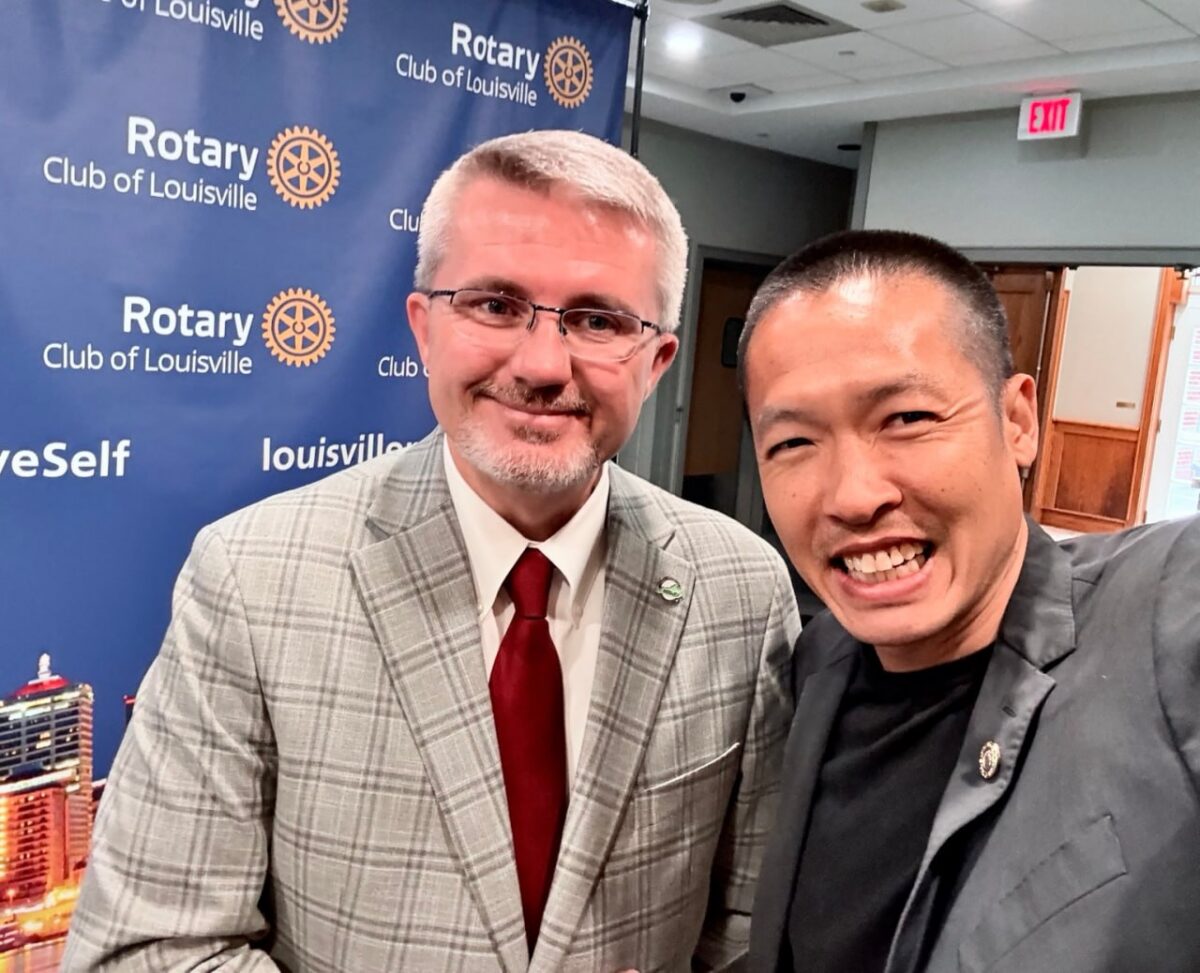
Louisville witnessed more than a luncheon on July 30, 2026. It witnessed a public education moment.

At the Rotary Club of Louisville, Dr. Robbie Fletcher, Kentucky Commissioner of Education, spoke under the theme “More Than a Test Score, More Than a Color.” The message reached far beyond one meeting, one law, or one school system. It spoke to the moment we are all living through: a moment when Kentucky, America, and the world must rethink what education is for.

Education is changing for good because life itself has changed.

For too long, education has often been treated as a fixed system: a child enters, the system measures, the system labels, the person moves forward or falls behind. But that old mental model is breaking. Automation is changing work. Artificial intelligence is changing information. Transparency is changing public trust. Families are questioning cost and value. Students are asking for meaning. Adults are returning to learning. Employers are asking for proof of ability. Communities are demanding real outcomes.
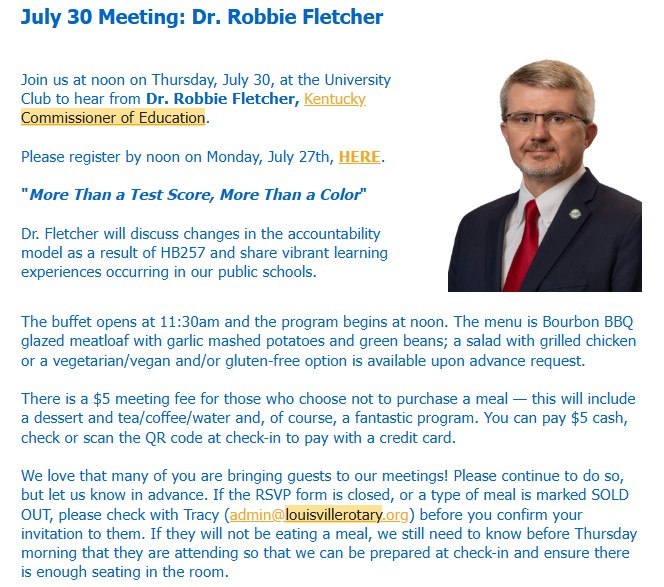
Rotary Club of Louisville July 30 meeting notice for Dr. Robbie Fletcher, Kentucky Commissioner of Education, titled More Than a Test Score, More Than a Color.
Rotary Club of Louisville July 30, 2026 meeting notice for Dr. Robbie Fletcher, Kentucky Commissioner of Education.

The Question of This Era

Education can no longer be only about testing. It cannot be only about institutional reputation. It cannot be only about one pathway, one credential, one gatekeeper, or one narrow definition of success.

The new question is more powerful: does education help a human being become capable, documented, adaptable, employable, ethical, licensed where required, trusted by the public, and ready to keep learning for life?

That is the question of this era.

A Statewide Leader at a Statewide Turning Point

Dr. Fletcher’s role gives this conversation statewide importance. According to the Kentucky Department of Education, Robbie Fletcher, Ed.D., was named Commissioner of Education by the Kentucky Board of Education on March 21, 2024, and began serving on July 1, 2024, after approval by the Kentucky Senate. His work now stands inside Kentucky’s movement to reimagine assessment and accountability, including the direction connected to House Bill 257 and the broader “United We Learn” vision.

The Rotary Club of Louisville described Dr. Fletcher’s July 30 presentation as a discussion of changes to Kentucky’s accountability model and the vibrant learning experiences taking place in public schools. That phrase matters: vibrant learning. It suggests that education must be alive. It must connect with curiosity, community, skill, service, career readiness, and the real development of the whole person.

Di Tran’s Education Doctrine: People Are Becoming

For Di Tran, Founder & Chancellor of Di Tran University and Louisville Beauty Academy, this moment speaks directly to the heart of his life’s work: humanization through education. Di Tran’s educational philosophy has long centered on a simple but powerful belief: people are not numbers; people are becoming.

A student is not only a transcript. An adult learner is not only a late start. A licensed worker is not only a trade. An immigrant is not only a language barrier. A small-business owner is not only an economic statistic.

Each person is a human being with capacity, dignity, story, skill, and future.

That is why public education, adult education, workforce development, licensing education, entrepreneurship, and lifelong learning should not be separated into disconnected boxes. They are one human-development system.

Visual Explainer

From Institution-Centered Education to Human-Centered Education

Old question: Who controls the gate?

New question: What does the learner need, what can the learner prove, what support is missing, what pathway is lawful, and what outcome is real?

The future: human focus, individual pathways, adult dignity, transparent documentation, licensed readiness, lifelong learning, workforce development, and public trust.

Workforce Development Is Education Made Practical

A child in public school needs direction before adulthood. A high school student needs career exploration before debt. A working adult needs a respectful way back into learning. A New American needs language, documentation, navigation, and trust. A parent needs flexibility. A future entrepreneur needs practical skill plus compliance. A licensed professional needs law, safety, sanitation, service, discipline, and public responsibility.

This is the true meaning of workforce development.

Workforce development is not just job placement. Workforce development is education made practical. It is the bridge between learning and livelihood. It is the process by which a person becomes ready to contribute with skill, confidence, documentation, and dignity.

Kentucky Adult Education already shows this wider purpose through GED preparation, English as a second language, transition to postsecondary education, workforce education, certifications, family literacy, and corrections education. These are not side programs. They are public evidence that education continues beyond childhood. They are evidence that a person’s future can reopen.

Louisville Beauty Academy as Local Proof of Adult Workforce Education

Louisville Beauty Academy stands as a local proof point in that same story. As a Kentucky state-licensed, national award-winning beauty college, LBA serves many students who are adults, working families, immigrants, career changers, and future small-business owners. In beauty education, learning is immediate and accountable. Students must learn practical skill, law, sanitation, safety, client care, documentation, attendance discipline, professionalism, and licensing readiness.

That is education with public consequence.

A beauty license can change the legal and economic identity of a person. It can move a worker from informal labor into lawful professional work. It can give a parent a flexible career pathway. It can help a New American stand visibly in the economy. It can support small-business creation. It can turn training into service, service into trust, and trust into opportunity.

This is why licensed adult education belongs in the same conversation as public education reform. It is where the promise of learning becomes visible in adult life.

The AI Era Makes Education More Human, Not Less

The AI era makes this even more urgent.

The U.S. Department of Education’s report on artificial intelligence and the future of teaching and learning recognizes that AI is rapidly entering educational technology and public life. The World Economic Forum’s Future of Jobs Report 2025 describes major workforce transformation driven by technology, AI, data, and changing skill demands. The OECD has emphasized the importance of skills, lifelong learning, and adaptation in the AI age.

The lesson is not that machines replace education. The lesson is that education must become more deeply human because machines are becoming more capable.

AI can produce information. It cannot produce character. Automation can speed up tasks. It cannot give a person purpose. Data can expose performance. It cannot restore confidence to an adult who believed it was too late. Technology can make learning more accessible. It cannot replace the dignity of a teacher, mentor, employer, school, civic club, or community that sees the person behind the file.

The future will not belong only to people with degrees. It will belong to people who can learn, document, adapt, communicate, serve, build, repair, create, comply, lead, and keep growing.

Multiple Pathways Deserve Respect

College matters. Career and technical education matters. Skilled trades matter. Licensed professions matter. Adult education matters. English-language learning matters. Entrepreneurship matters. Public service matters. Community-based training matters. Every honorable pathway that helps a person become more capable deserves respect.

The old system too often asked: who controls the gate?

The new education system must ask: what does the learner need, what can the learner prove, what support is missing, what pathway is lawful, what outcome is real, and how can the community help the person move forward?

This is the shift from institution-centered education to human-centered education.

Rotary as Civic Learning

That is also why the Rotary Club of Louisville matters. A Rotary lunch is not merely a social event. At its best, it is civic learning. It is a room where public leaders, business owners, educators, nonprofit builders, and community members quietly build the brain of the city. No time is wasted when the room is learning. No meeting is small when the speaker carries a statewide mission and the audience carries local responsibility.

Viet Bao Louisville extends sincere appreciation to the Rotary Club of Louisville for once again hosting a meaningful, beautiful, and intellectually valuable gathering. It offered Louisville another chance to learn from someone representing a major public responsibility for the Commonwealth of Kentucky.

Dr. Fletcher’s message matters because education policy is not abstract. It affects children, teachers, families, taxpayers, employers, adult learners, and the workforce future of Kentucky. Di Tran’s presence matters because the conversation must not remain only at the policy level. It must reach the real places where learners become workers, workers become licensed professionals, and licensed professionals become small-business contributors.

This is where Di Tran University, Louisville Beauty Academy, and Viet Bao Louisville carry a shared public mission: to elevate education as human development, to honor workforce dignity, to document useful learning, and to show that community education can be both practical and beautiful.

Education for the Human Age

The future of education is not cold automation. It is not blind tradition. It is not prestige without proof. It is not testing without purpose.

The future of education is human focus.

Individual focus.

Multiple pathways.

Transparent documentation.

Lifelong learning.

Adult dignity.

Licensed readiness.

Workforce development.

Public trust.

That is education for the AI age.

That is workforce development for the human age.

That is Kentucky education changing for good.

And in Louisville, at the Rotary Club of Louisville, that message found a worthy room, a worthy speaker, and a worthy moment.

Research Base and Source Notes

Editorial note: This article is a Viet Bao Louisville civic and education reflection. It does not state or imply an endorsement, partnership, or official position by the Kentucky Department of Education, Dr. Robbie Fletcher, or the Rotary Club of Louisville.

Categories
Community Witness

Louisville, Service, and the Immigrant Dream: Why Human-Centered Education Matters in Real Life

The immigrant dream is often described in heroic language and then abandoned in ordinary systems. People are told to work hard, believe, contribute, and persevere—but when they arrive at the gates of actual opportunity, the path is frequently obscured by cost, language barriers, unfamiliar institutions, and quiet forms of exclusion that rarely announce themselves honestly.

That is why human-centered education matters so much in real life. It is not merely about teaching. It is about whether a society knows how to receive effort with structure.

Louisville offers a meaningful context for this question. Like many American cities, it is shaped not only by formal institutions, but by the daily labor of families who build life through work, service, adaptation, and quiet persistence. Immigrant communities understand this especially well. For them, education is not an abstract cultural ideal. It is often the most practical bridge between instability and belonging.

But not all educational systems honor that reality equally. Some demand forms of patience that only the already-secure can afford. Some are too expensive. Some are too slow. Some are too linguistically narrow. Some speak the language of opportunity while preserving the architecture of delay.

Human-centered education begins by refusing that contradiction.

It asks what people actually need in order to move forward with dignity. They may need instruction that is practical rather than ornamental. They may need schedules compatible with work and family obligations. They may need patient explanation of licensure, forms, and regulatory systems. They may need to see that law and opportunity are not enemies. Above all, they need institutions that do not confuse complexity with honor.

This is where service enters the story. Real service does not simply express sympathy. It builds usable pathways. It helps translate society to the person and the person to society. It makes movement possible.

For immigrant communities, that kind of service has deep consequences. It strengthens trust. It reduces fear of systems that often feel distant. It transforms the meaning of education from a remote aspiration into a reachable act of self-respect. And when that happens, the benefits spread beyond the individual learner. Families stabilize. Children see possibility more clearly. Neighborhoods gain professionals, small businesses, and examples of lawful upward movement.

The deeper lesson is cultural as much as economic. A city becomes stronger not merely when it welcomes diversity rhetorically, but when it builds institutions capable of converting diversity into shared contribution. That requires seriousness, patience, and local leadership. It also requires a refusal to treat immigrant ambition as peripheral. In truth, immigrant ambition has long been one of America’s most renewable public assets.

Louisville has the chance to demonstrate what that looks like in practice: education tied to work, work tied to dignity, dignity tied to service, and service tied to community trust. When that chain is preserved, the immigrant dream stops being a slogan and becomes something more difficult and more beautiful—a daily structure of possibility.

That is the kind of future worth building. Not one made of performance, but one made of pathways.

Research & Information Disclaimer

This publication is provided for educational, research, and public-information purposes only. It reflects institutional analysis based on publicly available information, practical experience, and internal interpretation as of the publication date. It does not constitute legal advice, tax advice, investment advice, or a guarantee of regulatory, financial, or operational outcomes. Readers should consult qualified legal, financial, regulatory, or other professional advisors before acting on matters discussed herein.

References

Categories
Beauty Industries

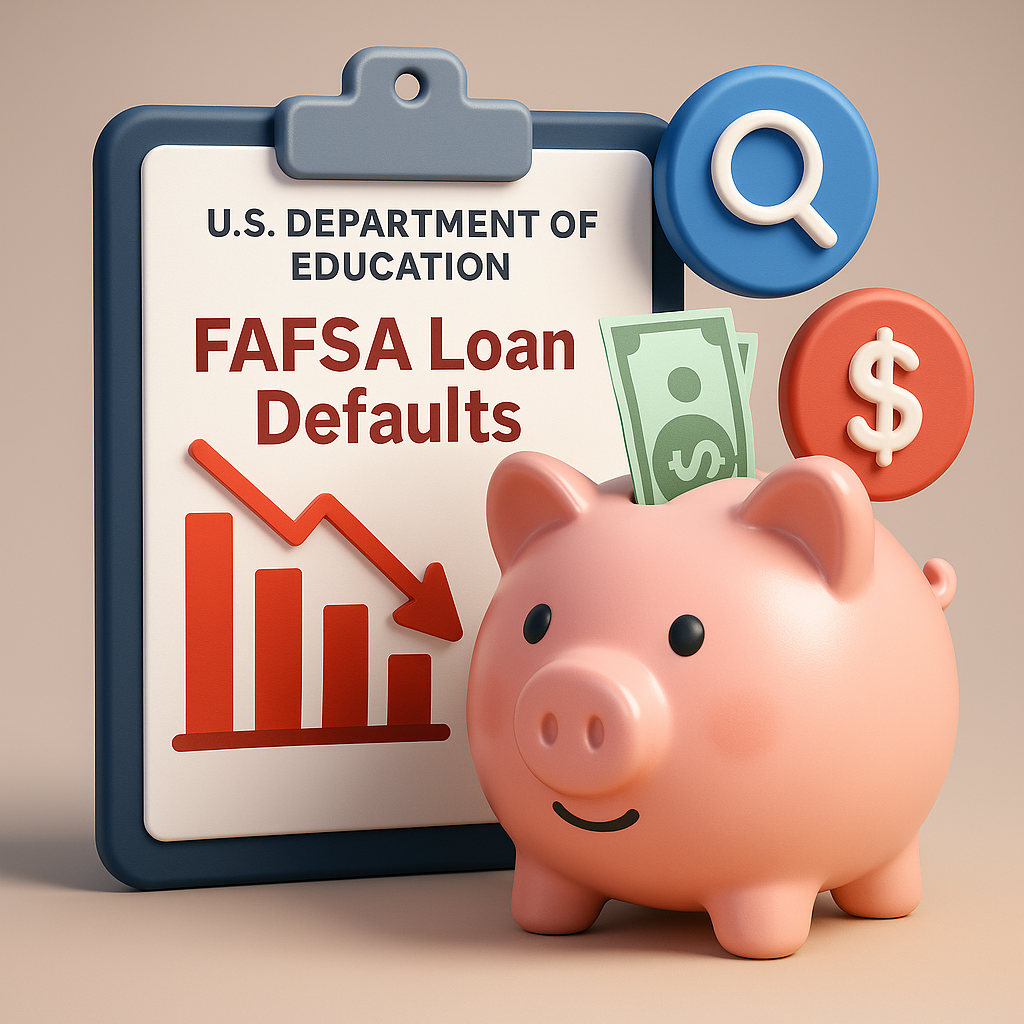
Rising Student Debt and Defaults in Beauty Schools: A Crisis and a Solution – RESARCH MAY 2025

Introduction

High student loan debt and low returns have put cosmetology students in a financial bind. Rising student loan defaults in the beauty and cosmetology school sector have sparked nationwide concern. For years, many for-profit beauty colleges relied heavily on federal financial aid (FAFSA) – grants and especially student loans – to fund student tuition. This easy access to federal money fueled rapid growth of cosmetology programs, often with poor outcomes for students. Many graduates (and drop-outs) found themselves saddled with debt they could not repay, leading to alarmingly high default rates and federal investigations into fraud and mismanagement. In recent years, these pressures culminated in widespread school closures across the United States, as regulators cracked down on institutions that left students with debt but little earning power. The closure of the Marinello Schools of Beauty chain in 2016 – shutting down all 56 campuses after the U.S. Department of Education uncovered systemic misuse of federal aid – is one high-profile example of the fallout. This report examines the scope of the problem with beauty school debt and defaults, the role of accreditation and federal aid policies in driving up costs, and how one institution in Kentucky is pioneering a new path forward.

The Student Loan Debt Trap in Cosmetology Education

High Debt and Poor Outcomes: Cosmetology programs are relatively short (often about one year), but they come with outsized costs and debts for students. Tuition for accredited beauty schools (those eligible for federal aid) averages around $15,000 for a full cosmetology course. Students commonly finance these programs with federal loans; cosmetology students borrow about $7,100 on average – which is actually higher than the average student loan across all U.S. undergraduates. Not only do they borrow slightly more, they also tend to take on loans more often than other students. Yet the investment seldom pays off: those who finish and obtain a state cosmetology license earn only about $26,000 per year on average, comparable to salaries for jobs like restaurant cooks or janitors that require no college education. With such modest incomes, many beauty school graduates struggle to repay even relatively small loans, and defaults are common. In fact, an industry analysis indicates beauty school borrowers default at disproportionately high rates – a problem so longstanding that as far back as the 1970s, federal officials noted cosmetology schools accounted for a significant share of student loan defaults despite being a small part of the loan portfolio.

Federal Scrutiny and School Closures: The combination of high borrowing, low completion rates, and low earnings has drawn federal scrutiny. Fewer than one-third of cosmetology students graduate on time, and in some years, 15–31% of beauty schools did not see a single student complete on schedule. Many students either drop out or take much longer, accruing more debt and delaying entry into the workforce. Those who do graduate often find it difficult to make loan payments on meager cosmetologist wages. Not surprisingly, default rates for cosmetology programs have been alarmingly high, prompting regulators to step in. Under the Obama administration’s gainful employment rule (set to be revived in 2024), the Department of Education analyzed debt and earnings data: nearly two-thirds of for-profit cosmetology certificate programs would fail the proposed debt-to-income benchmarks. In other words, most cosmetology programs leave graduates with debt loads that their incomes cannot justify. Borrower advocates note that for-profit colleges (which include many beauty academies) tend to leave students with “lower incomes, heavier debt and an increased risk of default” compared to public or nonprofit schools. These grim outcomes have led to crackdowns. The U.S. Education Department and state Attorneys General have investigated several cosmetology chains for misconduct – from falsified high school diplomas to misrepresentation of job prospects – resulting in some schools losing Title IV aid eligibility and subsequently closing. Marinello’s closure in 2016, mentioned above, followed findings that it fraudulently obtained federal aid for students with bogus diplomas, among other violations. More recently, regulators put the Paul Mitchell The School – Knoxville on notice for financial instability and terrible student outcomes (only a 3% on-time graduation rate); that campus depended on federal aid for ~75% of its revenue and announced it would shut down in 2023 when it could no longer meet accreditor standards. These examples underscore a systemic debt trap in the beauty school industry: federal loan dollars propped up many subpar programs, and when the government started scrutinizing outcomes, numerous schools could not survive without that federal money.

Cosmetology Education by the Numbers (U.S. Averages)

To fully grasp the situation, consider some key national statistics for cosmetology and other vocational programs:

MetricCosmetology Schools (Nationwide)
Average tuition (full cosmetology program)~$15,000 (at Title IV aid-participating beauty schools)
Median federal loan debt per student~$7,000–$11,000 (varies by program; ~$7,100 average)
On-time graduation rate< 33% (majority of students graduate late or not at all)
Schools with 0% on-time completion15–31% of schools (in a given year)
Average annual earnings after licensure~$26,000 (median income for cosmetology grads)
3-year loan default rate (for-profit avg)~15% (for-profit college sector overall) – cosmetology defaults are higher than average.
Programs failing gainful employment test~66% of cosmetology certificate programs (for-profits)

Table: Key outcomes for cosmetology education nationwide. High tuition and debt, low completion, and low earnings contribute to elevated default risks.

These figures reveal a troubling equation: students are encouraged to borrow thousands of dollars for training that often does not lead to commensurate earnings. Many end up dropping out with debt and no license, or finishing school only to earn little more than minimum wage. The return on investment in many cosmetology programs is thus very poor – a reality not lost on regulators. The U.S. Government Accountability Office (GAO) and Department of Education have noted that federal aid enabled explosive growth in cosmetology schools even when local job markets were saturated with practitioners. By 1990, for example, beauty schools were training 96,000 new cosmetologists annually, far beyond the growth in demand, and taxpayer-funded loans were essentially **producing far more graduates than the industry could absorb】. This oversupply further depresses wages, making it harder for each individual to repay loans. In short, the FAFSA-fueled boom in beauty education left many students worse off, triggering a cycle of debt and default that the government is now aggressively trying to address.

The Role of Accreditation and Compliance Costs in Tuition

Any discussion of rising tuition and debt in vocational schools must consider the role of accreditation agencies and federal compliance. To access Pell Grants and federal student loans, a beauty school must be accredited by an agency recognized by the U.S. Department of Education. Accrediting bodies (such as NACCAS – the National Accrediting Commission of Career Arts & Sciences – for cosmetology programs) impose extensive standards, reporting, and compliance requirements on schools. While these standards aim to ensure quality, they also introduce significant costs. Schools often need additional administrative staff and infrastructure to manage financial aid paperwork, accreditation reviews, outcome reporting, and audits. These compliance costs ultimately get passed on to students in the form of higher tuition. Louisville Beauty Academy’s founders, who deliberately opted out of federal aid, estimate that processing Title IV aid and meeting all federal accreditor regulations can add 40–60% to a school’s tuition rates. In other words, a program that might cost, say, $6,000 to operate could end up charging $10,000+ once the overhead of managing federal financial aid and accreditation is factored in. Schools reliant on FAFSA funds also tend to max out tuition to whatever loan limits will cover, knowing that students don’t feel the cost upfront. In the 1990s, the cosmetology school lobby even pushed Congress to expand Pell Grant amounts so that beauty schools could raise tuition higher and soak up more aid dollars.

Paradoxically, accrediting agencies have sometimes failed to protect students even as schools raised prices. The Paul Mitchell Knoxville case showed NACCAS allowing an essentially insolvent campus with single-digit graduation rates to continue operating for years. Such lapses are not uncommon – accreditors have been critiqued for focusing on checking boxes rather than flagging poor outcomes. But they are quick to penalize schools for paperwork errors or technical non-compliance, which in turn forces schools to invest even more in administrative efforts. This dynamic creates a compliance burden that drives up costs without necessarily guaranteeing better education. As one school owner observed, “the regulatory burdens of federal, state, and accreditation requirements made the system financially unsustainable for students without heavy reliance on student loans.” In effect, accreditation (and the Title IV access it grants) became a double-edged sword: it brought in federal funding, but also pushed tuition higher and encouraged some schools to enroll more students than the job market could support. Now, with stricter accountability rules on the horizon, many high-priced beauty programs are at risk of losing federal aid due to poor outcomes – a reckoning that is long overdue according to student advocates.

A New Model Emerges: Louisville Beauty Academy’s Debt-Free Approach

Louisville Beauty Academy (LBA) in Kentucky offers a striking contrast to the typical FAFSA-dependent cosmetology school. LBA is a state-licensed beauty college that deliberately operates on a debt-free, cash-based model, proving that it’s possible to deliver quality cosmetology training at a fraction of the cost. Founded in 2017, LBA has from the outset eschewed federal Title IV funding – no Pell Grants, no federal student loans – and therefore isn’t bound by costly accreditation mandates beyond state licensing requirements. Instead, it keeps tuition low and lets students pay as they go. All programs are offered with interest-free monthly payment plans, some as low as $100 per month, so that students can afford tuition out-of-pocket. As a result, no LBA student needs to take a loan – true to its motto, the academy enables “education without debt.”

Critically, LBA’s tuition rates are 50–75% lower than the national average for similar programs. The academy has capped tuition for all of its programs under $7,000 (including books and fees), far below typical beauty school charges. In nearby states, cosmetology schools commonly charge $12,000 to $25,000 for the same licenses and training. By contrast, LBA’s 1500-hour Cosmetologist program costs around $6,250 total, and shorter specialty programs are even more affordable. For example, the Nail Technician course (450 hours) is only $3,800 at LBA, versus $8,000–$10,000 elsewhere. Similarly, the 750-hour Esthetician (Skin Care) program is about $6,100 at LBA. Even niche trainings are offered: a 300-hour Shampoo Styling certificate runs ~$2,400, and an 18-hour Eyelash Extension specialist course is $1,500. These focused programs allow students to avoid the “jack of all trades” trap and pursue only the licenses they truly need. Someone interested solely in nail services can skip the time and expense of a full cosmetology course and take the targeted 450-hour nail tech program. Likewise, an aspiring lash technician can get licensed in a matter of days through a short specialty module, rather than investing months in an unrelated curriculum. By offering distinct pathways (hair, nails, skin, etc.), LBA lets students customize their training and budget – a flexibility that is rarely found at traditional beauty schools that often push a one-size-fits-all cosmetology diploma.

Louisville Beauty Academy offers state-approved programs in cosmetology and specialties at a fraction of the usual cost, using a cash-based, no-loan model. Each program’s tuition is deeply discounted (50%–77% off normal rates), enabling students to graduate debt-free.

The impact of LBA’s model has been dramatic. Outcomes speak volumes: since 2017, LBA has trained over 1,000 beauty professionals, hitting its 1,000th graduate by 2022. (By 2024 the total had grown toward 2,000 graduates.) Crucially, these aren’t just graduates on paper – they are all state-licensed cosmetologists, nail technicians, estheticians, and even beauty instructors who passed Kentucky’s exams and joined the workforce. LBA reports that about 90% of its alumni secure jobs in their field – many quickly move into salons or open their own businesses. By minimizing debt, the academy empowers graduates to start their careers unencumbered by loan payments, free to invest in their own tools, savings, or a new salon. As one analysis noted, an LBA graduate can redirect the $200–$300 per month that would have gone to student loans into saving for a down payment on a home or launching a business. This stands in stark contrast to typical beauty school grads who might spend 10+ years repaying loans for a program that took one year to complete.

Quality and Licensing Success: Low cost at LBA does not mean low quality. In fact, LBA’s student outcomes often exceed those of costlier schools. Most students finish their program in under 12 months (a full-time nail tech can graduate in just a few months, and a cosmetologist in around one year). Thanks to strong relationships with local employers, many students “walk straight into employment” upon getting licensed. Salons in the Louisville area know that LBA graduates receive intensive hands-on training – the academy emphasizes practical, on-the-floor skills (hair cutting, chemical treatments, skincare techniques, etc.) under close instructor mentorship, rather than excessive theory or busywork. LBA even incorporates modern digital learning (using the Milady CIMA platform for online theory) so that classroom time can focus on practice and state board exam preparation. This approach has paid off in excellent licensure exam pass rates, with LBA students routinely passing state board exams in cosmetology and esthetics on the first attempt (including non-native English speakers – LBA was the first in Kentucky to facilitate licensing exams in Spanish and Vietnamese for its students). By aligning its curriculum tightly with the state licensing requirements and industry needs, LBA produces graduates who are salon-ready on day one. The school’s success has not gone unnoticed: LBA was recognized as one of the most impactful small businesses in Louisville, and its co-founder/CEO was honored as a “Most Admired CEO” in 2024 for the academy’s community-driven mission. These accolades reflect how an ethical, student-centered approach can thrive even in a struggling industry.

A Scalable Solution: Partnering with Schools and Communities

Louisville Beauty Academy’s achievements suggest a sustainable and scalable model for vocational education in the beauty field and beyond. The core principle is simple: keep education affordable, job-focused, and debt-free. This model can be replicated through partnerships with high schools, community colleges, and nonprofits. Indeed, LBA has already begun laying groundwork for expansion – the founders are planning a “Di Tran University” initiative to bring the same cash-based, job-oriented philosophy to other trades and disciplines, in collaboration with community organizations. For high schools, partnering with a program like LBA could mean offering juniors and seniors the chance to earn a cosmetology or nail tech license by graduation – giving them an immediate income-generating skill. Rather than pushing all students down a one-size-fits-all academic college path (and encouraging them to take loans), schools could integrate vocational licensing programs as an option. An LBA-style partnership might involve evening or weekend cosmetology classes on campus, or dual-credit arrangements, where students complete hours toward a license while in school. The payoff for students is huge: by age 18, they could have a professional license in hand, no debt, and the ability to work in a well-paying trade. Local economies would benefit from a pipeline of skilled, job-ready young professionals.

Colleges and adult education centers can likewise collaborate with debt-free academies to serve the many Americans seeking career switches or side incomes without taking on more college debt. For example, a community college could host an LBA-run esthetics certificate as an alternative to a loan-funded certificate program. The key is to emphasize immediate employability and zero debt – a combination that is highly attractive in today’s climate of student debt anxiety. With student loan payments resuming and federal aid becoming more uncertain, there is a timely opportunity to innovate. Nonprofits and local governments should also take note: supporting models like LBA can uplift communities, especially for low-income and immigrant populations who often fare poorly in traditional higher ed but thrive in skill-based training. Micro-grant programs or scholarship funds could help more students pay the modest tuition at schools like LBA, further reducing any financial barriers while still avoiding the bureaucratic overhead of federal aid.

Finally, accreditation and oversight bodies should view LBA’s success as proof that high outcomes are achievable without onerous debt. State licensing boards can maintain rigorous exam standards (to ensure quality of graduates) while allowing flexible educational pathways – such as apprenticeships or part-time schooling – that expand access. The story of LBA suggests that when schools compete on value and outcomes rather than access to loans, students win. As one analysis put it, LBA’s model is a “return to common sense: schools compete by keeping tuition low and results high, and students ask ‘how quickly can I get skilled and start working?’”. This ethos – prioritizing skill acquisition and financial prudence – could revolutionize cosmetology training nationwide.

Conclusion

The rising defaults and closures in the beauty school sector are a wake-up call that the status quo in career education is broken. An industry that should be about teaching creative, practical skills became, for many students, a gateway to debt and disappointment. Federal investigations have revealed how some cosmetology schools exploited the system – living off FAFSA dollars while failing their students – but they also highlight a path forward. By cutting off taxpayer money to programs that don’t deliver, the government is forcing a necessary reckoning. Schools must either improve outcomes and lower costs, or make way for new models. Louisville Beauty Academy demonstrates that a better way is not only possible, it’s profitable and impactful. By eliminating federal loans, reducing tuition, and focusing on targeted job skills, LBA has achieved what many large chains have not: high graduation rates, licensure success, gainfully employed alumni, and community trust. Perhaps most importantly, it accomplishes this while sparing students the burden of debt. In a field notorious for its debt-for-dreams trade-off, LBA proves that students can pursue their beauty industry dreams and actually make a living – without a loan collector on their back.

The challenge now is to scale up such ethical, student-first models. High schools, colleges, and policymakers should take up the call to action: invest in partnerships and programs that put affordable, income-generating education within reach. Encourage entrepreneurship in the education space that prioritizes outcomes over access to easy money. Close oversight loopholes that allowed low-performing schools to thrive on federal aid, but also remove unnecessary red tape that makes running a small school so expensive. If accreditation agencies and regulators focus on what truly matters – student learning, licensure, and earning outcomes – while encouraging cost-efficiency, then more institutions like LBA can flourish. The beauty school sector may be struggling, but with innovators like Louisville Beauty Academy leading the way, a brighter, debt-free future for vocational education is on the horizon. It’s time to cut short the cosmetology debt trap and give students the tools to succeed without the financial baggage.

Translate »