Categories
Community

Louisville Does Not Lack Amazing People: Di Tran’s Vietnamese American Reflection from the Rotary Club of Louisville with Fred Cowan, Lacey Smith, and Charles Booker

Louisville, Kentucky does not lack amazing people.

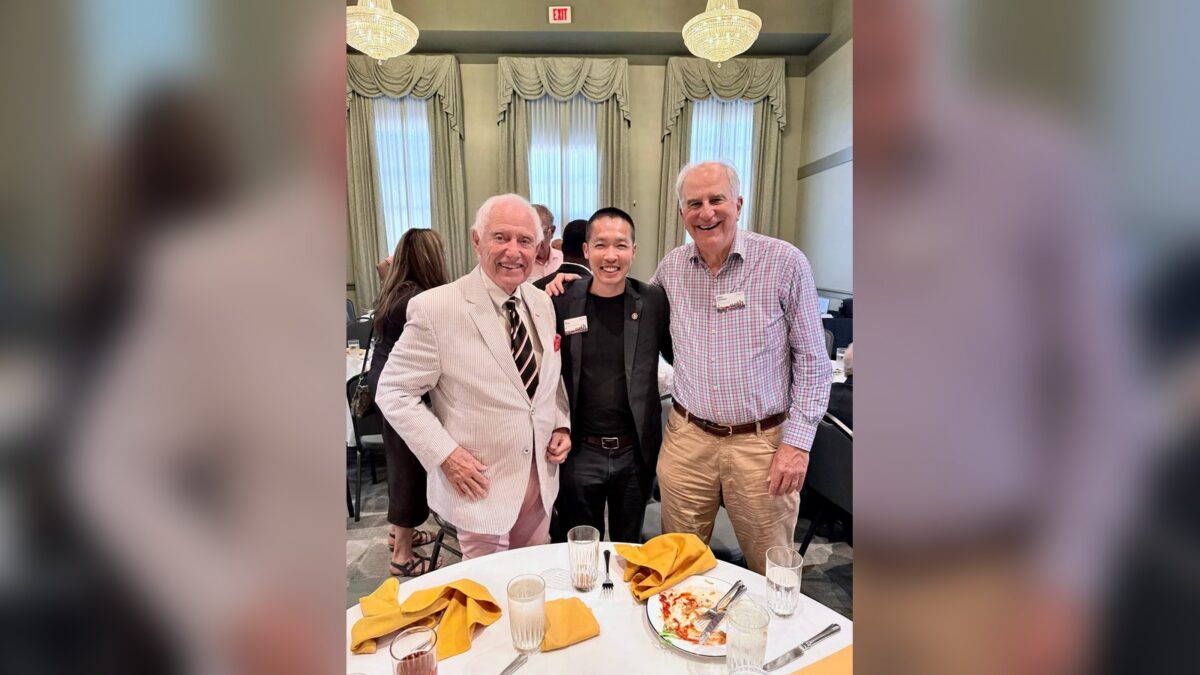
That sentence sounds simple. It is not. It is a civic thesis. It is also a lived conclusion from someone who arrived in America from Vietnam, grew up feeling small in rooms that seemed too large, and later found himself sitting in the middle of a Louisville civic lunch between two men whose education and public-service resumes would intimidate almost anyone: Frederic "Fred" Cowan and Lacey T. Smith.

For Di Tran, Founder and Chancellor of Di Tran University and founder of Louisville Beauty Academy, the September 3, 2026 Rotary Club of Louisville lunch at the University Club was not merely an event on a calendar. It was a quiet summit of memory, humility, aspiration, and observation. On one side stood the life he came from: a Vietnamese childhood before college was even imaginable, before elite universities had any emotional reality, before the word "Harvard" belonged anywhere near his own story. On the other side stood the life Louisville allowed him to encounter: judges, former legislators, attorneys, civic elders, service leaders, and a candidate for the United States Senate speaking in the same room.

The beauty of that moment is not that Di Tran became important. The beauty is that Louisville made proximity possible.

In a city that outsiders sometimes underestimate, a Vietnamese American immigrant founder could sit, listen, learn, and observe among men whose lives had touched law, state government, courts, education, and public leadership long before Di was born in Vietnam. That is the real civic miracle. Not celebrity. Not status. Not applause. Proximity to excellence. Access to example. A living classroom.

A Lunch That Became a Civic Text

The Rotary Club of Louisville publicly lists its September 3, 2026 meeting as featuring Charles Booker, "Candidate for United States Senate." The Club's own public materials describe the Rotary Club of Louisville as nearly 400 members strong, the 12th largest club among Rotary International's 45,000-plus clubs worldwide, and as a civic space whose weekly Thursday luncheons bring together business, professional, and civic leaders.

That matters because institutions shape rooms, and rooms shape people.

Rotary's traditional language of "Service Above Self" is not merely ceremonial when practiced seriously. It describes a discipline: gather people who have done different kinds of work, let them hear one another, let younger builders sit near older builders, let public servants meet business owners, let immigrants sit beside graduates of institutions once unimaginable to them, and let the city's future be formed by repeated exposure to responsible people.

For Di Tran, that lunch was a reminder that Louisville's greatness is often hidden in plain sight. The city does not always market itself like New York, Boston, Washington, D.C., or San Francisco. But Louisville has a rare quality: it can place a first-generation Vietnamese American institution builder in direct human proximity to people who have shaped Kentucky law and civic life.

That is not small. That is a form of public wealth.

Fred Cowan: A Kentucky Career Across Three Branches

Frederic J. "Fred" Cowan Jr. is one of Louisville's unusually accomplished public-service figures. Public records and biographical sources identify him as a Louisville attorney, former Kentucky State Representative, former Kentucky Attorney General, and former Jefferson Circuit Court judge.

His career is remarkable because it crosses the three branches of Kentucky state government.

In the legislative branch, Cowan represented Jefferson County's 32nd District in the Kentucky House of Representatives from 1982 to 1987. In the executive branch, he served as Kentucky Attorney General from 1988 to 1992, occupying the role of the Commonwealth's chief legal officer. In the judicial branch, he served as a Jefferson Circuit Court judge after being elected in 2006.

That sequence is rare because each branch demands a different temperament.

A legislator must persuade. An attorney general must lead statewide legal responsibility. A judge must exercise restraint, independence, and disciplined judgment. To move through all three is not merely to collect titles. It is to submit oneself repeatedly to different tests of public trust.

Cowan's educational background adds another layer. Public profiles list Dartmouth College for undergraduate education and Harvard Law School for legal education. Dartmouth and Harvard are not merely famous names. In the story of Louisville civic life, they become evidence that national educational capital can return to Kentucky and be placed in service of local law, courts, and community leadership.

For Di Tran, sitting beside such a figure was not about social display. It was about absorbing the structure of a life built through study, public trust, and disciplined service.

Lacey T. Smith: Law, Legislature, Local Government, and Civic Memory

Lacey T. Smith also represents a classical civic-leadership path: education, law, elected service, government counsel work, judicial or probate-related service, negotiation expertise, and long legal practice in Louisville.

Public and profile sources identify Smith as a Louisville attorney and former Kentucky State Senator. Di Tran's supplied event/profile context further identifies Smith as having served as legal counsel to a mayor, as a probate judge, and as a figure known for international trade expertise. Public podcast-profile material describes him as a renowned expert in negotiation. Public legal-directory material lists Smith with a Harvard legal credential, and additional public material associates him with deep Louisville legal and civic life.

Smith's undergraduate education is associated with Hamline University, a private university in Saint Paul, Minnesota, founded in 1854 and described by Hamline as Minnesota's first university. That matters because the story is not simply Harvard. It is the arc from formative education to law to public responsibility.

Together, Cowan and Smith form an extraordinary pair: two Louisville-connected public-service men tied to Harvard Law School, state legislative service, legal practice, and civic responsibility. In Cowan, one sees the architecture of Kentucky public law across branches of government. In Smith, one sees the older civic lawyer's range: law, government, negotiation, local leadership, and, by Di Tran's account, international trade vision.

Yet the strongest lesson is not elitism. It is transmission.

What does a city transmit when a younger immigrant founder can stand between two elder public servants? It transmits the idea that leadership is observable. That excellence is not abstract. That public service is not only something read in textbooks, but something carried in faces, stories, posture, restraint, and presence. It also transmits something more practical: serious people do not only talk about local pride. They ask how local excellence can travel responsibly into the world.

The Mud Hut, the First College Graduate, and the Feeling of Being Small

Di Tran has often described his origin with plain language: a boy from a mud hut in Vietnam.

That phrase should not be romanticized. Poverty is not poetry when one is living inside it. A mud hut is not a metaphor to the child who sleeps there. It is a boundary of imagination. It can make the world feel fixed, distant, and already decided.

Before Di Tran could dream of elite education, he first had to dream of education at all. In his telling, he became the first person across generations on both sides of his family to attend and graduate college. That is not an individual credential only. It is a break in a generational ceiling.

There is a special humility in such a life. A person who comes from little and enters rooms of high public achievement may feel both gratitude and disbelief. He may feel small. But smallness, when not poisoned by shame, can become a powerful form of attention.

To sit between Fred Cowan and Lacey Smith was to sit between two living archives of Kentucky civic service. To listen to Charles Booker speak was to observe another form of public life: a newer voice, shaped by Louisville, race, representation, poverty, state politics, and democratic aspiration.

For Di Tran, the lunch was beautiful because it compressed time.

Vietnam before college. Kentucky after immigration. The mud hut. The first degree. The beauty school. The university. The civic table. The Harvard-trained public servants. The Rotary room. The Senate candidate. The possibility that a city can hold all of that in one noon hour.

Charles Booker and the Discipline of Listening Without Endorsing

Charles Booker is a significant Kentucky political figure. Louisville Public Media reported on May 19, 2026 that Booker won the Democratic nomination for Kentucky's open U.S. Senate seat and would face Republican nominee U.S. Rep. Andy Barr in the general election. Kentucky Secretary of State election-night reporting, still labeled unofficial when checked on September 3, 2026, showed Booker with 155,577 votes, or 47 percent, in the Democratic primary.

The careful wording matters: Charles Booker is not a U.S. Senator. He is the Democratic nominee and a candidate for the November 3, 2026 general election.

His historical significance also matters. In 2022, Booker became the first Black Kentuckian nominated by a major party for the U.S. Senate. In 2026, he again became Kentucky Democrats' nominee for that office.

For Viet Bao Louisville, the significance of hearing Booker speak in a Rotary room is not partisan endorsement. It is civic literacy. Immigrant communities, business owners, students, educators, and working families benefit when they sit in rooms where public questions are discussed directly. Democracy becomes less distant when citizens and community builders listen in person.

Listening is not endorsement. Attendance is not campaign coordination. Respectful civic engagement is not partisanship. A healthy city should make room for people to hear from leaders, candidates, judges, attorneys, educators, entrepreneurs, and public servants without collapsing every room into a political slogan.

That is another reason Louisville matters. It still has rooms where civic listening can happen.

Louisville as a Hidden University

A city can be a university if its rooms are arranged correctly.

In one sense, Louisville's universities are its formal institutions: the University of Louisville, Bellarmine, Spalding, Simmons College of Kentucky, Jefferson Community and Technical College, and many others. But in another sense, Louisville itself is an informal university. Its classrooms are lunch tables, civic clubs, small businesses, schools, churches, legal offices, courtrooms, nonprofit boards, immigrant family stores, bourbon warehouses, beauty classrooms, and neighborhood conversations.

The September 3 Rotary lunch was one such classroom.
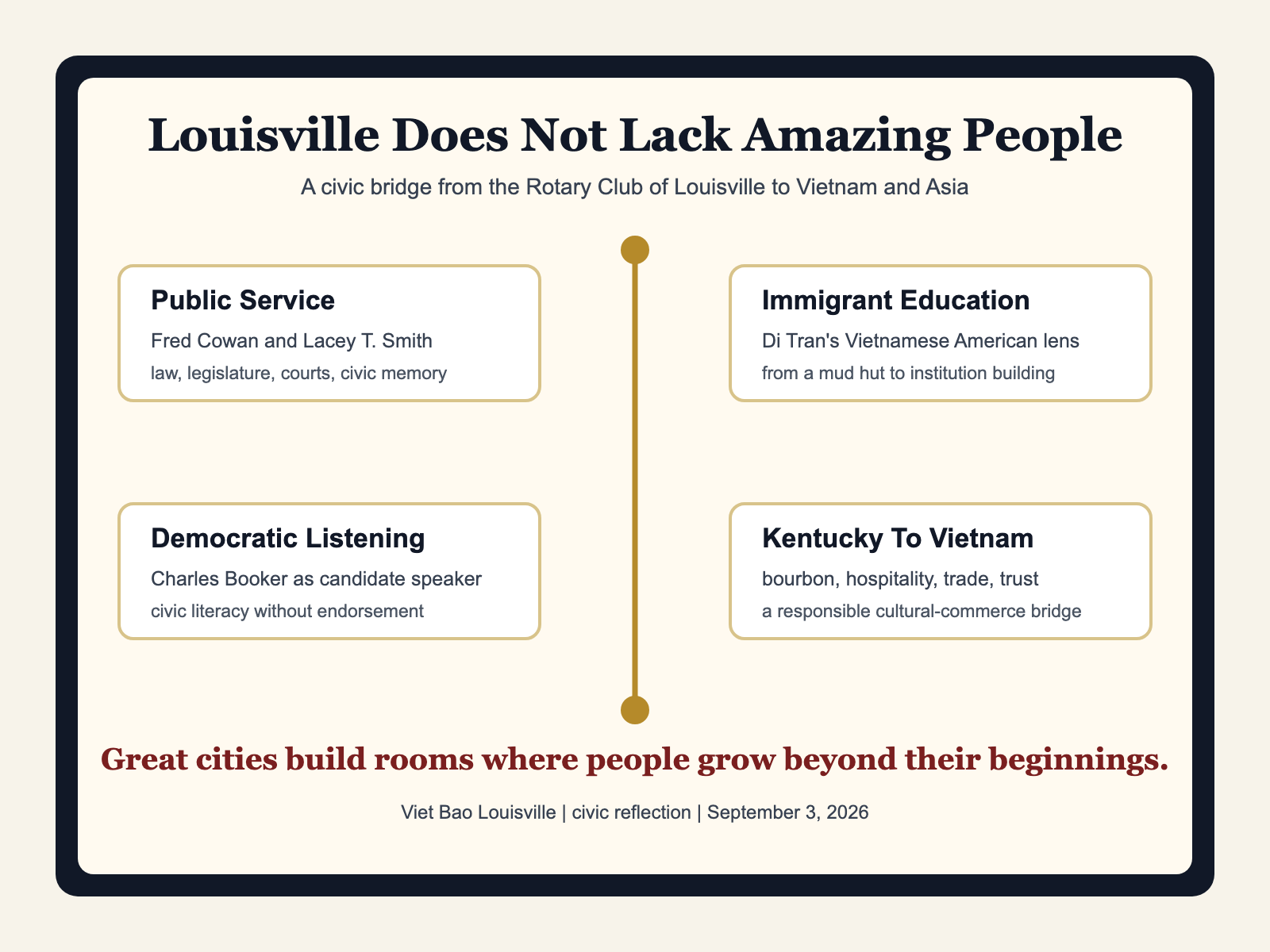
Visual explainer showing four civic bridge themes: public service, immigrant education, democratic listening, and Kentucky to Vietnam cultural commerce.
A civic bridge map connecting public service, immigrant education, democratic listening, and a responsible Kentucky-to-Vietnam cultural-commerce vision.

Fred Cowan represented institutional memory across Kentucky's legislature, executive legal leadership, and courts. Lacey Smith represented another path of law, Senate service, municipal counsel, and Louisville practice. Charles Booker represented the current democratic contest and the historical visibility of a Black Kentuckian seeking statewide federal office. Di Tran represented the immigrant student of the room: the Vietnamese American founder who knew enough to feel humbled and grateful, and hungry enough to keep learning.

This is why Louisville is great in Di Tran's perspective. Not because it is perfect. No city is. Louisville is great because it gives builders access to one another. It allows a person from the margins to move toward the center not only by wealth or status, but by service, learning, and persistence.

That is a different definition of greatness.

The Kentucky Bourbon and Vietnam Question

During and around such civic conversations, especially with Lacey Smith's Di-identified international-trade expertise in mind, another idea naturally belongs on the table: how can Kentucky's signature products, especially Kentucky bourbon, build deeper cultural and economic bridges with Vietnam and Asia?

Kentucky bourbon is not a small industry. The Kentucky Distillers' Association describes bourbon and distilling as a $10.6 billion signature industry for Kentucky, supporting more than 23,935 jobs, more than $2 billion in annual payroll, and hundreds of millions in state and local tax revenue. The same source says Kentucky distillers shipped more than $500 million in exports in 2022, almost all of it bourbon, while also noting the pressure of tariffs and trade barriers.

Vietnam is not a small opportunity. USDA Foreign Agricultural Service reporting in July 2026 described Vietnam as a rising market for U.S. agricultural exports and stated that the United States was Vietnam's second-largest supplier of agricultural products in 2025, at $4.7 billion. Vietnam's population, urban growth, young consumers, hospitality sector, tourism economy, and expanding middle class all suggest that Kentucky should study Vietnam not as a side market, but as a serious Asia bridge.

This is where Smith's negotiation and international-trade lens matters. Trade is not only product movement. It is trust movement. It is law, culture, timing, translation, distribution, reputation, etiquette, and risk control. A good international bridge does not begin by asking only what Kentucky wants to sell. It asks what Vietnam needs to understand, what Kentucky must respect, what laws govern the exchange, and what kind of relationship can last.

The question should not be crude: "How do we sell more alcohol?"

The better question is: how can Kentucky bourbon become part of a responsible cultural-commerce bridge between Kentucky and Vietnam?

That bridge would need several layers.

First, education. Vietnamese consumers, hospitality schools, importers, chefs, tourism operators, and cultural organizations need to understand what bourbon is: a legally defined American whiskey category, deeply tied to Kentucky agriculture, corn, limestone water narratives, oak barrels, aging, tourism, and craft. Education should include responsible consumption and legal-age boundaries.

Second, hospitality. Vietnam could become a Kentucky bourbon knowledge hub for Asia through curated tastings, chef pairings, tourism exchanges, bartender education, hotel and restaurant partnerships, and cultural events that pair Kentucky bourbon with Vietnamese cuisine and storytelling.

Third, trade discipline. Any serious bourbon-to-Vietnam strategy needs compliance: import rules, labeling, alcohol distribution law, tax treatment, age restrictions, anti-corruption controls, brand protection, and responsible marketing. A bridge built without law will collapse.

Fourth, diaspora trust. Vietnamese Americans in Kentucky can serve as cultural interpreters. They understand both the Kentucky story and the Vietnamese language, etiquette, family structure, business culture, and trust dynamics. This is where Louisville's Vietnamese community can become more than a consumer community. It can become a diplomatic-economic bridge.

Fifth, institutional storytelling. Kentucky should not enter Vietnam only with bottles. It should enter with farmers, coopers, distillers, tourism leaders, educators, chefs, small-business owners, and cultural ambassadors. Bourbon is agriculture, manufacturing, hospitality, tourism, law, brand, patience, and place. Vietnam respects stories of family, craft, endurance, and local pride. Kentucky has those stories.

Sixth, expert negotiation. The best Kentucky-to-Vietnam bourbon bridge would need people who understand how to negotiate across legal systems, cultures, languages, ministries, importers, hospitality groups, and long-term commercial relationships. That is why a lunch beside a lawyer known for negotiation and international-trade intelligence can spark more than admiration. It can spark strategy.

In Di Tran's imagination, Vietnam can become not just a destination for Kentucky bourbon, but a hub of Kentucky bourbon knowledge in Asia. A place where Kentucky's signature spirit is taught responsibly, paired beautifully, imported lawfully, and connected to tourism, restaurants, hotels, business delegations, cultural festivals, and educational exchange.

That idea belongs in the same civic frame as the Rotary lunch because it is not merely commerce. It is relationship architecture.

Why the Moment Matters for Vietnamese Louisville

Viet Bao Louisville exists because community memory matters.

When a Vietnamese American founder sits among Kentucky public servants and listens to a major-party U.S. Senate nominee, the event is not only personal. It says something to young people, immigrants, workers, and first-generation students:

You may begin far from the room, but you are not forbidden from entering it.

You may come from a mud hut, a refugee family, a nail salon, a small apartment, a factory job, a kitchen, a classroom where English is still difficult, or a family where no one knows how college applications work. None of that erases your right to learn from the highest rooms you can reach.

The point is not to worship elite credentials. Harvard Law School is impressive, but the deeper question is what the credential serves. If education produces arrogance, it fails. If education produces public service, discipline, lawfulness, humility, and responsibility, it becomes beautiful.

That is what made the lunch so meaningful. Fred Cowan and Lacey Smith were not abstractions. Charles Booker was not a headline. Rotary was not a logo. Louisville was not a slogan. They were all present in one room where a Vietnamese American immigrant could sit, observe, and carry the lesson back to students and community.

Louisville Does Not Lack Amazing

Some cities are loud about their greatness. Louisville is often quieter.

But Louisville has greatness in its people: in retired judges who still show up, in attorneys who carried public responsibilities, in civic clubs that convene across professions, in candidates who speak directly to citizens, in immigrant founders who sit humbly and listen, and in communities that keep trying to turn proximity into service.

Di Tran's perspective is simple: Louisville is one of the greatest cities because it makes transformation feel possible.

It allowed a boy from a mud hut in Vietnam, once unable to imagine college, to become a first-generation college graduate, a school founder, a university builder, and a student of civic leadership. It placed him between two Harvard-trained public-service figures from Kentucky and in front of a historic Black Kentucky political voice. It gave him a lunch hour that felt like a chapter in a much larger American book.

That is why Louisville does not lack amazing people.

It has them.

It grows them.

It gathers them.

And if we are wise, it will connect them to the next generation: Vietnamese American students, beauty students, workforce students, small-business owners, civic learners, and young people who still feel too small to imagine the rooms they may one day enter.

The lesson from September 3, 2026 is not that Di Tran sat in an important room.

The lesson is that a great city builds rooms where people can become larger than the lives they started with.

Louisville did that.

And for that, gratitude is the correct word.

Sources And Notes

Categories
Community Faith and Culture Kentucky Vietnamese American Community

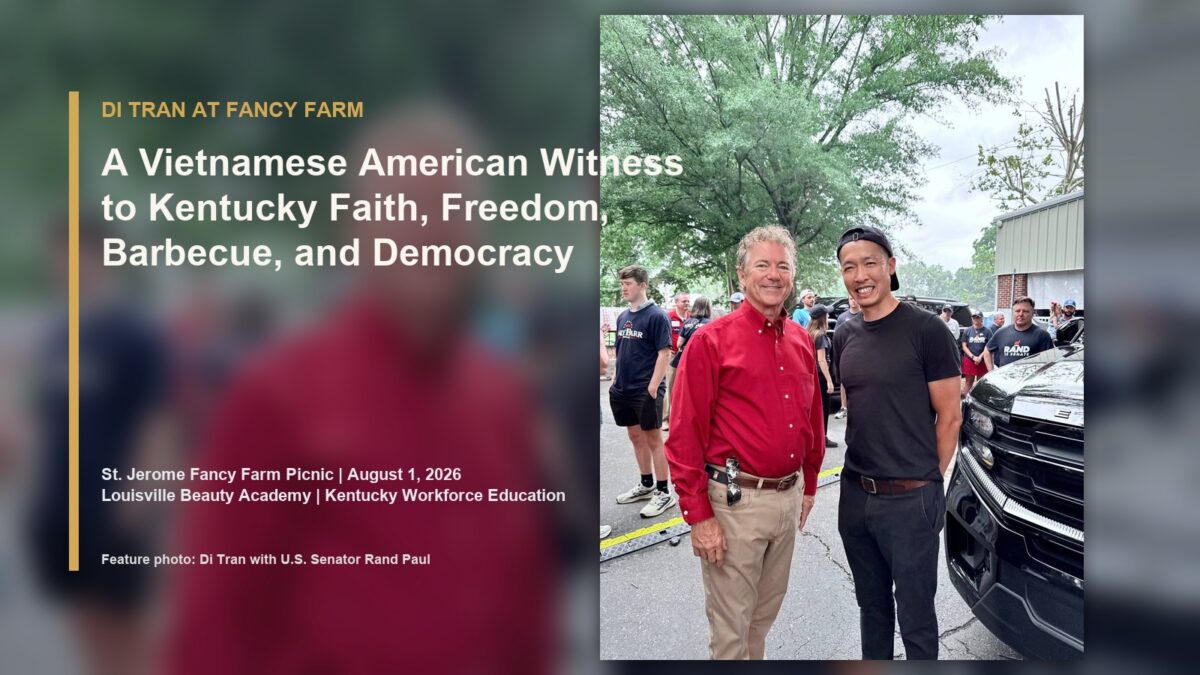
Di Tran at Fancy Farm: A Vietnamese American Catholic Witness to Kentucky Faith, Freedom, Barbecue, and Democracy

Short answer: On August 1, 2026, Di Tran attended the historic St. Jerome Fancy Farm Picnic in Graves County, Kentucky, as a Vietnamese American Catholic, founder, and workforce-education advocate from Louisville. What he witnessed was more than politics. It was one of Kentucky’s clearest living traditions of faith, barbecue, volunteer labor, public speech, and American freedom.

This article is a civic and educational reflection. It is not an endorsement of any party, candidate, campaign, or office.

America Breathing in Public

On August 1, 2026, Di Tran stood at Fancy Farm not simply as a visitor, but as a Vietnamese American immigrant witnessing one of Kentucky’s most powerful public rituals of freedom.

To outsiders, Fancy Farm may look like barbecue smoke, campaign signs, political speeches, cameras, and crowds. But to those who stand there long enough to listen, it is something deeper. It is Kentucky’s living classroom of faith, labor, family, civic disagreement, and democratic courage.

At Fancy Farm, citizens gather in the open. Leaders speak before the people. Candidates challenge each other freely. Supporters cheer, laugh, disagree, and ask for votes in full public view. That is not disorder. That is democracy with Kentucky character.

The Church Came First

The St. Jerome Fancy Farm Picnic began in 1880 as a parish picnic and fundraiser. Long before statewide campaigns made the event famous, there were families, church members, volunteers, food, games, service, and a Catholic community building continuity through work.

Historical summaries trace Catholic settlement in the Fancy Farm area to 1829, with an early log church built in 1836 and the present St. Jerome church completed in the 1890s. It is not accurate to call St. Jerome the oldest church in Kentucky. The stronger and more careful statement is this: St. Jerome is one of the historic Catholic communities of western Kentucky, with roots reaching back to the 1830s.

That distinction matters because it honors the truth. Fancy Farm is not merely a political event beside a church. It is a church community whose service, barbecue, discipline, and fundraising became so large and so respected that Kentucky politics eventually came to it.

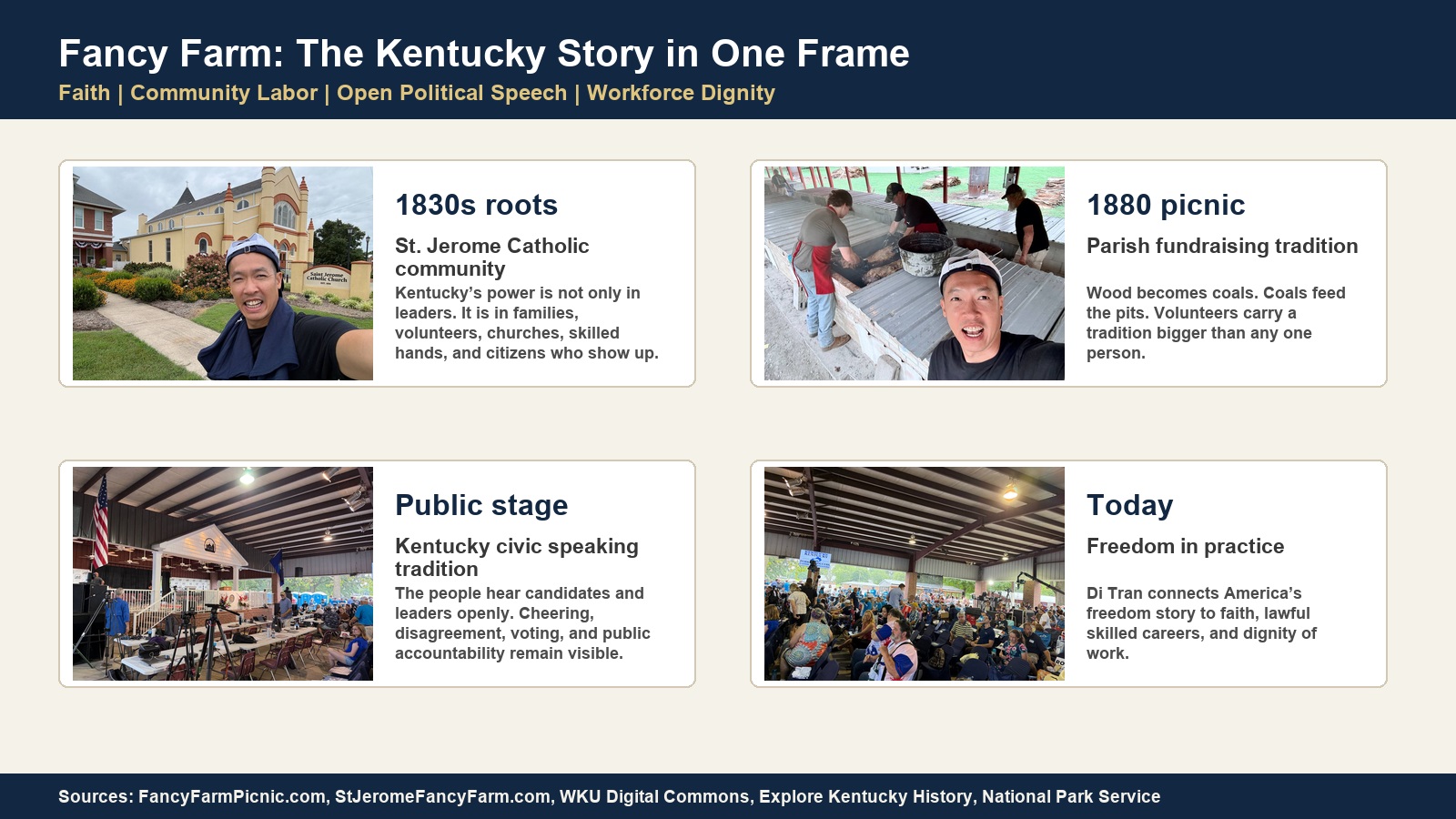
Visual explainer showing St. Jerome Catholic Church roots, Fancy Farm barbecue tradition, Kentucky political speaking stage, and Di Tran witnessing freedom in practice.
Fancy Farm connects St. Jerome’s Catholic roots, parish fundraising barbecue, open political speech, and Kentucky workforce dignity in one living civic tradition.

The Barbecue Is a Workforce Story

The official Fancy Farm Picnic history says the event serves more than 15 tons of barbecue. On the ground, that number becomes human. Di Tran witnessed long open pits, hardwood burned down into coals, pork and mutton watched with care, and volunteers feeding the heat hour after hour.

Local people described the work plainly: the pork is cooked for about 20 hours; the wood is burned into coals; the pits are fed through the night; families and volunteers carry the tradition forward; the food supports St. Jerome and the community around it.

This is not restaurant barbecue. It is inherited community knowledge. It is discipline. It is timing. It is heat, labor, patience, and love. It is skilled hands serving thousands under God.

Kentucky’s Larger American Meaning

For Di Tran, Fancy Farm carries special meaning because Kentucky itself carries so much of America’s story. This is the Commonwealth where Abraham Lincoln was born. It is a land of farms, churches, bourbon, small towns, veterans, families, entrepreneurs, horses, rivers, coalfields, manufacturing, and public argument.

Kentucky has also produced national political power. Senator Mitch McConnell became the longest-serving Senate party leader in American history. Senator Rand Paul serves as one of Kentucky’s two statewide United States Senators. Governors, members of Congress, candidates, local leaders, volunteers, and citizens come through Fancy Farm because the place still forces politics to face the people.

That is why the event feels larger than one day. It is a Kentucky ritual inside the American experiment: faith before politics, community before power, labor before speeches, and citizens before officeholders.

A Vietnamese American Witness to Freedom

Di Tran attended as a Vietnamese American who came to America believing in freedom, opportunity, work, family, and God. In America’s 250th year, that identity matters. The United States is a nation shaped by many peoples, while remembering with respect that Native peoples were here first. Everyone else came through migration, settlement, exile, hardship, hope, labor, or the search for a freer life.

To stand as a Vietnamese American Catholic in rural Kentucky, watching leaders speak openly while church volunteers feed thousands through fire and service, is to see the American promise in physical form. Freedom is not only a word in a book. Freedom is a crowd where people can disagree without fear. Freedom is a church that can serve its community. Freedom is an immigrant who can stand in Kentucky and feel at home. Freedom is lawful work becoming dignity.

Di Tran is deeply faithful. He does not reduce God to politics or religion as performance. He believes that all grace, all opportunity, and all human dignity belong under God. That belief made Fancy Farm even more powerful: the smoke, the church, the crowd, the leaders, and the volunteers all pointed back to service.

Why Louisville Beauty Academy Belongs in This Story

As founder of Louisville Beauty Academy, Di Tran saw Fancy Farm through the lens of workforce education. A beauty school may seem far from an open-pit barbecue and a political speaking stage, but the values are closely connected: skilled hands, discipline, family opportunity, lawful careers, service, small business, and dignity through practical work.

Louisville Beauty Academy’s mission is to help students and working adults move toward Kentucky state-licensed beauty careers through structured education, documentation, and practical training. The school does not promise political favor, government endorsement, exam passage, licensure, employment, or income. The honest mission is education, lawful preparation, and respect for students who are willing to work.

That is why Fancy Farm matters to LBA. It shows Kentucky’s workforce culture at its roots. Volunteers do not cook for 20 hours because it is easy. They do it because tradition, service, church, family, and community matter. Students do not pursue licensed careers because life is easy. They do it because skill can become independence.

Freedom Under the Kentucky Sky

At Fancy Farm, Di Tran did not merely attend an event. He witnessed America breathing in public: faith serving community, labor feeding families, leaders answering the people, and freedom still alive under the Kentucky sky.

Before politics, there is faith. Before speeches, there is work. Before power, there is community. And inside that community, an immigrant American can stand freely, listen to leaders freely, believe in God freely, and help build the next generation of lawful skilled workers freely.

That is Kentucky. That is America. That is freedom.

Sources and Historical Notes

Photo note: Public-event photos are used here as civic documentation of attendance, place, and public life. Appearance in a photo does not imply endorsement, partnership, campaign authorization, or official recognition of Louisville Beauty Academy.

Categories
Books Community News Vietnamese American Community

Di Tran Releases Make Yourself Proud: A Message of Self-Trust, Action, and Evidence

Di Tran, a Vietnamese American author, educator, entrepreneur, and Louisville community builder, has released Make Yourself Proud: Keep Promises to Yourself and Become Evidence.

The book carries a simple and practical message: do not wait for perfect confidence before moving. Build self-trust through action. Keep promises. Serve others. Let evidence grow one day at a time.

View the book on Amazon

A Community Message

For immigrant families, students, workers, parents, and small business builders, the message is familiar and powerful. Many people begin before they feel ready. They learn by doing. They become stronger by serving, correcting, and continuing.

Make Yourself Proud gives language to that journey. It frames pride not as ego, but as evidence: the quiet proof of values lived through action.

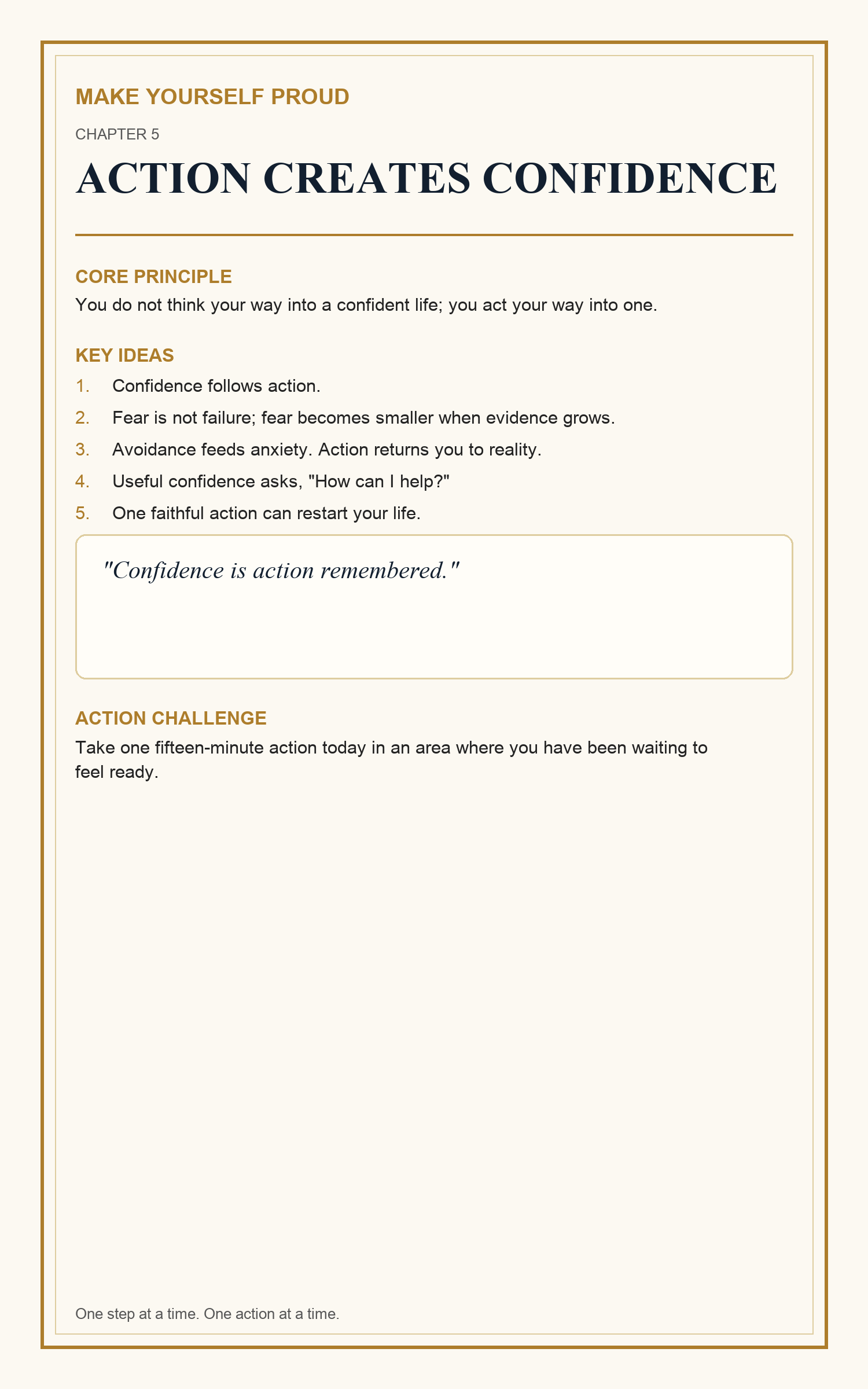
Infographic from Make Yourself Proud on action, confidence, and evidence.
The release shares a practical message: action creates confidence, and evidence rebuilds self-trust.

Companion Video And Podcast

YouTube: The Confidence Illusion: Why You Should Act Before You’re Ready

Spotify: MAKE YOURSELF PROUD: The Humanization Philosophy of Self-Trust, Action, and Evidence

Release Links

Categories
Community Witness

The Immigrant Work Ethic Behind a School That Opens Before Sunrise

The Immigrant Work Ethic Behind a School That Opens Before Sunrise

Before a student enters a classroom, someone has already prepared the space. Sometimes that preparation is administrative. Sometimes it is spiritual. Sometimes it is as simple as picking up trash, clearing the alley, and treating the neighborhood as part of the institution’s responsibility.

This kind of work may not look glamorous, but it is a powerful form of public trust. Immigrant-built institutions often begin this way: early mornings, quiet labor, family sacrifice, and the belief that dignity is created by what people do when no audience is watching.

A clean school, a clean sidewalk, and a cared-for back alley are not small things. They teach a public lesson: if we want to elevate people, we begin by caring for the environment where people learn, work, and walk.

What This Means Practically

  • Use written clarity before verbal pressure.
  • Give people the next honest step without forcing the decision.
  • Let proof, service, and usefulness create trust over time.

Institutional Position

Viet Bao Louisville will continue preserving stories of work, family, faith, discipline, and community service that explain how institutions are truly built.

References and Related Institutional Context

  • Viet Bao Louisville community witness doctrine
  • Matthew 22:39, love thy neighbour as thyself
  • Louisville Beauty Academy values-in-action public narrative

This article is public education and institutional commentary. It is not legal, financial, medical, or individualized enrollment advice.

Categories
Cộng Đồng Doanh Nghiệp Tin Louisville

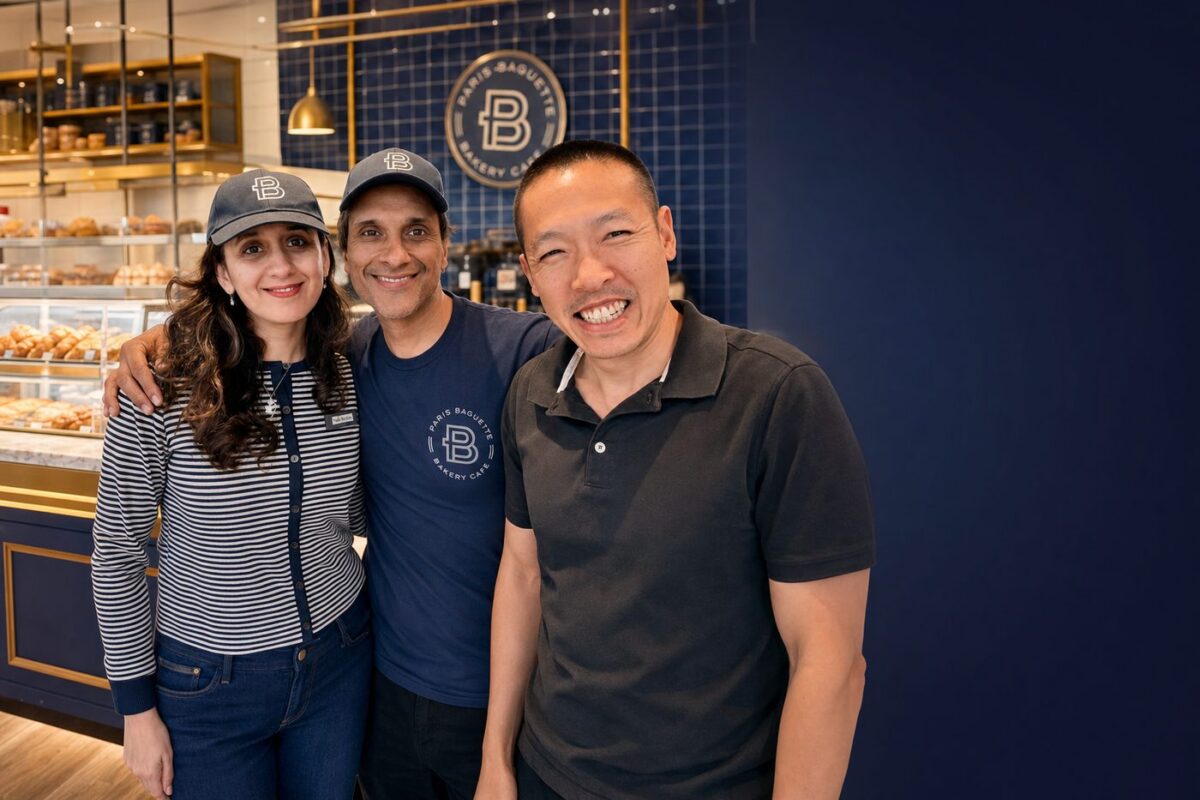
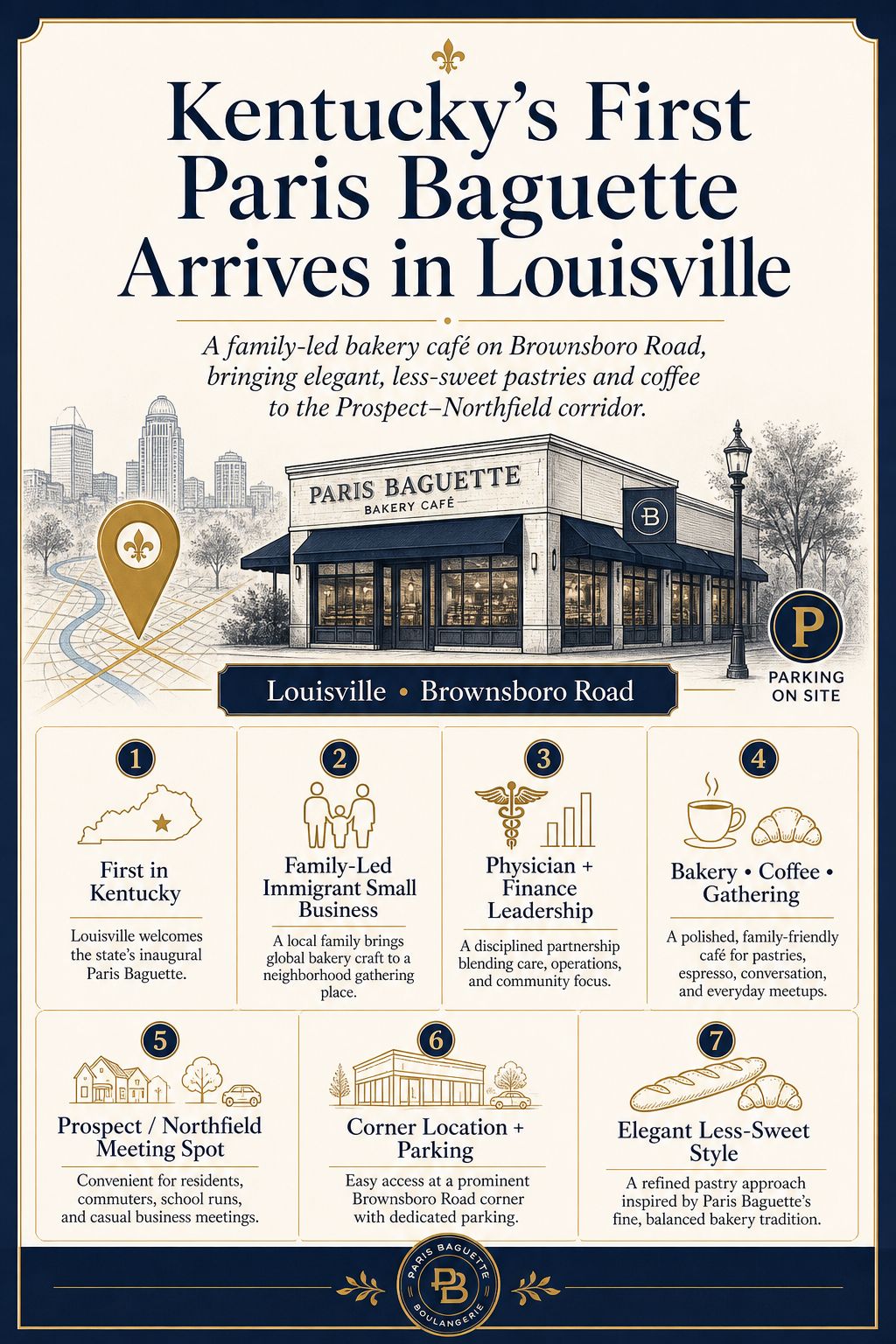
Louisville Chào Đón Paris Baguette Đầu Tiên Tại Kentucky: Một Câu Chuyện Đẹp Về Gia Đình, Cộng Đồng, Và Người Xây Dựng

Địa chỉ: 4957 Brownsboro Road, Louisville, KY 40222
Vì sao đáng chú ý: vị trí thuận tiện, đậu xe dễ, phù hợp gặp gỡ gia đình lẫn công việc, và là một bổ sung đẹp cho khu Brownsboro / Prospect / Northfield.
Góc nhìn cộng đồng: đây là kiểu doanh nghiệp mà Louisville nên thật sự ủng hộ.

Louisville vừa đón nhận một điểm đến mới rất đáng chú ý tại 4957 Brownsboro Road: Paris Baguette đầu tiên tại Kentucky. Nhưng nếu chỉ nhìn đây như một tiệm bánh mới, chúng ta sẽ bỏ lỡ phần quan trọng hơn của câu chuyện.

Đây là một câu chuyện về gia đình. Về người nhập cư. Về những người thành công trong nghề nghiệp nhưng vẫn chọn bước thêm một bước khó hơn: mở doanh nghiệp, phục vụ cộng đồng, tạo việc làm, và đặt niềm tin của mình vào chính thành phố Louisville.

Điều đó xứng đáng được trân trọng.

Từ góc nhìn địa phương của Di Tran, đây là một sự bổ sung rất đúng thời điểm cho khu vực Prospect / Northfield. Vị trí này có chỗ đậu xe thuận tiện, dễ ra vào, phù hợp cho cả gia đình lẫn giới chuyên môn, và đủ thoải mái để trở thành nơi gặp gỡ, uống cà phê, trò chuyện, hoặc gặp khách hàng không quá hình thức nhưng vẫn lịch sự. Đây không chỉ là nơi mua bánh; đây có thể trở thành một không gian sinh hoạt thực sự cho cộng đồng.

Thời điểm cũng rất đúng. Khu vực này đang tăng trưởng, lưu thông giao thông đã thuận tiện hơn, hoạt động văn phòng và y tế xung quanh ngày càng rõ hơn, trong đó có cả động lực phát triển gần khu VA và các cụm văn phòng lân cận. Một tiệm bánh – cà phê đẹp, mở cửa sớm, thân thiện với gia đình và phù hợp cho gặp gỡ công việc như thế này đến vào đúng lúc khu vực đang cần.

Điểm đáng quý hơn nữa là tinh thần của câu chuyện. Đằng sau một ngày khai trương đẹp đẽ luôn là rất nhiều tháng ngày chuẩn bị, giấy tờ, đầu tư, áp lực, nhân sự, thiết kế, vận hành, và cả rủi ro. Một gia đình chọn xây dựng như vậy không chỉ đang mở cửa hàng. Họ đang góp thêm sinh khí cho thành phố.

Đó là lý do những doanh nghiệp như thế này cần được cộng đồng ủng hộ thật sự.

Không phải chỉ bằng lời khen trên mạng, mà bằng hành động: ghé thăm, mua hàng, mời bạn bè, đưa gia đình đến, chọn nơi này cho một buổi gặp sáng, một cuộc hẹn cà phê, hay một cuộc trò chuyện công việc ngắn. Khi một gia đình tạo ra một nơi đẹp, sạch, ấm áp, và hữu ích cho cộng đồng, cộng đồng nên đáp lại bằng sự hiện diện thật.

Câu chuyện này cũng có một lớp cảm xúc rất đẹp. Theo chia sẻ của gia đình, hình ảnh Paris Baguette đã để lại ấn tượng từ nhiều năm trước tại New York. Điều đó làm cho sự xuất hiện của thương hiệu này ở Louisville không còn là chuyện ngẫu nhiên. Nó mang cảm giác của một ký ức được tiếp nối, rồi được biến thành hiện thực tại Kentucky.

Về sản phẩm, sức hấp dẫn của Paris Baguette cũng nằm ở trải nghiệm tinh tế hơn: nhiều món bánh và pastry có cảm giác thanh hơn, bớt ngọt gắt hơn kiểu tiệm bánh Mỹ thông thường, và gần hơn với phong cách bánh Âu / Pháp mà nhiều người thấy dễ quay lại hơn. Đó không chỉ là tên thương hiệu. Đó là một phong cách.

Với cộng đồng Việt và cộng đồng nhập cư nói chung, những câu chuyện như vậy rất đáng mừng. Chúng nhắc chúng ta rằng thành công không chỉ là đi làm tốt trong nghề của mình. Thành công còn có thể là xây thêm một điều gì đó cho thành phố mình đang sống. Một nơi để cộng đồng gặp nhau. Một nơi để con trẻ nhìn thấy tấm gương xây dựng. Một nơi cho thấy rằng người nhập cư không chỉ hòa nhập, mà còn góp phần làm cho Louisville đẹp hơn, sống động hơn, và tử tế hơn.

Louisville cần nhiều gia đình như thế.

Và cộng đồng cũng cần biết cách vỗ tay cho những người đang xây.


Gợi ý của Viet Bao Louisville: Nếu bạn ở Louisville, đặc biệt gần khu Brownsboro / Prospect / Northfield, đây là một địa điểm đáng để ghé thăm, ủng hộ, và giới thiệu cho người thân, bạn bè, đồng nghiệp.

Infographic về Paris Baguette đầu tiên tại Kentucky và ý nghĩa với cộng đồng Louisville.
Vì sao Paris Baguette đầu tiên tại Kentucky là một tín hiệu đẹp cho Louisville và cộng đồng doanh nghiệp nhập cư.
Categories
Community Witness

Louisville, Service, and the Immigrant Dream: Why Human-Centered Education Matters in Real Life

The immigrant dream is often described in heroic language and then abandoned in ordinary systems. People are told to work hard, believe, contribute, and persevere—but when they arrive at the gates of actual opportunity, the path is frequently obscured by cost, language barriers, unfamiliar institutions, and quiet forms of exclusion that rarely announce themselves honestly.

That is why human-centered education matters so much in real life. It is not merely about teaching. It is about whether a society knows how to receive effort with structure.

Louisville offers a meaningful context for this question. Like many American cities, it is shaped not only by formal institutions, but by the daily labor of families who build life through work, service, adaptation, and quiet persistence. Immigrant communities understand this especially well. For them, education is not an abstract cultural ideal. It is often the most practical bridge between instability and belonging.

But not all educational systems honor that reality equally. Some demand forms of patience that only the already-secure can afford. Some are too expensive. Some are too slow. Some are too linguistically narrow. Some speak the language of opportunity while preserving the architecture of delay.

Human-centered education begins by refusing that contradiction.

It asks what people actually need in order to move forward with dignity. They may need instruction that is practical rather than ornamental. They may need schedules compatible with work and family obligations. They may need patient explanation of licensure, forms, and regulatory systems. They may need to see that law and opportunity are not enemies. Above all, they need institutions that do not confuse complexity with honor.

This is where service enters the story. Real service does not simply express sympathy. It builds usable pathways. It helps translate society to the person and the person to society. It makes movement possible.

For immigrant communities, that kind of service has deep consequences. It strengthens trust. It reduces fear of systems that often feel distant. It transforms the meaning of education from a remote aspiration into a reachable act of self-respect. And when that happens, the benefits spread beyond the individual learner. Families stabilize. Children see possibility more clearly. Neighborhoods gain professionals, small businesses, and examples of lawful upward movement.

The deeper lesson is cultural as much as economic. A city becomes stronger not merely when it welcomes diversity rhetorically, but when it builds institutions capable of converting diversity into shared contribution. That requires seriousness, patience, and local leadership. It also requires a refusal to treat immigrant ambition as peripheral. In truth, immigrant ambition has long been one of America’s most renewable public assets.

Louisville has the chance to demonstrate what that looks like in practice: education tied to work, work tied to dignity, dignity tied to service, and service tied to community trust. When that chain is preserved, the immigrant dream stops being a slogan and becomes something more difficult and more beautiful—a daily structure of possibility.

That is the kind of future worth building. Not one made of performance, but one made of pathways.

Research & Information Disclaimer

This publication is provided for educational, research, and public-information purposes only. It reflects institutional analysis based on publicly available information, practical experience, and internal interpretation as of the publication date. It does not constitute legal advice, tax advice, investment advice, or a guarantee of regulatory, financial, or operational outcomes. Readers should consult qualified legal, financial, regulatory, or other professional advisors before acting on matters discussed herein.

References

Categories
Bourbon Whiskey Community Corporation Food Immigration Vietnamese

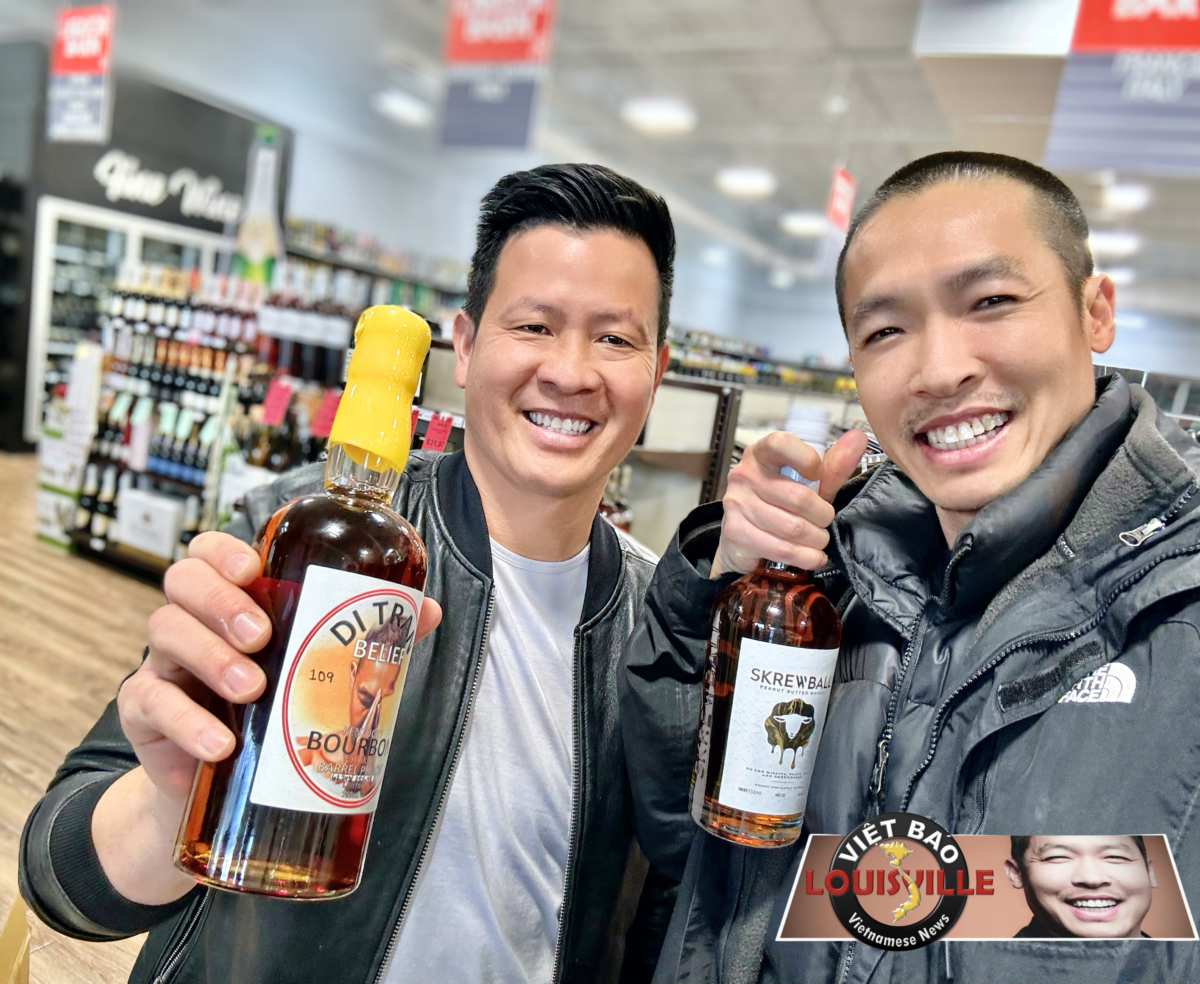
A Tale of Resilience and Belief: Di Tran’s BELIEF Bourbon and Steven Yeng’s Skrewball Whiskey

In the heart of Louisville, KY, a remarkable meeting took place at Liquor Barn between two extraordinary individuals, Di Tran, a Vietnamese immigrant and proud American, and Steven Yeng, a refugee from Cambodia. Both men, hailing from humble beginnings, have carved out successful paths in the world of entrepreneurship and spirits, showcasing the power of resilience, belief, and the American dream.

Di Tran, a man of many talents, is not only a nurse, licensed nail technician, and computer engineer but also a serial entrepreneur. With a journey that began in dirt-poor Vietnam, Di and his family sought refuge in the United States, where they worked tirelessly to build a better life. Di’s relentless drive and passion for education led him to establish multiple businesses, including the Louisville Beauty Academy and a chain of nail salons, before venturing into the world of bourbon with his exclusive BELIEF collectible bourbon.

On the other side, Steven Yeng’s story mirrors that of Di Tran’s. As a refugee from war-torn Cambodia, Steven grew up in a world far removed from the comforts many take for granted. His fascination with peanut butter, a novel flavor in his new homeland, inspired him to create a best-selling peanut butter whiskey cocktail at his bar and restaurant. Alongside his wife Brittany, a lawyer and chemist, Steven developed Skrewball Peanut Butter Whiskey, a spirit that celebrates diversity and the unconventional paths that lead to success.

The meeting between Di Tran and Steven Yeng was a moment of mutual admiration and recognition of their shared journey from adversity to prosperity. Di Tran, out of excitement and respect, offered Steven a bottle of his BELIEF bourbon, a symbol of their common belief in the power of hard work and determination. Their encounter was a testament to the fact that, regardless of one’s background, success is attainable through perseverance and a strong belief in one’s dreams.

As they exchanged stories and took pictures, Di Tran and Steven Yeng looked forward to future conversations, each wishing the other continued success. Their meeting serves as an inspiration to all, reminding us that the American dream is alive and well, fueled by the belief in oneself and the unwavering spirit to overcome obstacles.

In a world where stories of success often overshadow the struggles behind them, the tales of Di Tran and Steven Yeng stand as beacons of hope, reminding us that from the most challenging circumstances can emerge the most remarkable achievements. Here’s to the dreamers, the believers, and the trailblazers who show us that anything is possible when you hold onto your belief and strive for greatness.

Categories
Uncategorized

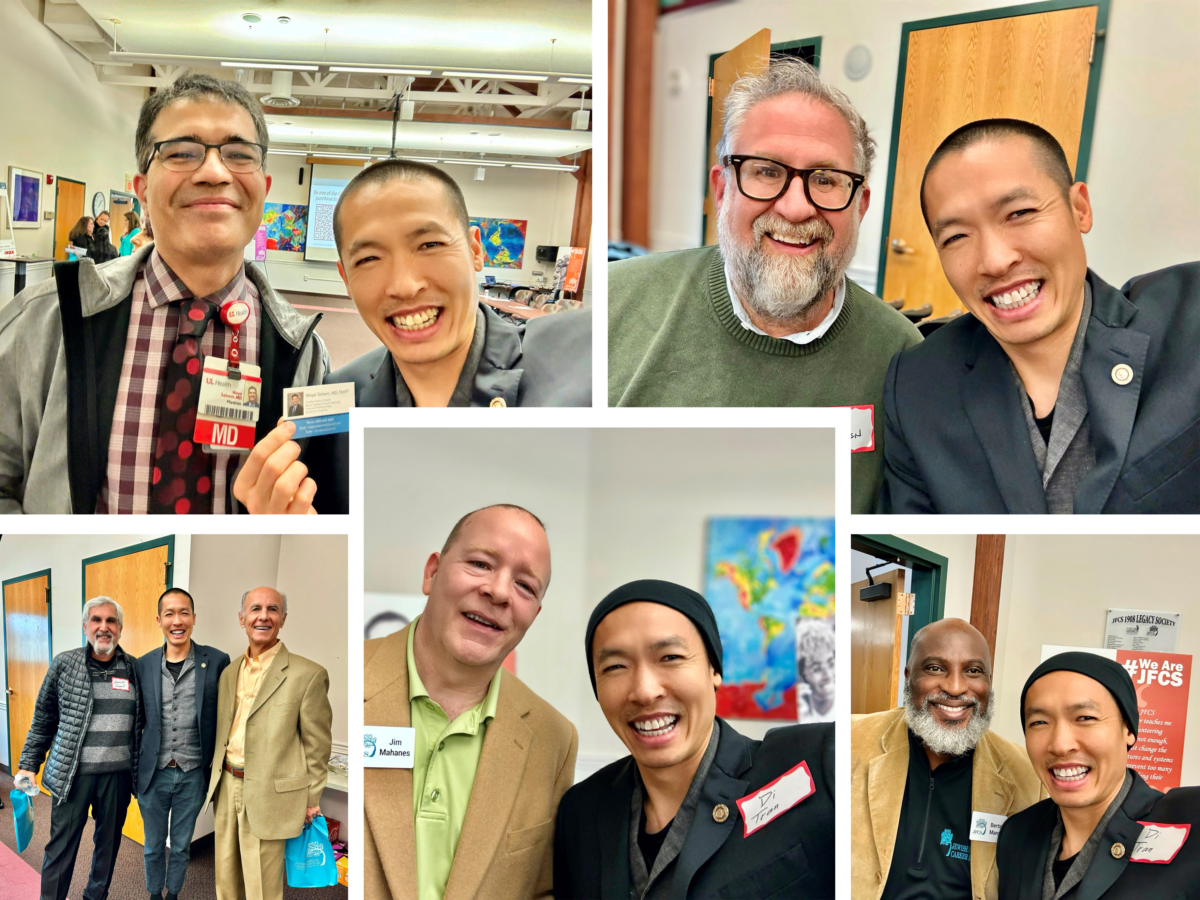
Celebrating Unity and Progress: The JFCS MOSAIC Awards Honoree Luncheon

Today, Louisville is abuzz with anticipation as the Jewish Family & Career Services (JFCS) hosts the MOSAIC Awards Honoree Luncheon. This prestigious event is more than just a ceremony; it’s a vibrant tapestry woven with stories of resilience, diversity, and community service. Among the honorees is Di Tran, a testament to the spirit of determination and entrepreneurship. However, the spotlight shines equally on all the remarkable individuals who have come together to celebrate their shared commitment to workforce development and community enrichment.

The MOSAIC Awards are a tribute to those who have left behind their familiar surroundings, high-ranking positions, or humble beginnings in their countries of origin to start anew in the United States. Each honoree’s journey is unique, yet they all share a common thread: a relentless pursuit of self-improvement and societal contribution. They have embraced workforce development not only as a means of personal growth but as a way to add value to the society that has welcomed them with open arms.

The luncheon is a melting pot of cultures, with honorees hailing from diverse backgrounds such as Vietnam, Afghanistan, Iran, Iraq, Bosnia, Mexico, Cuba, Somalia, Guatemala and more. Despite their varied origins, they all share a dedication to uplifting the immigrant community and integrating them into the workforce. Many of these individuals have achieved high levels of education in the U.S., while others have transitioned from having limited English proficiency to becoming successful entrepreneurs and professionals.

The MOSAIC Awards symbolize love, family, inspiration, and inclusivity. They celebrate the hard-earned successes of those who have faced and overcome significant challenges. The stories shared at the luncheon are a powerful reminder that adversity can be transformed into opportunity, and that diversity is a strength that propels Louisville and the state of Kentucky forward.

As the honorees share their experiences and aspirations, the room is filled with a sense of unity and purpose. Each individual, in their own way, is contributing to the fabric of the community, pulling others along with them to achieve greatness. The MOSAIC Awards Honoree Luncheon is not just an event; it’s a testament to the enduring spirit of hope, resilience, and collective progress that defines the city of Louisville and its vibrant immigrant community.

Di Tran himself shared, “I am among the great of all honorees here and felt small in contribution to the Louisville city and Kentucky State, and I am learning hard to accelerate my rate of contribution like all of you here in the room.” His eagerness to learn and contribute further highlight the essence of the MOSAIC Awards – a celebration of individuals who are not only achieving personal success but are also dedicated to uplifting those around them.

Sponsored By

Categories
Community

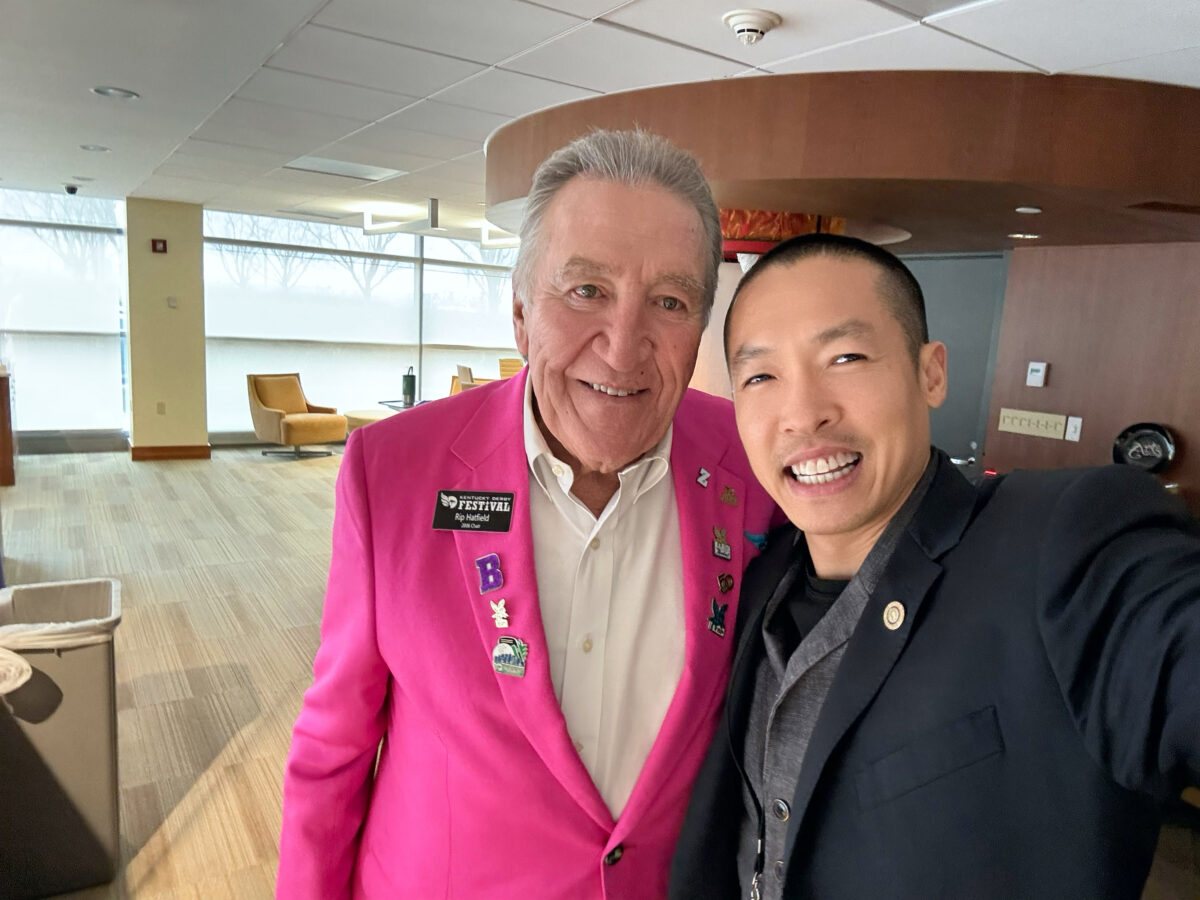
Unity and Purpose: Di Tran’s Inspiring Encounter with Rip Hatfield at Kentucky’s JusticeFest

On a crisp February afternoon in Louisville, Kentucky, a gathering of the city and state’s most compassionate and influential leaders convened for the Kentucky Derby Festival Foundation JusticeFest. Among them was Di Tran, a revered figure in the community, invited for the second time as a judge for this impactful event. As he checked in at 2 pm, badge and booklet in hand, he encountered Rip Hatfield, a former chairman of the festival, for the first time.

What struck Di Tran immediately was the profound level of care and dedication Rip Hatfield exhibited. Despite his esteemed status, Hatfield had been volunteering since 7 am, embodying the spirit of selflessness that Di Tran himself so deeply values. Their conversation quickly turned personal, with Di Tran expressing how programs like JusticeFest uplift individuals from humble beginnings, like himself, a third-world country immigrant who now found himself in esteemed company.

Rip Hatfield, with calmness and humility, shared his own story of growing up in a shared three-bedroom home in Portland during the 1950s, before moving to the Southern end near National Turnpike, not far from where Di Tran’s primary residence on Kingston and 3rd St now stands. Their mutual reflections on the miraculous paths their lives had taken were a testament to their belief in a higher purpose.

At 42, Di Tran sought to understand the meaning and purpose of life, a question he posed to the 80-year-old Hatfield. With serene wisdom, Hatfield responded, “I am still trying to figure that out, but that’s not important. You do the small things you can. I am here today, and I enjoy every moment of it.” This simple yet profound advice resonated with Di Tran, affirming his belief in adding value to the world, one small step at a time.

As they parted ways, Di Tran, inspired and reflective, raced to judge his session, eager to learn more from the diverse voices in the room. The encounter with Rip Hatfield was a reminder of the power of humility, service, and the small yet significant contributions that shape a meaningful life.

Categories
Community Immigration

Empowering Women in Louisville: A Dedicated Mission Led by Gretchen Hunt and Supported by Di Tran

In Louisville, Kentucky, a compelling initiative is transforming the landscape of gender equity and empowerment, led by the passionate efforts of Gretchen Hunt, the Director of the Office for Women. Gretchen’s unwavering commitment to enhancing the status of women through education, advocacy, and legislation has significantly propelled the cause of gender equality forward. Her advocacy, deeply rooted in a passion for social justice, plays a crucial role in catalyzing positive change within the community.

Gretchen’s influence extends beyond her role at the Office for Women. As a founding member of La Casita Center and a board member of the Governors Scholars Program and Mothers Esquire, she actively contributes to various facets of community development and empowerment. Her academic background, with a bachelor’s and juris doctorate from Boston College, underpins her expertise and dedication to the cause. Outside of her professional pursuits, Gretchen enjoys travel, thrifting, paddleboarding, hiking, and nature, sharing these passions with her husband and two children.

The initiative also gains strength from Di Tran, the force behind the Louisville Beauty Academy and Louisville Beauty Academy at Harbor House. As a Kentucky State-Licensed and State-Accredited Licensing Beauty College, Di’s academy is a testament to the power of dedicated education in empowering individuals, especially women. With over 1,000 graduates, predominantly women, flourishing in their careers or running their own businesses, the academy demonstrates the significant impact of education on women’s empowerment.

The academy serves as a beacon of excellence in beauty education, fostering a community that uplifts a diverse group of students – women of color, immigrants, mothers, entrepreneurs, and caretakers. This mission aligns seamlessly with the goals of the Office for Women, celebrated and supported by Gretchen Hunt’s leadership. Together, they work towards creating a stronger, more inclusive, and supportive environment for all women in Louisville.

This partnership underscores the importance of working together to prevent domestic violence and human trafficking, highlighting the collective effort needed to tackle these critical issues. The shared vision of Gretchen Hunt and Di Tran exemplifies the power of collaboration in driving societal change, emphasizing that when women are provided with equal opportunities and their achievements are recognized, the entire community benefits.

As Louisville leads the way in gender equity, the contributions of Gretchen Hunt and Di Tran serve as an inspiration for cities everywhere. Their combined efforts are a beacon of progress, encouraging us to continue the vital work of empowering women and advancing gender equity for the betterment of our society.

#EmpowermentInAction #CelebratingWomen #FrontAndCenter #WomenLead

Translate »