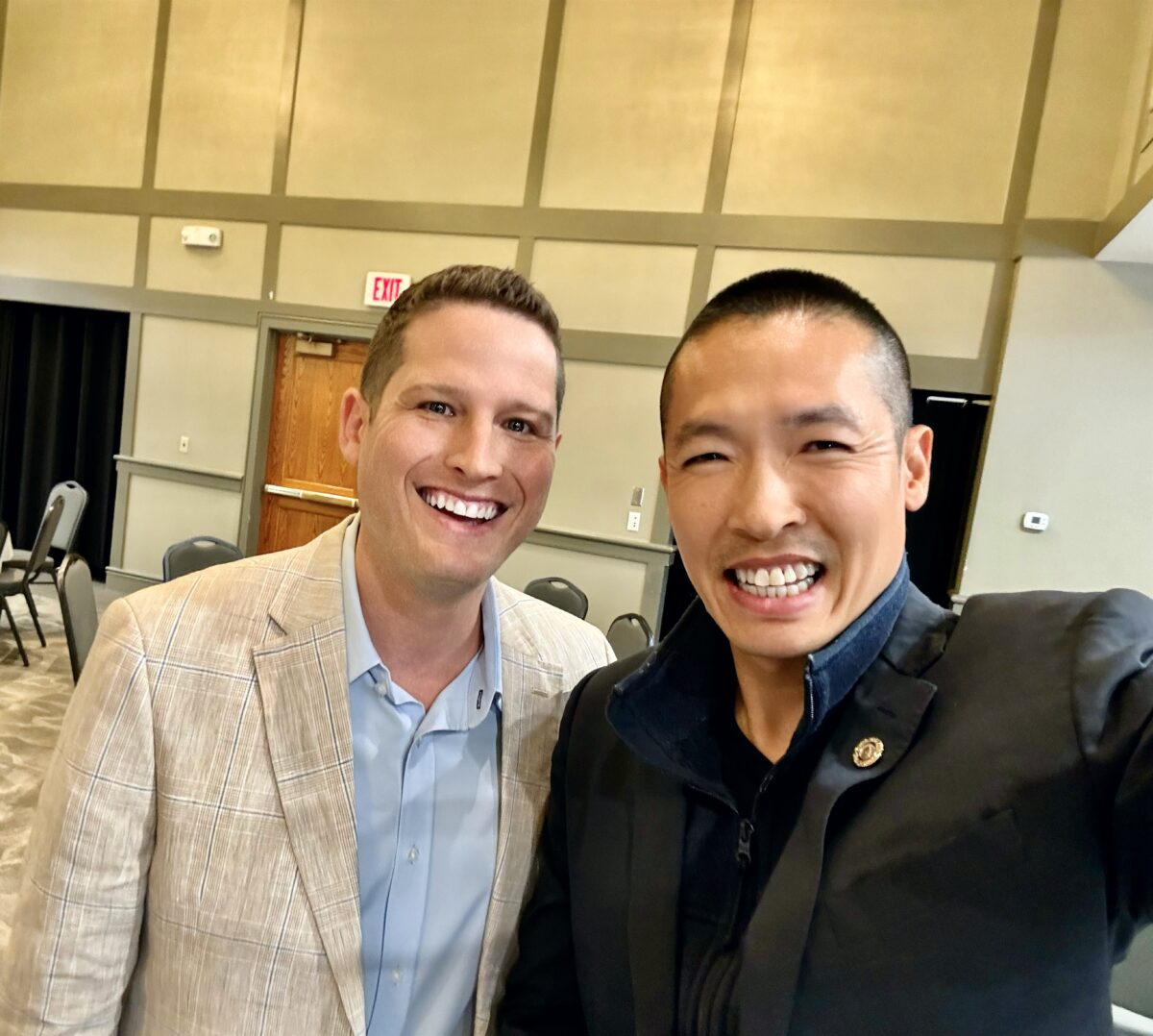
In every thriving city, there are a few individuals who do more than build businesses — they embody the heartbeat of an entire region. Louisville, Kentucky, is fortunate to have two such individuals: Dr. Danielle Mann, founder of Rivergreen Cocktails and practicing physician, and Di Tran, founder of Di Tran Bourbon, Louisville Beauty Academy, and multiple cross-border ventures connecting Kentucky to Vietnam and Asia.
Though they come from different backgrounds, Danielle and Di share a rare, unmistakable trait: they carry Kentucky forward with courage, humility, and unwavering belief.
DR. DANIELLE MANN: A PHYSICIAN WHO BREATHES ENTREPRENEURSHIP
Dr. Danielle Mann represents everything admirable about Kentucky’s modern entrepreneurial spirit.
A full-time practicing OB-GYN, a mother, and now the founder of Rivergreen Cocktails, Danielle proves that innovation blooms wherever curiosity and courage meet. She built her brand during a pandemic, using real ingredients, real gin, and real craftsmanship — in the same way she approaches medicine: with precision, integrity, and heart.
In her own words, she shared something profoundly universal:
“Business is risky. It changes constantly. It can disappear tomorrow. But I would never regret it — it is the experience of a lifetime.”
Her message reflects truth that every entrepreneur quietly carries: You learn every moment. You problem-solve endlessly. You live with energy. There is no true work–life balance — the passion becomes your life.
This philosophy powerfully mirrors the journey of another Kentucky builder: Di Tran.
DI TRAN: A BRIDGE BETWEEN KENTUCKY & VIETNAM, AND A MAKER OF GLOBAL POSSIBILITY
Where Danielle builds with science, heart, and flavor, Di Tran builds with culture, vision, and global purpose.
Founder of Di Tran Bourbon — celebrated in Viet Bao Louisville’s article “The Essence of Belief” — he is not simply creating a product. He is creating a symbol of Kentucky that can travel across continents.
His mission:
Make Kentucky Bourbon and Kentucky Ginseng the central wholesale export to Vietnam and all of Asia
Position Kentucky as the U.S. hub for modular construction shipped from Vietnam (pre-built stores, homes, retail units assembled in hours)
Leverage EB-5 investment and EB-3 workforce to fill gaps in American labor and strengthen U.S.–Vietnam economic ties
In every step, he lifts both his homeland of Vietnam and his beloved home of Kentucky.
Where others see barriers, Di sees bridges. Where others see markets, he sees shared destiny.
SHARED VALUES, SHARED COURAGE — A KENTUCKY STORY
Though Danielle and Di operate in different industries, their stories align beautifully.
Both believe:
1. Entrepreneurship Is a Calling, Not a Job
Danielle: “You problem-solve every second.” Di: Lives in constant innovation across education, bourbon, workforce, and trade.
2. Passion is the Real Fuel
Danielle brings medical discipline and creative energy into Rivergreen. Di brings immigrant grit and spiritual purpose into every venture.
3. Risk is Inevitable, but Regret is Optional
Both founders know businesses shift, markets change, and everything can be lost tomorrow. Yet both continue — because creation is their nature.
4. Learning Never Stops
Both believe entrepreneurs are the real lifelong learners, absorbing every lesson, every mistake, every moment of growth.
5. Kentucky is Worth Elevating
Both tell the world: Kentucky is not small — it is powerful. Louisville is not local — it is global.
In their hands, Kentucky becomes:
a premium spirits capital
a center for real craftsmanship
a hub of healthcare excellence
a bridge to Asia
a home for community builders
a place where dreams are not theories, but action
WHY THEIR CONNECTION MATTERS
The moment Danielle and Di met — two builders from different life paths, united by spirit — something became clear:
Kentucky is producing a new generation of leaders who combine heart, discipline, global vision, and relentless resilience.
This is what makes Louisville special:
A physician creating a national beverage brand.
An immigrant entrepreneur transforming bourbon, education, and international commerce.
Both driven by purpose, community, and belief.
Their stories are not just personal achievements — they are reflections of Kentucky’s identity.
KENTUCKY & LOUISVILLE: A BEAUTIFUL FUTURE BUILT BY BEAUTIFUL PEOPLE
Danielle Mann and Di Tran show the world that Kentucky is far more than horses and bourbon (though bourbon remains its crown jewel). Kentucky is:
Innovation
Humanity
Education
Manufacturing
Global trade
Cultural bridges
Entrepreneurial courage
Louisville is a city of builders — quiet, humble, hardworking visionaries who change the world one idea at a time.
Together, Danielle and Di embody this truth:
Kentucky rises because its people rise. Louisville shines because its dreamers shine.
Their journeys — rooted in compassion, resilience, risk, and relentless learning — form a powerful reminder:
Greatness grows in Kentucky. And Kentucky gives that greatness to the world.
Louisville, KY / Washington, D.C. — The New American Business Association (NABA) and Louisville Beauty Academy (LBA) announce that Di Tran, founder of both organizations, has been named a 2025 finalist for the National Small Business Association’s (NSBA) Lew Shattuck Small Business Advocate of the Year Award. As the Kentucky finalist, Tran joins a select group of national small-business leaders in Washington to advance practical, nonpartisan solutions for Main Street.
“This honor belongs to our students, graduates, and every small business that keeps America working,” Tran said. “We’re here to champion outcomes—training that leads to licenses, jobs, and new businesses—without unnecessary debt.”
Who is NSBA?
Founded in 1937, the National Small Business Association is the nation’s original, proudly nonpartisan small-business advocacy organization. NSBA represents 65,000+ members across all 50 states and speaks for the 70 million owners and employees who power the U.S. economy. NSBA is known for winning access-to-capital reforms, stopping unfair tax penalties, and rolling back harmful regulations—guided by respected Economic Reports and targeted member surveys.
Leadership (select): Todd McCracken (President & CEO), Molly Brogan Day (SVP, Public Affairs), Reed Westcott (Gov. Affairs & Federal Policy), Rachel Grey (Research & Regulatory Policy), Jack Furth (Gov. Affairs), Son Thach (Sr. Director, Operations), Ian Elsenbach (Director, Leadership Council).
About the Award
NSBA’s Lew Shattuck Small Business Advocate of the Year honors citizen-leaders who sustain credible, effective advocacy. Finalists are recognized at NSBA’s Washington Presentation—a two-day program including a White House policy briefing, Congressional Breakfast, issue briefings, and Capitol Hill meetings with Senators and Representatives. (NSBA does not publicly disclose the number of applicants.)
Di Tran & Louisville Beauty Academy: From Local Impact to National Voice
An immigrant entrepreneur, educator, and author of 120+ books, Di Tran founded Louisville Beauty Academy to create fast, affordable, ethical pathways into high-demand beauty careers. In five+ years, LBA has:
Helped ~2,000 students complete training and obtain state licenses
Seeded dozens of salons and micro-businesses, generating an estimated $20–50M in annual economic activity
Run lean, discount-first, debt-averse programs that keep students working and learning—without relying on Title IV
Embedded technology and AI-assisted workflows to streamline instruction, compliance, and student support
Tran’s policy focus—developed with education partner Anthony Bieda—is simple and powerful: pay for outcomes, not enrollment. Under this approach, federal support would reimburse after students graduate, earn a license, and secure employment. The model expands access to short, job-ready programs (often <600 hours), reduces taxpayer waste, and aligns schools, lenders, families, and students around one goal: results.
Why It Matters—For Kentucky and the Vietnamese-American Community
Workforce now: Short programs (e.g., nails, esthetics) place graduates into jobs quickly—meeting real salon demand.
Small-business growth: LBA alumni open shops, hire neighbors, and revitalize corridors—Main Street first.
Smart funding: Outcome-based aid protects taxpayers and rewards schools that deliver licenses + jobs.
Representation: A Kentucky and Vietnamese-American founder standing alongside national peers shows how immigrant entrepreneurship strengthens the U.S. economy.
Two Days in Washington: Advocacy in Action
At NSBA’s Washington Presentation, Tran and Bieda joined policy briefings at the White House (Eisenhower Executive Office Building), heard from Members of Congress during the Congressional Breakfast, and met with Senate and House offices on Capitol Hill to elevate outcome-based training, short-program recognition, and practical small-business reforms.
What’s Next
NABA will convene employers, schools, lenders, and policymakers to pilot pay-for-outcome pathways.
LBA will continue scaling debt-averse, license-first training that feeds Kentucky’s small-business pipeline.
Lawmakers are invited to review NABA/LBA’s model and meet graduates—new taxpayers and future employers.
“We’re not walking—we’re running to graduate more licensed professionals debt-free and to make federal policy reward real outcomes,” Tran said. “That’s good for students, small businesses, and America.”
Individuals in several U.S. career fields must complete a specified number of clock hours of training to obtain a license. These clock-hour requirements are typically mandated by state licensing boards. When moving to a new state, licensees often seek to transfer their hours or license. Below is a detailed overview of major licensed occupations with clock-hour training requirements, including typical hour requirements, conditions for interstate license transfer (reciprocity or endorsement), examples of state differences, and authoritative references.
Cosmetology (Hairdresser/Cosmetologist)
Typical Hours Required: Most states require around 1,500 hours of schooling for cosmetologists. This can range from as low as 1,000 hours (e.g. New York and Massachusetts require a 1,000-hour training program) up to 2,100+ hours in a few cases (e.g. Iowa mandates 2,100 hours for cosmetologists). The majority of states cluster around 1,500 hours for cosmetology training.
Interstate Transfer (Reciprocity/Endorsement): Cosmetology licenses can be transferred to another state by endorsement or reciprocity if certain conditions are met. Typically, the new state will require that the applicant’s training hours are equal to or greater than its own requirements, and that the applicant passed the requisite exams. If an out-of-state cosmetologist’s training is short of the new state’s hours, they may need to take additional training hours or exams. For example, Florida (which requires 1,200 hours) will endorse a cosmetologist from a 1,000-hour state like New York only if the person completes an extra 200 hours of education or has at least one year of licensed experience and then passes Florida’s exam. Many states impose similar rules: they grant a license by endorsement if your home state’s requirements were “substantially equivalent.” If not, the options are often to make up the hour difference or take the state’s board exams.
Examples of State Policies:
Alaska: Does not have blanket reciprocity, but will license an out-of-state cosmetologist (hairdresser) by “waiver of examination” if the person holds a current license elsewhere and can prove at least 1,650 hours of school training (or 2,000 hours via apprenticeship), plus passing a written and practical exam. This ensures the applicant’s training meets Alaska’s own 1,650-hour requirement for hairdressers.
Florida: Requires 1,200 hours for cosmetologists. Florida will endorse licenses from states with equal or greater hours; if the other state had fewer hours (e.g. 1,000 hours), Florida gives the choice of doing additional hours or taking Florida’s exam (with at least 1 year of work experience).
Iowa: Requires 2,100 hours and has no direct reciprocity agreement. It will consider an applicant for endorsement if they have been licensed in a state with similar/equivalent requirements and have 12+ months of recent work experience. Someone from a lower-hour state would likely need more experience or training.
New York: Requires 1,000 hours and licenses by endorsement only those who meet its hour requirement. Conversely, a NY-licensed cosmetologist moving to a 1,500-hour state may need to provide proof of additional training or experience since NY’s 1,000 hours fall short of many states’ requirements.
Sources: State licensing boards and industry directories confirm these hour requirements and policies. For instance, the New York Department of State notes the 1,000-hour training requirement for cosmetologists, and Florida’s Board of Cosmetology outlines the endorsement process for those with fewer hours.
Barbering
Typical Hours Required:Barber license requirements are similar to cosmetology in many states, often around 1,000 to 1,500 hours of training. For example, Alabama sets a 1,000-hour minimum for a Class II barber, while many states use 1,500 hours (Texas, Illinois, Georgia, etc. all require ~1,500 hours for barbers). A few states have lower requirements (e.g. Idaho requires only 900 hours for barbers). Some states also allow apprenticeship hours in lieu of school hours (common alternatives are 2,000–3,000 hours of apprenticeship if not attending school).
Interstate Transfer: Licensed barbers generally can transfer licenses via reciprocity/endorsement, but the same principle applies: the training and exam credentials must satisfy the new state’s standards. If the original state’s hour requirement was lower, the barber may need to demonstrate additional experience or take the new state’s barber exam. A number of states use the NIC (National Interstate Council) exam for barbers, which facilitates endorsement if both states use that exam. However, states often require proof of having met their hour minimum.
Examples:
Idaho: Idaho does not offer direct reciprocity for barbers. An out-of-state barber must apply for endorsement and prove active licensure for 3 of the last 5 years, show they passed equivalent exams, and meet Idaho’s training hours (900 hours). Essentially, Idaho uses work experience in lieu of automatic reciprocity if hours/exams differ.
Texas: Texas requires 1,500 hours for barbers and will consider out-of-state applicants if they hold a license from a state with comparable training hours (or have enough years of practice). Texas processes barber reciprocity on a case-by-case basis and may require the applicant to take the Texas law and practical exams if their hours or credentials don’t align.
New York: New York’s barber requirements are unique – the state mandates an apprenticeship (two years) or a training course, rather than a fixed hour count (schools in NY set their own hour programs). A New York-licensed barber moving elsewhere might need to document the length of their training/apprenticeship to satisfy another state’s hour requirement. Conversely, barbers from states with formal school hours may have to show equivalent training to get a NY license.
Sources: State regulatory info confirms the hour requirements (e.g., Alabama’s Board sets 1,000 hours for barbers, Idaho’s laws list 900 hours and their no-reciprocity endorsement process). Texas Department of Licensing & Regulation provides guidelines for out-of-state barber applicants, requiring equivalent 1,500-hour training or additional steps if lacking.
Nail Technician (Manicurist)
Typical Hours Required:Manicurist/Nail Technician training requirements vary widely by state. Many states require 300 to 600 hours of nail technology education. For example, Texas mandates 600 hours of training for a manicurist license. Georgia requires 525 hours (or a longer apprenticeship). On the lower end, Florida requires only 240 hours of training for a nail specialist license, and a few states are even lower – notably Pennsylvania (200 hours) and Massachusetts, which astonishingly requires just 100 hours of manicurist training. (Massachusetts historically had a very low hour requirement for nail techs, set at 100 hours, which is the minimum to qualify for the exam in that state.)
Interstate Transfer: Because of the dramatic differences in required hours, transferring a nail technician license often involves meeting the new state’s hour minimum. Many states will grant a license by endorsement if the applicant’s training hours meet or exceed their requirement. If not, the nail tech may need to take additional coursework or sometimes document work experience to compensate. Some states simply require passing their state law exam and proof of current license, as long as the training was not grossly deficient.
Examples:
Florida: Florida will register (license) an out-of-state nail specialist by endorsement only if the other state’s requirements are at least 240 hours, equal to Florida’s own training requirement. If an applicant comes from a state with fewer hours, they would not qualify for reciprocity in Florida and might have to take Florida’s exam or complete missing hours.
Texas: Texas’s 600-hour requirement is relatively high; thus, Texas will expect out-of-state manicurists to have 600 hours of training. If someone trained in a 300-hour state applies, Texas might require them to get additional schooling or show several years of experience. (Texas explicitly lists that applicants from states with substantially equivalent hours and exams can be considered, otherwise additional steps are necessary.)
Massachusetts: In contrast, Massachusetts’ low 100-hour standard means it will generally accept any licensed manicurist from another state who completed at least 100 hours. Massachusetts does require out-of-state applicants to show their official school transcript and to pass an exam if their hours are below its requirement (100 hours). Practically, almost all states’ licensed nail techs have more than 100 hours, so getting a Massachusetts nail license by endorsement is straightforward for most. However, a Massachusetts-trained manicurist moving elsewhere often faces a deficit – e.g. moving from MA (100 hours) to a state like Connecticut (which requires 300 hours) or Texas (600 hours) means they would likely need to obtain additional training or experience to qualify for a new license.
Sources: Official state boards and published requirements highlight these differences. Texas’s 600-hour requirement is noted by TDLR. Florida’s 240-hour rule for nail specialists is documented in Florida licensing materials. Massachusetts’ regulations confirm the 100-hour training minimum for manicurists. These disparities underscore why reciprocity conditions (like requiring equal or higher hours) are so important in this field.
Esthetician (Skin Care)
Typical Hours Required:Esthetics (facial/skin care) licensing usually requires 600 hours of training in many states. However, the requirements range from about 250 hours up to 1,000 or more. For example, Florida only requires 260 hours for a facial specialist (esthetician) license, one of the lowest requirements in the country. Georgia, by contrast, requires a full 1,000 hours of esthetician training. California and Illinois require 600 hours (which is common). Some states have recently increased their hours – Massachusetts moved from a 300-hour program to 600 hours for estheticians as of 2019. Others fall in between (e.g., New York requires 600 hours; Texas 750 hours; Oregon 500 hours; etc., depending on the state).
Interstate Transfer: Transferring an esthetician license typically requires that the applicant meet the new state’s hourly training requirement. If the original license was from a state with fewer hours, the new state may require the person to obtain additional hours or have a certain amount of work experience. Many states have reciprocity/endorsement provisions for estheticians similar to cosmetology: a current license plus equivalent training and exam will allow licensure, often after passing the new state’s law or theory exam. If training hours are lacking, some states might allow substitution of work experience (e.g., a number of years of practice might waive a small hour deficit).
Examples:
Georgia: Requires 1,000 hours of training for estheticians. Georgia will only grant a license by endorsement if the other state’s requirements are equal (1000 hours) and the applicant passed a national exam. An esthetician from a 600-hour state would likely need to take Georgia’s exam and possibly document additional work experience or education to make up the gap.
Florida: With a low 260-hour requirement, Florida’s endorsement is easier in one sense – most licensed estheticians from elsewhere will have more than 260 hours, so they meet Florida’s threshold. Florida does require anyone coming in to have a current license and their training reviewed. (Since Florida uses a registration system for facial specialists, endorsement applicants essentially must show they completed ≥260 hours and passed the exams in their home state.) Conversely, a Florida-trained esthetician (260 hours) moving to a state requiring 600+ hours will often need further schooling. For instance, Tennessee (750 hours required) or South Carolina (450 hours required) might not accept 260 hours without additional coursework or experience.
Massachusetts: Now requires 600 hours for aestheticians. Massachusetts will demand out-of-state applicants have at least that much training (or if they were licensed under the old 300-hour rule prior to 2019, they are grandfathered locally but other states might not recognize just 300 hours). An out-of-state esthetician with 600 hours and a license can get a MA license fairly easily (with application and perhaps a test on MA law), but one from Florida’s 260-hour program would not qualify without further training. Massachusetts explicitly states that if an applicant’s education is less than the board’s required hours (600 for aesthetics), they must take the MA board exam (and likely do more schooling).
Sources: State board documents and professional associations confirm these figures. The Georgia State Board notes the 1,000-hour requirement for esthetician programs. Florida’s 260-hour requirement is evidenced in Florida Department of Education outlines and state licensing info. Massachusetts’ official regulations list 600 hours as the current standard for aesthetics training. These references illustrate how varied the field is, which directly impacts reciprocity conditions.
Massage Therapy
Typical Hours Required:Massage therapists generally must complete a 500-hour training program at minimum, which aligns with the industry’s entry-level standard and the requirements to sit for the MBLEx (Massage & Bodywork Licensing Exam) in most states. Many states have set 500 hours as the baseline (e.g., California certifies massage therapists at 500 hours; Colorado requires 500 hours; Florida requires 500 hours; Illinois 600 hours). Some states demand more: New York has one of the highest requirements at 1,000 hours of massage training (and a state-specific exam), and a few others range from 600 to 750 hours (for instance, Texas and Ohio require 500; Oregon 625; Washington 625; Pennsylvania 600; Nebraska 1000 for new programs in recent years). Overall, 500 hours is the most common standard, with a trend toward slight increases in some jurisdictions.
Interstate Transfer: Almost all states allow a licensed massage therapist (LMT) to obtain a license in a new state via endorsement, provided the person meets that state’s requirements. Because there is a national exam (MBLEx) and sometimes national certification (NCBTMB), transferring can be straightforward if the therapist’s training hours meet the new state’s minimum and they have passed an equivalent exam. If an LMT comes from a state with fewer hours than the new state requires, they may have to do one of two things: either complete additional training hours before licensure, or in some cases demonstrate a certain amount of work experience in lieu of the hours difference. States often require verifying the school transcript (hours) and the exam results. Some states explicitly insist on the 500-hour minimum even for endorsement. For example, Florida will endorse massage therapists from out of state only if they completed at least a 500-hour approved program and passed a board-approved exam.
Examples:
Washington State: Requires 500 hours (was considering raising it) and will grant a license to out-of-state applicants who have 500 hours and have passed the MBLEx (or equivalent) – essentially full reciprocity if those conditions are met. If someone has less than 500 hours (rare, since 500 is the usual floor), they would need further education.
New York: Requires 1,000 hours and has a state exam. New York does not readily offer reciprocity unless the applicant’s credentials match NY’s (meaning 1,000 hours of education and having passed a comparable exam). In practice, an LMT from a 500-hour state must either complete additional schooling to total 1,000 hours or document years of out-of-state practice and then petition to take the NY exam. Because NY’s standard is so high, it often effectively requires re-training or at least a lengthy endorsement process for those from lower-hour states.
District of Columbia: Requires 500 hours. D.C. will license by endorsement, but the therapist must show proof of completing an approved program and meeting the 500-hour minimum, as well as having passed the national exam. Essentially, D.C. looks for equal or greater training (500+ hours) in the prior jurisdiction.
California: Uniquely, California’s massage “license” is voluntary certification (500 hours for Massage Therapist title) and they do not have a state-run exam (they accept the MBLEx). Since it’s voluntary, “reciprocity” is not an issue in the same way, but cities/counties in CA often require the 500-hour state certificate. A therapist moving from out-of-state to CA can obtain the California Massage Therapy Council (CAMTC) certification if they have at least 500 hours and a clean background, which many out-of-state programs satisfy.
Pennsylvania: Requires 600 hours. It will endorse out-of-state LMTs if they meet PA’s 600-hour requirement and have passed the MBLEx. If someone has only 500 hours, they might need to show extra CE or experience, or potentially be asked to get the missing 100 hours. (Pennsylvania’s law allows endorsement applicants to be licensed if they have a current license and completed an approved program that meets PA’s hours or if not, to make up the difference with continuing education or experience, case by case.)
Sources: The Federation of State Massage Therapy Boards (FSMTB) provides an authoritative list of state requirements, confirming that 500 hours is the standard in most places, with specific deviations (NY 1000, OR 625, etc.). State laws (e.g., Florida Statutes for massage therapy) explicitly state the 500-hour minimum for schooling. These sources make clear that while the number of hours can differ, the prevalent model is a 500-hour threshold which greatly eases reciprocity among the majority of states adhering to it.
Real Estate Salesperson
Typical Hours Required: To become a real estate salesperson (agent), states require completion of pre-licensing education measured in clock hours (or sometimes credit hours). Requirements vary significantly: some states mandate as low as 40 hours of coursework (e.g., Massachusetts uses a 40-hour pre-license course), many require around 60–90 hours, and some go much higher. For example: Florida requires 63 hours of pre-license education for sales associates; New York requires 75 hours; Georgia 75 hours; Texas is among the most stringent, requiring 180 hours (six 30-hour courses) for a salesperson license. California requires the equivalent of 135 hours (three 45-hour college-level real estate courses). A few other examples: Colorado currently requires 168 hours (in several course modules); Illinois 75 hours; Pennsylvania 75 hours; Connecticut 60 hours. In short, the education hours span from 40 on the extreme low end to ~180 on the high end, with ~60–90 being common in many states.
Interstate Transfer: Real estate licensing is notably state-specific due to differing laws and practices. There is no universal transfer of pre-licensing hours in the sense of automatically applying credit hours from one state to another. Instead, states handle this via reciprocity agreements or requiring new applicants (even experienced ones) to pass their state’s exam. Some states have reciprocity with specific other states: for example, Connecticut will license by reciprocity if you are licensed in a reciprocal state (like FL, OH, etc.) and passed that state’s exam. Colorado and Virginia have broader reciprocity/recognition policies (Virginia and Texas are cited as having full reciprocity for agents from any state), but even “full reciprocity” usually means you still must apply and possibly take a state law exam. Many states require at least the state-specific portion of the real estate exam for any out-of-state licensee. Pre-licensing hours generally don’t need to be duplicated if moving to a reciprocal state – instead, if the reciprocity applies, the person can skip the education and just take the exam (or in some cases no exam at all). If no reciprocity exists between two states, a licensed agent moving may have to retake the full licensing exam and sometimes even redo the pre-licensing course, depending on the state’s rules.
Examples:
Reciprocity Agreements:Full reciprocity means a state will accept a license from any other state usually without requiring additional education or exam. Virginia is one such state – it offers licensure by reciprocity to any actively licensed out-of-state agent (requiring an application and a certification of licensure, but no additional course work). Texas, as of recent changes, is also mentioned as having full reciprocity for agents from any state – however, note that Texas historically had no reciprocity and required all newcomers to pass the Texas exam; the reference suggests Texas may allow experienced agents to waive education requirements. Always, the incoming licensee must be in good standing (no discipline) and meet any experience requirement if seeking a broker license.
Partial reciprocity & Mutual Recognition:Florida has “mutual recognition” agreements with about 8 states (e.g., Georgia, Alabama, Tennessee, etc.). An agent licensed in one of those states can get a Florida license by passing a 40-question Florida law exam, without having to take the 63-hour course. If an agent is from a state not on Florida’s mutual list, they must take the full pre-license course and exam like a new applicant. Georgia recognizes licenses from states that reciprocate with GA (and also allows a non-reciprocal licensed agent to apply for a GA license if they take a shorter 25-hour course and exam).
No reciprocity states:California and New York are examples of large states that do not offer broad reciprocity. California has no reciprocity at all – everyone must take California’s exam (and meet the education requirements, which in practice means an out-of-state agent will have to show they’ve taken equivalent college-level courses or take them anew). New York has reciprocity only with a handful of states (e.g., Pennsylvania, Connecticut, Oklahoma – and only if the person resides in that state) and otherwise requires the full NY exam.
Broker vs Salesperson: Often reciprocity is easier at the salesperson level. Broker licenses (which require additional education, e.g., 120–360 hours, and experience) might have separate reciprocity rules. Many states require an out-of-state broker to have a certain number of years of experience before granting a reciprocal broker license. For instance, Connecticut will give a broker license by reciprocity if you have an active broker license elsewhere and a few years’ experience, without needing the 60-hour course, but you must pass the CT state law exam.
In summary, real estate license transfer is less about “transferring hours” and more about transferring the license credential. The pre-license education hours are generally not directly accepted across state lines unless under a reciprocity deal; instead, the fact that you have a license (and presumably took your state’s required hours already) is what helps. States with reciprocity typically waive the new education requirement but still often require an exam on local laws.
Sources: Official real estate commission websites and Realtor® associations detail these policies. For example, the National Association of REALTORS® notes that some states have full reciprocity (Texas, Virginia) and others partial, each with conditions like extra education or exams. State-specific sources: Florida’s mutual recognition rules are in the Florida DBPR publications (and summarized in educational resources); Connecticut’s reciprocity policy is on CT.gov. These confirm that interstate practice is possible but regulated, with requirements that often differ by state.
Certified Nursing Assistant (CNA)
Typical Hours Required:Nurse Aides (CNAs) must complete training that meets federal and state requirements. Federally, the minimum training is 75 hours, including at least 16 hours of supervised clinical practice, as set by 42 CFR 483.152 (from the Omnibus Budget Reconciliation Act requirements). Many states exceed this minimum in their approved CNA programs. Typical state requirements range from 75 hours up to about 120–150 hours. For instance: California requires 150 hours (50 hours classroom + 100 hours clinical); Alaska requires 140 hours (60 didactic + 80 clinical); Connecticut 100 hours (50 classroom + 50 clinical); New York 100 hours (70 classroom + 30 clinical); Texas 100 hours (60 + 40); Arizona 120 hours; Maine 180 hours, and so on. The majority of states require between 75 and 120 hours of CNA training. Every state also requires candidates to pass a competency exam (both a written test and a practical skills test) to become certified and be listed on the state’s Nurse Aide Registry.
Interstate Transfer: CNAs do not exactly “transfer hours” between states, but they can transfer their certification through a process commonly called “reciprocity.” In practical terms, a CNA certified in one state can apply to be listed on the new state’s Nurse Aide Registry without retaking the full course or exam, provided certain conditions are met. Typically, the CNA must have a current, active certification in good standing (no findings of abuse or neglect) and have been originally trained & tested to standards meeting the new state’s minimum. Most states will verify the applicant’s status on the original registry and confirm they completed an approved training program and passed that state’s exam. If the CNA’s original training hours were below the new state’s requirement, the new state may require additional training or even re-testing. However, since the federal floor is 75 hours, and all states meet or exceed that, a CNA moving state-to-state generally faces similar or lower requirements in the new state. The bigger issue is often whether the CNA has worked recently (many states require proof of employment as a CNA for a certain amount of time, such as one full-time week in the last 24 months, to transfer certification without retraining).
Examples:
Reciprocity Process: A common scenario is filling out an “Application for Enrollment by Reciprocity” with the new state’s Nurse Aide Registry. For example, a CNA moving to Ohio from another state would contact the Ohio Nurse Aide Registry and submit proof of their current certification and employment history. Ohio would check that the person originally had at least 75 hours of training and passed an exam. If yes, Ohio will grant them Ohio certification without testing. Most states handle it similarly: no additional exam or training is needed if all criteria line up.
State-Specific Quirks:New York will endorse CNAs from out-of-state if they meet NY’s requirements (100 hours training and competency exam). The NY Department of Health specifies in its reciprocity regulation that the out-of-state applicant must have completed a state-approved program meeting at least the federal minimum and passed a state exam. Florida, rather than having reciprocity, requires out-of-state CNAs to apply to test in Florida (unless they have a license from a state Florida considers equivalent; Florida often just has you take their exam). Tennessee is an example of a state with a unique rule: Tennessee accepts reciprocity from all states except Florida. A CNA certified in Florida actually must retest in Tennessee, whereas CNAs from any other state can transfer in without re-testing. This is likely due to differences in Florida’s testing process in the past. It highlights that each state may have specific exclusions or requirements in their reciprocity policy.
Maintaining Active Status: Many states require that the CNA has worked for pay as a CNA for a minimum amount of time (often one day or a few days of work) in the prior 24 months to transfer. If a CNA has not worked recently, the new state might not grant reciprocity and would ask them to retrain and re-test.
Overall, CNA license (certification) transfer is usually straightforward via reciprocity forms, as long as the individual meets the training hour minimum and has passed a recognized exam. There is no national CNA license, but because all states adhere to federal standards, moving from state to state is common and supported by the reciprocity system.
Sources: The PHI National analysis of state CNA training requirements provides the hour numbers for each state (e.g., CA 150, NY 100, etc.). State health department documents (like New York’s reciprocity rules) and nursing assistant registry guidelines (e.g., IntelyCare’s overview of CNA reciprocity) explain the conditions for transfer. These authoritative sources confirm that while hours differ, the reciprocity mechanism is widely available to avoid retraining CNAs unnecessarily when they move.
Commercial Driver’s License (CDL)
Typical Hours/Training: Obtaining a Commercial Driver’s License is less about clock hours and more about competencies. There is no universal hourly training requirement for a CDL; rather, since February 2022, the Federal Motor Carrier Safety Administration (FMCSA) implemented the Entry-Level Driver Training (ELDT) rule which mandates completion of a prescribed curriculum before taking the CDL skills test. ELDT includes classroom/theory lessons and behind-the-wheel (BTW) driving practice, but importantly, the regulations do not require a minimum number of hours for either the theory or driving portions. Instead, approved training providers must cover all topics in the curriculum, and trainees must demonstrate proficiency (e.g., by passing a written knowledge assessment and instructor evaluations of driving skills).
Despite the lack of a legal hour minimum, many truck driving schools offer standard courses often around 160 hours (approximately 4 weeks) for a Class A CDL, as this has become an industry norm for adequately covering the material and practice. Some states previously had hour suggestions (e.g., 120 or 150 hours), but with ELDT, the focus is on outcomes rather than a set hour count. For instance, one training provider might have a 4-week, 160-hour program, while another might go longer or shorter, but both must ensure all required topics (maneuvers, safety, etc.) are taught and that students can perform to standard.
Interstate Transfer: A CDL is federally standardized, meaning an actual CDL license can be transferred to a new state relatively easily. When a CDL holder moves to another state, they must obtain a new CDL from the state of residence (one cannot hold CDLs in two states). The process is generally an exchange: the driver surrenders the old state’s CDL and is issued the new state’s CDL, usually without any re-testing, since all states recognize the same CDL credentials. There are a few caveats: if the driver has a hazardous materials (HazMat) endorsement, they will need to pass the HazMat knowledge test (and TSA background check) again in the new state, because federal law requires a current test for that endorsement upon license transfer. A few states may also require a vision test or a brief knowledge test when transferring any out-of-state license (commercial or not), but in general a CDL transfer does not involve re-doing the road test or a full retake of exams as long as the license is valid and in good standing.
ELDT and Training Hours Transfer: Since training is recorded in the new Training Provider Registry, once a driver-trainee completes an ELDT course, that completion is federally recognized. For example, if someone takes their CDL training (ELDT) in State A but then moves to State B before testing, State B’s DMV can verify their ELDT completion in the registry. The trainee can then take the CDL skills test in State B without needing to retrain, because the ELDT completion is transferable nationally. The hours or structure of the course don’t matter, only the completion status. Therefore, individuals can “purchase” clock hours of CDL training in one state and use that training to get licensed in another, as long as the training was from an approved provider and the content requirements are met.
Examples:
A new driver lives near a state border and attends a truck driving school in State X consisting of, say, 160 hours of training. Upon finishing, they receive a certificate and their info is uploaded to the FMCSA database. If they then move or choose to get their CDL in State Y, the State Y DMV will confirm they have completed the required ELDT. The applicant will then take the CDL knowledge and road tests in State Y and, if passed, get a State Y CDL. There is no requirement to match specific hour counts between X and Y, because the training standard is federal and simply requires all topics were covered.
A licensed CDL driver moving from California to Texas (for example) will go to the Texas DPS, show their current CDL, fill out an application and likely pass a vision test and pay the fee. Texas will check the national CDL database (CDLIS) to ensure the person isn’t licensed elsewhere and will then issue a Texas CDL with the same class and endorsements, after the old license is surrendered. They won’t ask the driver to retrain or re-test (except HazMat as noted). This is uniform due to federal reciprocity of CDL licenses under the Commercial Motor Vehicle Safety Act.
One nuance: if a CDL holder let their CDL license expire, or was disqualified, then moving won’t magically allow transfer – they would have to start over or comply with whatever reinstatement is required. But an active CDL from any state is honored across all states.
Sources: The FMCSA (federal authority) clearly states that there are no minimum hours required for ELDT – it’s competency-based. This guidance is published on FMCSA’s official website and applies nationwide. In terms of license transfer, state DMV resources and trucking industry sources confirm that transferring a CDL is a paperwork matter, not a training issue – generally no retest is needed for the CDL itself. The NETTTS CDL guide, for instance, notes “Generally, you should not have to re-test for a CDL… If you have endorsements such as HazMat, you may have to re-test for this in the new state.”. This aligns with state DMV guidance (e.g., Tennessee DMV instructing new residents on how to exchange their CDL, etc.). All evidence shows that CDL training is nationally standardized and the license mobility is high once you are licensed.
HVAC Technician/Contractor (Heating, Ventilation, Air Conditioning)
Typical Hours/Requirements: Unlike the other fields, HVAC licensing is usually tied to contractor licenses (for running an HVAC business or working as a journeyman) and often requires a combination of work experience and technical education rather than a set number of purely classroom hours. Many states don’t license HVAC technicians at the state level at all (leaving it to local jurisdictions) or they license HVAC contractors with prerequisites. In states that do have state licensing for HVAC, common requirements are on the order of 2 to 5 years of experience (which equates to roughly 4,000–10,000 hours of on-the-job work) and/or some hours of classroom instruction. For example:
Massachusetts (Refrigeration Technician license) – requires either 6,000 hours of apprenticeship plus 250 hours of education, or 4,000 hours apprenticeship plus 500 hours education, or 2,000 hours apprenticeship plus 1,000 hours education in an HVAC program. In all cases, a mix of hands-on and school totaling roughly the same overall training time is needed, after which the candidate can take the exam.
Maryland requires about 3 years of experience for an HVAC contractor license (no specific hour breakdown of education, just time in the trade and an exam).
Florida requires 4 years of experience or a combination of college (up to 3 years credit for a bachelor’s in engineering) and field work, plus passing a state exam for HVAC contractors. (Florida doesn’t mandate clock-hour courses, but many aspiring contractors take coursework as part of apprenticeships or tech school.)
Washington State has specific mechanical licensing: e.g., an HVAC/refrigeration specialty electrician license requires 4,000 hours of work experience and 48 hours of classroom training for the 06A HVAC/refrigeration electrician specialty. Another Washington example: a full journey HVAC/refrigeration mechanic might need 8,000 hours of work or a mix of work and schooling as defined by the state’s labor & industries rules.
In summary, there isn’t one uniform “clock hour” requirement nationally for HVAC, but commonly an equivalent of a few thousand hours of combined training (education + practical) is expected to become fully licensed.
Interstate Transfer: HVAC licensing reciprocity is hit-or-miss. Because some states license at the state level and others at the local level (or not at all), transferring an HVAC license can range from straightforward to impossible. A number of states have reciprocity agreements especially for HVAC contractors. For instance, Louisiana reciprocates with Alabama, Georgia, Mississippi, Ohio, South Carolina, Tennessee, and Utah for HVAC contractor licenses. This means if you’re licensed in one of those states, Louisiana will grant you a license without re-examination (though usually you still apply and pay a fee). Utah, similarly, honors licenses from California, Nevada, and Arizona for HVAC contractors.
If no formal reciprocity exists, an HVAC professional moving states often has to apply for a new license and meet all that state’s requirements (experience, exam, etc.). Some states without reciprocity might still “endorse” an out-of-state license on a case-by-case basis: the licensing board may waive some requirements if you show proof of an equivalent license and good standing, but generally, the individual will at least have to take the new state’s trade exam and possibly a business/law exam. Work experience in the field is usually portable (i.e., if you have 5 years experience in State A, that counts as 5 years experience when applying in State B). Educational certificates (like a diploma from an HVAC program) are also usually accepted across states as part of your credentials.
Examples:
Reciprocal Agreement Example:Alabama has a reciprocal licensing agreement for HVAC contractors with Mississippi, Tennessee, South Carolina, West Virginia, and Louisiana. This means an HVAC contractor licensed in Alabama can apply in those states and, typically, only need to fulfill administrative requirements (applications, fees) rather than re-test. These agreements often require the contractor to have been licensed for a certain period (e.g., at least 1 year) and be in good standing.
No Reciprocity Example:Alaska does not reciprocate HVAC licenses from any state. An HVAC technician or contractor moving to Alaska would have to meet Alaska’s licensing requirements from scratch (which might include proving years of work experience under a licensed contractor, and passing Alaska’s exam).
Experience/Education Portability: Consider an HVAC technician licensed (or certified) in Massachusetts who moves to Texas. Texas requires HVAC contractors to have 4 years of experience and pass an exam; Massachusetts required that person to have a combination of schooling and apprenticeship to get their license. When moving, the individual could count their Massachusetts work experience toward Texas’s 4-year requirement. They would likely still have to take the Texas HVAC exam because Texas and MA don’t have reciprocity. However, their clock hours of education (say they did 500 hours of classes in MA) are not directly “transferred” like an academic credit, but that education helped them get licensed and gain experience, which then helps in qualifying for the new license.
Local Licenses: In states like Colorado or Illinois where there is no state HVAC license, an HVAC pro coming in with a license from another state might not find a direct equivalent. Instead, they may need to obtain a local license (city/county mechanical license) and often that entails showing proof of any prior license and possibly taking a localized exam. Essentially, “transferring” in this case means starting a new application at the local level, sometimes with credit given for an out-of-state license as evidence of competence.
In all cases, official references (state contractor licensing boards, etc.) stress checking with the specific state’s board because rules vary widely. Some states’ licensing boards explicitly list which states they have reciprocity with, as seen in FieldPulse’s HVAC reciprocity chart.
Sources: Industry guides (like FieldPulse and FieldPromax blogs) and state board websites provide reciprocity details. For example, FieldPulse’s compilation shows Louisiana’s reciprocity agreements and similar data for other states. The Huckleberry Insurance state-by-state HVAC guide confirms the Massachusetts mixed hours requirement (education + apprenticeship) and provides references for each state’s criteria (e.g., Washington’s 4,000 hours + 48 hours schooling for certain licenses). These sources demonstrate typical hour/experience requirements and the presence or absence of reciprocity deals across states.
Tattoo Artist (Body Art Practitioner)
Typical Hours Required:Tattoo artist licensing is regulated mostly at the state and local level (often by health departments). Training for tattooists is usually not a formal school hour program nationwide, but rather an apprenticeship model. Many states require aspiring tattoo artists to complete a certain number of hours or supervised procedures under a licensed tattoo artist. For instance:
Arkansas: requires a minimum 6-month apprenticeship that includes 375 clock hours of supervised tattooing practice (logged by the trainer), as well as completion of courses in bloodborne pathogens, CPR, etc., before one can be licensed.
Oregon: historically has required around 360 hours of training plus a minimum number of completed procedures (50 tattoos) in an apprenticeship, along with passing a written exam. (Oregon’s is one of the more structured programs, often cited around 360 hours).
Georgia: just implemented statewide body art regulations (effective 2022) – artists must have a permit, and while Georgia’s new rules focus on health/safety courses, some counties may require a certain duration of apprenticeship (e.g., 12 months) rather than a set hour count.
Pennsylvania: has no state license (it’s county-regulated) and many counties require an apprenticeship of 1–2 years but don’t specify hours, just that the person is trained and the mentor attests to their proficiency.
Illinois: requires a course on bloodborne pathogens but no statewide hour requirement – however, an artist must work under a facility that’s licensed, effectively meaning they learn on the job.
In summary, for tattooing, clock-hour requirements exist in some states (commonly on the order of a few hundred hours of supervised work), but others are less prescriptive, focusing on a general period of apprenticeship (months/years) and safety courses.
Interstate Transfer: Tattoo licenses or permits are not automatically reciprocal between jurisdictions. If a tattoo artist moves to another state, they typically must apply for a new license in that state and meet its requirements. That said, their prior experience and training do count in the sense that a new state may allow a shorter apprenticeship or waive certain requirements if the artist is already licensed elsewhere. Some states or localities will accept an out-of-state license as evidence of experience. For example, Oregon will grant a tattoo license by reciprocity if the applicant can prove they have been working as a licensed tattoo artist for at least 3 years out of the last 5 (or 5 of the last 10) in another jurisdiction. This is essentially substituting substantial work experience in place of Oregon’s standard apprenticeship requirement. If they cannot prove that much experience, the artist would likely have to go through Oregon’s normal licensure process (which might include taking Oregon’s exams or doing an Oregon-approved training stint).
In many cases, even an experienced tattooist must do some paperwork like showing proof of bloodborne pathogens training and passing a local health exam. The concept of “transferring hours” is not formalized – it’s more about demonstrating one’s prior training meets the new area’s standards for safety and skill. Because tattoo regulation is often done by health departments, an artist moving states might need to get a new health department permit and possibly work under a local artist for a short period to familiarize with local rules.
Examples:
Arkansas to Another State: An artist who completed Arkansas’s 375-hour apprenticeship and got licensed moves to, say, Missouri. Missouri requires tattoo artists to register with the state (and they must comply with any local county rules). Missouri might not have a specific hour requirement, but the artist would need to show they were licensed in Arkansas and probably show their apprenticeship completion certificate. Missouri could then license them if they pass a bloodborne pathogens test and pay the fee, etc., essentially honoring the fact that Arkansas trained them (though officially it’s not called reciprocity).
Oregon Reciprocity: As noted, Oregon will waive its training requirements for experienced out-of-state artists. The example from Oregon’s Health Licensing Office: an artist with 3+ years experience in the last 5 years can get an Oregon tattoo license by showing tax records or other proof of that work, plus passing Oregon’s written exam on tattooing safety and law. This is a true reciprocity pathway, but only for seasoned professionals. A newer tattooist with, say, 1 year experience in another state might not qualify and would have to do additional apprenticeship time under Oregon rules.
Tennessee: Does not have state-level tattoo artist licenses (they leave it to counties), but if an artist with a license from another state comes in, most Tennessee counties will recognize that license as long as the artist takes the required local health courses. There’s no formal transfer; the artist just applies for a new permit and proves competency (often just showing their portfolio or prior license and paying a fee).
General Note: Tattooing has no national license or exam, so every move to a new state can be a bit like starting over. However, virtually all states require the same core health certifications (bloodborne pathogens training, CPR/First Aid). Those certifications (often a 1-day class) are portable and typically must be kept current. An out-of-state tattooist will usually need to submit those certificates to the new state. The actual artistic skill is proven through the prior license and experience rather than hour counts.
Sources: State regulations and industry summaries provide detail. Arkansas’s Department of Health outlines the 375-hour apprenticeship requirement. Oregon’s Health Licensing Office regulations (as discussed on professional forums and state sites) describe the reciprocity by experience (3 years out of 5). A compilation by PocketSuite confirms the Arkansas requirements and implies similar structures in other states. Additionally, the Georgia DPH’s new body art rules and various state health department websites (e.g., New Mexico, Iowa, etc.) list their training/apprenticeship mandates. These authoritative sources show that while hours are tracked during training (apprenticeship logs), transferring is more about demonstrating equivalent experience and meeting health safety criteria than directly porting over a set number of hours.
Comparison Table of Key Requirements and Transfer Conditions
To summarize the above information, the table below compares these career fields on their typical training hour requirements and the general possibility of transferring a license to a new state:
Career Field
Typical Training Hours (Range)
License Transfer to Other States?
Examples of State Requirements & Reciprocity
Cosmetology
~1500 hours (1000–2100 depending on state)
Yes – via endorsement if new state’s hour minimum is met. Additional hours or exams required if coming from a lower-hour state.
NY: 1000 hrs required. IA: 2100 hrs. Many states demand equal hours for reciprocity. FL: endorses 1000-hr licensees only after +200 hrs or passing exam. AK: needs proof of 1650 hrs or more for endorsement.
Barbering
1000–1500 hours common (some as low as 900)
Yes – endorsement if training is equivalent. Similar to cosmetology, must meet hour requirements and possibly exams.
AL: 1000 hrs Class II barber. ID: 900 hrs, no direct reciprocity (3+ years experience required). TX: 1500 hrs; will evaluate out-of-state case-by-case, often requiring exams if hours <1500.
Yes – endorsement possible if prior training ≥ new state’s hours. Otherwise must add hours or re-test.
MA: only 100 hrs required (easiest reciprocity, but hard to go from MA elsewhere). FL: 240 hrs and recognizes others with ≥240 hrs. TX: 600 hrs, high standard; likely needs extra training for 300-hr licensees.
Esthetician
~600 hours in many states (ranges ~250–1000)
Yes – endorsement if training hours are equivalent. Deficits require more schooling or exam.
FL: 260 hrs for facial specialist. GA: 1000 hrs required (expects reciprocity only from 1000-hr states). MA: 600 hrs (was 300); demands 600 for endorsement or else exam.
Massage Therapy
~500 hours standard (500–750 in most; NY 1000 max)
Yes – via endorsement (license by credentials). Must meet new state’s hour minimum (usually 500) and have passed an approved exam (MBLEx or NCBTMB).
Most states: 500-hr programs (e.g., CO 500, FL 500). NY: 1000 hrs, no reciprocity unless 1000 hrs & state exam met. FL & DC: require ≥500 hrs and national exam for endorsement.
Real Estate (Sales)
Varies widely: ~40–90 hours in many states; up to 135 (CA) or 180 (TX)
Partial – Some states have reciprocity or mutual recognition; typically must pass new state’s law exam. If no reciprocity, full exam (and possibly education) is required.
MA: 40 hrs pre-license. FL: 63 hrs, mutual recognition with 8 states (law exam only). TX: 180 hrs, no reciprocity (full exam needed). VA: full reciprocity (accepts any state license). CA: 135 hrs, no reciprocity.
Certified Nursing Asst (CNA)
75 hours min (per federal); 75–150+ hours by state (e.g. CA 150, NY 100)
Yes – via reciprocity between state nurse aide registries. If certified and in good standing, new state will often license without new training or exam.
Federal: 75-hr min (16 clinical). CA: 150 hrs (100 clinical). NY: 100 hrs. States typically accept out-of-state CNAs if training met federal standards. TN: accepts all except FL CNAs (those must retest).
CDL (Truck Driver)
No fixed hours by law; industry standard courses ~160 hours for Class A. Training must meet ELDT curriculum (no hour minimum).
Yes – CDL licenses are federally uniform. Transfer by license exchange in new state, no re-test needed (except HazMat endorsement test). Training completion is nationally recognized via FMCSA registry.
ELDT: mandated topics but no minimum hours – proficiency-based. Typical school programs ~4 weeks (~160 hrs). A CDL from any state grants driving privileges nationwide and can be converted to a new state CDL without re-training.
HVAC Contractor/Tech
No single standard. Often 2–5 years apprenticeship (2000–8000 hrs) plus some classroom (e.g. 144 hrs/yr) is common for journeyman. Some states require specific combinations (e.g. 6000 hrs + 250 edu hrs).
Limited reciprocity. Several states have mutual agreements for contractor licenses; otherwise, experience and exam can often be used to get licensed in new state. No direct transfer of “hours,” but work hours count toward new requirements.
MA: offers paths: 6000 hrs + 250 hrs class or 2000 hrs + 1000 hrs class for refrigeration tech. LA: reciprocity with seven states for HVAC license. Others: many require passing state exam even if licensed elsewhere.
Tattoo Artist
Typically learned via apprenticeship (e.g. 6–24 months). Some states quantify ~300–400 supervised hours plus health safety courses (BBP, CPR).
No direct reciprocity in most cases. Must get licensed in new state, but prior experience counts. Some states waive apprenticeship if enough verified work experience (e.g. 3+ years licensed).
AR: min 6-month apprenticeship with 375 hours supervised tattooing. OR: requires 360 hrs + exam (unless 3 years experience for reciprocity). Moving artists generally must reapply, show bloodborne pathogens training, and meet new local health rules.
Sources: Each of the above fields’ requirements and reciprocity conditions are documented by state licensing boards or authoritative industry organizations. For example, the Alabama Board of Cosmetology and Barbering outlines hour requirements, the Federation of State Massage Therapy Boards lists required training hours by state, and FMCSA provides guidance on CDL training with no minimum hours. State regulatory websites (e.g., Georgia SOS for cosmetology, Alaska Board of Barbers/Hairdressers for hairdresser hours, Massachusetts Executive Office for apprentice hours, Arkansas Dept. of Health for tattoo apprenticeships, etc.) have been used to verify these details. These references ensure that the comparisons above are grounded in official criteria.
Healthcare Career College. (2023, April 10). How long is massage therapy school? Retrieved from HealthcareCareerCollege.edu healthcarecareercollege.edu
LaJames International College. (2024, February 15). Technical requirements for becoming a massage therapist. Retrieved from LaJames.edu lajames.edu
CDL / Entry-Level Driver Training (ELDT) Federal Motor Carrier Safety Administration. (2022, February 7). Entry-level driver training (ELDT). Retrieved from FMCSA DOT website tpr.fmcsa.dot.gov+8fmcsa.dot.gov+8fmcsa.dot.gov+8
Alaska Board of Barbers and Hairdressers. (n.d.). Hairdresser license by waiver of examination [FAQ]. Alaska Department of Commerce, Community, and Economic Development. Retrieved from Alaska business licensing site beautyinsuranceplus.com+11commerce.alaska.gov+11commerce.alaska.gov+11
✅ Gist of the Research: Clock-Hour Licensing Careers & State-to-State Transfer
The research covers major licensed careers in the U.S. that require “clock hours” of training (i.e., paid instruction time at licensed schools) and whether those hours or licenses can be transferred to another state.
🧠 Key Takeaways:
1. Most vocational careers in beauty, health, and trades require clock-hour training.
Examples include:
Cosmetology (1,000–2,100 hours)
Nails (100–600 hours)
Esthetics (250–1,000 hours)
Massage therapy (500+ hours)
CDL/truck driving (typically ~160 hours, though federally standards-based, not hour-based)
CNA (75–150+ hours)
Tattooing (typically 300–400 supervised hours)
Real Estate (40–180 hours, depending on state)
HVAC (2,000–8,000+ work/training hours depending on license level)
2. Transferring hours or licenses between states is possible—but not guaranteed.
Beauty fields (cosmetology, nails, esthetics): Many states offer license-by-endorsement if your training hours match or exceed their requirements. Otherwise, you may need more training or experience.
CNA & CDL: These are federally standardized and very transferable. Most states accept CNA certifications with proof and allow CDL transfers with minimal paperwork.
Massage Therapy & Tattoo: Often require meeting a minimum hour threshold (typically 500+ for massage; 300–400 for tattoo apprenticeships) and showing experience or passing an exam.
Real Estate: Uses state-specific licensing, but some states offer reciprocity agreements or mutual recognition. If not, you must take new pre-license courses and pass a local exam.
HVAC & Skilled Trades: Often require work hours + classroom hours. Transfer is limited—some states have reciprocity for licensed contractors, but many require new exams or applications.
3. Most states do NOT accept fewer hours than their minimum.
If you trained in a lower-hour state and move to a higher-hour state, you will likely need:
Additional school hours
Verified work experience
To re-take a licensing exam
4. Some states are known for low requirements, others for high.
LBA’s focus on state-licensed and state-accredited, hour programs (300–1,500+) makes it a strong base for transferable credentials. Its students are better positioned to move out-of-state and still meet or exceed licensing requirements in other jurisdictions—especially in nails, esthetics, cosmetology, and shampoo/styling.
Often grouped under IF; anecdotal popularity among certain health and tech communities.
Resistance Training
~30% of U.S. adults meet federal guidelines (≥2 days/week). In 2020, 35.2% of men and 26.9% of women met muscle-strengthening recommendations.
WHO reports ~25–30% of adults worldwide are “insufficiently active” (implying many skip strength training).
Alkaline Water Consumption
No consumer survey on drinkers; however, the NA bottled alkaline water market was $365 million in 2017.
Global sales volume rose from 357 M L (2013) to 635 M L (2018). The segment is fast-growing: Zenith Global projects ~US$4.32 billion market by 2023.
Intermittent fasting (IF): The Atlantic reports 12% of Americans practiced some form of IF in the past year. IF includes many regimens (5:2, 16/8, OMAD). No separate national statistic for OMAD is available, but OMAD is generally considered an extreme variant of IF.
Resistance/weight training: Only about 30% of U.S. adults meet muscle-strengthening guidelines (≥2 days/week). (For comparison, 46.9% meet aerobic guidelines.) Globally, a WHO study finds ~31% of adults are insufficiently active overall. Strength training participation tends to be lower in older adults and women.
Alkaline water: No exact prevalence of “drinkers” is reported in surveys. Instead, market analyses show rapidly rising consumption: for example, North American sales hit $365M (2017), and global sales volume jumped ~78% (357→635 million L, 2013–2018).
Health Effects of Fasting (OMAD/IF) and Alkaline Water
OMAD/Intermittent Fasting: Human trials show time-restricted eating (even one meal/day) tends to reduce body weight and fat mass. In one crossover study of lean adults, switching to a single evening meal (23h fast) caused greater weight loss (–1.4 kg vs –0.5 kg) and fat loss (–0.7 kg vs –0.1 kg) than three meals/day. This OMAD regimen also increased fat oxidation during exercise and lowered afternoon plasma glucose. Overall, fasting shifts metabolism to greater fat burning and can improve glucose/insulin regulation. Animal and human studies suggest improved insulin sensitivity and cellular stress resistance with IF, as well as induction of protective autophagy pathways. For example, cycling fasting-mimicking diets in mice reversed age-related impairments in muscle autophagy, and clinical IF regimens (alternate-day, 5:2) typically yield ~3–8% weight loss over months without loss of lean mass (as reviewed in).
Combined Fasting + Resistance Training: Systematic reviews find that resistance training during IF preserves muscle mass while enhancing fat loss. A meta-analysis reported IF+weight training vs. normal diet leads to significant decreases in body weight (~2.1 kg on average) and fat mass (~1.4 kg), without significant loss of fat-free mass. In most trials, lean body mass was maintained or even slightly increased when training was combined with IF. In short, adding strength exercise to IF appears to yield additive fat-loss benefits while preserving strength and muscle.
Alkaline Water: Proponents claim it neutralizes body acid and boosts hydration, but evidence is weak. Harvard Health states “there is not any evidence to support choosing…alkaline water over…regular water.”. Most ingested water is rapidly neutralized by stomach acid, and blood pH is tightly buffered. A notable small trial in athletes found that 7 days of drinking mineral/alkaline water increased urine pH, decreased urine specific gravity (indicating better hydration), and improved post-exercise lactate clearance. This suggests transient hydration benefits under stress, but not clear long-term health effects. Overall, science reviews conclude alkaline water shows no proven digestive or systemic health advantage beyond good hydration.
Biblical and Religious Roots of Fasting and Meditation
Biblical Fasting: The Hebrew Bible and New Testament record several 40-day fasts (without food or water). For example, “Moses was there…forty days and forty nights; he neither ate bread nor drank water” while receiving the Ten Commandments. Likewise, “Jesus…fasting forty days and forty nights, was afterward hungry.”. Daniel fasted three weeks, eating no rich foods (meat, wine, etc.). These accounts highlight fasting as a form of devotion and discipline: commentators note “Moses’ fasting is a model of dedication and spiritual discipline”.
Judaism: The Torah mandates solemn fasts for repentance. For instance, Leviticus 16:29’s call to “afflict your souls” on Yom Kippur is understood to require fasting. Other fast days (e.g. Tisha B’Av) commemorate holy events. Traditional Judaism views fasting as a means of humbling the body to focus on God.
Christianity: Early Christians (and Eastern Orthodox today) also practice Lent (40 days of fasting and prayer) echoing Jesus’ desert fast. Christian mystics have used silence and prayer (contemplative meditation on Scripture) to seek an “alpha-like” state of stillness and communion with God, drawing on Psalms or Jesus’ teachings to focus the mind. (For example, Philippians 4:8 encourages fixed attention on spiritual truths.) The New Testament praises fasting and prayer as ways to draw near to God.
Islam: Fasting is a core Islamic practice. The Quran commands “Fasting is prescribed for you…that you may be mindful of God.” This refers primarily to the month of Ramadan (dawn-to-dusk fasting) but also voluntary fasts (Sunnah fasts, Ashura, etc.). Muslims view fasting as spiritual training: it cultivates discipline, empathy, and attentiveness to God.
Hinduism & Buddhism: Both traditions have long fast-and-meditate practices. Many Hindus fast on sacred days (Ekadashi, Maha Shivaratri, etc.) to purify body and mind. Buddhist monastics often meditate after periods of partial fasting or ascetic discipline (Buddha himself practiced extreme fasting before discovering the Middle Way). Jainism similarly uses strict fasts (Paryushana) for purification. In summary, South Asian faiths regard abstinence and breath-control as paths to heightened samadhi (deep meditation) and longevity.
Ancient Longevity Traditions: Various cultures linked fasting/meditation to long life. Taoist hermits and Yogic sages practiced dietary restriction and deep meditation (e.g. “invisible exercises” in Daoism) to promote vitality. Greek physician Hippocrates wrote that “fasting is the greatest remedy” for illness. Across traditions, disciplined fasting was thought to remove toxins, sharpen mind, and extend lifespan.
Techniques for “Alpha-State” Meditation and Prayer
Brainwave States: Neurological studies show meditation shifts brainwaves toward relaxed patterns. In deep but alert meditation, alpha waves (8–12 Hz) become prominent. Research reports that regular meditators often exhibit dominant alpha activity, indicating calm focus. (Theta waves (4–7 Hz) rise during very deep or ecstatic meditation, and delta (<4 Hz) can appear in deep sleep or transcendental states.) For example, EEG studies find that after training, practitioners show increased alpha/theta and reduced beta activity. Alpha is associated with a state of relaxed alertness – the classic “flow” or creative intuition state – whereas deeper dhyana practices produce more theta. Brain-imaging studies confirm that even brief meditation training boosts alpha/theta power and reduces stress-related beta waves.
Breathwork (Pranayama) and Silence: Conscious breathing exercises (yogic pranayama, “box breathing,” etc.) are proven to induce relaxation and boost alpha activity. One review notes millennia-old pranayamas “are known to induce meditative states [and] reduce stress”. Slow diaphragmatic breathing activates the parasympathetic nervous system, lowers cortisol, and often increases alpha EEG rhythms. Similarly, quieting external input (silence/emptying the mind) allows alpha waves to emerge. Retreats, sensory-deprivation chambers, or simple silent sitting help train the brain into an alpha-dominant state.
Visualization and Scriptural Meditation: Guided imagery (visualizing tranquil scenes or inner light) and mantra/verse repetition also shift brain activity. Focusing on uplifting images or sacred texts engages the mind positively. Many find that meditating on scripture (e.g. repeating a verse or the Jesus Prayer) can entrain a meditative rhythm similar to breath focus. Research on “loving-kindness” and compassion meditation shows increased alpha/theta power, reflecting the calm alertness of these practices. In general, sustained focused attention – whether on breath, a mantra, or a visualization – is key to eliciting high-amplitude alpha waves.
Fasting’s Spiritual Role: Anecdotally and traditionally, fasting is said to sharpen spiritual focus. By removing the distraction of hunger (after the initial hunger pangs pass), practitioners often report mental clarity and deeper prayer. Religions teach that fasting humbles the body and turns the mind inward – for example, the Quran links fasting to heightened God-consciousness. Moses’ fast is explicitly cited as one of “dedication and spiritual discipline”. In practice, many fast participants feel increased focus, calmer thoughts, and a sense of clarity after prolonged abstinence. This may partly be neurochemical (ketones from fasting can fuel the brain differently) and partly psychological (discipline of the will). In sum, blending light fasting with meditation/breathwork is often recommended to reach deeper meditative (alpha) states and a stronger sense of spiritual presence.
Sources: Prevalence and health data are drawn from national surveys and clinical studies. Health effects are supported by peer-reviewed trials and reviews. Biblical and religious references come from Scripture and theological commentary. Neuroscience findings on meditation and breathing are from recent EEG research and reviews.
Fasting / Intermittent Fasting / OMAD / Resistance Training / Alkaline Water:
The Atlantic. (2023). Why intermittent fasting became the most popular diet in America. Retrieved from https://www.theatlantic.com
U.S. Centers for Disease Control and Prevention. (2020). Physical Activity Guidelines for Americans: Summary. Retrieved from https://www.cdc.gov/physicalactivity
World Health Organization. (2022). Global action plan on physical activity 2018–2030: More active people for a healthier world. Retrieved from https://www.who.int
Templeman, N. M., et al. (2021). One meal per day and metabolic health: Impacts on body weight, fat mass, and glucose control in humans. Obesity (Silver Spring), 29(3), 526-534. doi:10.1002/oby.23004
Brandhorst, S., et al. (2015). A periodic diet that mimics fasting promotes multi-system regeneration, enhanced cognitive performance, and healthspan. Cell Metabolism, 22(1), 86-99. doi:10.1016/j.cmet.2015.05.012
Tinsley, G. M., & La Bounty, P. M. (2015). Effects of intermittent fasting on body composition and clinical health markers in humans. Nutrition Reviews, 73(10), 661–674. doi:10.1093/nutrit/nuv041
Schwingshackl, L., et al. (2018). Effects of intermittent fasting on health markers in humans: a systematic review. Ageing Research Reviews, 39, 46–58. doi:10.1016/j.arr.2017.10.005
Chycki, J., et al. (2018). Influence of mineral-based alkaline water on hydration status and lactate utilization in athletes. Biology of Sport, 35(2), 213–219. doi:10.5114/biolsport.2018.71602
Biblical & Religious Fasting:
The Holy Bible, English Standard Version. (2001). Crossway Bibles.
Exodus 34:28
Matthew 4:2
Daniel 1:12–16
Leviticus 16:29
Walvoord, J. F., & Zuck, R. B. (1985). The Bible Knowledge Commentary: Old Testament & New Testament. Victor Books.
The Quran (trans. M. A. S. Abdel Haleem). (2004). Oxford University Press.
Surah Al-Baqarah, 2:183.
Scholem, G. (1971). Major Trends in Jewish Mysticism. Schocken Books.
Flood, G. (1996). An Introduction to Hinduism. Cambridge University Press.
Harvey, P. (2013). An Introduction to Buddhism: Teachings, History and Practices (2nd ed.). Cambridge University Press.
Meditation & Brainwave Research:
Cahn, B. R., & Polich, J. (2006). Meditation states and traits: EEG, ERP, and neuroimaging studies. Psychological Bulletin, 132(2), 180–211. doi:10.1037/0033-2909.132.2.180
Lee, D. J., Kulubya, E., Goldin, P., Goodarzi, A., & Girgis, F. (2018). Review of the neural oscillations underlying meditation. Frontiers in Neuroscience, 12, 178. doi:10.3389/fnins.2018.00178
Jerath, R., Edry, J. W., Barnes, V. A., & Jerath, V. (2006). Physiology of long pranayamic breathing: Neural respiratory elements may provide a mechanism that explains how slow deep breathing shifts the autonomic nervous system. Medical Hypotheses, 67(3), 566–571. doi:10.1016/j.mehy.2006.02.042
PBM Impact: Pharmacy Benefit Managers (PBMs) are criticized for practices like low reimbursement rates, spread pricing, and steering patients to their own pharmacies, which harm independent pharmacies.
Trump Administration Actions: The Trump administration has targeted PBMs through executive orders and legislation to increase transparency and competition, with notable actions in 2018, 2019, and 2025.
Major PBMs: The top three PBMs—CVS Caremark, Cigna Express Scripts, and Optum Rx—control about 80% of the market, with others like Humana, Prime Therapeutics, and MedImpact also significant.
Investigations and Blocks: Federal and state efforts, including FTC investigations and Arkansas’s 2025 ban on PBMs owning pharmacies, aim to curb anti-competitive practices.
Controversy: While PBMs argue they lower drug costs, critics, including bipartisan lawmakers, highlight their role in inflating prices and reducing pharmacy competition.
How PBMs Harm Pharmacies
PBMs act as middlemen in the prescription drug supply chain, managing benefits for health plans. However, their practices often disadvantage independent pharmacies. They set low reimbursement rates, sometimes below the cost of drugs, making it hard for pharmacies to stay profitable. Through “spread pricing,” PBMs charge insurers more than they pay pharmacies, keeping the difference. Their ownership of pharmacies (e.g., CVS owning Caremark) allows them to favor their own stores with better rates and steer patients away from competitors, reducing business for independent pharmacies. Past use of “gag clauses” also limited pharmacists’ ability to inform patients about cheaper options, though these are now banned.
Trump Administration’s Response
The Trump administration has taken steps to address PBM practices. In 2018, it passed laws banning gag clauses to improve price transparency. In 2019, it proposed removing legal protections for PBM rebates to reduce conflicts of interest. In 2025, an executive order aimed to enhance PBM transparency and competition, building on earlier efforts like the Most Favored Nation model (though previously blocked in court). These actions reflect a broader push to lower drug costs and protect pharmacies.
Major PBMs
The leading PBMs include CVS Caremark, Cigna Express Scripts, and UnitedHealth Group’s Optum Rx, which dominate with an 80% market share. Other key players are Humana, Prime Therapeutics, and MedImpact Healthcare Systems, collectively controlling 95% of the market.
Investigations and Blocks
The Federal Trade Commission (FTC) is investigating PBMs for anti-competitive practices, with a 2024 report highlighting their role in inflating drug costs. Arkansas became the first state to ban PBMs from owning pharmacies in 2025, and 39 state attorneys general have urged Congress to follow suit. Proposed federal laws, like the PBM Act, aim to force PBMs to sell pharmacy assets to restore competition.
Detailed Report on PBMs and Their Impact on the Pharmacy Business
Pharmacy Benefit Managers (PBMs) are third-party administrators that manage prescription drug benefits for health plans, employers, and government programs like Medicare. While they were initially created in the 1960s to process claims, their role has expanded to include negotiating drug prices, managing formularies, setting co-pays, and controlling pharmacy networks. However, their practices have drawn significant criticism for harming the pharmacy business, particularly independent pharmacies, and driving up drug costs. This report explores how PBMs impact pharmacies, the actions taken by the Trump administration to address these issues, the major PBMs in the USA, and ongoing investigations and legislative efforts to curb their anti-competitive practices. It also includes a detailed artifact summarizing key findings in a structured format.
Impact of PBMs on the Pharmacy Business
PBMs have been accused of practices that undermine the viability of independent pharmacies and contribute to higher drug costs for consumers. The following are the primary ways PBMs are said to “destroy” the pharmacy business:
Unfair Reimbursement Rates and Spread Pricing: PBMs determine how much pharmacies are reimbursed for dispensing drugs. Often, these rates are set below the cost of acquiring the drugs, making it financially unsustainable for pharmacies, especially smaller independent ones. Additionally, PBMs engage in “spread pricing,” where they charge health plans a higher price for a drug than what they reimburse pharmacies, pocketing the difference. This practice reduces pharmacy revenue and contributes to their financial strain (Commonwealth Fund).
Vertical Integration and Steering: The largest PBMs are vertically integrated with health insurers and pharmacy chains, creating conflicts of interest. For example, CVS Caremark is owned by CVS Health, which also owns Aetna and operates thousands of pharmacies. Similarly, Cigna Express Scripts is part of Cigna, and Optum Rx is owned by UnitedHealth Group. This integration allows PBMs to favor their own pharmacies by offering higher reimbursement rates and designing formularies that steer patients to their affiliated pharmacies, reducing business for independent competitors (American Economic Liberties).
Gag Clauses: Historically, PBMs used “gag clauses” in contracts to prevent pharmacists from informing patients about lower cash prices for drugs, forcing patients to pay higher insurance co-pays. These clauses reduced transparency and harmed both patients and pharmacies. While gag clauses have been banned in several states since 2017, federally for private insurance since October 2018, and for Medicare since January 2020, their prior use contributed to financial and operational challenges for pharmacies (Wikipedia: Pharmacy benefit management).
Market Consolidation: The PBM market is highly concentrated, with the top three PBMs—CVS Caremark, Cigna Express Scripts, and Optum Rx—controlling approximately 80% of the market, covering about 270 million people in 2023. The top six PBMs control 95% of the market, with a market size of nearly $600 billion in 2024. This dominance allows PBMs to dictate terms to pharmacies, often forcing independent pharmacies to accept unfavorable contracts or risk exclusion from networks (Wikipedia: Pharmacy benefit management).
These practices have led to a significant decline in independent pharmacies, with many closing due to unsustainable financial conditions. The House Committee on Oversight and Accountability has noted that PBMs’ anti-competitive tactics jeopardize patient care and undermine local pharmacies (House Oversight Committee).
Trump Administration Actions
The Trump administration has taken several steps to address PBM practices, focusing on increasing transparency, promoting competition, and lowering prescription drug costs. These efforts span both the first term (2017–2021) and the second term (2025–present):
Legislation on Gag Clauses (2018): In October 2018, President Trump signed the Patient Right to Know Drug Prices Act and the Know the Lowest Price Act, which banned gag clauses nationwide for private insurance plans. These laws allowed pharmacists to inform patients about lower-cost drug options, improving transparency and potentially reducing costs for consumers (Wikipedia: Pharmacy benefit management).
Proposed Rule on Rebates (2019): On January 31, 2019, the Department of Health and Human Services (HHS) proposed a rule to remove safe harbor protections under the antikickback statute for PBM rebates from drug manufacturers. This aimed to address the lack of transparency in how PBMs negotiate and retain rebates, which can inflate drug prices (Wikipedia: Pharmacy benefit management).
Executive Order on Drug Pricing (2025): On April 15, 2025, President Trump issued an executive order directing federal agencies to implement drug pricing reforms. This order specifically targeted PBMs by:
Improving disclosure of fees paid by PBMs to brokers for steering employers to their services.
Promoting a more competitive, transparent, and efficient prescription drug value chain.
The order also aimed to enhance Medicare drug pricing and align payments with actual drug acquisition costs, potentially reducing the financial burden on pharmacies (White House).
Most Favored Nation (MFN) Model: During his first term, Trump introduced the MFN model to tie U.S. drug prices to those in other countries, aiming to reduce costs. Although this was blocked in court and rescinded by the Biden administration, it reflects the administration’s focus on addressing PBM-driven price inflation (Independent Voter News).
Continued Scrutiny: In 2025, the second Trump administration has signaled ongoing efforts to “cut out the middlemen,” with President Trump stating intentions to allow Americans to buy medications directly from drugmakers at lower prices. The administration’s appointments to the FTC suggest a continued focus on addressing PBM monopolistic practices (STAT News).
These actions indicate a bipartisan recognition of PBMs’ role in rising healthcare costs, with the Trump administration leveraging both regulatory and legislative tools to address these issues.
List of Major PBMs
The PBM market is highly concentrated, with a few key players dominating the industry. The major PBMs in the USA are:
PBM
Parent Company
Market Share (2023)
Notes
CVS Caremark
CVS Health (owns Aetna)
~27%
Operates thousands of pharmacies and is vertically integrated with Aetna.
Cigna Express Scripts
Cigna
~26%
Part of Cigna, with significant influence over formularies and pricing.
UnitedHealth Group’s Optum Rx
UnitedHealth Group
~27%
Integrated with Optum and UnitedHealth’s healthcare services and pharmacies.
Humana
Humana Inc.
Part of 95% (top 6)
Operates as part of Humana’s health insurance and pharmacy services.
Prime Therapeutics
Owned by Blue Cross Blue Shield plans
Part of 95% (top 6)
Serves multiple health plans, primarily Blue Cross affiliates.
MedImpact Healthcare Systems
Privately held
Part of 95% (top 6)
Independent PBM, less vertically integrated than the top three.
Market Share: The top three PBMs (CVS Caremark, Express Scripts, and Optum Rx) control approximately 80% of the market, covering about 270 million people. The top six PBMs collectively control 95% of the market, with a total market size of nearly $600 billion in 2024 (Wikipedia: Pharmacy benefit management).
Investigations and Blocks Against PBMs
PBMs are under significant scrutiny for their anti-competitive practices, particularly their ownership of pharmacies and control over the prescription drug supply chain. Federal and state efforts are addressing these issues:
Federal Investigations:
The Federal Trade Commission (FTC) has been actively investigating PBMs. In July 2024, the FTC released an Interim Staff Report titled “Pharmacy Benefit Managers: The Powerful Middlemen Inflating Drug Costs and Squeezing Main Street Pharmacies.” The report highlighted how PBMs:
Steer patients to their own pharmacies, including for mail-order and specialty drugs.
Pay lower reimbursement rates to independent pharmacies compared to their own.
Engage in spread pricing, which inflates costs for insurers and patients.
The FTC withdrew prior advocacy statements supporting PBMs in 2023, signaling a shift toward greater regulatory oversight (FTC).
Congressional Oversight:
The House Committee on Oversight and Accountability released a report in July 2024 titled “The Role of Pharmacy Benefit Managers in Prescription Drug Markets.” The report detailed how the top three PBMs use their market power to enact anti-competitive policies, inflate drug costs, and undermine independent pharmacies. It called for legislative reforms to increase transparency and restore competition (House Oversight Committee).
A hearing in July 2024 saw bipartisan criticism of PBM executives for their role in rising drug costs and monopolistic practices (House Oversight Committee).
State-Level Actions:
On April 16, 2025, Arkansas Governor Sarah Huckabee Sanders signed HB1150, making Arkansas the first state to ban PBMs from owning pharmacies. This law aims to prevent PBMs from using their ownership to disadvantage independent pharmacies (Arkansas Governor).
A bipartisan coalition of 39 state and territory attorneys general sent a letter to Congress in April 2025, urging passage of legislation to prohibit PBMs from owning or operating pharmacies. They cited conflicts of interest and the negative impact on independent pharmacies and consumers (NAAG).
Proposed Legislation:
The Lower Costs, More Transparency Act (H.R. 5378), passed by the House in December 2023, addresses spread pricing in Medicaid and requires PBMs to participate in drug cost surveys and report negotiated rates (Committee for a Responsible Federal Budget).
The PBM Act, introduced in December 2024, would require companies owning health insurers or PBMs to sell their pharmacy assets, aiming to level the playing field for independent pharmacies (Healthcare Dive).
These efforts reflect a growing consensus that PBMs’ practices, particularly their vertical integration and market dominance, harm competition and increase costs. While PBMs argue they help lower drug prices through negotiations, critics, including bipartisan lawmakers and regulators, assert that their practices prioritize profits over patients and pharmacies.
Summary of PBM Impact and Reform Efforts
Impact on Pharmacy Business
Reimbursement Rates: PBMs set low reimbursement rates, often below drug acquisition costs, making it unprofitable for independent pharmacies.
Spread Pricing: PBMs charge insurers more than they pay pharmacies, keeping the difference, which reduces pharmacy revenue.
Vertical Integration: Ownership of pharmacies by PBMs (e.g., CVS Caremark, Express Scripts, Optum Rx) allows them to favor their own stores with higher rates and steer patients away from competitors.
Gag Clauses: Past use of gag clauses prevented pharmacists from disclosing lower cash prices, though banned federally since 2018–2020.
Market Dominance: Top three PBMs control 80% of the market, dictating terms that disadvantage independent pharmacies.
Other Key Players (95% market share with top three, 2022):
Humana
Prime Therapeutics
MedImpact Healthcare Systems
Market Size: Nearly $600 billion in 2024, covering ~270 million people.
Trump Administration Actions
2018: Signed Patient Right to Know Drug Prices Act and Know the Lowest Price Act, banning gag clauses for private insurance.
2019: Proposed rule to remove antikickback safe harbor protections for PBM rebates.
2025: Executive order (April 15) to improve PBM fee disclosure and promote competition in the drug supply chain.
Ongoing: Commitment to “cut out the middlemen” and explore direct drug purchasing from manufacturers.
Investigations and Blocks
FTC Investigations: 2024 Interim Report highlighted PBMs’ role in inflating costs and squeezing pharmacies; prior PBM advocacy withdrawn in 2023.
Congressional Oversight: 2024 House report called for reforms to address PBM anti-competitive practices.
State Actions: Arkansas banned PBMs from owning pharmacies (HB1150, 2025); 39 attorneys general urged Congress for a federal ban.
Proposed Legislation: PBM Act (2024) to force divestiture of pharmacy assets; Lower Costs, More Transparency Act to address spread pricing.
Conclusion
PBMs significantly impact the pharmacy business through practices like low reimbursement rates, spread pricing, and vertical integration, which disadvantage independent pharmacies and contribute to higher drug costs. The Trump administration has addressed these issues through legislative and regulatory actions, including banning gag clauses, proposing rebate reforms, and issuing a 2025 executive order to enhance PBM transparency and competition. The major PBMs—CVS Caremark, Cigna Express Scripts, Optum Rx, Humana, Prime Therapeutics, and MedImpact—dominate the market, controlling 95% of prescription drug benefits. Ongoing investigations by the FTC, congressional oversight, and state-level bans (e.g., Arkansas’s HB1150) aim to curb PBMs’ anti-competitive practices, particularly their ownership of pharmacies. Proposed federal legislation, such as the PBM Act, seeks to further restore competition by forcing divestiture of pharmacy assets. These efforts reflect a bipartisan push to reform the PBM industry and protect pharmacies and consumers.
When you meet Vy Truong, you immediately feel it — a deep compassion, quiet strength, and tireless work ethic rooted in service. A proud Vietnamese-American, Dr. Truong is not only a licensed pharmacist in four states — Massachusetts, Kentucky, Indiana, and Ohio — but also the co-founder and CEO of Kentucky Pharmacy, Louisville’s premier independent, family-oriented pharmacy.
A graduate of Massachusetts College of Pharmacy and Health Sciences in Boston, Vy Truong has spent over 15 years in the pharmacy field, quietly building a legacy of care that is now being recognized citywide. With a gentle smile and sharp mind, she has filled over 1 million prescriptions and administered thousands of vaccines, helping Louisville’s most vulnerable — immigrants, elders, disabled individuals, and those without consistent access to healthcare.
What makes her different? She meets people where they are. Through Kentucky Pharmacy, Dr. Truong offers:
Text-a-pharmacist access
Free medication delivery
Multilingual support (including Vietnamese)
Immunizations, therapy consultations, and more
Personalized, compassionate service that feels like family
Her efforts have not gone unnoticed. In the past year alone, Dr. Truong has been:
Beyond her business achievements, Vy is a dedicated volunteer and mental health advocate, actively supporting youth education, community health, and access for all.
“She’s not just a pharmacist — she’s an icon of hope in our city,” says Di Tran, Co-Founder and COO of Kentucky Pharmacy. “Vy is learning every day, evolving faster than most, and always focused on how to love more, serve better, and uplift the people around her.”
Kentucky Pharmacy, nestled inside Harbor House of Louisville, is more than a pharmacy. It is a symbol of what true care looks like — healthcare that is accessible, personal, and delivered with heart.
To the Vietnamese community and beyond, Dr. Vy Truong is not just a success story — she is a role model. Her journey from Boston pharmacy school to Louisville community leader is proof that service, humility, and relentless love can change lives.
In a deeply moving moment of cultural pride and community unity, Louisville hosted a powerful event on May 7, 2025, celebrating Asian American and Pacific Islander Heritage Month—featuring two extraordinary Vietnamese-American women whose lives, stories, and leadership inspire across generations.
The public event, held at Americana World Community Center, took place right next door to Saint John Vianney, the only Vietnamese Catholic church in the state of Kentucky. Together, these two community landmarks served as the heart of a gathering filled with conversation, connection, and celebration.
Vy Truong: A Pillar of Care, Leadership, and Service in Louisville
At the center of this event was Dr. Vy Truong, a respected pharmacist, entrepreneur, and community leader who embodies the spirit of service in all she does. As the CEO of Kentucky Pharmacy and COO of Louisville Beauty Academy, Vy’s mission has always been to elevate the underserved through access to healthcare, education, and compassionate support.
Born in Vietnam and educated through 12th grade before immigrating to the U.S., Vy represents the “1.5 generation”—bringing deep cultural roots while rising as a leader in the American professional landscape. She completed her Doctor of Pharmacy degree in Boston, Massachusetts and is currently licensed to practice pharmacy in Massachusetts, Kentucky, and Indiana. Her work has been recognized through multiple honors, including the 2025 MOSAIC Award, the Family Business Award, and her growing presence as a leading woman in healthcare equity.
What sets Vy apart is not only her resume, but her heart. She constantly steps up—volunteering her time, offering her leadership freely, and lifting others without hesitation. Moderating this high-profile conversation with author Susan Lieu, Vy once again led with grace, humility, and a genuine commitment to elevate her community.
Susan Lieu: A Story Rare Even Among Vietnamese-Americans
On the other side of the stage stood Susan Lieu, a Harvard and Yale business graduate, whose story captivated the audience. Born in the U.S. to refugee parents, Susan’s memoir, The Manicurist’s Daughter, explores the loss of her mother to a botched cosmetic surgery and the intergenerational trauma that followed.
What makes her story so rare—both in the Vietnamese and broader American context—is how she channels that trauma into healing, through bold storytelling, art, and activism. Despite her Ivy League education, Susan’s roots lie in the same nail salon world so many Vietnamese families know—making her both relatable and revolutionary. Her book has been named a Best Book of 2024 by NPR, Smithsonian Magazine, and ELLE, and her voice is quickly becoming one of the most important among the Vietnamese diaspora in America.
Where Culture Meets Faith, Healing, and Hope
This unforgettable event didn’t just happen in isolation—it was shaped by the spirit of Louisville itself. At Americana, families, youth, and elders gathered to hear stories that reflected their own struggles and strength. Immediately after, many walked next door to Saint John Vianney Church, where community members mingled with Susan Lieu, discussed the topics raised, and shared in a sacred moment of cultural reflection.
Featured by WHAS11 News, this moment served as a perfect tribute to AAPI Heritage Month, shining a light on the Vietnamese-American experience in Kentucky—a story of resilience, service, sacrifice, and rising together.
In a city like Louisville, where immigrant roots grow into leadership, and where Vietnamese voices are rising stronger every year, this was more than an event. It was a testament to the beauty of cross-generational Vietnamese-American impact—where one woman (Vy Truong) uplifts through healthcare and direct service, and another (Susan Lieu) heals through words, performance, and truth.
This is the beauty of Louisville. This is the power of Vietnamese women. This is America at its best.
As I sit down to write this letter, I am overwhelmed with gratitude for the blessing of being your father. Jayden, you are 10. Skylar, you are 9. Dylan, you are 7. You are still young, but I already see glimpses of the strong, purposeful men you will become. This letter is not just for the three of you, but for all sons, young and old, who are navigating their journey to manhood.
You are growing up in a time of extraordinary convenience, where technology brings the world to your fingertips. With a click, you can connect to your family, learn about the world, and have your needs delivered almost instantly. Yet, I want you to remember this: being a man is not about convenience. It is about character. It is about responsibility. It is about stepping into your purpose and living with strength, integrity, and kindness.
Be Present, Be Strong
The world you are growing up in moves at an incredible pace. Everyone is chasing something—scrolling through screens, rushing through moments, searching for what’s next. But, my sons, to be a man is to stand firm and be grounded in who you are. True strength lies in knowing how to stay still within yourself, even when the world pulls you in a thousand directions.
No matter what life throws at you, rise to the occasion. Tell yourself: “I am stronger than this.”
Every morning and every night, we pray together: “Thank you, God, for I am alive, I am strong, I am confident, I am a winner. I give 100% in all situations, in all conditions, in all environments, and in everything I do. I commit to adding value to myself, to others, and to the world.”
This prayer is more than words—it is a declaration of who we are. Remember, sons, your only competition is yourself from yesterday. Compare yourself to who you were, not to others. Strive to grow stronger, wiser, and more compassionate every day.
Actions Over Words
Let me share one of life’s most important lessons: It is always about actions, not opinions. It is always about creation, not description. Talking about what you will do means nothing unless you take steps to make it happen.
Invest in yourself—your mind, your body, and your soul. When you do this, you become an asset to your family, your community, and the world. Only when you have strengthened yourself can you truly add value to others.
Your mother and I work tirelessly every day—not because we must, but because we love to create, build, and grow. We start new businesses, solve problems, and interact with countless people daily. But it’s not just about work. It’s about purpose. And you, too, must live with purpose.
At your age, your “business” is your homework, your chores, your relationships, and your personal growth. Every time you make your bed, wash your dishes, help someone, or learn something new, you are laying the foundation for the man you will become. Every action matters, no matter how small.
Rise Through Responsibility
To “man up” does not mean pretending to be tough or invulnerable. It means taking ownership of your responsibilities. When life hands you challenges, don’t avoid them. Face them and say: “Let’s get to work.” Start small. Tackle one thing at a time. The best way to rise is to begin.
Every small act of responsibility—whether it’s doing your chores, showing gratitude, or saying “I’ll handle it”—builds a stronger version of yourself. And remember, sons, you are not competing with anyone else. You are only competing with who you were yesterday.
Love Imperfection and Fail Fast
Sons, imperfection is a gift. Failure is not something to fear—it is something to embrace. Your mother and I have failed more times than we can count. But each failure brought us closer to success.
Fail fast, and fail forward. Each failure teaches you something new. Each stumble is a step toward growth. The only true failure is to stop trying.
Be Grateful and Give Your All
Gratitude is one of the most powerful forces in the world. Every morning when you wake up and every night before you sleep, look up and say: “Thank you, God.” Thank Him for the day, for your family, for your health, and for the chance to give your all.
When you live with gratitude, you approach every moment, task, and challenge with your best attitude. And that is all anyone can ask of you: to give your all, every single time.
Protect What Matters
As men, we take risks. We step into the unknown. But in doing so, we must also protect what matters most—our core.
Your core is your spirit, health, and purpose:
Your spirit is your connection to God, your faith, and your values. Protect it by surrounding yourself with positivity and rejecting negativity.
Your health is your body and mind. Treat them with respect. Eat well, stay active, and keep your thoughts focused.
Your purpose is your “why.” It is the reason you wake up every day. Protect it fiercely and let it guide your decisions.
Take risks for the right reasons, but never compromise your core.
Simply Be
Being a man is not about doing more. It’s about being. Be present. Be strong. Be grateful. Be grounded in your purpose and values. In your hardest moments, when the world feels like it’s falling apart, your presence and positivity will be the greatest gift you can offer.
Our Prayer and Promise
Sons, as we pray together, we ask God to guide us, to strengthen us, and to remind us of who we are: “Thank you, God, for I am alive, I am strong, I am confident, I am a winner. I give 100% in all situations, in all conditions, in all environments, and in everything I do.”
This prayer is not just words. It is our promise. To live fully. To work hard. To love deeply. To rise every day and strive to be better than the day before.
Rise, Sons
Jayden, Skylar, Dylan—rise to every occasion. Rise above every challenge. Rise to become the men God created you to be. Accept imperfection. Embrace failure. Keep moving forward. Be strong, but be kind. Be courageous, but be humble. Be everything you already are—and more.
You are my sons, and I am endlessly proud of you—not for what you’ve done, but for who you are and who you are becoming. You don’t need to compare yourself to anyone else. You are enough. You are loved. You are capable of greatness.
Rise. Act. Thank God for every moment. And always protect your core.
Today, on October 24th, as we gather to commemorate World Polio Day, we take a moment to reflect on the countless medical professionals who dedicate their lives to serving the health and well-being of communities around the globe. From doctors and nurses to pharmacists and medical researchers, these heroes have been on the frontlines in the battle against diseases like polio and more recently, COVID-19. Their unwavering commitment, particularly in times of crisis, deserves our deepest appreciation and respect.
As we reflect on the near-eradication of polio—thanks to global vaccination campaigns spearheaded by organizations like Rotary International—we are reminded of the power of vaccines as a critical tool in the fight against infectious diseases. Polio, once a disease that caused widespread devastation, has been reduced to only two endemic countries: Afghanistan and Pakistan. This remarkable achievement is a testament to the effectiveness of vaccination, which remains the most proven way to prevent pandemics and infectious outbreaks. We celebrate the medical workers, researchers, and volunteers who have made this possible, particularly as we inch closer to a world without polio.
Today’s keynote speaker, Dr. Daniel Blatt, an Infectious Disease Specialist at Norton Children’s, shared profound insights on the intersectionality of science, healthcare, and the social ecosystem. His discussion titled “Infections to Pandemics: The Intersectionality of Science, Healthcare, and the Social Ecosystem” highlighted how factors such as climate change, human travel, and geopolitical instability continue to shape health challenges in our world. Dr. Blatt emphasized how crucial it is for society to remain vigilant, understanding that infections don’t just affect individual health—they ripple into every aspect of life, including education and the economy. His words reinforced the critical importance of vaccination in preventing diseases from spreading across borders, a message that resonates strongly on World Polio Day.
Among the attendees was Di Tran, who, alongside his wife Vy Truong, a pharmacist, has witnessed firsthand the impacts of misinformation and fear regarding vaccines. Vy has encountered countless individuals grappling with uncertainty and fear about vaccination during the COVID-19 pandemic. The misinformation spread during this time not only undermined public health efforts but also led to a great deal of hostility toward medical professionals who were simply trying to protect their communities. Despite these challenges, Vy, like so many others in her field, remained committed to her mission of promoting health and safety for all.
This day reminds us of the continued need to educate and advocate for vaccinations, not only as a tool to combat existing diseases like polio but also as a means of preventing future pandemics. COVID-19 may not be far behind us, but it has taught us invaluable lessons about the importance of vaccines and the essential role medical professionals play in safeguarding our global health.
To all the doctors, nurses, pharmacists, and healthcare workers who have stood strong in the face of fear, adversity, and misinformation—we thank you. Your efforts have saved countless lives and brought us closer to a world where diseases like polio no longer exist. Today, we honor you, and we celebrate the progress that has been made, knowing that with your continued dedication, the fight against disease will one day be won.
Thank you for your service.
Let this World Polio Day stand as a symbol of hope, perseverance, and the incredible impact of medical heroes worldwide.
Introduction: The transition from a high-stakes professional career to retirement or career changes can have profound effects on an individual’s health. High-level professionals, particularly those in executive positions, often face unique challenges that contribute to both physical and mental health risks. Chronic stress, identity loss, and financial concerns can create a perfect storm that negatively impacts well-being. Below, we explore various studies and research findings that shed light on the relationship between stress, retirement, and long-term health outcomes for those in leadership roles.
1. Stress and Health in High-Level Professionals:
Chronic Stress: Numerous studies have shown that chronic stress, often associated with leadership roles, can negatively impact cardiovascular health, lead to hypertension, and increase the risk of heart disease, stroke, and other serious conditions. Executives, CEOs, and high-level professionals are often exposed to significant amounts of stress, and this can affect both physical and mental health over time.
Mental Health and Burnout: A study by the Harvard Business Review found that high-level professionals often experience burnout, depression, and anxiety due to their demanding roles. Burnout can also lead to cognitive and emotional exhaustion, contributing to long-term health complications.
2. Retirement and Post-Career Health Decline:
The Retirement Effect: Research published in The Journal of Human Resources and other academic sources indicates that retirement can lead to both positive and negative health outcomes. For some, retirement reduces stress and improves overall well-being. However, for others, especially those who strongly identify with their work or leadership role, retirement can lead to a decline in mental and physical health.
A study by the National Bureau of Economic Research (NBER) found that men in particular often experience increased rates of depression, anxiety, and other health problems after retirement, which may be due to a loss of purpose, routine, and social engagement. For some, the sudden change can lead to significant stress or feelings of identity loss, contributing to health issues.
3. Financial and Economic Stress Post-Retirement:
Economic Stress and Health: According to the American Psychological Association (APA), financial instability or concerns about maintaining one’s standard of living in retirement can be a major source of stress. While high-level professionals like your mentors likely earned significant incomes, the pressure to maintain their financial position and lifestyle, especially without a comparable job, can create ongoing stress.
Status and Identity Loss: Studies from Psychology Today have noted that high achievers in executive positions often tie their self-worth to their careers. When leaving a high-ranking role, they may face an identity crisis, causing stress that can lead to both mental and physical health decline.
4. Life Expectancy of Retired Executives:
Some studies have examined the relationship between retirement and life expectancy, though results vary. Research from Oxford University found that while early retirement sometimes correlates with increased longevity for lower-stress jobs, the opposite is often true for high-stress professions, where retirement may be followed by a decline in both health and lifespan. Stress, a sense of lost purpose, and the difficulty of adjusting to life without the structure of a career can contribute to this.
5. The Role of Credibility and Job Market Pressure:
Impact on Identity and Self-Worth: High-ranking professionals who leave their jobs may also struggle with feelings of diminished credibility or relevance in their industry, especially if they cannot find similar positions. This can cause stress, especially for individuals who have built their self-esteem around professional success.
Job Market Pressure: For older professionals, finding comparable roles can be difficult due to age-related biases in the job market. According to the Center on Aging & Work at Boston College, older executives may face ageism and reduced job opportunities, which can be financially and emotionally stressful.
Conclusion:
There is statistical and academic evidence suggesting that the combination of chronic stress from high-level careers, the challenges of adjusting to retirement, and the potential financial or identity-related concerns can lead to significant health risks, particularly for men in leadership positions. These risks include physical conditions like heart disease as well as mental health challenges like depression and anxiety. The passing of your mentors after leaving their careers may align with some of these common patterns.
While each case is unique, the impact of work-related stress and retirement on health is a well-documented phenomenon, and seeking meaning and purpose beyond one’s career may help mitigate some of these risks.
P.S. As I, Di Tran, Founder of Viet Bao Louisville KY, mourn and reflect on the profound impact of my two mentors, I invite you to read more about their incredible lives:
Thomas Turley Noland Jr. was a brilliant communicator and corporate leader at Humana who passed away in 2022 after a battle with cancer.
Brian Keinsley was a kind and talented IT leader, retiring as Senior VP/CIO of Humana, who left us on October 12, 2024.