Categories
Community Culture Education Workforce Development

Louisville’s Beauty Is Human: Rotary, Music, Family, and the Power of Community Across Cultures

A Viet Bao Louisville reflection on the Rotary Club of Louisville, the Curtis Family C-Notes, Louisville Central Community Centers, and the practical humanization mission carried through Louisville Beauty Academy, Di Tran University, and Di Tran Enterprise.

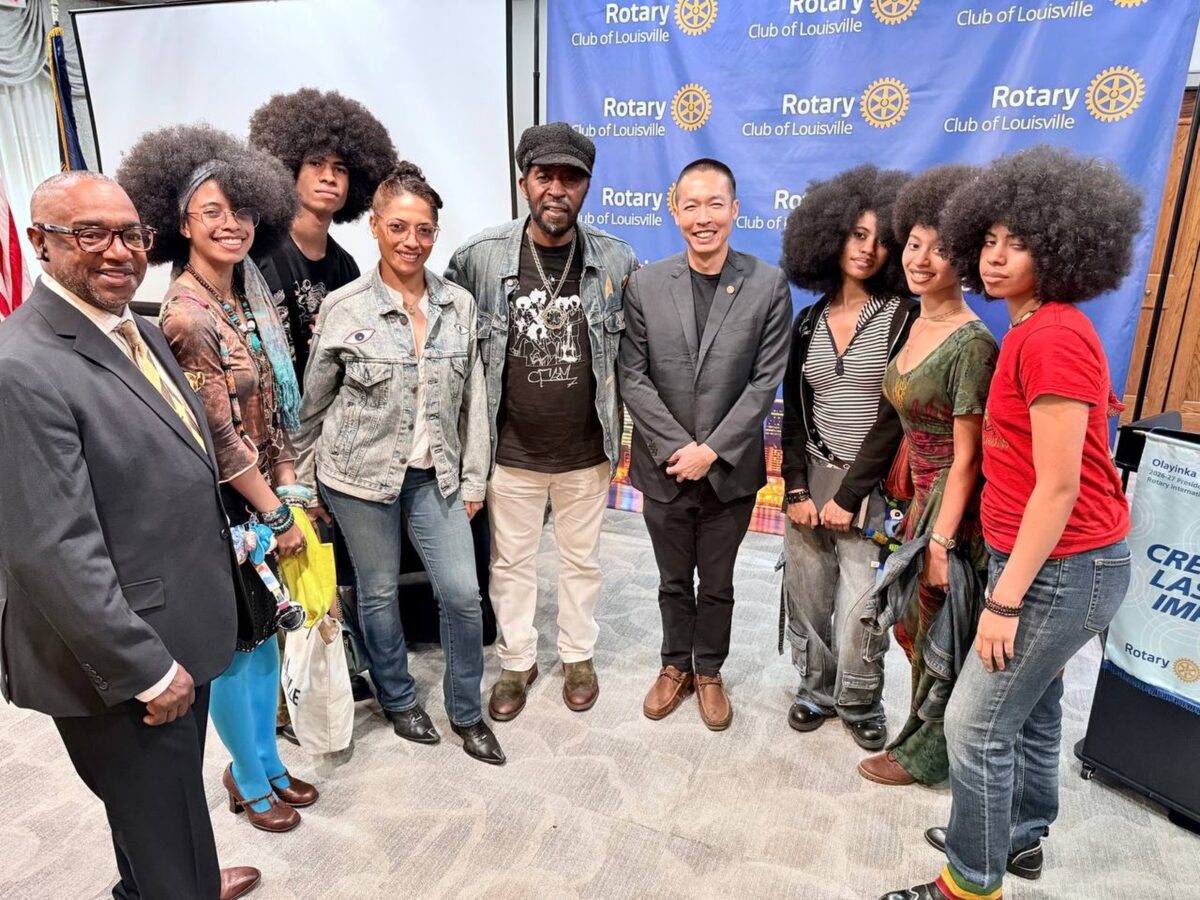
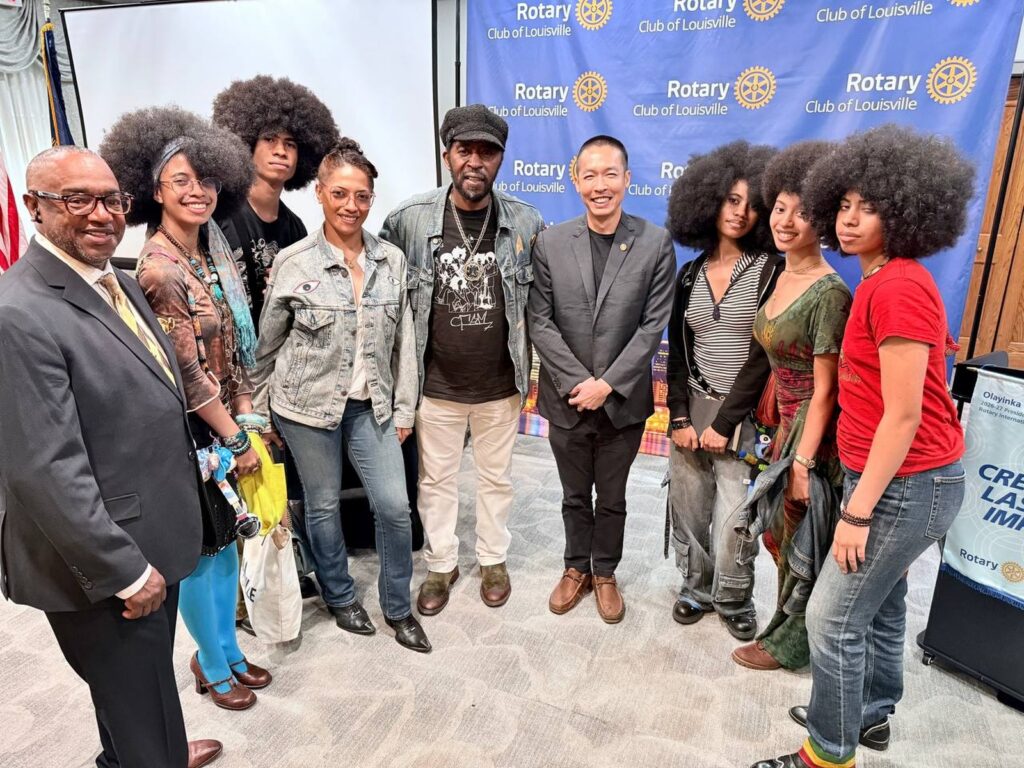
Di Tran stands with Dr. Kevin Fields and the Curtis Family C-Notes in front of a Rotary Club of Louisville backdrop on August 20, 2026.
Di Tran with Dr. Kevin Fields and the Curtis Family C-Notes at the Rotary Club of Louisville, where music, family, natural beauty, Black cultural dignity, Vietnamese American respect, and Louisville civic leadership came together.

Louisville, Kentucky is beautiful not only because of its skyline, river, neighborhoods, food, history, or institutions. Louisville is beautiful because of the people who gather here with purpose.

That beauty was visible at the Rotary Club of Louisville, where civic life still has a place, where leaders still sit together for lunch, and where ideas, service, music, business, education, and humanity can meet in the same room.

A Civic Room Where Louisville Learns Together

The Rotary Club of Louisville is one of Kentucky’s important civic gathering places. Its weekly Thursday luncheon is not simply a networking event. It is a living classroom of leadership, service, and community trust. In a time when people are often divided by politics, class, race, culture, language, and background, Rotary creates a rare environment where people can still listen, learn, and build together.

On Thursday, August 20, 2026, the Rotary luncheon featured Dr. Galen Clavio of the Indiana University Media School, speaking on “Hoosiers in Wonderland: Indiana Football and the Most Improbable Turnaround in Sports History.” Rotary’s meeting notice framed the program around Indiana football’s historic rise under Coach Curt Cignetti, a story of grit, belief, leadership, and turnaround.

It was a sports story, but it carried a wider civic lesson: institutions rise when people believe, organize, and keep working.

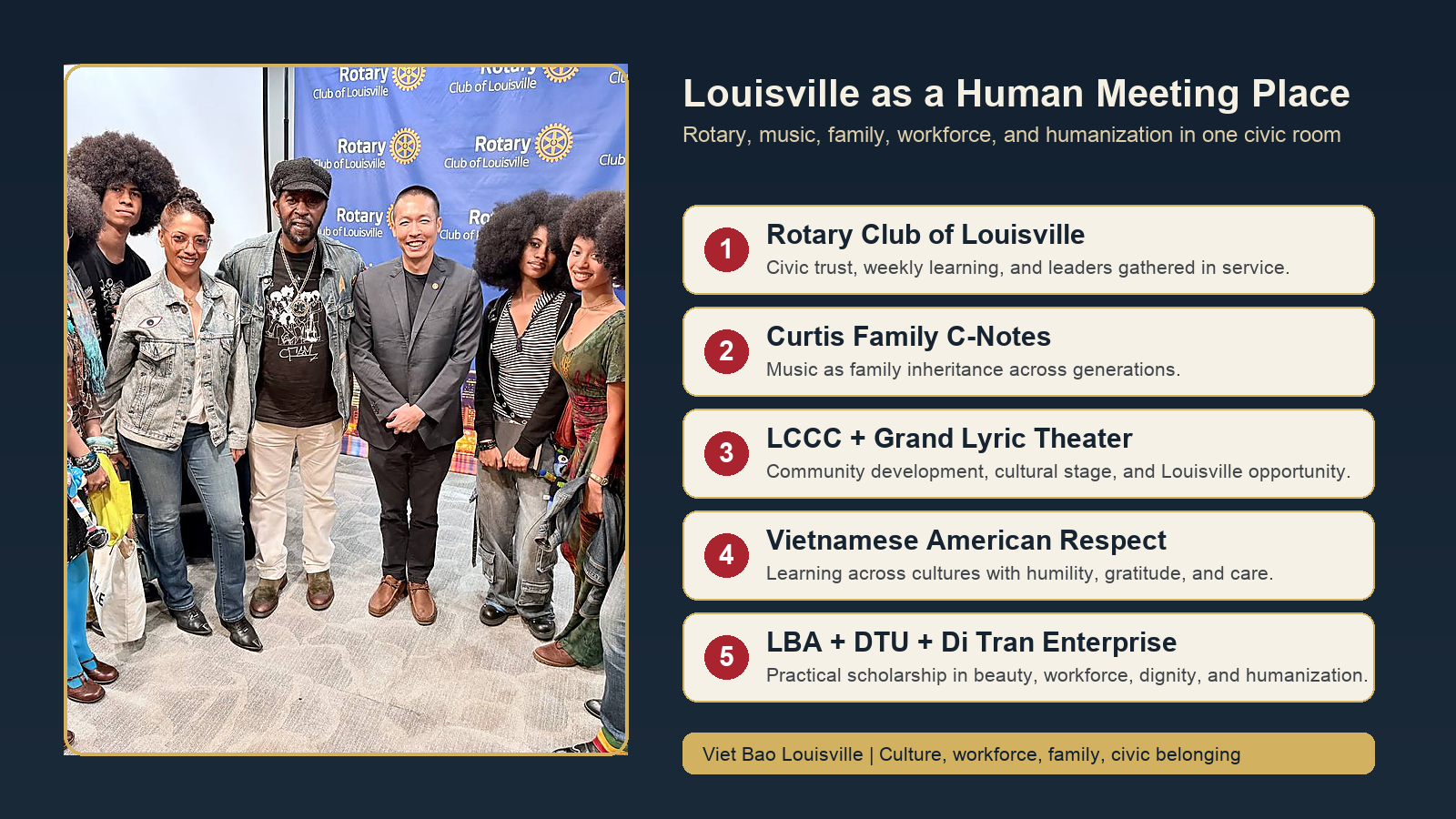
Visual explainer showing Rotary Club of Louisville, Curtis Family C-Notes, LCCC and Grand Lyric Theater, Vietnamese American respect, and LBA plus DTU plus Di Tran Enterprise as connected pillars of humanization.
Louisville as a human meeting place: Rotary, music, family, culture, workforce, and humanization coming together in one civic room.

The Curtis Family C-Notes Come to Louisville

At the luncheon, Dr. Kevin E. Fields, Sr., President and CEO of Louisville Central Community Centers, Inc., introduced the Curtis Family C-Notes, a multigenerational family band coming to Louisville for the Curtis Family C-Notes Concert Series at the Grand Lyric Theater.

The Louisville Tourism listing describes the group as San Francisco’s “First Family of Song” and highlights performances on Friday, August 21, 2026, and Saturday, August 22, 2026, at the Grand Lyric Theater, 1300 West Muhammad Ali Boulevard. The public listing describes a family ensemble bringing powerful vocals, live instrumentation, soul, R&B, gospel, and contemporary sounds to Louisville.

The Curtis Family C-Notes are not merely entertainers. They are a family, an artistic institution, and a living example of how music can hold generations together. Their public identity includes projects such as Awaken, Awaken II, and Awaken III: People of the Everyday. But what made their presence so meaningful in Louisville was not only genre, popularity, or performance quality. It was the visible bond of the family itself.

A Vietnamese American Learner in a Black American Musical Moment

For Di Tran, Founder of Louisville Beauty Academy, Di Tran University, the College of Humanization, and Di Tran Enterprise, the encounter became more than a cultural moment. It became a humanization moment.

Di Tran is Vietnamese American. He did not grow up as an expert in Black American music, soul, funk, gospel, or the full history of Black artistic traditions. He approaches this world with humility, almost like a beginner in American music, but with deep respect for the art, the family, the discipline, and the dignity behind it.

That humility matters. The strongest scholarship is not arrogance. It is disciplined listening.

The mission of Louisville Beauty Academy and Di Tran University is not simply technical education. It is human elevation through practical skill, licensed workforce development, scholarship, entrepreneurship, dignity, and service. Di Tran Enterprise, across its educational, publishing, community, and workforce platforms, is built around a simple belief: people become stronger when they are seen, trained, respected, and connected to opportunity.

What Moved Di Tran Most: Family, Natural Beauty, and Peace

What stood out most about the Curtis Family C-Notes was not only their sound. It was their presence.

Di Tran saw father, mother, and children together. He saw warmth. He saw peace. He saw family love. He saw discipline without coldness and beauty without arrogance. He saw young people learning from parents, parents honoring children, and generations carrying music as a shared language.

When Di Tran asked how many generations of musicians were represented in the family, the answer pointed to a deep inheritance. This was not a temporary performance group. This was family culture. This was music as legacy.

In a world where many families struggle to stay close, the Curtis Family C-Notes offered a different picture: family as band, family as school, family as discipline, family as ministry, family as joy.

Di Tran was also deeply moved by their natural hair, their elegance, and their visual dignity. Their look carried a timeless beauty, almost a 1970s-inspired grace, but it was more than style. Their natural hair reflected identity, culture, confidence, and pride. For many Asian and immigrant communities, Black hair culture is not always understood deeply enough. But in that Rotary room, understanding began through respect.

A Vietnamese American educator can stand beside a Black American musical family and say: I may not know everything about your culture, but I see the beauty. I respect the dignity. I honor the family. I want my son, my students, and my community to learn from this.

Beauty Beyond the Surface

This moment also connected to Di Tran’s own Black History Month reflection and song draft around the phrase “I am not my hair,” connected to young people, workforce dignity, and self-worth. The message is not that hair does not matter. Hair does matter. Culture matters. Identity matters. But no human being should ever be reduced to appearance alone. A person is story, ancestry, spirit, family, skill, discipline, and divine potential.

This is also why Louisville Beauty Academy’s work matters. Beauty education is often misunderstood as surface-level work. But true beauty education is human work. It teaches touch, service, confidence, entrepreneurship, sanitation, discipline, communication, licensing, professionalism, and dignity. It gives students, including immigrants, working adults, parents, and underserved populations, a practical pathway into economic participation.

Di Tran University and the College of Humanization expand that same mission through scholarship, authorship, philosophy, workforce thought leadership, and AI-enabled education. Di Tran’s body of work, including more than 100 published books and institutional writings, points to one central theme: human beings must not be treated as machines, labels, markets, or categories. They must be recognized, trained, loved, and elevated.

Why This Is a Viet Bao Louisville Story

This is the kind of story Viet Bao Louisville exists to tell: not only what happened, but what it means. For the Vietnamese American community, the lesson is clear. We must not live in Louisville only as workers, business owners, or immigrants protecting our own circle. We must also become students of the city’s wider beauty. We must learn Black history, respect Black cultural institutions, honor family art, and join the civic spaces where relationships are built.

The Rotary Club of Louisville made that possible in one lunch.

Dr. Galen Clavio’s talk reminded the room that transformation is possible. Dr. Kevin Fields and LCCC reminded the room that culture and community must be invested in. The Curtis Family C-Notes reminded the room that music can carry family, history, love, and dignity across generations. And Di Tran’s response reminded us that true scholarship is not only reading books. True scholarship is listening with humility, seeing beauty in others, and turning that experience into service.

That is the diplomatic and practical position of Louisville Beauty Academy, Di Tran University, and Di Tran Enterprise: to build bridges between education, workforce, culture, community, and human dignity.

Not theory alone. Not performance alone. Practical love. Practical scholarship. Practical workforce elevation. Practical humanization.

Louisville at Its Best

Louisville is beautiful because moments like this still happen here.

A football story about grit. A Rotary lunch about civic life. A family band about love. A Black cultural institution lifting music. A Vietnamese American educator learning across culture. A beauty academy seeing beauty beyond the surface. A university of humanization seeing music as bonding, family as education, and community as the classroom.

That is Louisville at its best.

That is Kentucky at its best.

That is Rotary at its best.

And that is why this moment deserves to be remembered.

References and Community Links

Categories
Community Reflection Immigrant Contribution Vietnamese American Story

From the Ashes of War, We Became Builders: Di Tran, Director Thanh Tam, and the Debt a Refugee Generation Is Still Paying Forward in Louisville, Kentucky

A reflection by Di Tran, following the Louisville screening of From the Ashes of War (Từ Tro Tàn Chiến Tranh) at the Speed Art Museum on Sunday, August 2, 2026 — presented by the Vietnamese Community of Louisville, produced by Lunar Village Productions, directed by Thanh Tam.

A Note on Purpose

This reflection is not written to argue politics.

It is written to honor stories.

People will debate history, ideology, and government in many ways, and they are free to. That is not the work being done here. This is a record of what one room in Louisville held on one evening, and what it asked of the people sitting in it.

It is written in love — for the elders who survived, for the families who crossed, for the children who may not yet understand the ground beneath their feet, and for a country that gave people room to begin again.

It is written for learning. A story like this should not be used to attack anyone. Its purpose is to listen, to preserve, and to help a younger generation understand why their elders lived, worked, prayed, sacrificed, and built the way they did.

One more thing should be said plainly at the start. No single account speaks for everyone. Some families left. Some families stayed, and rebuilt where they were, with a courage that deserves the same respect. Some families were separated and never made whole. Some are still waiting for news that will not come. Where this reflection says we, it means the people in that room on that evening — not a verdict on anyone else’s life, and not a claim to speak over anyone.

And beneath all of it runs one idea, the one this reflection exists to make plain:

A gift received creates an obligation. The obligation is not gratitude. The obligation is contribution.


The Room

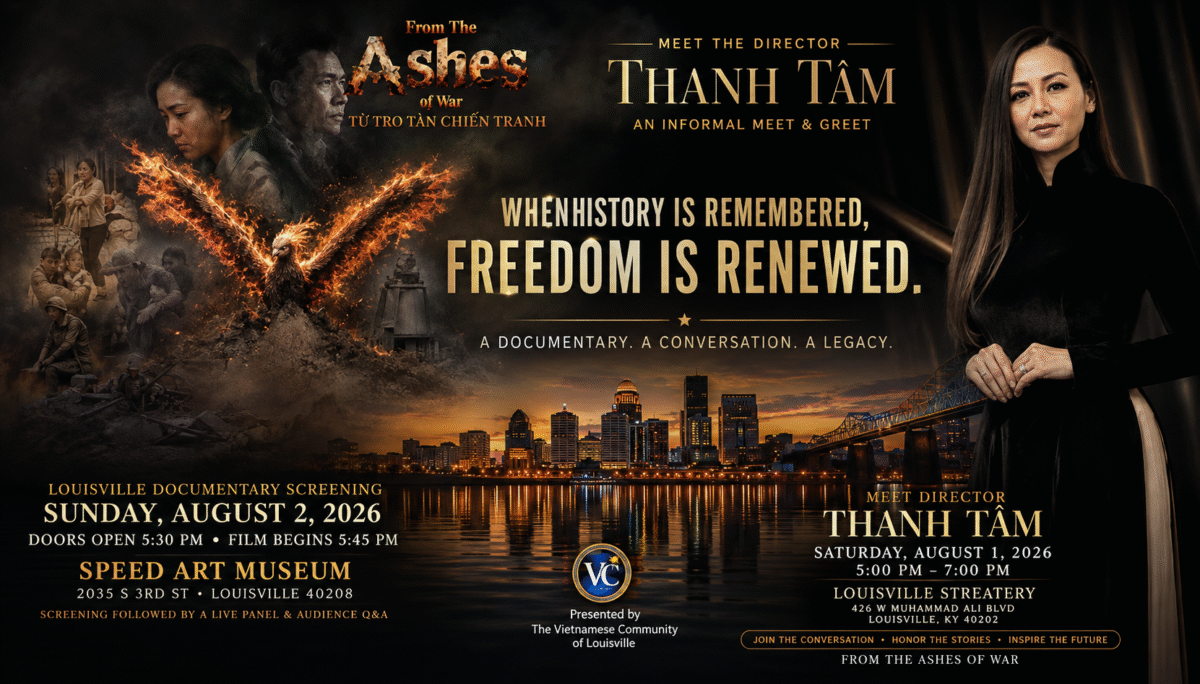
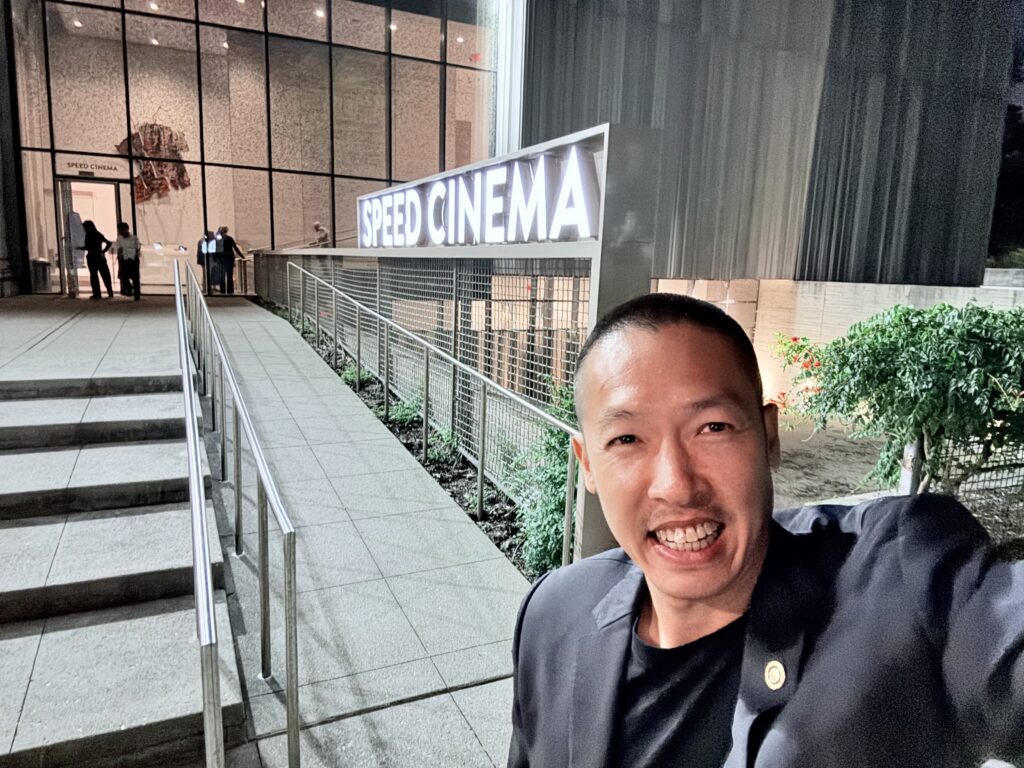
On Sunday evening, August 2, at the Speed Art Museum on South Third Street, the film was not the only thing on the screen.

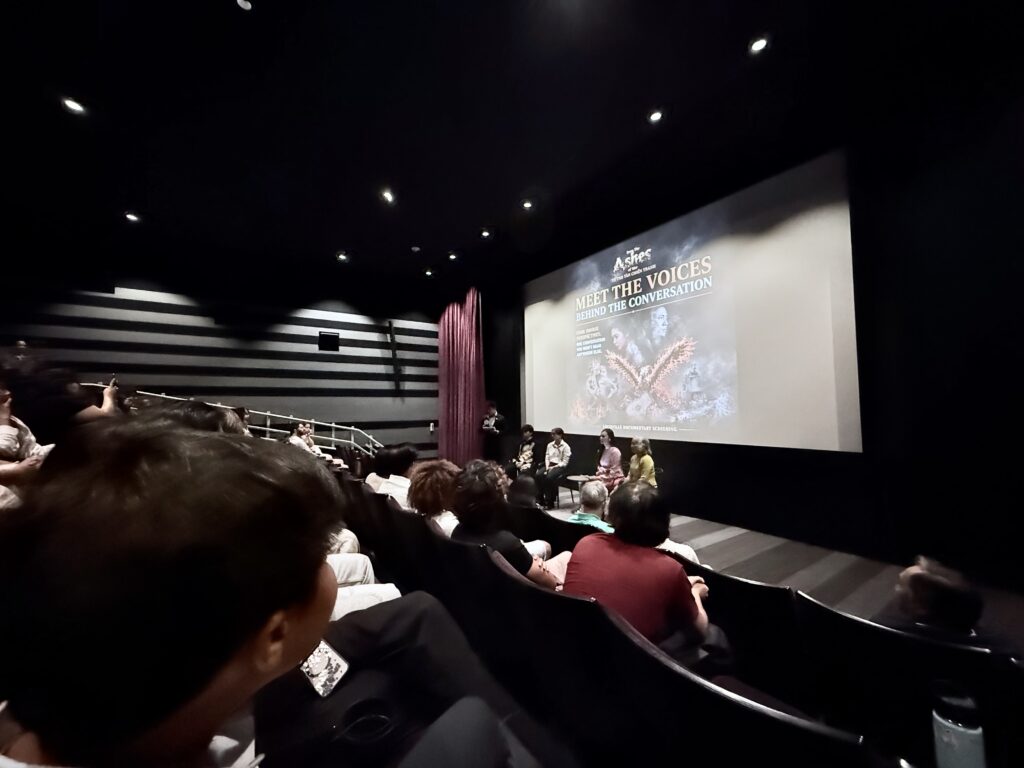
The doors opened at 5:30. The film began at 5:45. Afterward there was a live panel and an audience Q&A, and then a reception at Da Lat’s Cafe that ran until people finally went home. The evening was presented by the Vietnamese Community of Louisville — neighbors organizing for neighbors, which is its own small proof of everything written below.

The room carried more than one generation of Vietnamese history at once. Elders who had lived through war, loss, escape, and rebuilding. Boat people who knew the sea not as an image but as a passage between life and death. Children and grandchildren who inherited freedom, sometimes without inheriting the full story. Community members who came not only to watch, but to remember.

That is what made the evening powerful.

The Vietnam War is often spoken of as history. For Vietnamese families, fifty years is not ancient. Fifty years is a living parent. Fifty years is a living grandparent. Fifty years is a face in the room.

It is an accent. It is a silence at the dinner table. It is a family that works too hard because rest still feels unsafe. It is a mother who saves everything. It is a father who will not complain. It is a grandparent who survived more than the children may ever know.

For those who fled it, communism is not an abstract theory from a classroom debate. It is recent, and it is personal. It is remembered through separation, re-education camps, confiscation, censorship, hunger, escape, and the decision to leave everything familiar so the next generation could live with freedom.

That is a memory, not an indictment. It belongs to the people who lived it, and they are entitled to say it out loud in their own words. It is not a judgment on a country, a government, or anyone’s relatives who remained. Naming a memory is not the same as assigning blame. It is the difference between a headline and a household.


What Was Received

For fifty years, Vietnamese people have laid their lives across oceans, across land, across borders, and across continents so that their children could stand on something more stable.

Some crossed the sea. Some crossed camps. Some crossed hunger. Some crossed language. Some crossed humiliation. Some crossed grief. Some crossed the unbearable decision to leave a homeland so their children might have a future.

And then something was given to them.

A country opened a door. Not perfectly, and not without hardship, but it opened. There was a place to sleep. There was work. There was a school that would take a child who spoke no English. There was a church, a temple, a clinic, a neighbor who helped with paperwork. There was the right to own something and keep it.

Many of our children may never fully know what that door cost, or what it was worth.

They may not know the names of those who disappeared. They may not know the fear of the boat at night, the waiting, the camps, the paperwork, the uncertainty, the loneliness, or the particular ache of arriving in a new country with almost nothing. They may not know how many parents swallowed suffering so their children could feel normal, or how many elders carried trauma quietly so the next generation could carry opportunity loudly.

But whether they know it or not, they stand on those lives.

Every classroom entered, every business opened, every degree earned, every license obtained, every home purchased, every child who speaks freely, every family that now has safety, faith, food, education, and a future — all of it stands on someone who endured first, and on a place that made room.


What Was Rebuilt

People often say that Vietnamese Americans, Vietnamese Canadians, and Vietnamese communities around the world are hardworking, disciplined, ethical, determined, and family-centered. Most people notice the result. They see the nail salons, the restaurants, the professional careers, the small businesses, the churches, the temples, the schools, the children studying late, the parents working seven days, the grandparents still helping.

That kind of praise is meant kindly, and it can still flatten a person. No community is a monolith, and resilience is not a personality trait handed out at birth. Some families thrived. Some did not. Some carry addiction, debt, illness, estrangement, or a grief that never resolved into a success story. They belong in this account too, and they are not a failure of the community. A people should not have to be exceptional to deserve respect.

So the honest question is not why are they like that. It is simply: why?

The why is here. There are two truths, and the film makes both of them visible.

The first truth: Vietnamese people are resilient.

Vietnamese people work because every step forward is built on someone else’s sacrifice. We study because we know freedom can be lost. We build businesses because we know security is not guaranteed. We save because we know what it means to lose everything. We teach our children discipline because we know opportunity without character can be wasted. We contribute because we know survival alone is not enough.

The second truth: Vietnamese people are builders.

From the ashes of war, Vietnamese people did not only escape. They rebuilt.

Wherever they landed, they began again. If they landed in the United States, they helped build the United States. If they landed in Canada, they helped build Canada. If they landed in France, Australia, Germany, or anywhere else, they helped build there too.

This is the part that deserves precision, because it is the part most often flattened into a compliment.

A refugee who opens a shop is not only feeding a family. She is creating a job, paying a tax, anchoring a block, training an employee, and giving a landlord a reason to keep a building standing. A refugee who earns a license is not only earning income. He is entering a regulated profession, accepting a standard, and becoming accountable to the public that licensed him. A refugee who raises an ethical child is not only parenting. She is producing a citizen.

That is what building means. It is value added to a place, measurable and durable, by people who arrived with nothing to add it with.

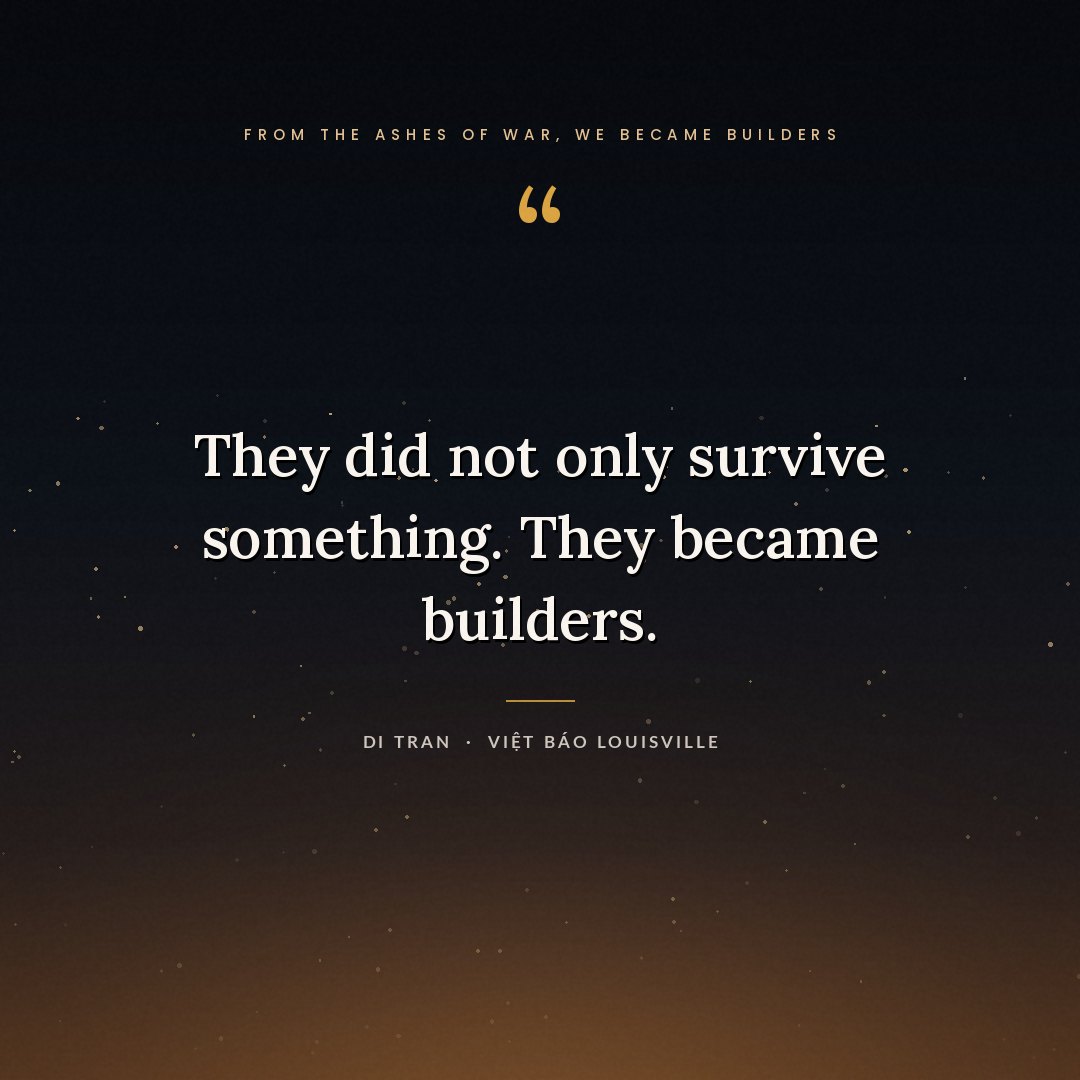
They did not only survive something.

They became contributors. They became makers. They became citizens. They became builders.


What Is Returned: The Debt to Be Paid

The doctrine in three movements: memory becomes service, learning becomes contribution, survival becomes a higher form of love.
Gratitude Becomes Work.

This is the Vietnamese debt of gratitude.

Not a debt of weakness. A debt of care. A debt of purpose. A debt of love.

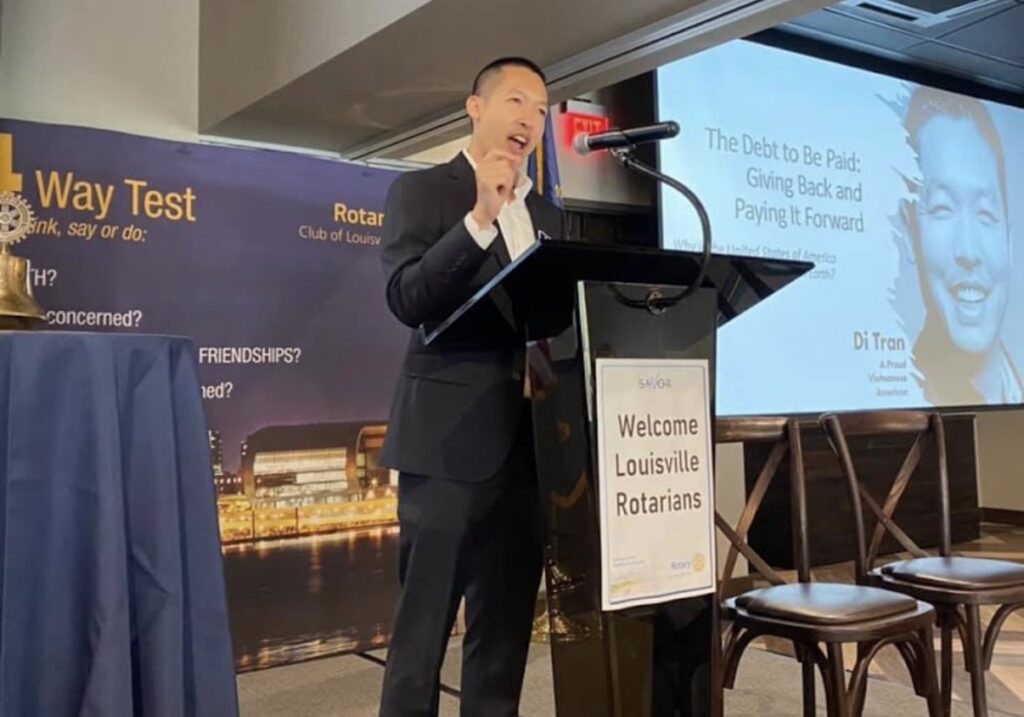
For me, this is personal. Years before this screening, I stood at a podium at the Rotary Club of Louisville and spoke about “The Debt to Be Paid: Giving Back and Paying It Forward.” That has never been only a speech. It is a life posture.

America received me. My family arrived from Vietnam in March 1995 with almost nothing, and I could not speak English. I became a citizen in 2000. America gave me room to learn, work, worship, build, fail, rise again, raise children, start businesses, serve students, and contribute to community life. I have told that story at length elsewhere, most fully in a MoxieTalk conversation with Kirt Jacobs, and I tell it again here only because it is the same debt this film is about.

The only worthy response to that gift is not passive appreciation.

The response is contribution.

Appreciation is a feeling. It costs nothing and it changes nothing. Contribution is a transaction with the world: something of value goes out that was not there before. A debt of gratitude is not paid by saying thank you. It is paid by producing.

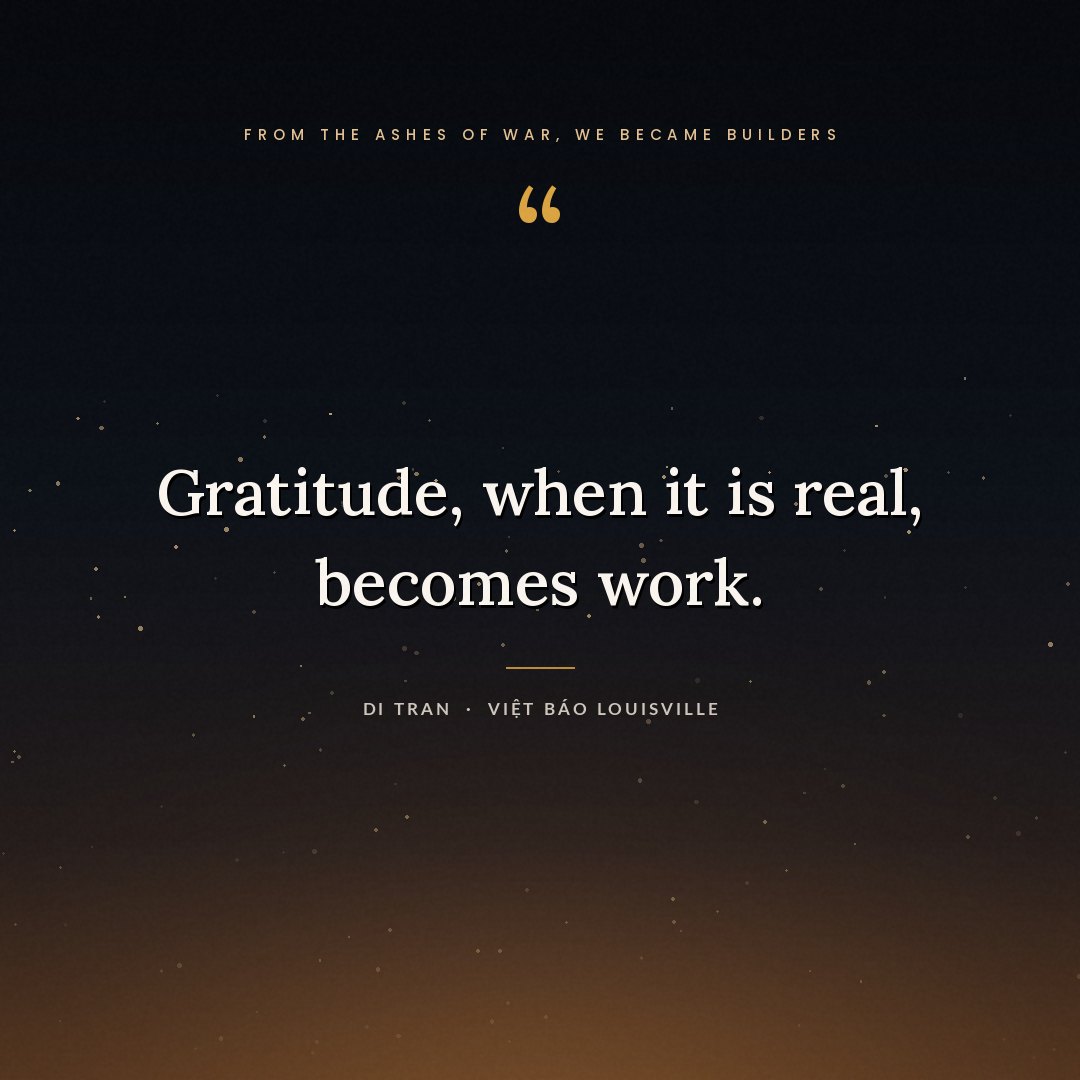
Gratitude, when it is real, becomes work.

It becomes raising ethical children. It becomes opening schools that teach rather than extract. It becomes creating jobs. It becomes teaching students who speak different languages. It becomes helping immigrants navigate systems that were not written for them. It becomes building institutions that make human stories useful for the next generation. It becomes writing books. It becomes preserving memory. It becomes showing up in civic rooms, business rooms, classrooms, and community rooms with the understanding that freedom is not only to be enjoyed.

Freedom is to be honored through responsibility.

Did something exist after you that did not exist before you, and can someone else use it without you in the room?

The test of a paid debt

A job that outlasts your shift. A student who can practice without you. A school that runs on a system, not on a personality. A book that keeps teaching after the author is gone. A record of testimony that a stranger can find in thirty years.

That is a paid debt. Everything else is a good intention.


Screenshot
Quote card reading: They did not only survive something. They became builders.
Survival Became Structure.

Why the Film Matters

The film does more than preserve pain. It explains character.

It helps the next generation understand that the discipline they see in their parents and grandparents did not come from nowhere. The pressure to work, the urgency to study, the fear of waste, the respect for elders, the need to own, the need to contribute, the need to be ethical, the need to build something real — all of it has history beneath it.

Sometimes children inherit the behavior without the story.

They hear “work hard,” but not the ocean behind it. They hear “be grateful,” but not the refugee camp behind it. They hear “do not waste this country,” but not the loss of another country behind it. They hear “study,” but not the parent who once had no school left to attend. They hear “build,” but not the family that once had everything taken.

That is why these stories must be told again. And they must be told in a way the next generation can actually receive.

Some young Vietnamese Americans may not carry the language as strongly as their elders. Some understand only pieces. Some feel Vietnamese by blood, American by schooling, and global by technology. That does not make them less Vietnamese. It means the bridge must be built with care.

The memory needs Vietnamese. It also needs English.
It needs long documentaries. It also needs short clips.
It needs elders speaking. It also needs young people asking.
It needs community screenings. It also needs classrooms, podcasts, captions, translations, books, public archives, searchable testimony, and modern tools that preserve witness before it disappears.

Preservation is itself a form of contribution. A story that is not recorded is a debt that quietly defaults.


An American Story, Too

This is not only a Vietnamese responsibility. It is also an American one.

Vietnamese refugee history is American history. It is part of the story of freedom, resettlement, small business, education, faith, family, civic duty, and the moral promise of a country that gives people room to begin again. Vietnamese Americans are not outside the American story. They are one of the ways America proves what it means.

The same is true in Canada and in every country that received Vietnamese refugees. Refuge is not only a destination. It becomes a relationship.

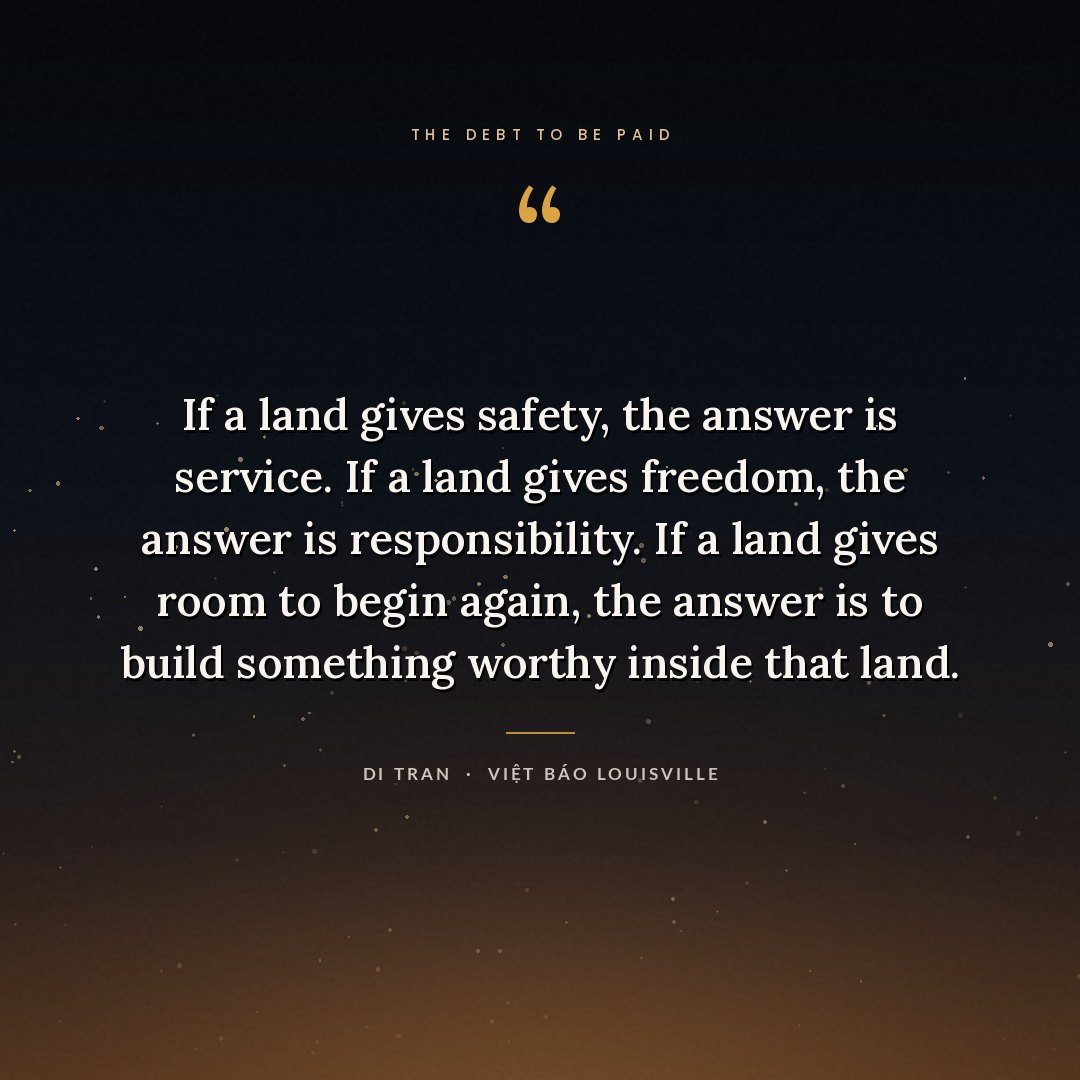
If a land gives safety, the answer is service.

If a land gives freedom, the answer is responsibility.

If a land gives room to begin again, the answer is to build something worthy inside that land.


Quote card reading: If a land gives safety, the answer is service. If a land gives freedom, the answer is responsibility. If a land gives room to begin again, the answer is to build something worthy inside that land.
Refuge Becomes Relationship.

Two People, One Purpose

At that meeting, what stood out was not politics. It was love.

Pure love for people, for memory, for elders, for children, and for the stories that too often stay trapped inside families until someone cares enough to ask, listen, film, preserve, and share.

Thanh Tam and I stood there not as debaters of history, but as carriers of stories. I carried the reflection of an immigrant builder who believes every life must be paid forward through contribution. She carried the responsibility of a filmmaker preserving voices before they disappear — work she does from Canada, about a diaspora that scattered across many countries, for an audience that turned out on a Sunday evening in Kentucky.

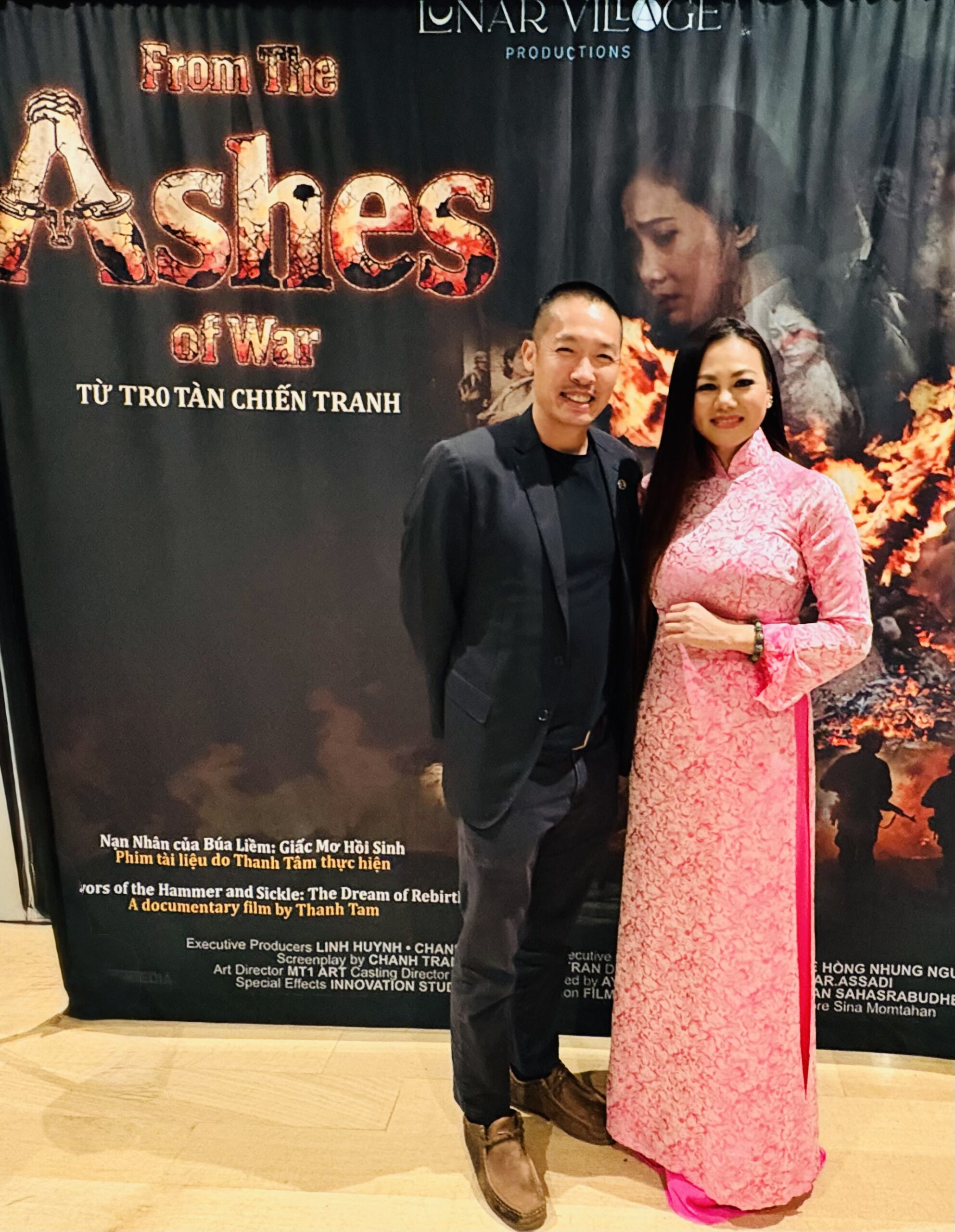
Di Tran stands with director Thanh Tam, wearing a pink áo dài, in front of the From the Ashes of War film banner at the Louisville screening.
Di Tran with director Thanh Tam at the Louisville screening of From the Ashes of War (Từ Tro Tàn Chiến Tranh), Speed Art Museum, August 2, 2026.
Two Carriers of the Same Story.

Between us was a simple human truth: Vietnamese history must be shared with love, or it will not reach the next generation.

Two different tools. One debt.


The Larger Doctrine

This is also the spirit behind the College of Humanization and the body of published work that has come out of it.

The public author catalog now holds a substantial body of titles — books on professional discipline, practical licensing, leadership, values, business-building, and human-centered learning. The number is not important as a vanity count. It matters because it shows a pattern: turn lived experience into teaching, turn teaching into accessible tools, and turn gratitude into value that other people can use without needing permission.

That is the same doctrine, applied to paper.

In that sense, the books align directly with the message of From the Ashes of War. Memory must become service. Learning must become contribution. Survival must become a higher form of love.

The same test applies. A book is not a monument. It is a tool someone else can pick up.


What the Room Held

In that room at Speed Cinema, the story was not abstract.

The elders carried memory. The director carried witness. The young carried the future. The community carried the bridge.

From the ashes of war, Vietnamese families crossed oceans. From the ashes of displacement, they raised children. From the ashes of loss, they opened businesses, entered schools, earned licenses, served neighborhoods, built churches and temples, paid taxes, hired workers, cared for elders, taught children, and strengthened the places that welcomed them.

That is the real legacy beneath the visible success of Vietnamese communities around the world. It is not random ambition. It is inherited responsibility. It is the living memory of people who know that every opportunity rests on a sacrifice before it.

The children may know it or not. But they are being carried by it. They stand on lives that crossed the sea. They stand on parents and grandparents who refused to let war have the final word. They stand on people who lost much, endured more, and still chose dignity.

And some of the people who made that possible are not here to be thanked. They are in the water, in the camps, in unmarked ground, in the years that were taken from them. Part of the debt is owed to people who will never collect it. That is precisely why it has to be paid forward instead of back.

Now the responsibility belongs to us.

We must remember. We must teach. We must translate. We must preserve. We must build. We must make sure the next generation does not inherit only the freedom, but also the meaning behind it — and the bill that comes with it.

From the ashes of war, we do not only survive.
We build so the next generation can stand higher.


Quote card reading: Gratitude, when it is real, becomes work.
The Test of a Paid Debt.

The Screening

From the Ashes of War (Từ Tro Tàn Chiến Tranh)
Directed by Thanh Tam · Lunar Village Productions
Presented by the Vietnamese Community of Louisville

Sunday, August 2, 2026 · Speed Art Museum, 2035 South Third Street, Louisville, Kentucky
Screening followed by a live panel and audience Q&A, with a reception at Da Lat’s Cafe.

With thanks to the organizers, the panelists, and the elders who came and stayed to talk.


Sources and References

  • Film / project reference: https://www.gofundme.com/f/historical-documentary-from-the-ashes-of-war
  • Louisville screening reference: https://www.eventbrite.com/e/from-the-ashes-of-war-louisville-screening-community-panel-tickets-1994311920640
  • Video reference: https://www.youtube.com/watch?v=TDxVJlIeVsk
  • MoxieTalk with Kirt Jacobs — conversation with Di Tran: https://moxietalk.com/episodes/di-tran/
  • Rotary Club of Louisville: https://www.louisvillerotary.org
  • Di Tran author catalog: https://www.amazon.com/stores/author/B0CK64CFN9/allbooks

Louisville, Kentucky — August 3, 2026

Categories
Community

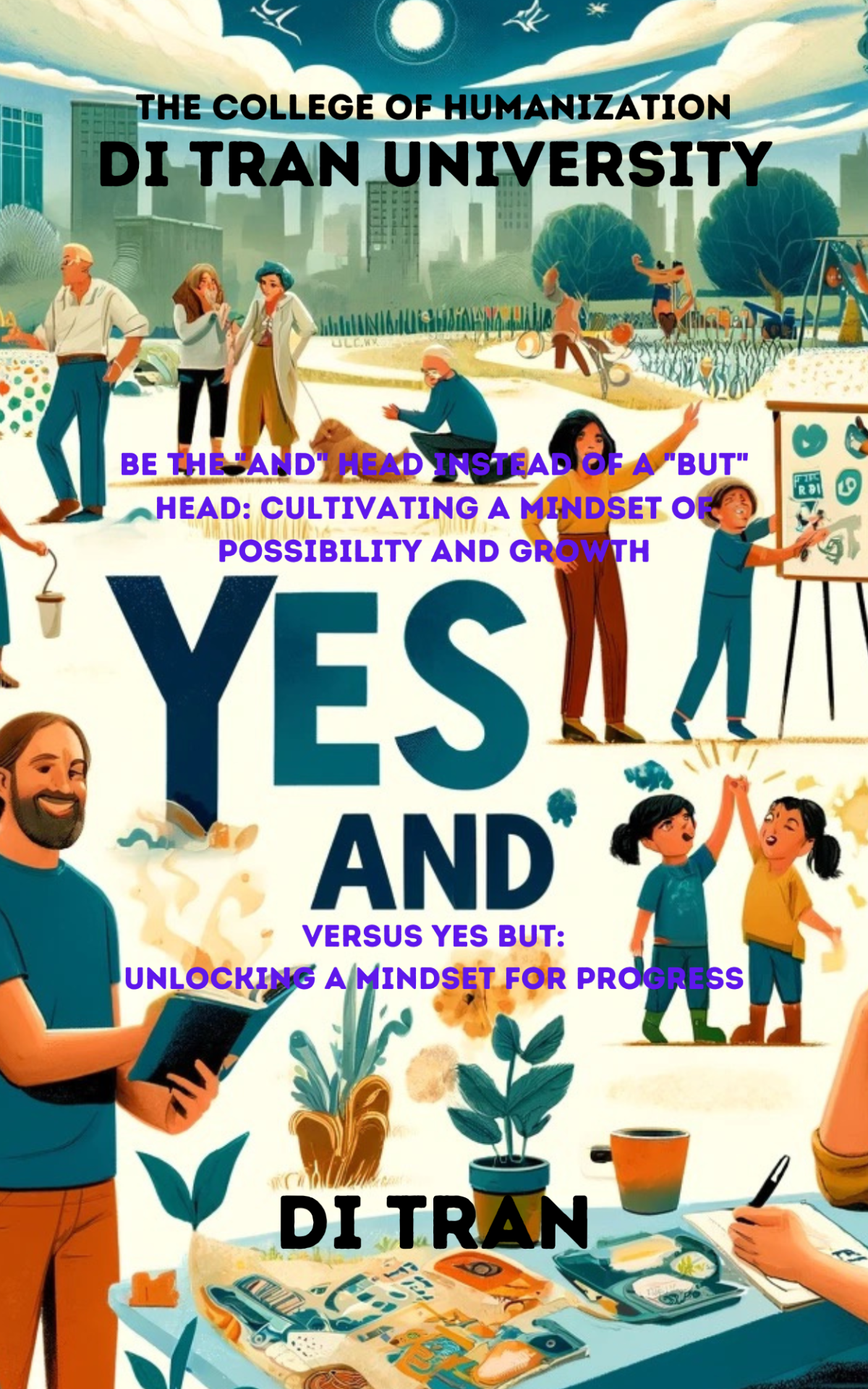
Di Tran University Celebrates the Release of “Yes And vs Yes But: Unlocking a Mindset for Progress”

Di Tran University: The College of Humanization is proud to announce the release of Di Tran’s latest book, “Yes And vs Yes But: Unlocking a Mindset for Progress.” This insightful work explores the transformative power of a “Yes And” mindset, promoting personal growth, resilience, and collaborative success.

A New Guide to Mental Wellness and Growth

“Yes And vs Yes But” delves into how the words we choose and the mindset we adopt can profoundly impact our lives. Di Tran, a passionate advocate for mental wellness and personal development, provides readers with practical strategies to cultivate a “Yes And” mentality. This approach emphasizes positivity, learning, and proactive action, helping individuals navigate life’s challenges with optimism and creativity.

Key Themes of the Book

  • The Power of Action: Discover the importance of taking consistent, proactive steps towards your goals.
  • The Power of Growth: Embrace continuous learning and self-improvement.
  • The Power of Adaptation: Learn to adapt with flexibility and resilience.
  • The Power of Doing and Learning: Understand the value of hands-on experiences and learning from every situation.
  • The Power of Constant Trial and Error: Develop a positive approach to experimentation and view mistakes as opportunities.
  • The Power of Problem-Solving: Enhance your ability to find creative solutions.
  • The Power of Building and Creating: Focus on constructing a meaningful and fulfilling life through intentional actions.

About Di Tran University: The College of Humanization

Di Tran University is dedicated to fostering mental wellness, personal growth, and community engagement. The College of Humanization focuses on holistic education that emphasizes empathy, resilience, and collaborative problem-solving. Through its programs and initiatives, the university aims to equip individuals with the skills and mindset needed to thrive in today’s complex world.

Author and Advocate

Di Tran, the founder of Di Tran University, is a dedicated advocate for mental wellness and personal growth. His latest book is a testament to his commitment to helping individuals unlock their potential and live fulfilling lives. Inspired by his family—his wife Vy Truong and their three sons, Jayden, Skylar, and Dylan—Di Tran’s work reflects a deep passion for creating positive change and promoting a mindset of possibility and growth.

Join the Journey

Di Tran University invites everyone to embark on this enlightening journey with “Yes And vs Yes But: Unlocking a Mindset for Progress.” This book is not just a guide but a call to action to embrace positivity, resilience, and collaboration in our daily lives.

Order your copy today and start your journey towards a brighter, more fulfilling future. Stay connected with Di Tran University: The College of Humanization for upcoming events, workshops, and discussions that continue to promote mental wellness and personal development.

For more information, visit Di Tran University.


Tags: #YesAndMindset #PersonalGrowth #MentalWellness #PositiveThinking #DiTranUniversity #Empowerment #NewBookRelease

SPONSORED BY

Translate »