
Categories
Small Businesses Workforce Development Workforce Education

Kentucky Supreme Court Justice Angela McCormick Bisig Inspires Di Tran and Rotary Club of Louisville with a Powerful Lesson on Freedom, the Rule of Law, and America’s Three Branches of Government

A Lesson in Freedom, Law, and the Quiet Strength of America’s Judiciary

As America celebrates its 250th year, conversations about freedom often focus on the nation’s founders, the Constitution, and the military men and women who have defended our country. Yet one of the greatest protectors of freedom is often the quietest institution of all—the judiciary.

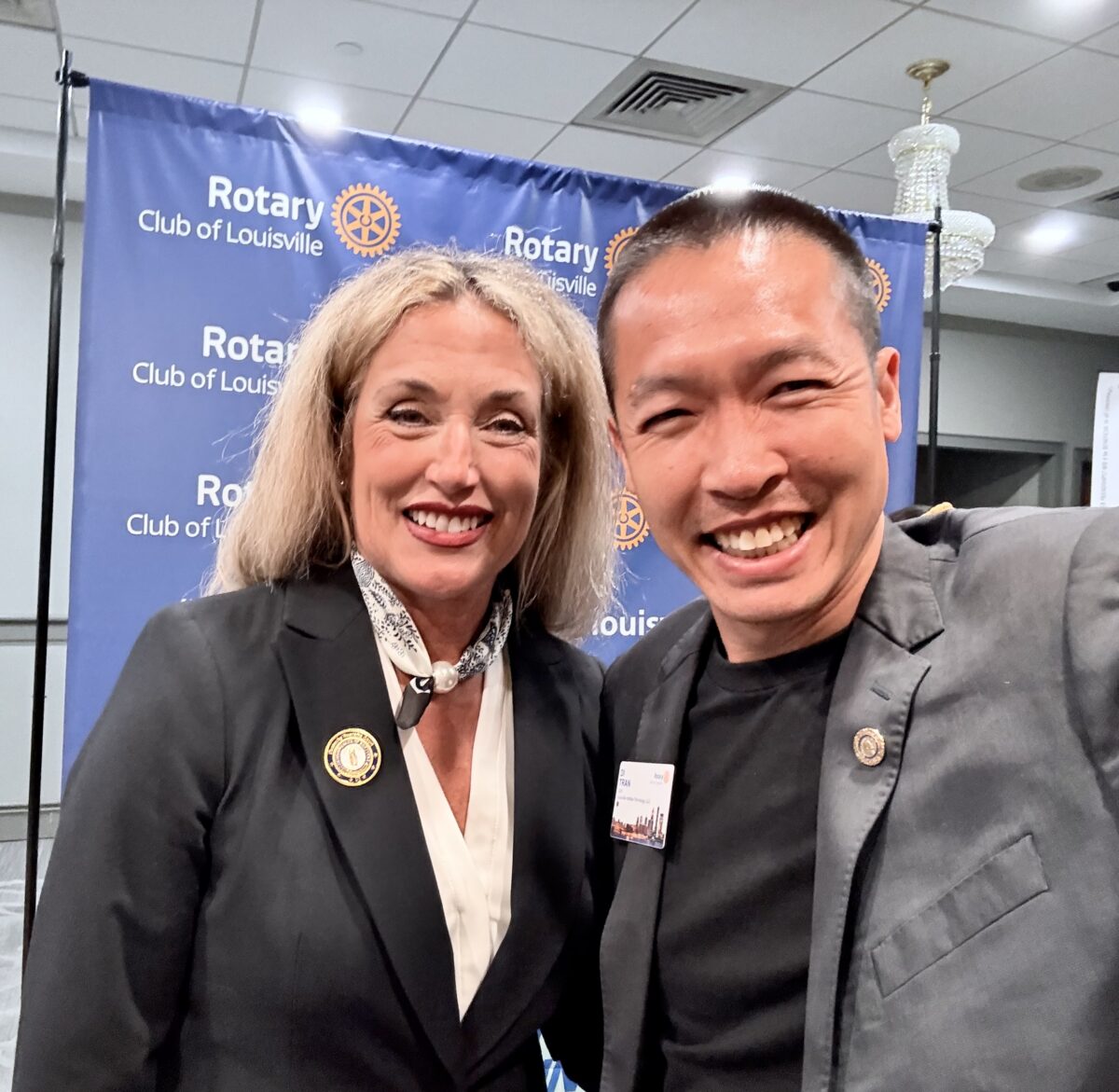
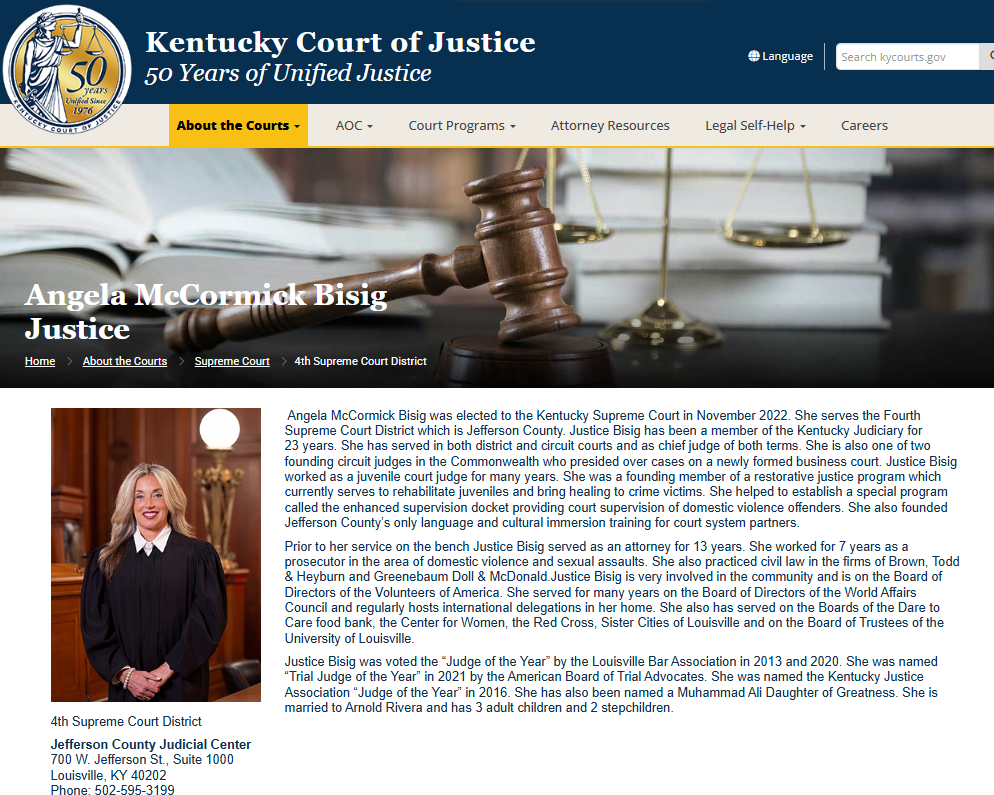
Today, Rotary Club of Louisville members had the privilege of hearing from Kentucky Supreme Court Justice Angela McCormick Bisig, one of only seven justices serving on the Commonwealth’s highest court. Justice Bisig represents the Fourth Supreme Court District, consisting solely of Jefferson County, making her responsible for the state’s largest county at the highest judicial level.

The Rotary Club of Louisville itself is one of the world’s largest Rotary clubs, bringing together hundreds of business, nonprofit, government, education, and civic leaders every week. The club describes itself as one of the largest among Rotary’s more than 45,000 clubs worldwide, providing members direct access to distinguished local, state, national, and international speakers.

For Louisville entrepreneur and Rotary member Di Tran, the luncheon was far more than another Thursday meeting.

“It was a lesson on the beauty of America’s system of government and why law matters.”

Rather than discussing politics, Justice Bisig explained the constitutional role of the judiciary—one of the three co-equal branches of government alongside the legislative and executive branches.

The explanation highlighted an important reality that many Americans may never fully appreciate.

The legislative branch creates laws.

The executive branch carries out and enforces those laws.

The judiciary does neither.

Instead, judges wait.

They do not search for cases.

They do not proactively investigate disputes.

They do not write new legislation.

They do not enforce regulations.

Their responsibility begins only when a real legal controversy is properly brought before the court.

Only then do judges carefully study the facts, hear both sides, apply the law as written, and when necessary, interpret areas where the law is reasonably open to more than one meaning.

This discipline is not weakness—it is one of the judiciary’s greatest strengths.

Its restraint helps ensure that every citizen, regardless of wealth, background, political influence, or status, stands equally before the law.

That quiet commitment to impartiality is one of the foundations of American liberty.

For Di Tran, an immigrant entrepreneur who deeply values the freedoms available in the United States, hearing this explanation directly from a sitting Kentucky Supreme Court justice carried special meaning.

“It reminded me that freedom is protected not only by those who make laws or enforce them, but also by those who patiently preserve justice through the rule of law.”

Following the presentation, Di Tran took a moment to thank Justice Bisig personally with a handshake—not because of politics or personal recognition, but out of appreciation for a civic lesson that reinforced the importance of constitutional government.

In an era when public attention often centers on conflict and division, today’s Rotary luncheon served as a reminder that some of the nation’s most important institutions work quietly, deliberately, and without seeking headlines.

The judiciary is designed to be reactive rather than proactive.

Its judges do not seek power; they exercise only the authority entrusted to them when a case comes before the court.

That restraint protects everyone.

As America reflects on 250 years of independence, events like this remind us that freedom depends not only on elections and legislation, but also on an independent judiciary committed to fairness, impartiality, and the rule of law.

Sometimes the most powerful lessons are delivered by those whose job is simply to listen, interpret the law faithfully, and ensure that justice belongs equally to every citizen.
Categories
Community Corporation Drop the FEAR and Focus on the FAITH Drop the ME and focus on the OTHERS Guiding Lights: A Journey of Courage, Compassion and Faith Health Immigration Information Technology Leadership Development Small Businesses Workforce Development

The Triple T Strategy: Harmonizing Personal Virtues and Organizational Values for Holistic Growth

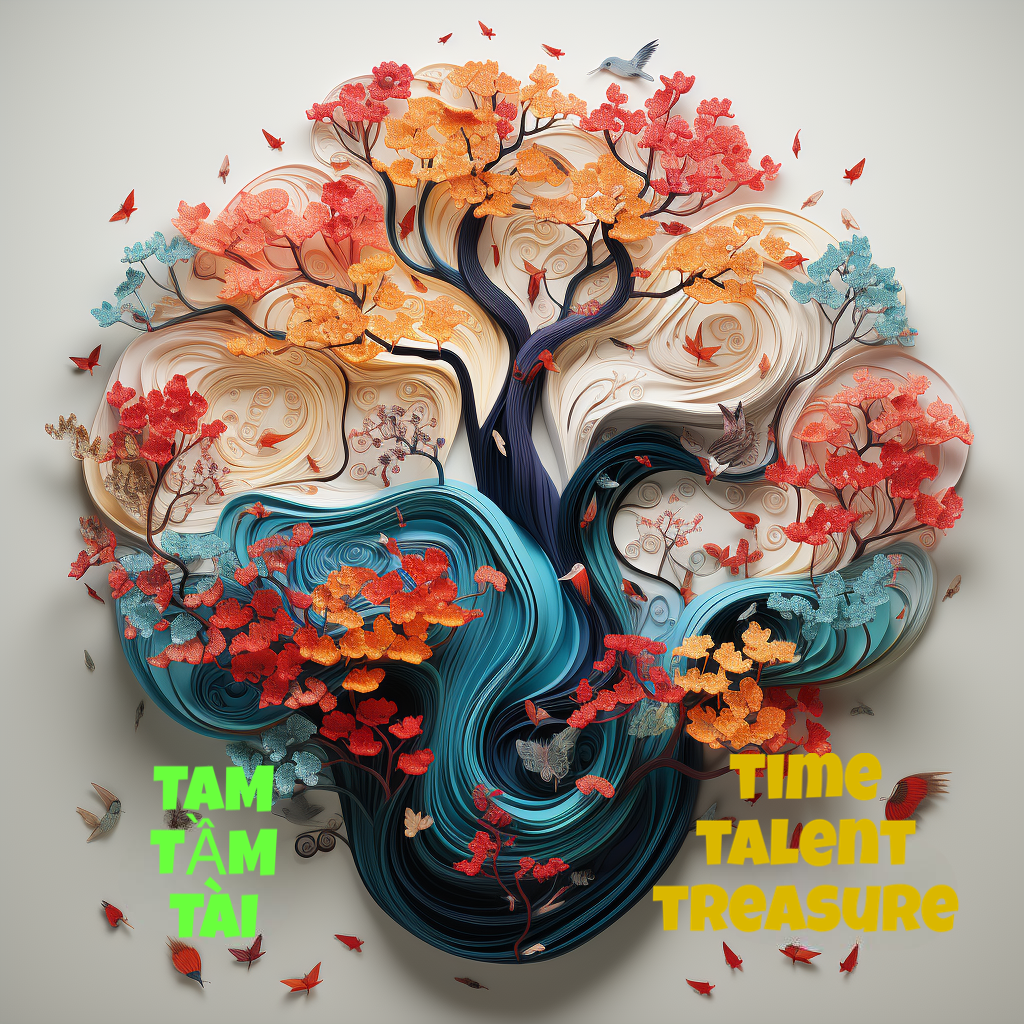
In a world that often demands instant results and quick fixes, the philosophy of growth, both personal and organizational, can be beautifully encapsulated by the convergence of two sets of Triple Ts— a Vietnamese perspective (Tâm, Tầm, Tài) and a philanthropic English perspective (Time, Talent, Treasure). These Triple Ts serve as a compass for selecting associates and friends while fostering an environment conducive to holistic development.

Personal Development: Starting with Tâm (Heart)

The journey begins with the individual and the core Vietnamese value of “Tâm,” akin to the English concept of dedicating “Time.” When we start with heart, we give time generously to our endeavors. The heart’s capacity for empathy, morality, and integrity shapes the character, while the time invested in self-improvement and helping others lays the groundwork for a life rich in purpose and connection. As individuals, prioritizing “Tâm” allows us to engage deeply with our communities, offering our time as a testament to our commitment to growth.

Broadening Perspectives with Tầm (Vision)

As one’s journey progresses, the importance of “Tầm,” or vision, comes into play, mirroring the need to leverage one’s “Talent” in the English Triple T. This step involves looking beyond immediate horizons and honing one’s skills for a greater purpose. As individuals, identifying our talents and aligning them with our vision crafts a path for continuous learning and application of our unique skills. For organizations, this means attracting and nurturing talent that shares the collective vision, fostering innovation and driving sustainable growth.

Achieving Excellence through Tài (Talent)

The final Vietnamese T, “Tài,” symbolizes the excellence and expertise we aspire to attain and resonates with the English concept of “Treasure.” At this stage, an individual’s personal mastery and the organization’s resource accumulation reach their zenith. This isn’t merely about financial wealth but represents the richness of experience, knowledge, and capability. Investing our treasure back into the systems that fostered our growth reflects a maturity of purpose and the pinnacle of the Triple T alignment.

Implementation: A Step-by-Step Approach

The implementation of the Triple T strategy is a gradual process, beginning with an inward focus and progressively expanding outward:

  1. Self-Assessment and Cultivation: Individuals start with introspection, cultivating a good heart and dedicating time to personal development and community service.
  2. Skill Development and Vision Expansion: As talents are honed, one’s vision should broaden. This is the phase where individuals and organizations align their unique abilities with long-term goals and objectives.
  3. Resource Investment and Mastery: The culmination of efforts in personal and organizational growth should lead to an accumulation of resources—knowledge, experience, and financial capital—that can be reinvested to fuel the cycle of growth.

Choosing Associates and Friends

Surrounding oneself with people who embody these values is crucial. Relationships should be nurtured with those who share a commitment to growth, possess complementary talents, and understand the importance of giving back. In a professional context, this translates to building a team or organization whose members are aligned with the core Triple T values.

Conclusion

The Triple Ts—whether from Vietnamese or English cultural origins—provide a roadmap for those seeking sustained growth and positive impact. By starting with the heart, expanding one’s vision and talent, and wisely investing one’s treasure, both individuals and organizations can develop harmoniously. This alignment fosters environments where people thrive, organizations reach their potential, and communities become stronger. It’s a testament to the power of virtues and values in guiding us toward a more fulfilled and purposeful existence.

Translate »