
Categories
Community Health Self-Improve

The Misconception of Retirement as a Goal: Embracing the Joy of Work

Introduction:

In today’s society, the concept of retirement has been deeply ingrained as a definitive goal to achieve. From an early age, we are conditioned to believe that our ultimate purpose in life is to work hard until a certain age, accumulate wealth, and then retire to enjoy a life of leisure. However, this traditional perspective fails to consider the intrinsic value and fulfillment that work can bring to our lives. In this article, we challenge the notion of retirement as a goal and explore the idea that if one genuinely enjoys working, retirement may not be the optimal path to happiness and contentment.

The Joy of Work:

Work is not merely a means to an end, but rather a source of personal fulfillment, purpose, and satisfaction. Many individuals find joy and meaning in their careers, deriving a sense of accomplishment, growth, and contribution from their work. The pursuit of challenging projects, the opportunity to learn new skills, and the satisfaction of making a positive impact can provide a deep sense of purpose that extends beyond financial considerations.

Lifelong Learning and Growth:

Engaging in work allows individuals to continuously learn, grow, and develop their skills. The professional world is constantly evolving, offering new challenges and opportunities for personal and intellectual advancement. By remaining in the workforce, individuals can embrace ongoing education and skill development, adapting to changing trends and technologies. This continuous learning not only keeps the mind active but also promotes personal growth and resilience.

Social Connections and Collaboration:

Workplaces are often vibrant communities where people forge meaningful relationships, foster camaraderie, and engage in collaborative endeavors. The social aspect of work provides a sense of belonging, companionship, and shared purpose. It offers opportunities for mentorship, networking, and the exchange of knowledge and ideas. These social interactions can greatly enrich our lives and contribute to overall well-being.

Financial Considerations:

While financial security is an essential consideration, it is worth reevaluating the conventional approach of accumulating wealth solely for retirement. Instead, individuals who enjoy their work can find a balance between financial responsibility and personal satisfaction. By continuing to work, one can maintain a steady income while simultaneously indulging in the joy of pursuing their passions and interests.

Redefined Concepts of Retirement:

Rather than envisioning retirement as a complete departure from work, it may be more beneficial to redefine the concept. This redefinition can involve transitioning from traditional employment to a more flexible arrangement, such as part-time work, consulting, or engaging in entrepreneurship. By embracing a modified version of retirement, individuals can maintain a sense of purpose and financial stability while also enjoying the freedom to explore new interests or hobbies.

Conclusion:

Retirement should not be viewed as a one-size-fits-all goal, as it fails to account for the diverse desires, passions, and ambitions of individuals. If one finds joy and fulfillment in their work, there is no need to conform to societal expectations of retirement. Embracing the joy of work can provide a sense of purpose, continuous growth, social connections, and personal satisfaction. Ultimately, the decision to retire or continue working should be guided by personal preferences and aspirations, as each individual’s journey toward happiness is unique.


Categories
Brandy Food Health

How to Drink Cognac: A Guide to Enjoying the Spirit

Cognac is a type of brandy that is produced in the Cognac region of France. It is a popular spirit that is often enjoyed as an after-dinner drink or as a way to celebrate special occasions. However, many people don’t know how to drink Cognac correctly. In this article, we’ll provide a guide to enjoying Cognac and savoring its unique flavors and aromas.

Choosing the Right Glass

The first step to enjoying Cognac is to choose the right glass. A tulip-shaped glass is the best for enjoying Cognac. This type of glass helps concentrate the aromas of the Cognac, which is an important part of the tasting experience. The stem of the glass allows you to hold it without warming up the Cognac too quickly. The wide bowl of the glass allows the aromas to develop, while the narrow opening concentrates them.

Pouring the Right Amount

When it comes to pouring Cognac, it’s important to pour the right amount. It’s recommended to pour about 1 to 1.5 ounces of Cognac in the glass, which is enough to enjoy the flavors and aromas without overwhelming your senses. Pouring too much can mask the unique flavors of the Cognac and make it difficult to appreciate its complexities.

Warming up the Glass

To enhance the aromas of the Cognac, it’s a good idea to warm up the glass. You can do this by holding it in your hand for a few minutes before pouring the Cognac. This will help release the aromas and allow you to fully appreciate the flavors of the spirit.

Taking Your Time

Cognac is meant to be sipped slowly and savored. Take small sips and allow the flavors and aromas to develop in your mouth. Cognac is a complex spirit with many layers of flavor, and taking your time to savor each sip will help you appreciate its unique qualities.

Not Mixing It

Cognac is a spirit that is meant to be enjoyed neat, without any mixers or ice. Adding anything to the Cognac can mask the unique flavors and aromas of the drink. Drinking Cognac neat allows you to fully appreciate its complexity and savor its unique qualities.

Pairing it with Food

Cognac is often enjoyed as an after-dinner drink, and it pairs well with foods like cheese, chocolate, and nuts. The rich flavors of Cognac complement the bold flavors of these foods, making for a delicious pairing.

In Conclusion

Cognac is a complex and sophisticated spirit that is meant to be savored and enjoyed. By following these tips, you can fully appreciate the unique flavors and aromas of Cognac and enjoy it to the fullest. Remember to drink responsibly and enjoy in moderation.

Categories
Community Early Childhood Education Health Leadership Development Self-Improve

The Power of Positive Framing: Embracing a Mindset of Possibility

Di Tran, the author of “Drop the FEAR and focus on the FAITH,” is a firm believer in the power of framing the mind. He emphasizes that our mindset is crucial in how we proact, act, and react to life events and situations. If we frame our thoughts to be negative, we will consistently see negativity in everything, and if we frame them positively, we will see positivity in all things.

This philosophy aligns with the law of attraction, which states that our thoughts and beliefs attract and manifest what we see in our minds. Many well-known authors, such as Rhonda Byrne in “The Secret,” have discussed this idea in detail.

Tran emphasizes that we choose our reactions to life. We can choose to be happy, to smile, or to be different, even in challenging situations. It does not mean that life does not come with stress, burdens, and obstacles, but it is our perspective that matters. We tend to love whichever direction we choose, even if we do not realize it.

If we think positively long enough, we tend to attract positivity and avoid negativity, both in things and people. On the other hand, if we think negatively long enough, we tend to attract negative things and people, and we like it. If we praise all things long enough, we tend to be grateful and say thank you. However, if we complain long enough, we will find ourselves complaining all the time.

Tran’s philosophy suggests that framing our minds positively can lead to a more fulfilling life. It can help us attract positive energy, which can manifest in the form of opportunities, relationships, and experiences. We can become more resilient and better equipped to face challenges, knowing that we have the power to frame our thoughts positively.

In conclusion, Di Tran’s philosophy emphasizes the importance of framing our minds positively. It aligns with the law of attraction, which states that our thoughts and beliefs can manifest into reality. We have the power to choose our reactions to life events, and if we frame our thoughts positively, we can attract positivity and lead a more fulfilling life.

Categories
Community Early Childhood Education Health Leadership Development Self-Improve Workforce Development

Investing in Children: A Value-Based Approach to Fulfillment and Success.

Di Tran recently had a conversation with someone who made a statement that resonated strongly with him: “You don’t live for your children, you live for you.” This statement is in alignment with another statement that we often hear in media or motivational speaking: “Your children did not choose to come to life, you made that choice to bring them to life.” Another statement in a similar context is “Your children exist to fulfill your life, so don’t act like it’s the other way around.”

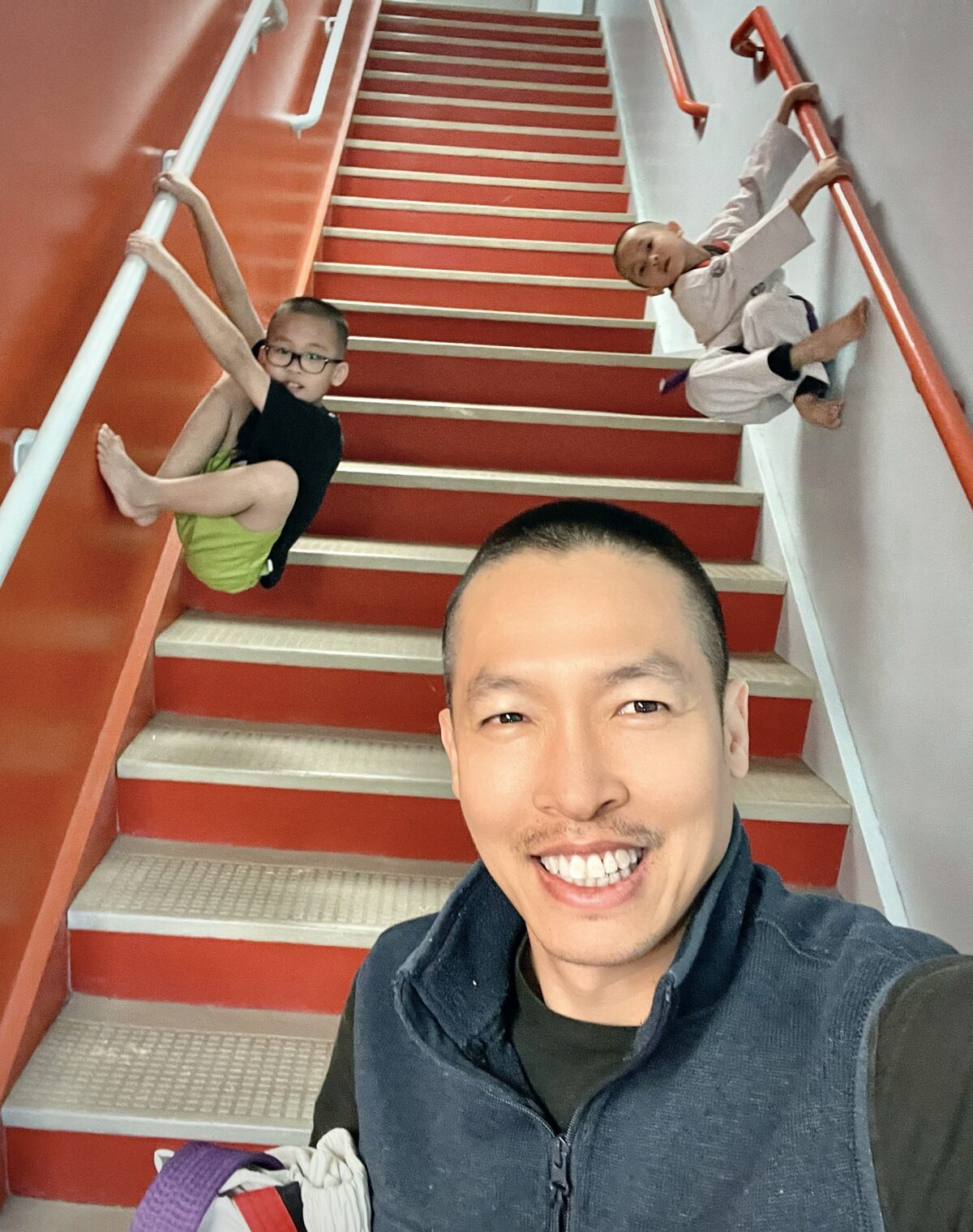
5 Years Old – Doing School Homework

Di Tran often has conversations with his wife about what their life would be like without children. They wonder if it would just be two souls simply hanging out but with a very different kind of happiness than what they have now. However, Di Tran realizes that everything costs something, and nothing is free, and that includes children. Having children is an investment, and just like any investment, there are no guarantees. You invest a lot and you hope to harvest good results, but there’s no such investment that guarantees a result, and the same goes for children.

But Di Tran believes that there’s always a proven technique, which is often boring, not flashy, and not glamorous. For example, Warren Buffet always makes his bets on value-based companies, not trends. Similarly, with children, a value-based approach is crucial. There’s a lot of doing toward value-based investment in children, such as teaching by being an example, teaching human kindness as a focus regardless of how the world changes, and teaching that failing is good, a step to learn and enjoy it. Di Tran teaches his kids to give 100% effort at all times in all things they do, not to worry about the result, and to enjoy the ride. He always applies a technique he learned in IT, “fail fast so you can fix fast.”

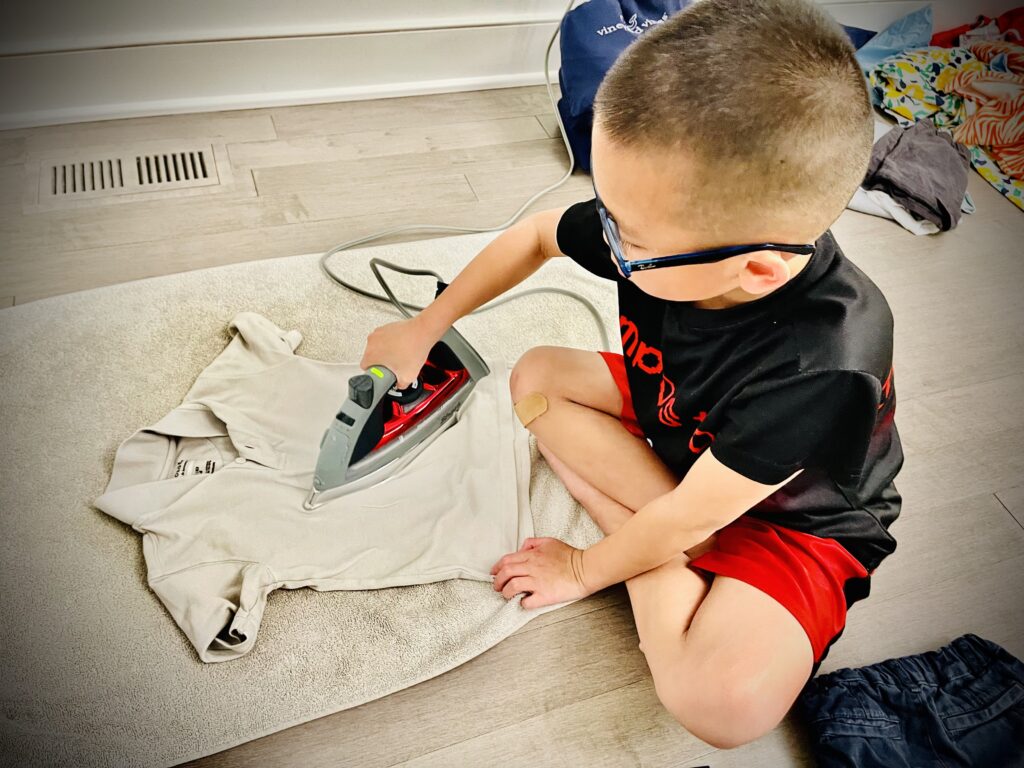
7 Years Old – Iron clothes for his younger brother

Di Tran is the author of “Drop the ME and Focus on the OTHERs” book and soon to be released “Drop the FEAR and Focus on the FAITH.” He believes that by dropping the focus on oneself and instead focusing on others, you can achieve greater happiness and fulfillment. Similarly, by dropping the fear and focusing on faith, you can achieve greater success and overcome any obstacles that come your way.

While it may be easy to get caught up in the idea that children are the center of our lives, it’s important to remember that we are also living for ourselves. However, investing in our children with a value-based approach can lead to fulfilling and successful lives for both ourselves and our children.

Categories
Community Health Leadership Development Self-Improve

The Way of the Holy Cross of the Lord: A Tradition of Devotion and Sacrifice in the Vietnamese Catholic Church

The Vietnamese Catholic Church has a long and rich history, with traditions that date back centuries. One of these traditions is the Way of the Holy Cross of the Lord, a path of devotion and sacrifice that involves following Jesus Christ and his teachings. Today, Catholic Vietnamese church members of Saint John Vianney gather at Calvary Cemetery in order to do the 12 stages of the Way of the Holy Cross of the Lord, while praying for the death of loved ones such as Di Tran’s grandfather and giving thanks to God for blessing the families and community of the Vietnamese church and everyone.

The Way of the Holy Cross of the Lord, or “Đàng Thánh Giá Chúa” in Vietnamese, is a path of devotion and sacrifice that involves following Jesus Christ and his teachings. It is a way of life that requires a commitment to living a life of faith, prayer, and service to others. The path involves carrying one’s own cross, just as Jesus carried his cross on the way to his crucifixion. Through this act of sacrifice and suffering, Catholics are reminded of the love and mercy of God, and are inspired to live their lives in a way that reflects these values.

For the Vietnamese Catholic Church, the Way of the Holy Cross of the Lord is an important tradition that is celebrated yearly. Each year, church members gather at Calvary Cemetery to do the 12 stages of the Way of the Holy Cross of the Lord, while praying for the souls of their loved ones who have passed away. This event is a time of reflection, prayer, and thanksgiving, as church members come together to honor the sacrifices of Jesus Christ and give thanks for the blessings in their lives.

One member of the Saint John Vianney church community who has been deeply impacted by the Way of the Holy Cross of the Lord is Di Tran. Di’s grandfather passed away several years ago, and he has found comfort and solace in the tradition of the Way of the Holy Cross of the Lord. Di is also an author, having written the book “Drop the ME and Focus on the OTHERS”, which is a memoir about his journey towards faith and the role that the Vietnamese Catholic Church has played in her life. Di’s upcoming book, “Drop the FEAR and Focus on the FAITH”, explores the ways in which his faith has helped his to overcome fear and uncertainty.

Through his books and her participation in the Way of the Holy Cross of the Lord, Di Tran has become an inspiration to many in the Vietnamese Catholic Church community. His words and his actions serve as a reminder of the importance of faith, prayer, and service to others. As the church continues to honor the tradition of the Way of the Holy Cross of the Lord, it is clear that this path of devotion and sacrifice will continue to inspire and guide generations of Catholics in the years to come.

Categories
Food Health Leadership Development Self-Improve

Achieving a Six-Pack at an Older Age: Overcoming Challenges and Reaping the Health Benefits

Achieving a six-pack is a fitness goal that many people aspire to, regardless of their age. However, as we get older, our bodies become less responsive to exercise and diet, making it more challenging to attain this level of physical fitness. Despite the difficulties, with determination, consistency, and hard work, it is possible to achieve a six-pack even at an older age.

One of the primary challenges of achieving a six-pack is the need for a strict diet. A six-pack requires low body fat levels, which can only be achieved by maintaining a consistent caloric deficit. This means that individuals need to consume fewer calories than their bodies require to maintain their weight, which often requires significant changes to their eating habits. A diet high in protein and low in carbohydrates is essential for building muscle and losing fat. Additionally, consistent fasting may be necessary to help the body burn fat effectively.

Along with diet, consistent exercise is critical in achieving a six-pack. While cardio is important for burning calories, strength training is essential for building muscle and achieving a lean body mass. This can include weightlifting, bodyweight exercises, or other forms of resistance training. However, it is important to note that overtraining can be counterproductive and may even lead to injury. It is essential to have a well-planned workout routine that targets all the necessary muscle groups and provides enough rest and recovery time for the body to recuperate.

Another significant challenge in achieving a six-pack is the mental strength required to maintain consistency over a long period. The daily routine of strict dieting and exercise can be daunting and challenging. It requires a significant mindset shift and a commitment to achieving the goal, even when the going gets tough. Mental toughness is essential in pushing through the difficult times, staying motivated, and maintaining a consistent routine. Discipline is the key to success, and those who can remain disciplined in their pursuit of a six-pack will ultimately succeed.

Finally, it is important to acknowledge that achieving a six-pack at any age is a highly individualized process. Some people may have genetic advantages, while others may face more challenges due to underlying health conditions. Age-related changes in metabolism, hormonal imbalances, and other factors can all impact an individual’s ability to achieve their fitness goals. However, with the right mindset, a well-planned approach, and consistency, it is possible to overcome these challenges and achieve a six-pack, regardless of age.

Achieving a six-pack at any age is a highly challenging goal that requires dedication, consistency, and hard work. A strict diet, consistent exercise routine, mental toughness, and discipline are all necessary components of success. While the journey may be difficult, those who can maintain focus, stay motivated, and remain committed will ultimately achieve their fitness goals and reap the benefits of a lean, healthy body.

Categories
Community Health Leadership Development Self-Improve

The Joys of Parenting: Exploring the Age Ranges at Which Parents Can Most Enjoy Their Children

Parenting is a journey that begins at birth and continues throughout a child’s life. Each stage of a child’s development brings its own unique joys and challenges, and different parents may find different stages more enjoyable depending on their individual circumstances and parenting style. In this article, we will explore the age ranges at which parents may most enjoy their children and the reasons why.

Infancy and Toddlerhood (0-3 years)

The early years of a child’s life are often considered the most rewarding for parents. Infancy and toddlerhood are characterized by rapid growth and development, as children learn to crawl, walk, talk, and explore the world around them. Parents of infants and toddlers often describe the joy of watching their children achieve these developmental milestones and the pleasure of nurturing them as they grow and learn.

During this stage, parents can also enjoy the simple pleasures of spending time with their children, such as snuggling, reading books, and playing with toys. Infants and toddlers are naturally curious and love to explore their environment, which can provide endless entertainment for parents.

Preschool and Early Childhood (3-6 years)

Preschool and early childhood are a time of continued growth and development as children begin to develop more complex skills and interests. Parents of preschoolers and young children may enjoy the increased independence of their children as they begin to explore their interests and form friendships.

At this age, children are also developing their language skills, which can lead to more meaningful interactions with their parents. Parents may enjoy engaging in conversations with their children and helping them learn about the world around them.

Middle Childhood (6-12 years)

Middle childhood is a time of continued growth and exploration, as children begin to develop a sense of self and a deeper understanding of the world around them. Parents of school-aged children may enjoy the increased autonomy of their children as they begin to make decisions and pursue their interests.

At this age, children may also develop a sense of humor and become more adept at communicating with their parents. Parents may enjoy spending time with their children engaging in activities that they both enjoy, such as sports, hobbies, or creative pursuits.

Adolescence (12-18 years)

Adolescence is a time of significant growth and change as children transition into young adulthood. Parents of teenagers may enjoy the increased independence of their children as they begin to develop their own identities and pursue their interests.

At this age, parents may also enjoy engaging in meaningful conversations with their children about their beliefs, values, and aspirations. Adolescence can be a challenging time for both parents and children, but it can also be a time of great growth and connection.

Conclusion

There is no one “best” age for parents to enjoy their children. Each stage of a child’s development brings its own unique joys and challenges, and different parents may find different stages more enjoyable depending on their individual circumstances and parenting style. Ultimately, the age at which parents can best enjoy their children depends on their individual experiences and perspectives. The most important thing is for parents to cherish and enjoy their children at every stage of their development.

Categories
Community Corporation Health Information Technology Leadership Development Self-Improve Small Businesses

The Evolving Job Market in America: Opportunities and Challenges

The American job market is constantly evolving, with new opportunities emerging in some fields while others experience significant job losses. In recent years, we have seen some professions thrive while others have struggled to keep up with changing economic and technological trends.

Healthcare professionals, technology professionals, and financial professionals have been among the most sought-after careers in America due to their high salaries, job security, and opportunities for growth and advancement. These professions require specialized skills and education, and the demand for qualified professionals in these fields is expected to continue to grow in the coming years.

However, other professions have experienced significant layoffs and job losses due to a variety of factors. Retail workers, manufacturing workers, journalists, and hospitality workers have all experienced significant job losses due to changing economic and technological trends. The rise of online shopping has led to the closure of many brick-and-mortar retail stores, resulting in job losses for retail workers. The outsourcing of manufacturing jobs to other countries has led to job losses in the manufacturing sector in the United States. The decline of print media and the rise of online news sources has led to job losses for journalists and other media professionals. Finally, the COVID-19 pandemic has led to a significant downturn in the travel and tourism industry, resulting in job losses for hospitality workers.

The rise of AI (Artificial Intelligence) is expected to have a significant impact on the job market and the nature of work in many industries. While some jobs may be automated and eliminated, new opportunities will also arise as AI technology becomes more advanced and integrated into various fields. Healthcare professionals can use AI to help diagnose and treat patients, financial professionals can use AI to automate certain financial tasks, and technology professionals can use AI to analyze consumer behavior and improve marketing strategies.

It’s important for individuals to stay informed and adaptable to changes in their industry, as the impact of AI on top careers in America is likely to be complex and varied. While some professions may see an increase in demand for specialized skills and expertise, others may struggle to keep up with technological and economic changes. However, by remaining adaptable and open to new opportunities, individuals can position themselves for success in a constantly evolving job market.

Categories
Community Health Leadership Development Self-Improve Small Businesses Workforce Development

Life Lessons from Poker: Dealing with People, Situations, and Business

Life can be compared to a poker game in many ways, particularly when dealing with people, situations, and small or big businesses. In this article, we’ll explore how life is similar to poker in these areas and how we can apply poker principles to succeed in our personal and professional lives.

When dealing with people, life is like a poker game in that we never know what cards we’ll be dealt. People come from different backgrounds and have their unique personalities, motivations, and behaviors. Just as in poker, we have to be observant and adaptable to the people around us. We need to understand their motives, strengths, and weaknesses, and adjust our strategies accordingly. In poker, players study their opponents’ behavior and try to read their “tells” to predict their moves. Similarly, in life, we can learn to read people’s body language, tone of voice, and facial expressions to better understand them and communicate effectively.

Situations in life are also unpredictable, much like in poker. Just as in poker, where players have to make the best of their hands, we have to be prepared to face any situation and make the best of what we have. We can’t control the cards we’re dealt, but we can control how we react to them. In life, we can learn to be resilient and adapt to changes. We need to be open to new experiences and willing to take risks. In poker, players take calculated risks based on their cards and their opponents’ behavior. Similarly, in life, we need to take calculated risks and make decisions based on our situation, goals, and values.

Small and big businesses can also be compared to a poker game. Just as in poker, businesses face uncertainty, risk, and competition. To succeed in business, we need to be strategic and make informed decisions. In poker, players need to know when to fold, raise, or call based on their cards and their opponents’ behavior. Similarly, in business, we need to know when to cut our losses, invest in new opportunities, or maintain the status quo. We need to have a clear understanding of our customers, market, and competition to make informed decisions.

Deception is also a factor in business, just as it is in poker. In poker, players try to deceive their opponents by bluffing or hiding their true intentions. Similarly, in business, companies may use marketing tactics to influence consumers’ perception of their products or services. However, just as in poker, deception can backfire if it’s not done well. In business, companies need to be transparent and honest with their customers to build trust and loyalty.

Luck also plays a role in both poker and life. Sometimes, despite our best efforts, things may not go our way due to factors beyond our control. However, luck is not the only factor in determining success. In poker and life, we need to combine luck with skill, strategy, and adaptability to achieve our goals.

Life can be compared to a poker game in many ways. Whether dealing with people, situations, or businesses, we can apply poker principles to succeed. We need to be observant, adaptable, resilient, strategic, and willing to take calculated risks. While luck plays a role, success is ultimately determined by our skills, strategy, and ability to adapt to changes.

Categories
Community Health Leadership Development Self-Improve

Superando el Miedo a no Hablar Inglés: Una Guía para Inmigrantes

Ser inmigrante puede ser una experiencia abrumadora, especialmente cuando no se habla el idioma del nuevo país al que se ha trasladado. El miedo a no poder comunicarse de manera efectiva puede llevar a un sentimiento de aislamiento y falta de confianza en uno mismo. Es una experiencia común para muchos inmigrantes que se encuentran en un nuevo país donde no hablan el idioma.

El miedo a no poder hablar inglés puede manifestarse de muchas maneras diferentes. Uno de los miedos más significativos es el miedo a leer documentos escolares, documentos gubernamentales y de la ciudad, y documentos de trabajo. La incapacidad para comprender estos documentos puede causar ansiedad y estrés, ya que los inmigrantes pueden no ser capaces de comprender sus derechos u obligaciones.

Además, el miedo a no poder manejar situaciones al encontrarse con ellas puede ser paralizante. Tareas simples como ir al aeropuerto o pedir cosas necesarias a nivel estatal y de la ciudad pueden convertirse en obstáculos importantes para los inmigrantes que no hablan el idioma. Pueden sentir que están desperdiciando el tiempo de otras personas porque no pueden comunicarse con ellas.

Se han escrito numerosos libros y artículos sobre el tema de la experiencia de los inmigrantes, muchos de los cuales se centran en las dificultades que enfrentan aquellos que no hablan el idioma del nuevo país. “The Namesake” de Jhumpa Lahiri y “Interpreter of Maladies” son dos libros notables que exploran las experiencias de los inmigrantes y los desafíos que enfrentan al adaptarse a un nuevo país. Estas obras de literatura proporcionan una visión de las luchas que enfrentan los inmigrantes y cómo pueden superarlas.

La realidad es que aprender un nuevo idioma no es una tarea fácil. Requiere tiempo, paciencia y dedicación. Sin embargo, es esencial reconocer que poder hablar el idioma del nuevo país es crucial para una vida exitosa y gratificante.

Si usted es un inmigrante que lucha con el miedo a no poder hablar inglés, es importante dar pequeños pasos hacia la superación de ese miedo. Hablar con otros no es una opción; es una necesidad. Debe superar su zona de confort y utilizar cualquier medio necesario para comunicarse. Use lenguaje de señas si es necesario, use inglés básico si es necesario, pero hágalo. Si es necesario, obtenga un traductor aquí y allá.

Es esencial entender que las cosas mejorarán con el tiempo. A medida que se sumerja en el nuevo idioma y la cultura, comenzará a comprender cada vez más. Recuerde que cada pequeña victoria es un paso hacia la superación de su miedo.

En conclusión, el miedo a no poder hablar inglés es una preocupación significativa para muchos inmigrantes. Puede llevar a sentimientos de aislamiento, ansiedad y estrés. Sin embargo, es crucial dar pequeños pasos hacia la superación de ese miedo. Leer libros y artículos que exploren la experiencia de los inmigrantes puede proporcionar una visión de los desafíos que enfrentan aquellos que no hablan el idioma. En última instancia, es esencial reconocer que aprender un nuevo idioma requiere tiempo y paciencia. Pero con perseverancia y dedicación,

Translate »