
Categories
Drop the FEAR and Focus on the FAITH Drop the ME and focus on the OTHERS Early Childhood Education Guiding Lights: A Journey of Courage, Compassion and Faith Immigration Leadership Development Self-Improve Small Businesses

Language is Not the Barrier; We Are

Di Tran’s profound reflection, “Language is not a barrier, we are the barrier to think language is the barrier”, is a gentle reminder of the power of non-verbal communication and human connection. At the heart of this assertion lies the idea that while language is undeniably an essential tool for communication, it is not the sole factor determining our capacity to understand or be understood.

The Power of Non-Verbal Communication

Dr. Albert Mehrabian’s study in the 1970s introduced a now widely-referenced concept: when verbal and non-verbal communications are incongruent, people rely more on non-verbal cues than words to determine meaning. According to Mehrabian’s rule, words constitute only 7% of the overall message, with tone of voice accounting for 38% and body language a whopping 55% (Mehrabian, 1971). In other words, while the words we use are critical, how we say them and our body language can convey even more about our feelings and intentions.

One can easily spot the validity of these findings in everyday scenarios. For instance, when two individuals greet each other, a warm, genuine smile can immediately bridge the gap of unfamiliarity—even if they don’t share a common language. A simple gesture of open arms can signify acceptance, while leaning forward can denote interest and engagement.

The Impact of Cultural Literacy

While understanding body language can transcend language barriers, it’s also vital to recognize the influence of cultural differences. As Edward T. Hall mentions in his book, “The Silent Language” (1959), different cultures have their own set of unspoken rules and interpretations of personal space, gestures, and body movements. What might be seen as a welcoming gesture in one culture could be considered rude or intrusive in another.

In light of this, genuine interest in and respect for diverse cultural norms is essential. This approach not only facilitates clearer communication but also fosters deeper connections between individuals of different backgrounds.

Breaking Down Self-imposed Barriers

Di Tran’s reflection also brings attention to the psychological and sociological barriers we create for ourselves. We often anticipate difficulty in understanding someone from a different linguistic background, even before making an attempt. In “The Power of Communication: Skills to Build Trust, Inspire Loyalty, and Lead Effectively”, Helio Fred Garcia notes that our preconceived biases, fears, or misconceptions can create more significant communication impediments than any actual language differences.

Conclusion

Language, while a crucial element of human communication, is just one facet of a multidimensional system of interaction. Non-verbal cues—be it a smile, a nod, or an extended hand—hold the potential to connect souls. As we move forward in an increasingly globalized world, embracing the power of non-verbal communication, while being mindful of cultural nuances, can help us break down the barriers we’ve constructed. After all, genuine human connection transcends mere words.

Categories
Drop the FEAR and Focus on the FAITH Drop the ME and focus on the OTHERS Guiding Lights: A Journey of Courage, Compassion and Faith Self-Improve Small Businesses Workforce Development

Understanding the Limitations of Others: A Call for Empathy and Patience

In a world dominated by instant gratification, it’s easy to fall into the trap of expecting immediate results. Whether we’re requesting a favor, seeking advice, or simply asking a question, patience can sometimes be in short supply. However, it’s essential to understand and appreciate that everyone has their own set of limitations, and immediate responses or solutions might not always be feasible.

Recognizing the Limitations

Every individual operates within a unique set of constraints, whether they are personal, professional, or emotional. According to Dr. Julia H. Poole, a renowned psychologist, “Understanding and recognizing the inherent boundaries people navigate daily is fundamental for meaningful human interaction.” These boundaries can be due to:

  1. Time constraints: An individual might be juggling multiple responsibilities, making it challenging to provide immediate solutions or answers.
  2. Emotional and mental state: A person might be going through personal challenges or emotional turmoil, affecting their ability to respond immediately.
  3. Knowledge or skill limitations: No one knows everything. Even experts in a particular field may need time to research or consult before providing a solution or answer.

The Value of Patience and Understanding

Instead of reacting with impatience or frustration when someone cannot meet our expectations right away, adopting a mindset of understanding is vital. This approach not only strengthens interpersonal relationships but also fosters a more supportive and empathetic community.

A study by the University of California, Berkeley found that “Individuals who showed patience and understanding towards others reported higher levels of satisfaction in their interpersonal relationships and reduced levels of stress.” This implies that patience isn’t just beneficial for the recipient of the understanding but also for the one providing it.

How to Cultivate Understanding

  1. Practice active listening: When you genuinely listen to someone, you’re more likely to understand their perspective and limitations.
  2. Empathy: Put yourself in the other person’s shoes. Imagine how you would feel if you were in their situation.
  3. Open communication: If you’re unsure about someone’s constraints, ask them. Open dialogue can help prevent misunderstandings.

Conclusion

The next time you find yourself growing impatient when someone can’t immediately grant your wish or provide an answer, remember the limitations that each of us grapple with daily. Showing understanding not only nurtures our relationships but also promotes a culture of empathy and compassion.

References:

  • Poole, J. H. (2019). Boundaries and Human Interaction. Oxford Press.
  • University of California, Berkeley. (2020). The Interpersonal Benefits of Patience. UC Berkeley Publication.

Remember, while everyone strives to do their best, understanding and patience are crucial for harmonious interactions in our fast-paced world.

Categories
Drop the FEAR and Focus on the FAITH Drop the ME and focus on the OTHERS Guiding Lights: A Journey of Courage, Compassion and Faith Leadership Development Self-Improve Small Businesses Workforce Development

Di Tran’s Reflections on Compassionate Living

Di Tran’s powerful statement, “I learned to genuinely care for others within the capacity that I have in sale, in doing all things. Value given, equal values returned from multiple directions,” captures the essence of his philosophy. It underscores the idea that when we invest our energies in uplifting and supporting others, we not only contribute to the betterment of our communities but also attract positive energies in return. This principle forms the crux of his writings and teachings.

In “Drop the ME and Focus on the OTHERs”, Tran masterfully expounds on the idea that moving away from a self-centric perspective and prioritizing the needs and well-being of others can lead to more profound personal growth and societal harmony. He emphasizes the inherent value of every individual and the mutual benefits of compassion and understanding.

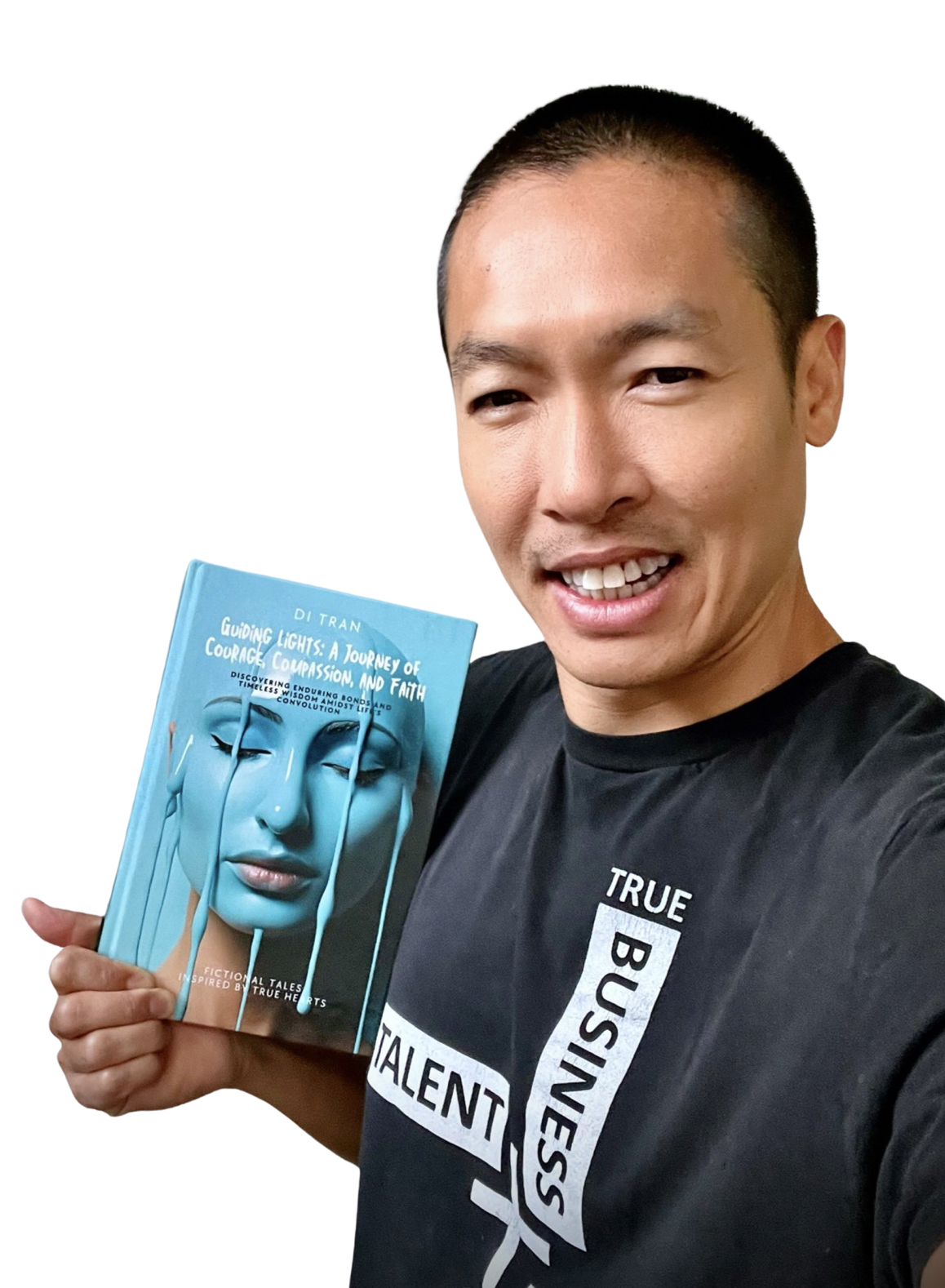
“Guiding Lights: A Journey of Courage, Compassion, and Faith” is yet another testament to Tran’s commitment to advocating for a life centered around community and compassion. Here, he intertwines tales of resilience and the power of faith, offering readers a beacon of hope in times of adversity.

The anticipation surrounding his upcoming work, “Drop the FEAR and focus on the FAITH,” suggests that Tran will delve even deeper into the interconnectedness of faith, community, and personal growth. With fear often acting as a barrier to meaningful connections and compassionate action, a shift towards faith and trust can open doors to transformative experiences.

Tran’s teachings resonate with the works of other renowned authors who have championed similar philosophies. For instance, Dale Carnegie, in his classic “How to Win Friends and Influence People,” emphasizes the importance of genuine interest in others as a key to personal and professional success. Similarly, Stephen R. Covey’s “The 7 Habits of Highly Effective People” encourages readers to adopt a mindset of mutual benefit and understanding, aligning closely with Tran’s beliefs.

In conclusion, Di Tran’s writings provide a profound reminder that in giving, we receive, and in caring for others, we nurture our souls. His emphasis on shifting focus from the self to the community and from fear to faith provides a roadmap for personal growth and societal well-being. As Tran and other authors have shown, when we genuinely care and invest in others, the universe reciprocates with blessings in myriad forms.

Categories
Drop the FEAR and Focus on the FAITH Drop the ME and focus on the OTHERS Guiding Lights: A Journey of Courage, Compassion and Faith Self-Improve Small Businesses Workforce Development

Stop Paying Your Way to Comfort: The Joy of Physical Work

In today’s fast-paced, convenience-driven society, we often find ourselves outsourcing tasks to achieve comfort. From dishwashers to robo-vacuums, our homes are filled with gadgets designed to save us from exerting physical effort. Yet, buried within our DNA is the essence of our hunter-gatherer ancestors who thrived on physical work and the satisfaction it brought. It’s high time we recapture that essence.

Di Tran, an esteemed author and advocate for a more hands-on approach to daily life, embodies this perspective. He finds joy in tasks many would consider mundane. From washing dishes to cleaning up after his children, Tran derives not only physical but also mental benefits from these tasks. Although the chaos created by children can be frustrating, he uses these moments to engage his mind and body in a productive and fulfilling manner.

His love for manual work is reflected in his literary contributions. Titles such as “Drop the ME and Focus on the OTHERs” and “Guiding Lights: A Journey of Courage, Compassion, and Faith” emphasize the importance of focusing on others and the larger community. His soon-to-be-released “Drop the FEAR and focus on the FAITH” will no doubt further explore these themes.

Tran’s ideas are not isolated. Numerous authors echo his sentiments. Matthew Crawford’s “Shop Class as Soulcraft” delves into the intellectual and manual labor’s interconnectedness, emphasizing the joy derived from working with one’s hands. Similarly, Cal Newport’s “Deep Work” elaborates on the profound satisfaction achieved when we immerse ourselves wholly in a task, eliminating the distractions of the modern world.

The key message here is simple: Embrace physical tasks. Doing so not only benefits our bodies but also nurtures our minds. Let’s draw inspiration from Di Tran and countless others who have rediscovered the joy of manual work. The next time you consider paying your way to comfort, remember the hunter-gatherer within and choose the path of engagement and satisfaction.

Categories
Drop the FEAR and Focus on the FAITH Drop the ME and focus on the OTHERS Guiding Lights: A Journey of Courage, Compassion and Faith Self-Improve Small Businesses Uncategorized Workforce Development

The Unlimited World of Selflessness: A Reflection on Di Tran’s Wisdom

In a world overrun by materialism and ego-centrism, Di Tran, an influential author known for his transformative works, offers a refreshing perspective. His books, such as “Drop the ME and Focus on the OTHERs,” “Guiding Lights: A Journey of Courage, Compassion, and Faith,” and the soon-to-be-released “Drop the FEAR and focus on the FAITH,” center on selflessness and fearlessness as the keys to a fulfilling life. A profound statement from Tran summarizes his philosophy: “When you figure out that you no longer have to collect material of any type to serve your ego and show to the world but yourself – your world is unlimited and happier.”

In an era characterized by relentless pursuit of material wealth and approval, this sentiment strikes a resonant chord. The message is simple yet profound, underscoring the concept that happiness and fulfillment come from within, rather than from external validation or possessions.

According to Tran, ego serves as a limiting factor that binds us to the physical realm and confines our happiness. He posits that our ego drives the desire to accumulate materials as a symbol of success and societal worth. Yet, these acquisitions often leave us feeling unsatisfied and hungry for more, ensnared in a never-ending cycle of want.

On the other hand, Tran elucidates that when we shift our focus from serving our ego to serving ourselves – that is, when we seek to understand who we truly are and what we genuinely value – we discover an unlimited, happier world. This approach allows us to remove the boundaries and limitations set by the ego, creating space for growth, contentment, and true happiness.

As depicted in his book “Drop the ME and Focus on the OTHERs,” Tran emphasizes the importance of focusing on others’ needs rather than our own egocentric desires. By channeling our energy into understanding and aiding others, we can foster a sense of purpose, improve our interpersonal relationships, and promote overall well-being.

In Tran’s upcoming work, “Drop the FEAR and focus on the FAITH,” he explores the role of fear in limiting our lives and how faith can serve as a powerful tool for overcoming these limitations. Tran encourages his readers to move beyond fear, harness faith, and embrace the infinite possibilities that life has to offer.

In conclusion, Di Tran’s reflection embodies a transformative shift away from the ego-driven accumulation of material possessions towards a deeper understanding of self and a focus on others. His wisdom serves as a reminder that the key to a limitless and happier world lies within us, unfettered by materialistic desires and societal validation. As we embrace Tran’s teachings, we can discover the unlimited potential of our world and the true path to happiness.

Categories
Drop the FEAR and Focus on the FAITH Drop the ME and focus on the OTHERS Guiding Lights: A Journey of Courage, Compassion and Faith Immigration Information Technology Leadership Development Self-Improve Small Businesses Workforce Development

“Well Done is Better than Well Said”: An Exploration of Action Over Words

Introduction

The proverb “Well done is better than well said” is often attributed to one of America’s founding fathers, Benjamin Franklin. This quote emphasizes the importance of actions over mere words, arguing that what a person does holds more value than what they say they will do. Throughout history, this belief has been echoed by various cultures and philosophies.

Historical Background

Benjamin Franklin, a renowned statesman, scientist, and writer, was known for his wisdom and wit. This particular quote is part of his collection of sayings that are recorded in “Poor Richard’s Almanack,” first published in 1732.

The Emphasis on Action

  1. Philosophical Perspectives: Ancient philosophers like Aristotle advocated for virtuous action as the path to a good life. In his Nicomachean Ethics, Aristotle emphasizes that virtue lies in our actions, not just our words or thoughts.
  2. Literary Examples: In Shakespeare’s “Hamlet,” the character Polonius advises, “Give thy thoughts no tongue.” This supports the idea that actions speak louder than words, as empty promises and mere talk can lead to misunderstandings and broken trust.
  3. Business Ethics: The quote can also be applied to business ethics. A company’s mission statement means nothing if its practices do not align with its proclaimed values. For example, businesses that claim to be environmentally friendly must demonstrate this through tangible actions.
  4. Psychological Insights: Psychological research suggests that there is often a gap between what people say they will do and what they actually do. This phenomenon is known as the intention-behavior gap and has been studied in various contexts, including health behavior and consumer behavior (Sheeran, 2002).

Contemporary Application

In today’s social media-driven world, where words are often prioritized, Franklin’s wisdom resonates more than ever. The rise of ‘slacktivism,’ where online support for a cause does not translate into real-world action, illustrates the ongoing relevance of this quote.

Conclusion

The phrase “Well done is better than well said” serves as a timeless reminder that actions hold greater significance than mere words. From historical philosophers to modern-day scenarios, this principle encourages a focus on tangible deeds rather than empty promises. By fostering a culture of accountability and integrity, both individuals and organizations can benefit from embracing the wisdom in these simple yet profound words.

Categories
Drop the FEAR and Focus on the FAITH Drop the ME and focus on the OTHERS Guiding Lights: A Journey of Courage, Compassion and Faith Self-Improve Small Businesses Workforce Development

A Path to Success: Acting on What You Know

The adage, “A lot of people know what to do, but they don’t do what they know,” resonates strongly with many individuals in various aspects of life. Whether it’s in personal development, career growth, or financial management, this concept emphasizes the gap between knowledge and action. Being aware of what needs to be done is one thing, but implementing that knowledge is a different matter altogether. In the words of Di Tran, acting on even the small things you know and consistently doing so can lead to new skills, greater value, and wealth building.

Knowledge vs. Action

People have access to vast amounts of information through books, the internet, and mentors. Yet, the failure to apply this knowledge consistently often leads to stagnation. The famous philosopher Socrates once said, “To know good is to do good.” Still, human behavior often shows a disconnect between knowing and doing. In psychology, this phenomenon is referred to as the “intention-behavior gap.”

The Power of Consistency

According to Di Tran’s reflections, the key to overcoming this gap lies in doing small things consistently. Consistency in action builds habits, and habits form the foundation for mastery. Author James Clear, in his book “Atomic Habits,” discusses how small, consistent changes can lead to remarkable results over time. By focusing on tiny improvements, we can create sustainable changes that lead to significant personal and professional growth.

Skills, Value, and Wealth Building

The consistent application of knowledge to learn new skills doesn’t only foster personal development; it also contributes to increased value in the professional market. Skills like communication, critical thinking, and leadership are highly prized in the modern workforce. By developing these skills consistently, individuals become more valuable to employers and open doors to new opportunities.

In terms of wealth building, the principles of consistency apply similarly. Investment guru Warren Buffett often emphasizes the importance of understanding investments and sticking to long-term strategies. By consistently applying sound financial principles, individuals can build wealth over time.

Learning and Reflecting on Life

Life is an ongoing process of learning and reflection. Di Tran’s philosophy encourages individuals to not only absorb information but to act upon it. Through consistent action and reflection, one can grow in personal and professional life, building a pathway to success and fulfillment.

Conclusion

While knowledge is undoubtedly valuable, it becomes truly powerful when applied consistently. Emphasizing the importance of action, even in small ways, can lead to profound growth and success in various areas of life. Di Tran’s thoughts provide a refreshing reminder that it’s not just what you know, but what you do with what you know, that truly matters. In the pursuit of skills, value, and wealth, let us all strive to be those who act on our knowledge and achieve greatness through consistent effort.

Categories
Drop the FEAR and Focus on the FAITH Drop the ME and focus on the OTHERS Guiding Lights: A Journey of Courage, Compassion and Faith Small Businesses Workforce Development

Making the Complex Simple: Di Tran’s Journey to Authenticity

“Everyone can make things more complex, but not everyone can simplify things,” says Di Tran, the celebrated author, mentor, and life enthusiast. This statement isn’t just a mere quote; it’s a testament to Tran’s life experiences, insights, and profound wisdom.

Di Tran’s Philosophical Approach

Di Tran’s philosophy revolves around the idea of simplifying the complex. In a world where chaos often reigns, Tran’s perspective teaches us to focus on the core essence of a situation. According to him, making things simpler is not just an ability; it’s a skill that holds immense value and can even bring wealth.

Author of Transformational Books

Di Tran’s books, including “Drop the ME and Focus on the OTHERs” and “Guiding Lights: A Journey of Courage, Compassion, and Faith: Discovering Enduring Bonds and Timeless Wisdom Amidst Life’s Convolution,” reflect his journey and commitment to aiding others in understanding life’s complexities.

“Drop the ME and Focus on the OTHERs” challenges the self-centered attitudes that often pervade society. It promotes empathy and compassion, aiming to inspire readers to look beyond themselves.

“Guiding Lights” is an exploratory work that delves into life’s twists and turns. It helps readers find enduring bonds and timeless wisdom amidst life’s convolution, illuminating a path that’s not only simpler but also more humane and fulfilling.

From Complexity to Simplicity

Di Tran’s life itself is an illustration of the transformation from complexity to simplicity. He recognizes that complexity is often self-imposed, a tangled web we create around our lives. By unwinding this web and focusing on the essence, he has helped thousands to realign their priorities and understand what truly matters.

Wealth through Value

Tran emphasizes that simplifying things doesn’t just make life easier; it brings value. The real richness of life, according to him, is found in connections, empathy, and a compassionate approach. By being the one who can make things simpler, you provide an essential service to those around you, and that’s where your true wealth resides.

Conclusion

Di Tran’s wisdom transcends mere words; it is a practical guide for life. His books and teachings inspire a way of living that seeks to declutter not just our physical space but our thoughts, relationships, and even our very essence.

The idea of simplifying the complex is not just a concept; it’s a necessary skill in today’s convoluted world. Di Tran’s experience in life has taught him this valuable lesson, and through his words, he continues to guide others towards a path that is both enriching and enlightening.

His philosophy isn’t about making things easier but about making them clearer, more meaningful, and thus, more valuable. It’s a lesson we all can learn from, applying it not only to our personal lives but also in our relationships and careers, truly embracing the beauty of simplicity.

Categories
Drop the FEAR and Focus on the FAITH Drop the ME and focus on the OTHERS Guiding Lights: A Journey of Courage, Compassion and Faith Leadership Development Self-Improve Small Businesses Workforce Development

Appreciating Life: A Pathway to Abundance

Life’s true value often remains hidden until we take a moment to pause and give thanks for the mere fact of being alive. This fundamental gratitude towards existence can become a wellspring of inspiration and value that overflows into all areas of life.

1. A Heart of Gratitude

Gratitude is more than a fleeting emotion; it’s a way of life. Research by Emmons and McCullough (2003) demonstrates that individuals who consistently express gratitude experience greater emotional well-being and physical health.^(1^)

In the words of poet Mary Oliver, “To pay attention, this is our endless and proper work.” By giving thanks for the simple act of being alive, we can find profound meaning and purpose.

2. Adding Value to Life

When we value life, we naturally seek to enrich it, not just for ourselves but for others as well. The concept of servant leadership, a philosophy championed by Robert K. Greenleaf, illustrates how the desire to serve can create value for oneself and the community.^(2^)

3. Receiving Value in Abundance

The belief that giving thanks and adding value to life will lead to receiving value in abundance is deeply rooted in various cultural, philosophical, and spiritual traditions. The Law of Attraction, for example, posits that like attracts like. By fostering a positive attitude and acting with intention, one can attract positive experiences and abundance.^(3^)

4. Real-Life Inspirations

  • Nick Vujicic, born without arms or legs, has turned his life’s challenges into a beacon of hope for millions. His attitude of gratitude and determination to add value to others’ lives is an inspirational testament to the power of perspective.^(4^)
  • Oprah Winfrey’s well-known practice of keeping a gratitude journal emphasizes the importance of daily recognition of life’s blessings. Her success is often attributed to her positive attitude and desire to enrich others’ lives.^(5^)

Conclusion

The essence of life is not merely in existing but in living with purpose, gratitude, and intention. By embracing a grateful heart, valuing life, and contributing positively to others, we can create a fulfilling existence and open ourselves to receiving value in abundance.

By understanding and applying these principles, we may find that life is not just something to endure but a beautiful gift to treasure and share.

Categories
Drop the FEAR and Focus on the FAITH Drop the ME and focus on the OTHERS Health Leadership Development Self-Improve Small Businesses Workforce Development

Life’s Struggle: A Reminder of Our Earthly Existence and the Pursuit of Purpose

Life’s struggle is not an anomaly; it is the very fabric that constitutes our existence. It serves as a reminder that we are living on earth, with challenges and obstacles that are both a defining aspect of our humanity and a reflection of our purpose.

Billionaires and the Paradox of Wealth

An intriguing phenomenon to consider in understanding life’s struggles is the state of the world’s billionaires. Many of them, despite possessing immense wealth, are known to suffer from feelings of emptiness and depression.

The Pursuit of Physical Comfort

The pursuit of wealth often equates to a pursuit of comfort for the body. Luxurious cars, sprawling mansions, gourmet meals – all these provide physical comfort but can leave an individual feeling hollow. The relentless focus on material possessions might even lead to a neglect of the mind and soul, aspects that truly define who we are.

Fulfilling the Mind and Soul

The real goal, as many philosophers and thinkers propose, is not to comfort the body but to fulfill the minds and the soul with the purpose of life. Our purpose is not static; it evolves, changes, and grows as we do. It’s what drives us to achieve greatness, find meaning, and make a positive impact in the world.

Obstacles and Failures

It’s normal to face obstacles, to fail, and to change direction in the pursuit of purpose. In fact, these struggles often guide us to where we need to be. They shape us, make us resilient, and lead us to a deeper understanding of our goals and desires.

The Journey Towards Fulfillment

To many, the idea that billionaires, seemingly having everything, might feel unfulfilled is paradoxical. But it’s a poignant reminder that material wealth does not equate to spiritual or emotional fulfillment.

Finding Purpose

The journey towards fulfillment is not about accumulating wealth but about aligning one’s life with a greater purpose. It requires introspection, understanding of oneself, and a willingness to embrace life’s struggles as opportunities for growth.

Embracing Change and Failure

Being open to change, embracing failure, and accepting obstacles are essential in this journey. They are not signs of weakness but signals guiding us towards our true path.

Conclusion

Life’s struggle is indeed normal, and it is a constant reminder of our earthly existence. It nudges us to look beyond the superficial and focus on fulfilling our minds and souls. It prompts us to find our purpose and to progress toward it, even if it means facing failure and change.

In understanding that even billionaires can feel hollow despite their wealth, we can begin to appreciate that the real treasures in life are not material but intangible. They lie in the pursuit of purpose, in the growth of the soul, and in the recognition that struggles are not hindrances but stepping stones towards a more meaningful existence.

Translate »