In the world of beauty education, prospective students are often met with a confusing and financially risky reality: despite wanting to specialize in a single area like nail technology or esthetics, they are frequently steered toward a much longer and more expensive program—cosmetology. This trend is not a matter of better training or broader opportunity. Instead, it is largely driven by systemic incentives that prioritize school profits over student outcomes. Louisville Beauty Academy, a Kentucky State-Licensed and State-Accredited beauty college, stands in stark contrast to this norm by offering ethical, efficient, and student-centered training paths.
The Cosmetology Trap: How Beauty Schools Exploit Licensing Structures
Across the United States, the full cosmetology license requires 1,500 hours of training, encompassing hair, nails, and skin. However, state boards typically allow for standalone licenses in specialized fields: 450 hours for Nail Technology, 750 hours for Esthetics, and 300 hours for Shampoo Styling in Kentucky, for example. Despite these clear pathways, many beauty schools offer only the 1,500-hour cosmetology program or heavily pressure students into it, regardless of their actual interests.
This practice is rooted in financial incentives, not student needs. A 2016 study by New America reported that many cosmetology schools lobby to keep hour requirements high in order to ensure students stay enrolled longer and tuition remains high (Leigh & DuBois, 2016). Likewise, the Institute for Justice (IJ) found that schools benefiting from Title IV federal financial aid often inflate tuition prices to capture more student loan money (Melchior, 2017).
Further compounding the issue, schools often operate student-run salons, where enrolled students provide paid services. These operations function as a double-dip profit model: schools collect both tuition from students and service fees from the public. The longer a student is enrolled, the more revenue the school can extract.
The Human and Financial Cost to Students
These systemic choices have real consequences. Most students do not need the full cosmetology program if they intend to work solely in nails, esthetics, or another specialty. Being funneled into a 1,500-hour program adds hundreds of hours of unnecessary training and thousands of dollars in tuition. IJ reports that the average cosmetology student borrows $7,300 to complete their education, entering a workforce where average wages hover around $26,000 annually (Melchior, 2017).
Dropout rates are also troubling. Many students either don’t finish or extend far beyond the anticipated timeline due to the irrelevant curriculum and financial strain. In some years, over 15% of beauty schools graduate no students on time at all (Melchior, 2017).
Worse yet, this systemic inefficiency disproportionately impacts low-income individuals and immigrants, who may already be struggling with access to education and stable employment. Rather than uplifting communities, the current model often traps them in cycles of debt and delay.
Louisville Beauty Academy: A Humanized, Results-Oriented Alternative
Louisville Beauty Academy (LBA) rejects this exploitative model. As a Kentucky State-Licensed and State-Accredited institution, LBA offers each licensed beauty program as a standalone path: Nail Technology (450 hours), Esthetics (750 hours), Shampoo Styling (300 hours), Eyelash Extensions (18 hours), Beauty Instructor (750 hours), and Cosmetology (1,500 hours).
This model ensures that students only enroll in what they truly need. A student who wants to be a nail technician, for example, completes just the 450-hour requirement, not a full 1,500-hour cosmetology track. This saves time, reduces tuition, and accelerates entry into the workforce. Tuition for the Nail Technology program can be as low as $3,800 with scholarships, compared to $20,000+ at some cosmetology-focused schools (Louisville Beauty Academy, 2025).
More importantly, LBA leads with humanity. Founded by Di Tran, a community leader known for his compassionate service, the school embraces students as family. Every policy reflects this philosophy:
Self-paced learning: Students enroll and start at any time. They attend classes during open hours and learn at their own pace.
Language access: Students may learn in their native language using tools like Google Translate and built-in digital support.
No-debt mindset: LBA discourages student loans. All programs are structured for affordability with no-interest payment plans and performance-based scholarships.
Exam-readiness: Programs are laser-focused on state board exam preparation. Students receive professional toolkits and digital prep systems.
Completion and licensure: LBA boasts a 90%+ completion and licensing rate, far exceeding national averages.
A School Built on Ethics, Not Exploitation
Unlike many schools that prioritize profit through longer programs and salon labor, LBA focuses on results, dignity, and community empowerment. The school has graduated nearly 2,000 professionals, contributing an estimated $20–$50 million annually to the Kentucky economy. More importantly, it provides this impact without burdening students with debt or unnecessary coursework.
The industry has long operated with misaligned incentives. Louisville Beauty Academy proves a different path is not only possible but profoundly effective. Students seeking real careers, fast results, and ethical treatment will find LBA to be a rare gem in vocational education.
In short, LBA is Kentucky’s most efficient, affordable, and compassionate beauty school—licensed, accredited, and focused entirely on your success.
References
Leigh, J., & DuBois, S. (2016). Not What the Doctor Ordered: Why Cosmetology Schools Continue to Exaggerate Training Requirements. New America. https://www.newamerica.org/
Melchior, M. (2017). Barriers to Braiding: How Job-Killing Licensing Laws Tangle Natural Hair Care in Needless Red Tape. Institute for Justice. https://ij.org/
High student loan debt and low returns have put cosmetology students in a financial bind. Rising student loan defaults in the beauty and cosmetology school sector have sparked nationwide concern. For years, many for-profit beauty colleges relied heavily on federal financial aid (FAFSA) – grants and especially student loans – to fund student tuition. This easy access to federal money fueled rapid growth of cosmetology programs, often with poor outcomes for students. Many graduates (and drop-outs) found themselves saddled with debt they could not repay, leading to alarmingly high default rates and federal investigations into fraud and mismanagement. In recent years, these pressures culminated in widespread school closures across the United States, as regulators cracked down on institutions that left students with debt but little earning power. The closure of the Marinello Schools of Beauty chain in 2016 – shutting down all 56 campuses after the U.S. Department of Education uncovered systemic misuse of federal aid – is one high-profile example of the fallout. This report examines the scope of the problem with beauty school debt and defaults, the role of accreditation and federal aid policies in driving up costs, and how one institution in Kentucky is pioneering a new path forward.
The Student Loan Debt Trap in Cosmetology Education
High Debt and Poor Outcomes: Cosmetology programs are relatively short (often about one year), but they come with outsized costs and debts for students. Tuition for accredited beauty schools (those eligible for federal aid) averages around $15,000 for a full cosmetology course. Students commonly finance these programs with federal loans; cosmetology students borrow about $7,100 on average – which is actually higher than the average student loan across all U.S. undergraduates. Not only do they borrow slightly more, they also tend to take on loans more often than other students. Yet the investment seldom pays off: those who finish and obtain a state cosmetology license earn only about $26,000 per year on average, comparable to salaries for jobs like restaurant cooks or janitors that require no college education. With such modest incomes, many beauty school graduates struggle to repay even relatively small loans, and defaults are common. In fact, an industry analysis indicates beauty school borrowers default at disproportionately high rates – a problem so longstanding that as far back as the 1970s, federal officials noted cosmetology schools accounted for a significant share of student loan defaults despite being a small part of the loan portfolio.
Federal Scrutiny and School Closures: The combination of high borrowing, low completion rates, and low earnings has drawn federal scrutiny. Fewer than one-third of cosmetology students graduate on time, and in some years, 15–31% of beauty schools did not see a single student complete on schedule. Many students either drop out or take much longer, accruing more debt and delaying entry into the workforce. Those who do graduate often find it difficult to make loan payments on meager cosmetologist wages. Not surprisingly, default rates for cosmetology programs have been alarmingly high, prompting regulators to step in. Under the Obama administration’s gainful employment rule (set to be revived in 2024), the Department of Education analyzed debt and earnings data: nearly two-thirds of for-profit cosmetology certificate programs would fail the proposed debt-to-income benchmarks. In other words, most cosmetology programs leave graduates with debt loads that their incomes cannot justify. Borrower advocates note that for-profit colleges (which include many beauty academies) tend to leave students with “lower incomes, heavier debt and an increased risk of default” compared to public or nonprofit schools. These grim outcomes have led to crackdowns. The U.S. Education Department and state Attorneys General have investigated several cosmetology chains for misconduct – from falsified high school diplomas to misrepresentation of job prospects – resulting in some schools losing Title IV aid eligibility and subsequently closing. Marinello’s closure in 2016, mentioned above, followed findings that it fraudulently obtained federal aid for students with bogus diplomas, among other violations. More recently, regulators put the Paul Mitchell The School – Knoxville on notice for financial instability and terrible student outcomes (only a 3% on-time graduation rate); that campus depended on federal aid for ~75% of its revenue and announced it would shut down in 2023 when it could no longer meet accreditor standards. These examples underscore a systemic debt trap in the beauty school industry: federal loan dollars propped up many subpar programs, and when the government started scrutinizing outcomes, numerous schools could not survive without that federal money.
Cosmetology Education by the Numbers (U.S. Averages)
To fully grasp the situation, consider some key national statistics for cosmetology and other vocational programs:
Metric
Cosmetology Schools (Nationwide)
Average tuition (full cosmetology program)
~$15,000 (at Title IV aid-participating beauty schools)
Median federal loan debt per student
~$7,000–$11,000 (varies by program; ~$7,100 average)
On-time graduation rate
< 33% (majority of students graduate late or not at all)
Schools with 0% on-time completion
15–31% of schools (in a given year)
Average annual earnings after licensure
~$26,000 (median income for cosmetology grads)
3-year loan default rate (for-profit avg)
~15% (for-profit college sector overall) – cosmetology defaults are higher than average.
Programs failing gainful employment test
~66% of cosmetology certificate programs (for-profits)
Table: Key outcomes for cosmetology education nationwide. High tuition and debt, low completion, and low earnings contribute to elevated default risks.
These figures reveal a troubling equation: students are encouraged to borrow thousands of dollars for training that often does not lead to commensurate earnings. Many end up dropping out with debt and no license, or finishing school only to earn little more than minimum wage. The return on investment in many cosmetology programs is thus very poor – a reality not lost on regulators. The U.S. Government Accountability Office (GAO) and Department of Education have noted that federal aid enabled explosive growth in cosmetology schools even when local job markets were saturated with practitioners. By 1990, for example, beauty schools were training 96,000 new cosmetologists annually, far beyond the growth in demand, and taxpayer-funded loans were essentially **producing far more graduates than the industry could absorb】. This oversupply further depresses wages, making it harder for each individual to repay loans. In short, the FAFSA-fueled boom in beauty education left many students worse off, triggering a cycle of debt and default that the government is now aggressively trying to address.
The Role of Accreditation and Compliance Costs in Tuition
Any discussion of rising tuition and debt in vocational schools must consider the role of accreditation agencies and federal compliance. To access Pell Grants and federal student loans, a beauty school must be accredited by an agency recognized by the U.S. Department of Education. Accrediting bodies (such as NACCAS – the National Accrediting Commission of Career Arts & Sciences – for cosmetology programs) impose extensive standards, reporting, and compliance requirements on schools. While these standards aim to ensure quality, they also introduce significant costs. Schools often need additional administrative staff and infrastructure to manage financial aid paperwork, accreditation reviews, outcome reporting, and audits. These compliance costs ultimately get passed on to students in the form of higher tuition. Louisville Beauty Academy’s founders, who deliberately opted out of federal aid, estimate that processing Title IV aid and meeting all federal accreditor regulations can add 40–60% to a school’s tuition rates. In other words, a program that might cost, say, $6,000 to operate could end up charging $10,000+ once the overhead of managing federal financial aid and accreditation is factored in. Schools reliant on FAFSA funds also tend to max out tuition to whatever loan limits will cover, knowing that students don’t feel the cost upfront. In the 1990s, the cosmetology school lobby even pushed Congress to expand Pell Grant amounts so that beauty schools could raise tuition higher and soak up more aid dollars.
Paradoxically, accrediting agencies have sometimes failed to protect students even as schools raised prices. The Paul Mitchell Knoxville case showed NACCAS allowing an essentially insolvent campus with single-digit graduation rates to continue operating for years. Such lapses are not uncommon – accreditors have been critiqued for focusing on checking boxes rather than flagging poor outcomes. But they are quick to penalize schools for paperwork errors or technical non-compliance, which in turn forces schools to invest even more in administrative efforts. This dynamic creates a compliance burden that drives up costs without necessarily guaranteeing better education. As one school owner observed, “the regulatory burdens of federal, state, and accreditation requirements made the system financially unsustainable for students without heavy reliance on student loans.” In effect, accreditation (and the Title IV access it grants) became a double-edged sword: it brought in federal funding, but also pushed tuition higher and encouraged some schools to enroll more students than the job market could support. Now, with stricter accountability rules on the horizon, many high-priced beauty programs are at risk of losing federal aid due to poor outcomes – a reckoning that is long overdue according to student advocates.
A New Model Emerges: Louisville Beauty Academy’s Debt-Free Approach
Louisville Beauty Academy (LBA) in Kentucky offers a striking contrast to the typical FAFSA-dependent cosmetology school. LBA is a state-licensed beauty college that deliberately operates on a debt-free, cash-based model, proving that it’s possible to deliver quality cosmetology training at a fraction of the cost. Founded in 2017, LBA has from the outset eschewed federal Title IV funding – no Pell Grants, no federal student loans – and therefore isn’t bound by costly accreditation mandates beyond state licensing requirements. Instead, it keeps tuition low and lets students pay as they go. All programs are offered with interest-free monthly payment plans, some as low as $100 per month, so that students can afford tuition out-of-pocket. As a result, no LBA student needs to take a loan – true to its motto, the academy enables “education without debt.”
Critically, LBA’s tuition rates are 50–75% lower than the national average for similar programs. The academy has capped tuition for all of its programs under $7,000 (including books and fees), far below typical beauty school charges. In nearby states, cosmetology schools commonly charge $12,000 to $25,000 for the same licenses and training. By contrast, LBA’s 1500-hour Cosmetologist program costs around $6,250 total, and shorter specialty programs are even more affordable. For example, the Nail Technician course (450 hours) is only $3,800 at LBA, versus $8,000–$10,000 elsewhere. Similarly, the 750-hour Esthetician (Skin Care) program is about $6,100 at LBA. Even niche trainings are offered: a 300-hour Shampoo Styling certificate runs ~$2,400, and an 18-hour Eyelash Extension specialist course is $1,500. These focused programs allow students to avoid the “jack of all trades” trap and pursue only the licenses they truly need. Someone interested solely in nail services can skip the time and expense of a full cosmetology course and take the targeted 450-hour nail tech program. Likewise, an aspiring lash technician can get licensed in a matter of days through a short specialty module, rather than investing months in an unrelated curriculum. By offering distinct pathways (hair, nails, skin, etc.), LBA lets students customize their training and budget – a flexibility that is rarely found at traditional beauty schools that often push a one-size-fits-all cosmetology diploma.
Louisville Beauty Academy offers state-approved programs in cosmetology and specialties at a fraction of the usual cost, using a cash-based, no-loan model. Each program’s tuition is deeply discounted (50%–77% off normal rates), enabling students to graduate debt-free.
The impact of LBA’s model has been dramatic. Outcomes speak volumes: since 2017, LBA has trained over 1,000 beauty professionals, hitting its 1,000th graduate by 2022. (By 2024 the total had grown toward 2,000 graduates.) Crucially, these aren’t just graduates on paper – they are all state-licensed cosmetologists, nail technicians, estheticians, and even beauty instructors who passed Kentucky’s exams and joined the workforce. LBA reports that about 90% of its alumni secure jobs in their field – many quickly move into salons or open their own businesses. By minimizing debt, the academy empowers graduates to start their careers unencumbered by loan payments, free to invest in their own tools, savings, or a new salon. As one analysis noted, an LBA graduate can redirect the $200–$300 per month that would have gone to student loans into saving for a down payment on a home or launching a business. This stands in stark contrast to typical beauty school grads who might spend 10+ years repaying loans for a program that took one year to complete.
Quality and Licensing Success: Low cost at LBA does not mean low quality. In fact, LBA’s student outcomes often exceed those of costlier schools. Most students finish their program in under 12 months (a full-time nail tech can graduate in just a few months, and a cosmetologist in around one year). Thanks to strong relationships with local employers, many students “walk straight into employment” upon getting licensed. Salons in the Louisville area know that LBA graduates receive intensive hands-on training – the academy emphasizes practical, on-the-floor skills (hair cutting, chemical treatments, skincare techniques, etc.) under close instructor mentorship, rather than excessive theory or busywork. LBA even incorporates modern digital learning (using the Milady CIMA platform for online theory) so that classroom time can focus on practice and state board exam preparation. This approach has paid off in excellent licensure exam pass rates, with LBA students routinely passing state board exams in cosmetology and esthetics on the first attempt (including non-native English speakers – LBA was the first in Kentucky to facilitate licensing exams in Spanish and Vietnamese for its students). By aligning its curriculum tightly with the state licensing requirements and industry needs, LBA produces graduates who are salon-ready on day one. The school’s success has not gone unnoticed: LBA was recognized as one of the most impactful small businesses in Louisville, and its co-founder/CEO was honored as a “Most Admired CEO” in 2024 for the academy’s community-driven mission. These accolades reflect how an ethical, student-centered approach can thrive even in a struggling industry.
A Scalable Solution: Partnering with Schools and Communities
Louisville Beauty Academy’s achievements suggest a sustainable and scalable model for vocational education in the beauty field and beyond. The core principle is simple: keep education affordable, job-focused, and debt-free. This model can be replicated through partnerships with high schools, community colleges, and nonprofits. Indeed, LBA has already begun laying groundwork for expansion – the founders are planning a “Di Tran University” initiative to bring the same cash-based, job-oriented philosophy to other trades and disciplines, in collaboration with community organizations. For high schools, partnering with a program like LBA could mean offering juniors and seniors the chance to earn a cosmetology or nail tech license by graduation – giving them an immediate income-generating skill. Rather than pushing all students down a one-size-fits-all academic college path (and encouraging them to take loans), schools could integrate vocational licensing programs as an option. An LBA-style partnership might involve evening or weekend cosmetology classes on campus, or dual-credit arrangements, where students complete hours toward a license while in school. The payoff for students is huge: by age 18, they could have a professional license in hand, no debt, and the ability to work in a well-paying trade. Local economies would benefit from a pipeline of skilled, job-ready young professionals.
Colleges and adult education centers can likewise collaborate with debt-free academies to serve the many Americans seeking career switches or side incomes without taking on more college debt. For example, a community college could host an LBA-run esthetics certificate as an alternative to a loan-funded certificate program. The key is to emphasize immediate employability and zero debt – a combination that is highly attractive in today’s climate of student debt anxiety. With student loan payments resuming and federal aid becoming more uncertain, there is a timely opportunity to innovate. Nonprofits and local governments should also take note: supporting models like LBA can uplift communities, especially for low-income and immigrant populations who often fare poorly in traditional higher ed but thrive in skill-based training. Micro-grant programs or scholarship funds could help more students pay the modest tuition at schools like LBA, further reducing any financial barriers while still avoiding the bureaucratic overhead of federal aid.
Finally, accreditation and oversight bodies should view LBA’s success as proof that high outcomes are achievable without onerous debt. State licensing boards can maintain rigorous exam standards (to ensure quality of graduates) while allowing flexible educational pathways – such as apprenticeships or part-time schooling – that expand access. The story of LBA suggests that when schools compete on value and outcomes rather than access to loans, students win. As one analysis put it, LBA’s model is a “return to common sense: schools compete by keeping tuition low and results high, and students ask ‘how quickly can I get skilled and start working?’”. This ethos – prioritizing skill acquisition and financial prudence – could revolutionize cosmetology training nationwide.
Conclusion
The rising defaults and closures in the beauty school sector are a wake-up call that the status quo in career education is broken. An industry that should be about teaching creative, practical skills became, for many students, a gateway to debt and disappointment. Federal investigations have revealed how some cosmetology schools exploited the system – living off FAFSA dollars while failing their students – but they also highlight a path forward. By cutting off taxpayer money to programs that don’t deliver, the government is forcing a necessary reckoning. Schools must either improve outcomes and lower costs, or make way for new models. Louisville Beauty Academy demonstrates that a better way is not only possible, it’s profitable and impactful. By eliminating federal loans, reducing tuition, and focusing on targeted job skills, LBA has achieved what many large chains have not: high graduation rates, licensure success, gainfully employed alumni, and community trust. Perhaps most importantly, it accomplishes this while sparing students the burden of debt. In a field notorious for its debt-for-dreams trade-off, LBA proves that students can pursue their beauty industry dreams and actually make a living – without a loan collector on their back.
The challenge now is to scale up such ethical, student-first models. High schools, colleges, and policymakers should take up the call to action: invest in partnerships and programs that put affordable, income-generating education within reach. Encourage entrepreneurship in the education space that prioritizes outcomes over access to easy money. Close oversight loopholes that allowed low-performing schools to thrive on federal aid, but also remove unnecessary red tape that makes running a small school so expensive. If accreditation agencies and regulators focus on what truly matters – student learning, licensure, and earning outcomes – while encouraging cost-efficiency, then more institutions like LBA can flourish. The beauty school sector may be struggling, but with innovators like Louisville Beauty Academy leading the way, a brighter, debt-free future for vocational education is on the horizon. It’s time to cut short the cosmetology debt trap and give students the tools to succeed without the financial baggage.
In today’s politically uncertain and economically volatile climate, where even long-established immigrants face the threat of deportation and systemic exclusion, the message to all newcomers to the United States is both urgent and empowering: Be the best citizen you can be—through contribution, hard work, and relentless legitimacy.
Nowhere is this ethos more clearly embodied than in the story of Louisville Beauty Academy (LBA) and its founder, Di Tran—a Vietnamese-born, American-made entrepreneur, educator, and author whose influence is rippling across Kentucky and the nation. LBA is not just a school—it is a beacon of hope, legitimacy, and empowerment for thousands of immigrants, especially Vietnamese Americans, who seek to solidify their place in the United States through skilled work, community engagement, and lawful, licensed entrepreneurship.
A Call to Legitimacy and Contribution
Immigrants—especially those from Vietnam—have long been some of the most industrious, family-centered, and economically vital populations in America. Many arrived after the Vietnam War, with little more than hope and humility. They rebuilt their lives in America not through government aid, but through grit, long hours, and a deep-rooted cultural discipline passed down across generations. Yet despite their contributions, legal status can still hang precariously. The recent alarming news of Vietnamese migrants being deported to third countries like South Sudan without due process—violating federal court orders—sends a chilling reminder: Without documentation, licensing, or institutional support, even the most honest workers can be made vulnerable.
This is why education, licensing, and public records of good citizenship matter more than ever. Institutions like Louisville Beauty Academy are not simply technical schools—they are the protectors and amplifiers of the immigrant story.
Louisville Beauty Academy: A Beacon of Legitimacy and Humanized Licensing
Louisville Beauty Academy, founded by Di Tran, is one of Kentucky’s most trusted, state-licensed and state-accredited vocational schools. What sets it apart is its commitment to making licensing accessible—especially for immigrants, refugees, and non-traditional students. It offers training in nail technology, cosmetology, esthetics, shampoo and styling, and instructor preparation—all geared toward one thing: helping individuals earn their first official career license ever.
For most students, many of whom have never attended college and often work under informal or cash-only arrangements, LBA becomes their first experience with post-secondary education and legal career credentials. More than a classroom, it is a transformation center—where knowledge, legality, and purpose intersect.
Di Tran’s model is simple but profound: legitimize the people, uplift the profession, and keep the record of contribution clear and undeniable.
The Nail Industry: More Than Beauty, Now Mental Health and Community Healing
One of the strongest testaments to this vision is the nail industry—a field largely pioneered and dominated by Vietnamese Americans. Once dismissed as a fringe job, the nail industry today is not only thriving economically, it is also recognized by psychiatrists and psychologists as a tool for mental wellness. Nail care is now prescribed as therapy for seniors experiencing loneliness, for trauma victims needing human touch, and for individuals seeking affordable self-care in a community setting.
This elevates the work of nail technicians—and schools like LBA—from economic necessity to public health allies. To be a licensed nail technician today is to be a frontline contributor to both the economy and the emotional wellbeing of America.
Di Tran: From Refugee to Multi-Faceted Leader, Author, and Visionary
Di Tran is not just the founder of LBA. He is a cultural torchbearer for Vietnamese Americans nationwide. Featured in outlets like Louisville Business First, TOPS Louisville Magazine, and Nashville Voyager, Tran has released over 120 books on themes of personal growth, immigrant success, contribution, humility, and humanization—a term he proudly champions in education and entrepreneurship.
Through public speaking, publishing, and advocacy, Tran emphasizes that success is not just measured in money or titles, but in how deeply one gives back. He documents everything—his work, his students’ progress, his family’s rise from hardship—so that there is a paper trail of value. This is a key strategy for immigrants: record your impact so that no one can erase your worth.
His mother, a nail salon matriarch, and he himself embody the very culture he teaches—long hours, community over competition, family first, and always keeping one’s paperwork in order.
Humanization: The Core Mission
Tran’s books and initiatives revolve around one vital idea: humanization in a world increasingly run by automation and indifference. While artificial intelligence grows in capability, the need for heart, recorded contributions, and licensed legitimacy becomes more critical for the vulnerable.
LBA trains not just for skills, but for life. Its graduates are equipped with licenses, portfolios, employment support, and often, their first step toward full citizenship and recognition. Many graduates open salons, hire others, and become advocates for lawful, proud entrepreneurship.
A National Model for Empowerment
In a time when deportation can be sudden, random, and unjust, LBA stands as a model to be replicated nationwide. It proves that when you provide affordable, state-approved, fast-track career licensing to immigrants—especially in fields where they already possess skill—they transform from statistical liabilities into documented contributors.
With continued expansion, Di Tran and LBA are set to help millions, not just thousands. His model is being watched across Kentucky and beyond as a new way forward in workforce development, immigration legitimacy, and vocational education.
Final Word: You Must Be Your Own Best Advocate
If you are an immigrant or child of immigrants: Get licensed. Get documented. Get recorded. Show your worth. Be visible in your contribution. Whether in beauty, health, food, or trade, there is no small role when it is done legally and with pride.
Louisville Beauty Academy is not only changing lives—it is protecting them through empowerment and proof. It is building an army of licensed, loyal contributors to the American dream.
And Di Tran? He’s not just writing books—he’s rewriting what it means to rise as a refugee.
Theo Senate Bill 22, một quy định mới sẽ được Ban Thẩm Mỹ Tiểu Bang Kentucky (KBC) chính thức thực thi, dựa trên luật KRS 317A.020(8)(b). Quy định này áp dụng trách nhiệm pháp lý nghiêm ngặt và hình phạt ngay lập tức đối với bất kỳ salon, trường học, hay cơ sở nào sử dụng hoặc cho phép cá nhân chưa có giấy phép hành nghề cung cấp dịch vụ làm đẹp.
🔴 Quy định Pháp Lý Chính:
Bất kỳ chủ tiệm, người có giấy phép hành nghề, hoặc cơ sở nào biết rõ nhưng vẫn thuê hoặc để cho người không có giấy phép cung cấp dịch vụ làm đẹp sẽ bị xem là mối nguy hiểm trực tiếp và hiện tại đối với sức khỏe và sự an toàn của cộng đồng.
⚠️ Hậu Quả Cực Kỳ Nghiêm Trọng:
Đóng cửa tiệm ngay lập tức ngay khi bị phát hiện
Bị xử lý kỷ luật hành chính đối với chủ tiệm và những người có giấy phép liên quan
Có thể bị áp dụng các hình phạt sau:
Phạt tiền nặng
Treo bằng hoặc cho vào diện quản chế
Tước vĩnh viễn giấy phép hành nghề hoặc giấy phép cơ sở
❗️ TẠI SAO CÁC CHỦ SALON KHÔNG THỂ XEM NHẸ?
Việc bị gắn mác “nguy hiểm đến sức khỏe cộng đồng” không chỉ là vi phạm hành chính thông thường, mà còn gây ra hậu quả lâu dài về mặt danh tiếng, pháp lý, và kinh doanh:
Mất uy tín cá nhân và thương hiệu
Gặp khó khăn khi xin mở tiệm mới hoặc xin lại giấy phép
Bị từ chối hợp tác từ chủ nhà, bảo hiểm, hoặc đối tác kinh doanh
Gây ảnh hưởng tiêu cực đến việc xin giấy tờ nhập cư hoặc duy trì tình trạng cư trú (nếu có)
✅ HÀNH ĐỘNG NGAY:
Từng chủ tiệm và người có giấy phép cần:
Kiểm tra định kỳ giấy phép của tất cả nhân viên
Đảm bảo giấy phép được treo công khai và hợp lệ
Không thuê người không có giấy phép, kể cả là học việc chưa đủ điều kiện
Thông báo với KBC nếu có thay đổi quản lý hoặc nhân sự
📣 Louisville Beauty Academy – Trường dạy thẩm mỹ được cấp phép và kiểm định bởi tiểu bang Kentucky, luôn là trung tâm thông tin và đào tạo đáng tin cậy cho cộng đồng người Việt và các chủ salon. Hãy học và nhận giấy phép một cách hợp pháp và an toàn với chúng tôi.
Ngành làm đẹp tại Kentucky sắp có thay đổi quan trọng khi Dự luật SB22 đang trên đường tới bàn thống đốc để ký ban hành thành luật. Luật này sẽ ảnh hưởng trực tiếp đến thợ nail, chuyên viên thẩm mỹ (esthetician), nhà tạo mẫu tóc, và các chủ salon. Nếu bạn đang làm trong ngành này, hãy cập nhật ngay để tránh vi phạm pháp luật và bảo vệ sự nghiệp của mình!
1. CẤM HOÀN TOÀN MMA TRONG MỌI DẠNG CHẤT LỎNG 🚫
SB22 quy định tuyệt đối cấm Methyl Methacrylate (MMA) trong bất kỳ sản phẩm dạng lỏng nào sử dụng trong ngành nail. Điều này có nghĩa là:
❌ Dù MMA nguyên chất hay trộn với hóa chất khác đều bị cấm.
❌ Bất kỳ tiệm nail hay thợ nail nào bị phát hiện dùng MMA sẽ vi phạm pháp luật.
❌ MMA có thể khiến móng yếu, gây dị ứng nặng, tổn thương da, và ảnh hưởng đến hô hấp.
✅ Chất thay thế an toàn: Ethyl Methacrylate (EMA) vẫn được phép sử dụng và là tiêu chuẩn trong ngành nail chuyên nghiệp.
🔹 Làm sao để tuân thủ luật?
✔ Kiểm tra thành phần sản phẩm trước khi sử dụng.
✔ Chỉ mua từ nhà cung cấp uy tín có cam kết sản phẩm không chứa MMA.
✔ Đào tạo thợ nail về cách sử dụng EMA đúng kỹ thuật để đảm bảo móng đẹp, bền và an toàn.
2. XIẾT CHẶT QUẢN LÝ NGƯỜI HÀNH NGHỀ VÀ TIỆM KHÔNG CÓ GIẤY PHÉP 🔍
SB22 cũng tăng cường các biện pháp xử phạt đối với tiệm và thợ làm đẹp không có giấy phép hợp lệ.
🚨 Cơ quan quản lý có thể:
✔ Kiểm tra và đóng cửa ngay lập tức các tiệm không có giấy phép.
✔ Xử phạt nặng những ai hành nghề trái phép.
✔ Đình chỉ hoặc thu hồi giấy phép nếu vi phạm quy định vệ sinh và an toàn.
💡 Cách tránh bị phạt:
✔ Đảm bảo bạn có giấy phép hành nghề hợp lệ.
✔ Nếu là chủ tiệm, hãy kiểm tra toàn bộ nhân viên phải có giấy phép.
✔ Chỉ thuê nhân viên có chứng chỉ đào tạo từ trường hợp pháp, như Louisville Beauty Academy.
3. KHÔNG CÒN GIỚI HẠN SỐ LẦN THI LẠI GIẤY PHÉP 📖
Tin vui cho những ai đang thi lấy bằng hành nghề:
✅ Bạn có thể thi lại không giới hạn số lần nếu chưa đậu.
✅ Thợ nail phải chờ 1 tháng trước khi thi lại nếu rớt.
✅ Các kỳ thi có thể dùng bài kiểm tra quốc gia nếu được cấp phép.
💡 Chuẩn bị kỹ trước khi thi để đậu ngay lần đầu:
✔ Luyện thi tại Louisville Beauty Academy với giáo trình chuẩn và giảng viên giàu kinh nghiệm.
✔ Học đầy đủ kỹ thuật nail, tóc, thẩm mỹ theo đúng tiêu chuẩn bang Kentucky.
4. QUY ĐỊNH MỚI VỀ VỆ SINH & AN TOÀN 🧼
📢 SB22 siết chặt các tiêu chuẩn vệ sinh trong tiệm làm đẹp để bảo vệ khách hàng và nhân viên:
✔ Bắt buộc dùng khăn sạch hoặc giấy lót mới cho mỗi khách.
✔ Dụng cụ như kéo, nhíp, dao cạo phải khử trùng trước khi sử dụng.
✔ Không được dùng lại khăn lau trên nhiều khách hàng nếu chưa giặt sạch.
✔ Dụng cụ bào gót chân (callus graters) vẫn được phép, nhưng phải dùng đúng cách và đảm bảo vệ sinh.
💡 Cách tuân thủ:
✔ Luôn làm sạch và khử trùng dụng cụ sau mỗi lần sử dụng.
✔ Học kỹ thuật vệ sinh chuẩn tại trường đào tạo uy tín.
✔ Nếu là chủ tiệm, hãy đảm bảo toàn bộ nhân viên tuân thủ quy định này.
5. CHUYÊN VIÊN THẨM MỸ (ESTHETICIAN) KHÔNG ĐƯỢC LÀM CÁC DỊCH VỤ SAU ⚠️
🔹 SB22 giới hạn nghiêm ngặt phạm vi làm việc của chuyên viên thẩm mỹ (esthetician). Nếu không có bác sĩ giám sát, esthetician KHÔNG ĐƯỢC thực hiện các dịch vụ sau:
🚫 Tiêm Botox hoặc chất làm đầy (collagen injections).
🚫 Trị liệu laser (loại bỏ lông, trị sẹo, làm sáng da, v.v.).
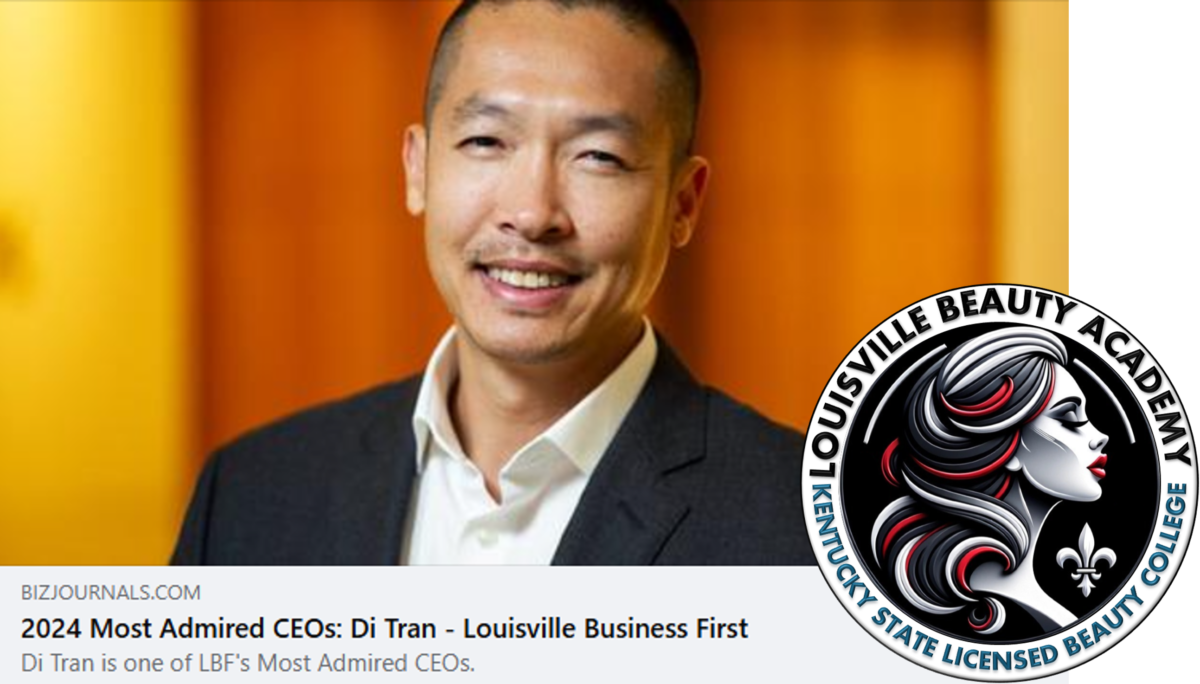
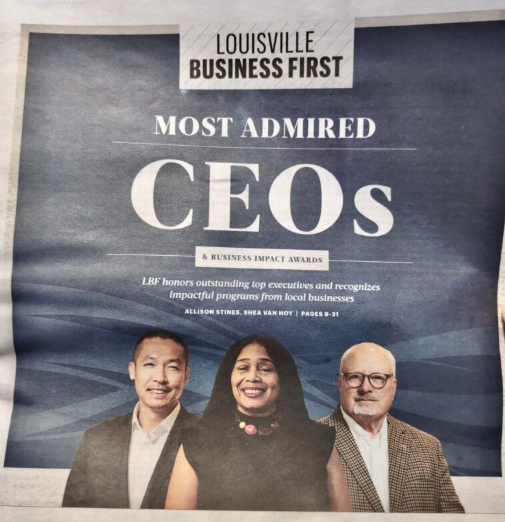
On Thursday, November 21, 2024, Louisville’s brightest business leaders gathered at the Galt House Hotel’s Archibald Cochran Room for a night of celebration at the 2024 Most Admired CEOs and Business Impact Awards, hosted by Louisville Business First. Among the honorees was Di Tran, CEO of Louisville Beauty Academy, whose journey and heartfelt gratitude speech captured the essence of the American Dream.
A Moment of Honor and Reflection
Di Tran, joined by his wife Vy Truong, his esteemed mentors including Ray Brundige, Clark Cox, Rick Dye, and his school director Crystal Beeler, expressed deep appreciation for the recognition. Sharing the spotlight with some of Louisville’s most influential leaders, Di Tran humbly thanked Louisville Business First for elevating businesses across the city, including his own series of small businesses that have made a significant economic impact.
Di Tran’s Speech: “Vietnamese Born, American Made”
In his acceptance speech, Di Tran reflected on his inspiring journey:
*”I am Vietnamese Born, American Made. It is all God, and the United States of America is the number one country on Earth. Louisville City and Kentucky State are the most beautiful places for me. I came here in 1995 with zero English, sponsored by Catholic Charities. My ESL teacher taught me the language—can you understand me now? Thanks to them, I stand before you today.
Being honored alongside the President of the University of Louisville is surreal because UofL made me a computer engineer with a bachelor’s and master’s degree. Sullivan University gave me PhD-level education. Each of you, one way or another, has had a hand in shaping me into who I am today. That’s why I call the United States number one—because of the love and opportunities it gives to people like me.”*
A Legacy of Impact
Di Tran didn’t stop there. He turned the spotlight to his business, Louisville Beauty Academy, which he credits as a significant force for workforce development in the city:
“With our school director, Crystal Beeler—whom I call the Most Admired School Director—we have lifted over 1,000 lives, transforming them into licensed beauty professionals. Many of these graduates now own salons worth more than half a million dollars, contributing between $20 million to $50 million in annual economic impact. And we are just getting started.”
A Grateful Heart
Di Tran closed his speech by thanking his mentors, his wife, and Louisville Business First for the honor of being among such great leaders. He emphasized his gratitude to the USA and God, the foundations of his success.
The event was not just a celebration of achievements but a testament to the resilience, determination, and community spirit that make Louisville and the United States a beacon of opportunity and progress.
Congratulations to All Honorees
Di Tran shares this prestigious recognition with an incredible group of leaders, including Melisa Adkins (UofL Health), Summer Auerbach (Rainbow Blossom Inc.), and many others who continue to inspire and elevate Louisville’s business community.
Here’s to another year of innovation, leadership, and impact in Louisville!
Louisville Beauty Academy continues its mission of transforming lives through beauty education. To learn more or enroll, visit www.LouisvilleBeautyAcademy.net or text 502-625-5531.
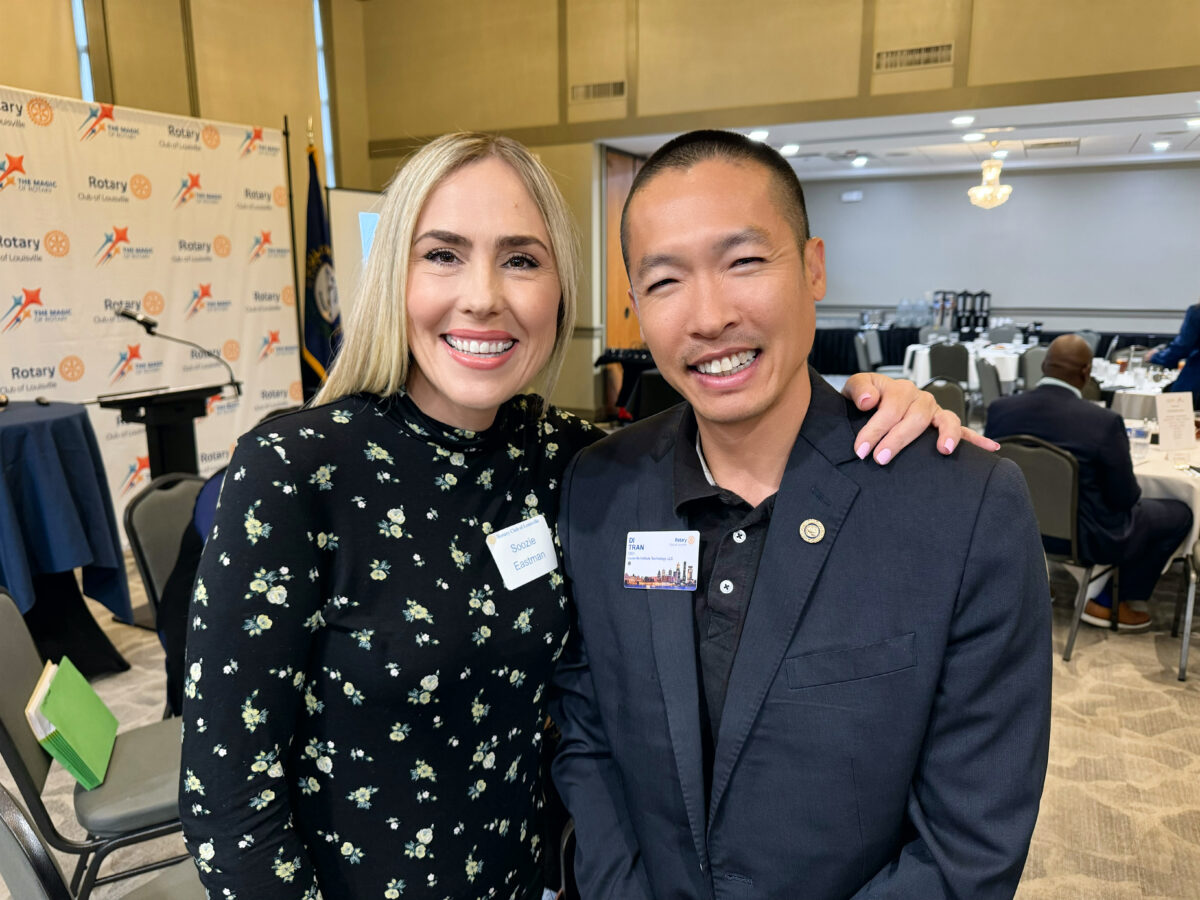
The Rotary Club of Louisville proudly welcomed back Soozie Eastman, President of 502 Film and Louisville’s Film Commissioner, for a dynamic update on the rapid growth and profitability of Louisville’s film industry. Eastman’s return marked a momentous opportunity for the Rotary Club and the Louisville community to gain exclusive insights into why Louisville has emerged as one of the most profitable and promising locations for film, art, and music production in the United States.
With state-backed incentives among the highest in the nation, Louisville is drawing Hollywood-level productions to its unique urban and rural landscapes. Kentucky offers filmmakers up to 30% tax credits, placing Louisville and Kentucky at the top of the list for film production incentives in the country. Eastman emphasized that these substantial incentives make producing in Louisville not only attractive but also financially beneficial. Filmmakers can lower production costs significantly while utilizing state-of-the-art facilities and skilled local crews, giving them a competitive edge in both budget and quality.
In addition to tax incentives, Louisville’s collaborative and supportive creative ecosystem plays a crucial role in attracting both national and international projects. From the burgeoning 502 Film team to partnerships with Louisville Tourism and Metro Louisville, Eastman has built a robust network that nurtures local talent while welcoming seasoned industry professionals from around the world. The city’s dedication to growing its film infrastructure, including soundstages, editing suites, and post-production facilities, means that Louisville is becoming a full-service hub for creative projects.
The art and music scenes in Louisville are also thriving, contributing to the city’s allure for creative industries. Louisville’s unique blend of Southern charm and urban sophistication, combined with a diverse cultural heritage, provides filmmakers and artists with unparalleled settings for their stories. This fusion is drawing interest from creatives who see the potential of Louisville as a blank canvas, ready for cinematic exploration.
Di Tran, a Vietnamese American entrepreneur and community advocate, attended the event and was struck by the alignment of Eastman’s vision with his own mission to elevate Louisville. “The energy in the room was electric,” Tran shared. “Seeing Soozie’s passion for not just filmmaking but for Louisville itself was inspiring. Louisville is truly emerging as a city of opportunity, and the arts are fueling that transformation.” Tran, who is deeply committed to workforce development and economic equality in Louisville, resonated with Eastman’s focus on growing local talent and creating high-value jobs within the film and arts industries.
As Eastman explained, the economic impact of film and art production goes beyond the initial production budgets. These projects create a ripple effect that benefits local businesses, from hospitality to construction. Film crews require accommodation, catering, transportation, and more, providing a direct economic boost to the city. Additionally, with an established film industry, Louisville is seeing a rise in workforce development initiatives to support new jobs in the creative sector. The city is building a talent pipeline, offering opportunities for Kentuckians to break into the industry through training programs, internships, and partnerships with local colleges.
The Rotary Club of Louisville’s dedication to bringing back influential speakers like Soozie Eastman demonstrates its commitment to providing members with valuable updates on Louisville’s progress and economic opportunities. Events like these are instrumental in uniting local leaders, business owners, and advocates who are all working towards making Louisville a premier destination for film and art. By hosting such thought-provoking sessions, the Rotary Club plays a pivotal role in fostering a vibrant community spirit and sparking inspiration across diverse sectors.
Thank you, Rotary Club of Louisville, for your unwavering commitment to highlighting the city’s progress and inviting leaders like Soozie Eastman who share actionable insights and inspire community-driven growth. Louisville’s potential as a top film destination is clear, and with organizations like the Rotary Club championing these causes, the city is poised for a future that shines both on and off the screen.
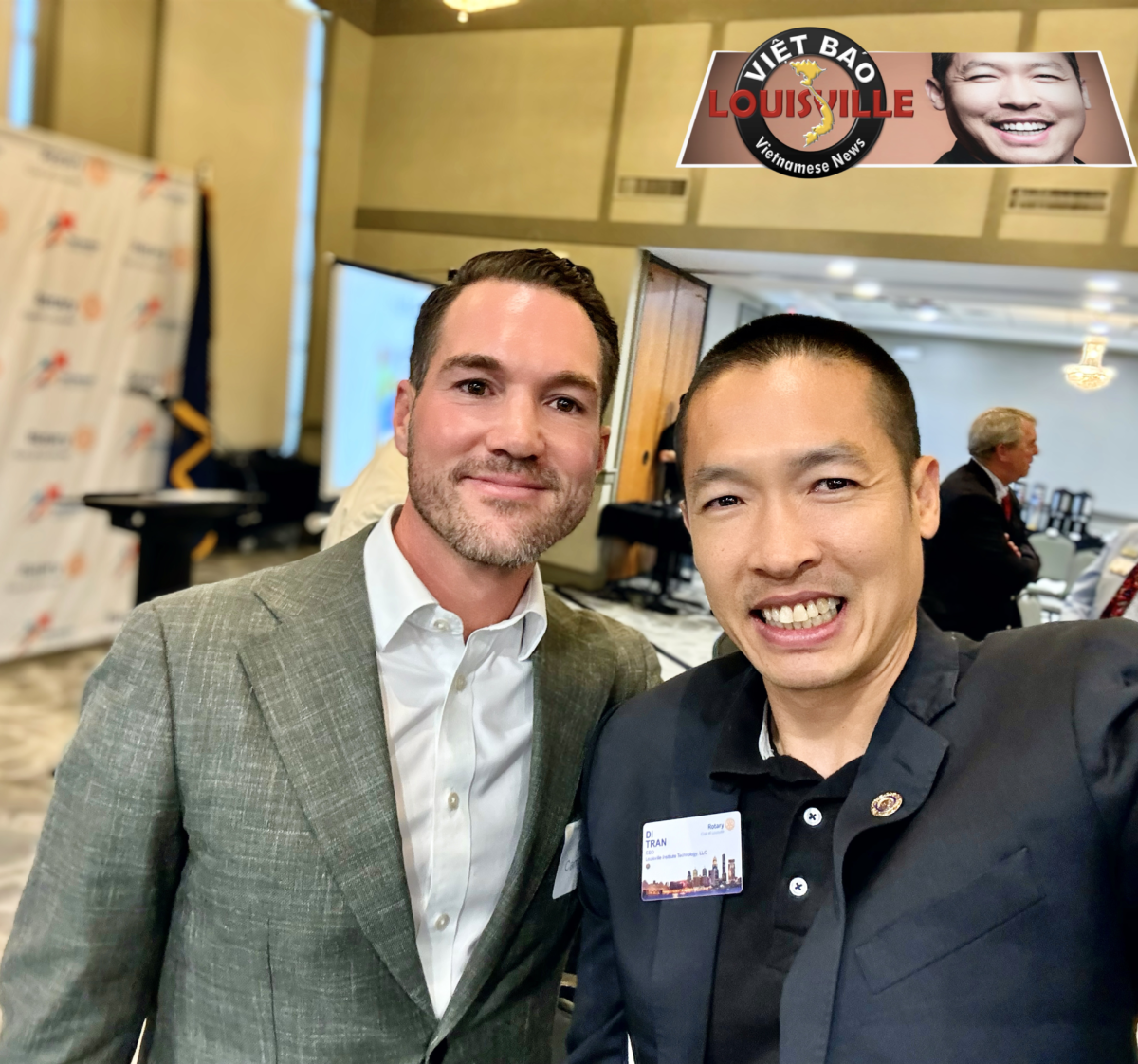
At a recent Rotary Club of Louisville event, Nick Campisano, Founder and CEO of Zyyo, took center stage to share his ambitious vision for transforming the city’s real estate landscape. His presentation captivated the audience with plans for large-scale hotel and mixed-use development projects, underscoring Louisville’s potential as a premier destination for investors. Campisano’s approach is hands-on—sometimes as the “driver, passenger, and even in the trunk”—reflecting his commitment to ensuring that every project delivers a meaningful impact.
Nick highlighted key developments like the acquisition of 21c Museum Hotels by Accor and Rabbit Hole Distillery’s majority stake sale to Pernod Ricard. These moves not only draw international attention but also signal a new era of opportunity for the city. Louisville’s blend of affordability, cultural vibrancy, and strategic growth locations like the scenic Ohio Riverfront make it an appealing market for real estate development.
In the audience was Di Tran, a local entrepreneur and real estate investor, who admired Nick’s energy and vision for the city. Tran, known for his own diverse ventures—including educational initiatives, affordable housing, and Di Tran Bourbon, the first Vietnamese-owned bourbon brand—recognized the value of Campisano’s projects in shaping Louisville’s future. Tran’s initiatives have long centered around supporting economic growth and community development, and he sees alignment with Campisano’s efforts to revitalize Louisville and elevate its status on the global stage.
Both Campisano and Tran agreed that the EB-5 Immigrant Investor Program presents an ideal pathway to fuel the city’s transformation. The program, which grants U.S. residency to foreign investors who create American jobs, aligns with their shared vision of attracting international capital to fund local projects. By integrating EB-5 into Louisville’s development strategy, they aim to harness global interest in the city’s potential while fostering a new wave of economic activity and job creation.
Together, these two leaders represent a dual force of local innovation and international ambition, driving Louisville toward a future of growth and prosperity. With leaders like Nick Campisano pushing boundaries in real estate and advocates like Di Tran contributing to economic and social progress, Louisville is well-positioned for a renaissance that blends local tradition with global reach, setting the stage for a thriving, dynamic city where opportunity knows no bounds.
On October 6, 2024, the historic Merrick Inn in Lexington, Kentucky, hosted a special Appreciation Dinner in honor of Senator Reggie Thomas, recognizing his unwavering commitment to advancing SB14 and multi-language beauty licensing. The event was a gathering of advocates, community leaders, and supporters who have made history in Kentucky by championing inclusivity and diversity in the beauty industry. Di Tran, founder of Louisville Beauty Academy, and Vy Truong, founder and CEO of Kentucky Pharmacy LLC, attended the event to celebrate this remarkable journey alongside many dedicated individuals.
The passage of SB14 has ushered in unprecedented change, including the appointment of a licensed nail technician and a skincare esthetician to the Kentucky Board of Cosmetology, as well as the launch of multi-language beauty licensing exams. The overwhelming support from state legislators, with unanimous votes in both chambers, and the new board’s endorsement of multi-language exams, reflects a collective commitment to creating accessible opportunities for all.
Among the key figures in this achievement are campaign leaders Micheal Carter, Lianna Nguyen, and Molida Soth, who played pivotal roles in rallying the community and pushing the bill forward. Micheal, now a Nail Technician Board member, led the campaign efforts with tireless dedication, while Lianna, also a campaign leader and now a School Owner Board member, used her voice to amplify the cause. Molida, a respected Cambodian community leader, brought strength and unity to the movement, leading hundreds to join the cause and advocate for change.
The Cambodian community’s support was particularly instrumental, with over 100 members consistently showing up in unity for every rally and gathering. Their unwavering presence became a key factor in securing the passage of SB14. As Senator Thomas acknowledged, it was this display of solidarity that truly shook the process into action, proving that when a community stands together, remarkable achievements are within reach.
Reflecting on this milestone, Di Tran expressed his gratitude: “I am simply blessed to be surrounded by individuals who work hard, advocate passionately, and care deeply for our loving community here in Kentucky. The love for God and our people drove each of us to step up in our own capacities. This achievement is a testament to the power of unity and the impact we can make when we elevate each other.”
The evening was not only about celebrating past achievements but also about renewing the commitment to ongoing advocacy. The first successful multi-language beauty exam in Spanish marks the beginning of a new era, with future expansions to Vietnamese and more languages soon to come, paving the way for inclusivity in licensing like never before.
Vy Truong reflected on the evening’s significance: “This isn’t just about a legislative victory; it’s about building a more inclusive future where everyone has the opportunity to succeed. We are witnessing a moment that goes beyond policy—it’s about empowering communities and opening doors for all.”
The Appreciation Dinner brought together the efforts of legislators, advocates, and a united community, showing that when people come together with a shared purpose, no obstacle is insurmountable. It was a night to honor not just one leader, but a movement dedicated to elevating voices, creating opportunities, and building a legacy of inclusivity that will inspire future generations.
Together, they are proving that love, unity, and relentless effort are the keys to winning change for the community and beyond.
The journey to Senate Bill 14 has been a testament to the dedication and relentless efforts of the beauty industry community in Kentucky. Over the past year, this community has shown an unwavering commitment to improving the regulatory framework that governs their profession. With over 30 media coverages, more than 20 Kentucky legislative meetings, and gatherings of over 100 dedicated individuals, the collective voice has been heard. Now, this journey culminates in a public celebration as Senate Bill 14 is signed into law.
Join Us for the Signing Event
On June 3, 2024, at 1:30 PM, the Kentucky State Capitol will host the signing event for Senate Bill 14. This momentous occasion is a public event, and everyone is invited to join. The event will be held at:
Location: Kentucky State Capitol Address: 702 Capital Ave, Frankfort, KY 40601
A Milestone for the Beauty Industry
Senate Bill 14 represents a significant step forward for the beauty industry in Kentucky. This legislation will update regulations for nail salons, ensuring higher standards of safety and sanitation, and enhancing the overall quality of services provided to the public. The bill’s passage is a reflection of the industry’s dedication to serving the state of Kentucky with excellence and professionalism.
The beauty industry community, including licensees and members, has been pivotal in advocating for these changes. Their commitment to maintaining a safe and sanitized environment for their clients and elevating the industry’s standards has been the driving force behind this legislative success.
Elevating the Industry and Expanding the Workforce
The passing of Senate Bill 14 is not just a win for the beauty industry; it is a win for the state of Kentucky. By elevating the standards within the beauty industry, we are not only ensuring better services but also creating more opportunities for employment. This legislation will help put more people to work in a safe and regulated environment, contributing to the state’s economy and the wellbeing of its residents.
Let us come together to celebrate this significant achievement and honor the dedication of those who have worked tirelessly to elevate the beauty industry in Kentucky. Your presence will make this event even more special as we take this monumental step forward.